VCE Psychology units 3 & 4: Nervous System and Stress
 Call Kai
 Learn
 Practice Test
 Spaced Repetition
 Match
 Flashcards
 Knowt Play
1/31

There's no tags or description
Looks like no tags are added yet.
32 Terms
DIVISIONS OF THE NERVOUS SYSTEM

Neurons
Neurons = specialized nerve cells
Three types of neurons: S.A.M.E
-Sensory/afferent neurons (in PNS) think Afferent=ascending
-Interneurons (in CNS)
-Motor/efferent neurons (in PNS) think Efferent=Exit

Central nervous system (CNS)
brain and spinal cord
Brain
An organised network of neurons with specialised functions.
Main Functions:
-Receives and processes sensory information from environment.
-Initiates, responds and controls all bodily functions.
Spinal cord
A long, thin bundle of nerve tissue linking the brain with the peripheral nervous system.
Main functions:
-Sends sensory info from body to brain.
-Carries motor commands from brain to muscles, organs, and glands.
-Initiates spinal reflexes
Peripheral nervous system
All nerves and neurons that extend from the brain and the spinal cord, & connect with the muscles, organs and glands
Somatic nervous system
*S is for Sensory & Skeletal!
Main functions:
1. Carries sensory info from sensory receptors (nerve endings in sense organs) to the CNS.
2. Sends motor info from CNS to skeletal muscles, enabling voluntary movement.

Autonomic nervous system
*A is for Automatic!
Main functions: regulates the activity of the body’s visceral muscles, organs and glands, which occurs unconsciously and involuntarily.
Sympathetic nervous system
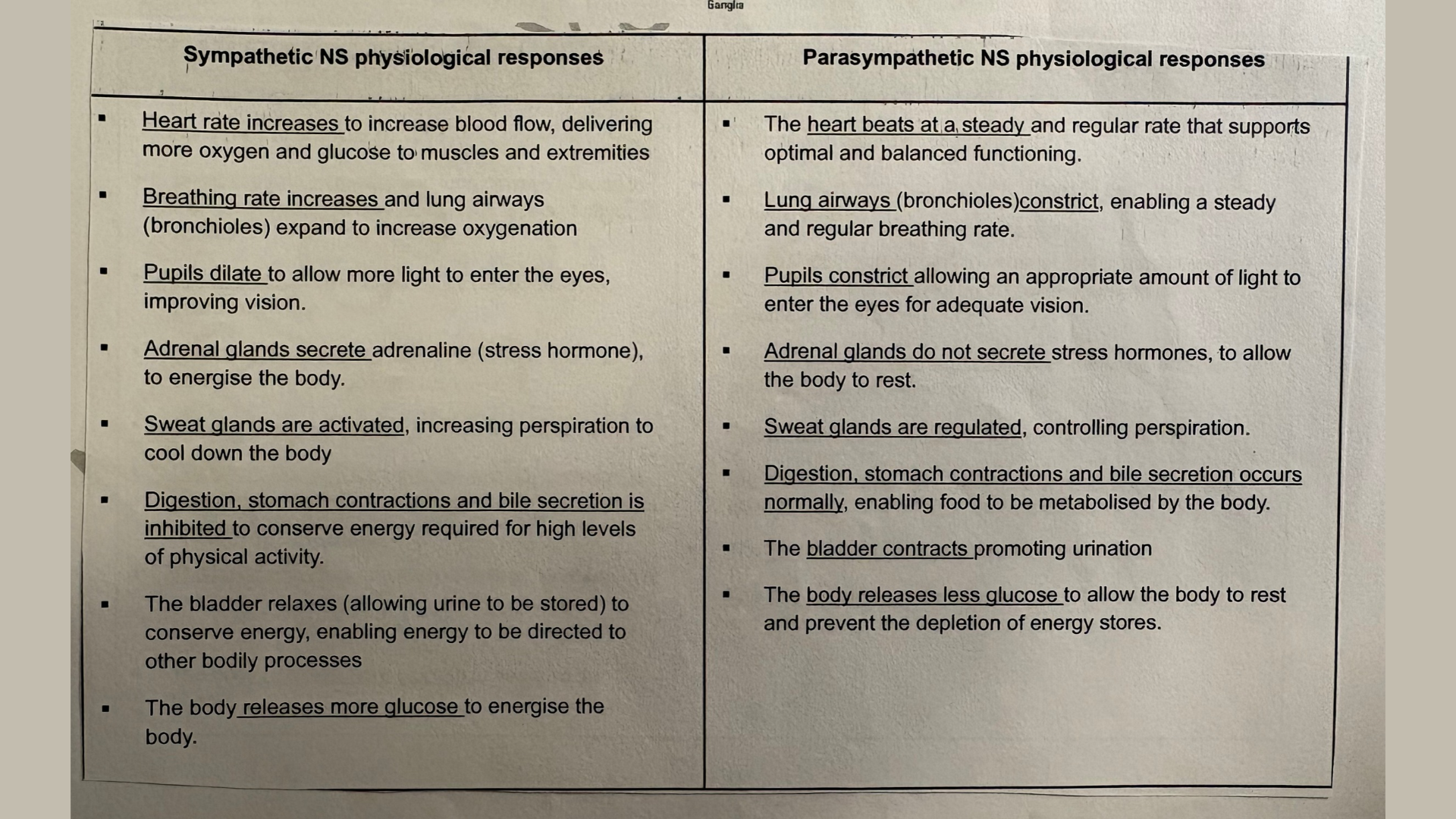
*Activates the visceral muscles, organs and glands to prepare for vigorous activity, or to deal with a stressful/threatening situation.
immediate response=enhancing survival
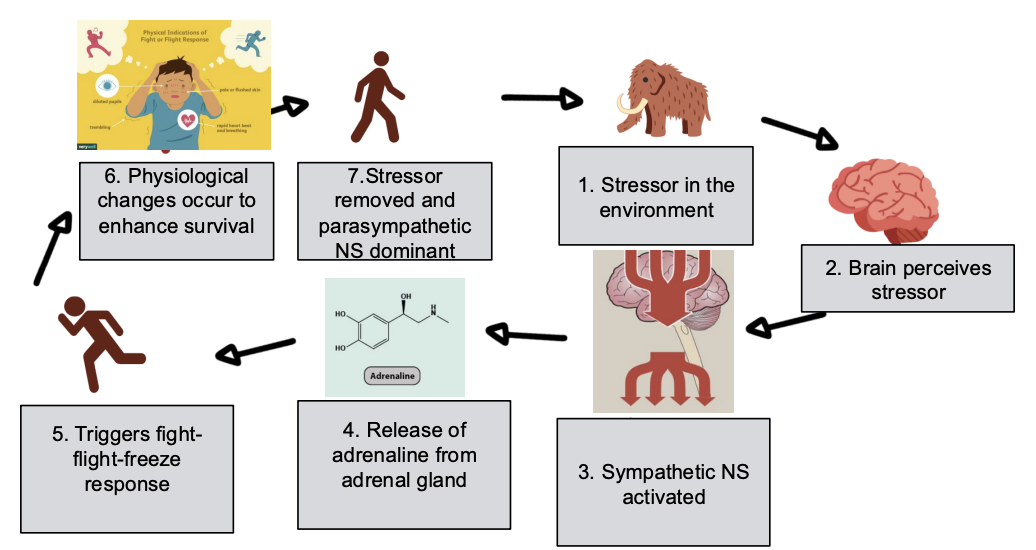
Parasympathetic nervous system
*Helps maintain homeostasis (balanced state)
Main Functions:
-Counterbalances physiological changes of sympathetic nervous system, once the threat has passed.
-Takes longer to return body to homeostasis due to lingering presence of adrenaline that is released when the Sympathetic Nervous System is activated.
Conscious response Interneuron (somatic)
*deliberate and voluntary action that involves awareness
-involves interaction between CNS and somatic NS (PNS)
Unconscious response (Autonomic)
*automatic and involuntary actions that occur without awareness
Includes…
-Physiological responses of the autonomic NS (EG. Heart beating, lungs filling with oxygen, blinking)
-The spinal reflex (interaction between somatic NS and CNS)

Spinal reflex (unconscious response)
A spinal reflex is an unconscious, involuntary and automatically occurring response to sensory stimuli without the involvement of the brain.
Spinal reflex enables survival:
The spinal cord triggers a response before the brain receives the sensory information, allowing a faster reaction that helps minimise harm and increases the organism’s chances of survival.

Sensory receptor
Nerve endings in sense organs.
DP2: Neurons
*Neurons are nerve cells specialised to receive, process and/or transmit information.
-Communicate with other neurons, organs and glands
-interconnect to form neural pathways, enabling communication of information around the body.
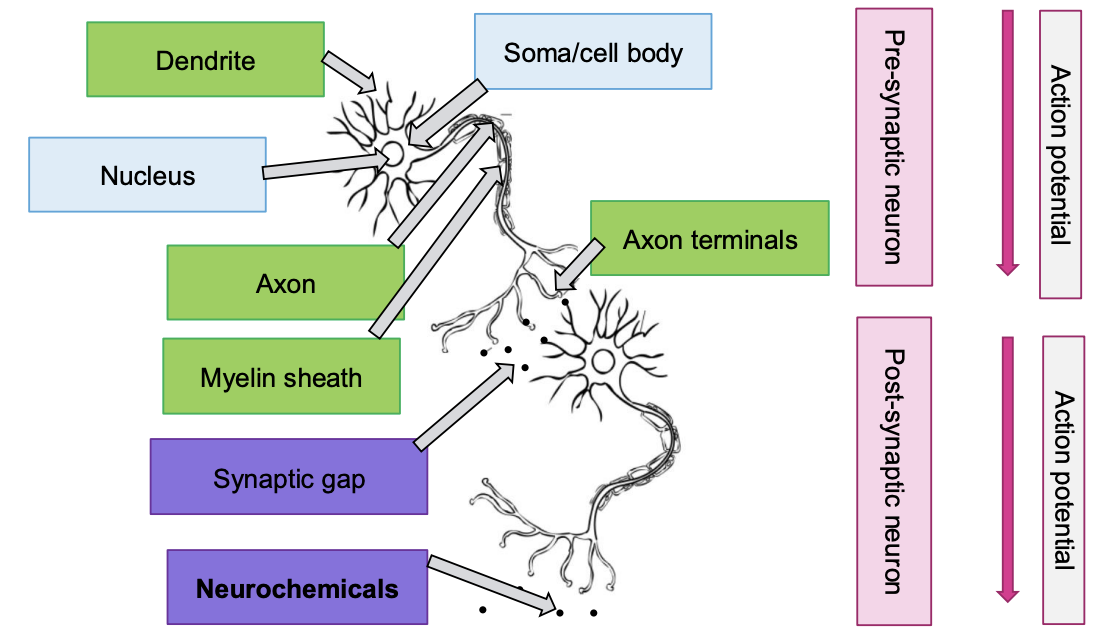
Neurons Function

Neurochemicals Flowchart

Neurotransmitters (communication within neurons)
Communication WITHIN Neurons:
*Neurotransmitters are neurochemicals that are released from pre-synaptic neurons.
→received on the receptor sites of the dendrites (of the post-synaptic neuron)
→message sent to the soma, information is integrated, action potential is generated.
→electrical message travels along axon as an action potential.
→electrical message then reaches the axon terminals.
Neurotransmitters (communication between neurons)
Communication BETWEEN Neurons:
1. neural impulse reaches axon terminals of pre-synaptic neuron.
2. causes neurotransmitters to be released from axon terminal (pre-synaptic neuron) into the synaptic gap
3. Once crossed synaptic gap, they bind to receptor sites on the dendrites of the post-synaptic neuron
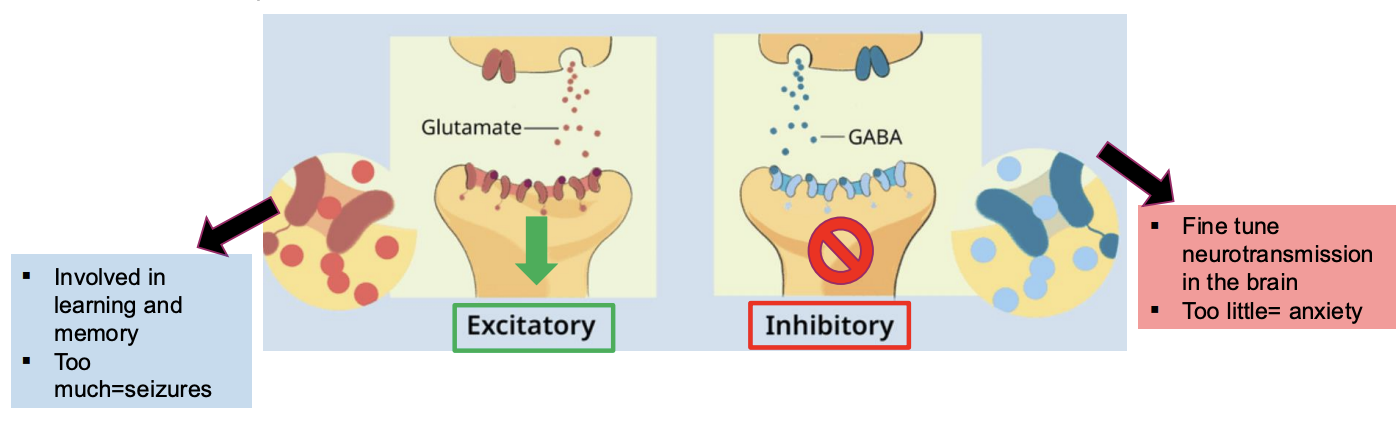
4. results in inhibitory or excitatory effect
*Neurotransmitters DO NOT travel down the axon. They cause an ‘effect’ and then diffuse across the synapse
Glutamate→think Glue=excitatory
Neuromodulators
Neuromodulators are neurochemicals released from neurons, either into synapses or into the extracellular fluid in neural tissue, where they alter the strength of neural transmission across broad brain regions.
*Extracellular fluid → Neuromodulators diffuse through extracellular fluid in brain tissue, affecting many synapses at once.
-neuromodulators produce slower, longer-lasting and more widespread effects.

Neuromodulator: Dopamine
Dopamine is a neuromodulator primarily responsible for voluntary motor movement, the experience of pleasure, reward-based learning and motivation.
Role in functioning:
-Reward based learning→ Engage in behaviour→ rewarded for behaviour→ dopamine released→ experience of pleasure and wellbeing. -Motivation→ Rewarding behaviours that trigger the release of dopamine→ experience pleasure→ motivation to engage in behaviour again→ addiction
Neuromodulator: Serotonin
Serotonin is a neuromodulator that is primarily responsible for the regulating behaviour processes such as aggression, appetite, memory
*90% of the body’s serotonin is produced in the gut.
Role in functioning:
-Regulates and stabilises mood
→High levels of serotonin → experience positive and stable moods→ promotes wellbeing
→Low levels of serotonin → sadness and depression
-Regulates the circadian sleep-wake cycle
→High level of serotonin→ improved quality and quantity of sleep at night→ feelings or alertness and wakefulness during the day.
→Low levels of Serotonin→ disruption of the circadian rhythm of the sleep-wake cycle and the release of melatonin (sleep hormone).
DP2 summary

DP3: Relationship between learning and memory
Learning involves the acquisition of knowledge, whereas, memory is the expression of that knowledge.
Synaptic plasticity
Synaptic plasticity refers to the ability of the synapse to change its structure and function in response to stimulation from the environment.
LTP (sprouting)
The long-lasting strengthening of synaptic connections between neurons, after repeated stimulation of the same neural pathways, resulting in enhanced synaptic transmission.
sprouting=growth

Physiological changes due to LTP

LTD (pruning)
Long-term depression (LTD) is the long-lasting weakening in the strength of synaptic connections which reduces synaptic efficacy due to repeated low level stimulation of the post-synaptic neuron.
purpose:
-Increases the likelihood of forgetting
-Allows us to prune or eliminate useless/unwanted/unimportant memories.
-Allows us to adjust, edit or correct our thinking when problem solving, or our movements if performing a skill.
Pruning=synapes between neurons eliminate.

Physiological changes due to LTP

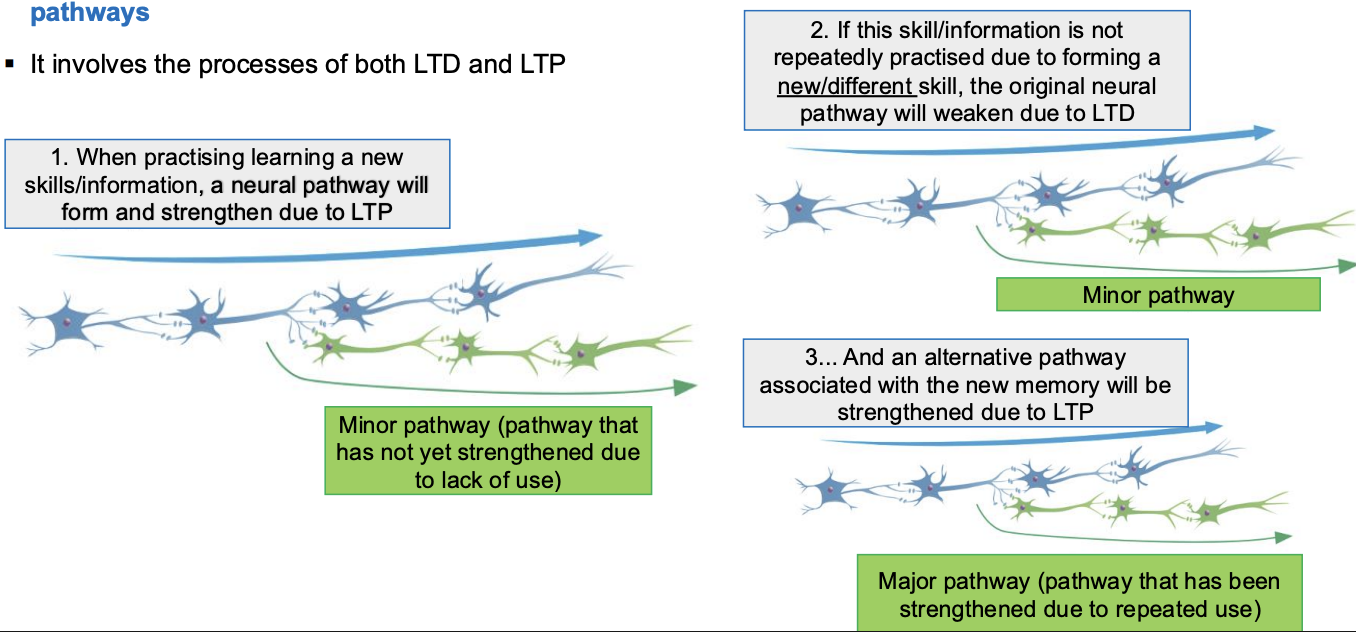
Rerouting
The formation of new connections between neurons to establish alternative neural pathways.
LTP & LTD differences

DP4 stress and stressors
