HMI205 - Accident and emergency
 Call Kai
 Learn
Learn Practice Test
 Spaced Repetition
 Match
Match Flashcards
 Knowt Play
1/37

There's no tags or description
Looks like no tags are added yet.
Name | Mastery | Learn | Test | Matching | Spaced | Call with Kai | Chat |
|---|
No analytics yet
Send a link to your students to track their progress
38 Terms
What is the normal vital signs of an adult?

How to do DRSABCD

What is the Australasian triage system (ATS)
Tool used to calculate the appropriate wait times for assessment and treatment of a patient.
There are 5 categories of the ATS
Category 1:
Resuscitation
immediate
i.e. heart attack, major car accident
C2:
Emergency
within 10 mins
I.e. severe blood loss, overdose
C3:
Urgent
Within 30 mins
I.e. head injury (conscious), breathing difficulties, infection
C4:
Semi-urgent
Within 1
I.e. Possible fractures
C5:
Non-urgent
Within 2 hrs
I.e common cold

What is the Glasgow coma scale (GCS)?
Assessment of a person's level of consciousness, particularly after a brain injury, by evaluating:
eye
verbal
motor responses.
What are the different scales of GCS?
Low GCS 3 and normal GCS is 15
Lower score, higher risk of death
GCS 13-15 mild
GCS 3-8 severe
GCS can change very quickly

What is a trauma call?
Notifies trauma team that an emergency is en route and gives time to department to prepare.
Code brown might be activated: Multiple and/or major emergency
Who are in the trauma team?
Team leader: ED consultant in control of the team, remains hands off, allocates roles, prepares prior to patient arrival, makes critical decisions
Nurses
Doctors
Radiographers
Administration - for IDing the patient and getting medical records
Specialist consultants - i.e. if there is open femur fracture, you want ortho
What is the radiographer’s role in a trauma call?
Make sure there is a request form or someone is actively putting in a request
ID - can be pseudonym first and then once patient is identified, the images can be matched up
Consent - In resus, team leader is making the decision so listen to them.
Use markers
Lead aprons
What are the pros and cons of bringing patient from ED/resus to the x-ray room?
PROs | CONs |
|
|
What are the pros and cons of doing Mobile x-ray machine to resus?
PROs | CONs |
|
|

What kind of trolley is this?
Mobile trolley
under table draw/space for cassette
Remove detector when moving patient supine/erect

What equipment is this?
Slider detector case
Used between slide sheets
Helps to put detector behind patient
Wipe them down to present coss infection
What are some radiographer communications?
What images do u require?
If they ask for multiple things, “Shall i just do a trauma series for now and then u guys get what you need for the immediate care and then well work out the rest after?”
Are you likely to remove the trauma board soon? If not there is going to be artefact on the image, are you still happy for me to do it?
Coming in with the xray machine….for a lateral CV… ill be shooting across there.
Who isn’t wearing lead apron or doesn’t have to remain here?
Stablising head and neck when moving them.
5 step advocacy for the airway doctor to go wear a lead apron

What is a trauma series?
Supine AP chest
AP pelvis
Hori-beam C-spine
How do we do trauma positioning modifications?
Minimise movement
Move bucky and beam instead of patient
Accept there will be some artefacts
Make sure there is a nurse or doctor supporting the neck
How do a trauma modification for an AP scapula?

How do a trauma modification for an AP Elbow?

How do a trauma modification for an Lateral Elbow?

How do a trauma modification for a Lateral wrist`?

How do a trauma modification for a lateral forearm?

How to do a trauma modification DP and oblique foot x-ray.

How to do a trauma modification lateral foot x-ray

How to do a trauma modification lateral Y-scapula
Roll patient 45 degrees.
If collared patient, use piano stool
Supine with flat detector (might elongate the anatomy)

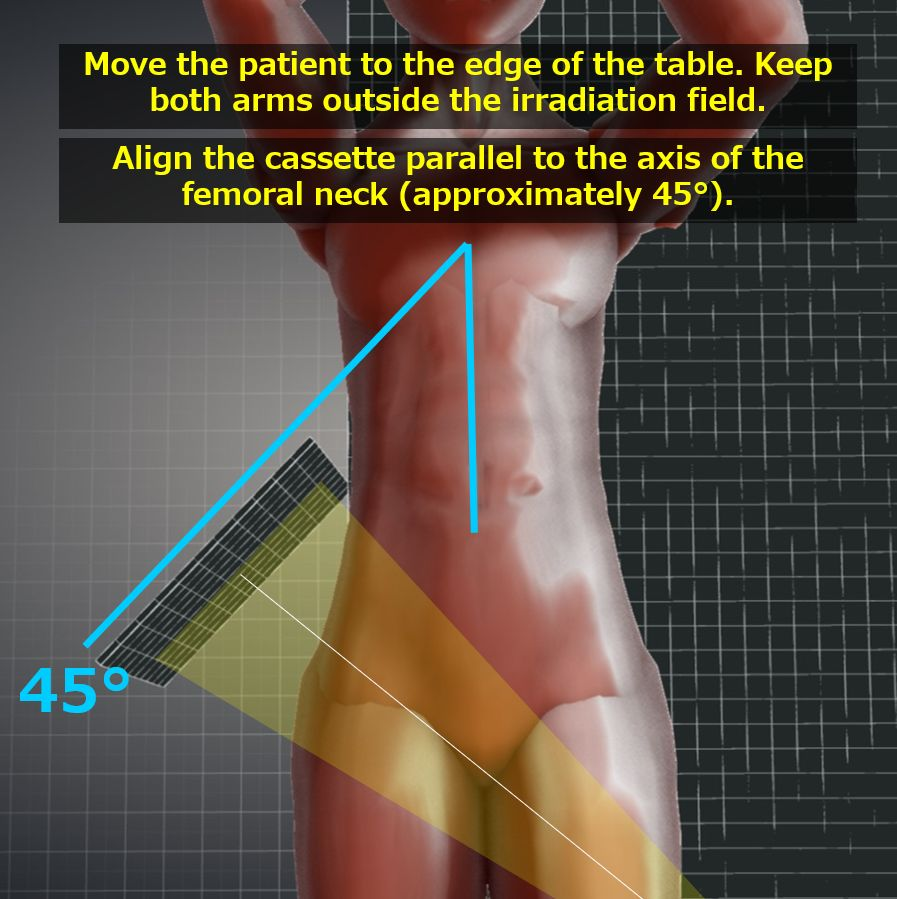
How to do a trauma modification lateral hip
Clements Nakayama if both hips are affected.
Use upright bucky.
Turn patient 45 degrees to show femoral neck.
CR 20 degrees inferiorly from horizontal
Make sure the patient is at the edge of the bed and close to the detector
Trauma Image critique soft tissue signs of injury
J: Joint effusion
A: Air
I: Increased densities
L: Lipohaemarthrosis
S: Soft tissue swelling

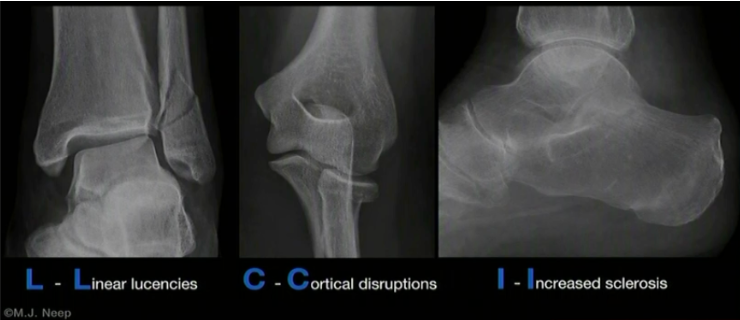
Trauma Image critique bony signs of injury
L - linear lucency
I - increased sclerosis
C - cortical disruption
Trauma Image critique Alignment of joints, sign of injury
Intact - normal alignment
Not intact - widened, sublexed, dislocated

Diagnosis vs aesthetic. If you cannot get a better image than the one you have right now, what can you do?
Ask the radiologist.
Check if they have any other scans that can visualise it better.
Patient pain?
What are the Hospital emergency codes?
Blue - medical emergency
Red - fire/smoke
Orange - Evacuation
Yellow - internal disaster, infrastructure failure, or severe operational capacity overload
Grey - unarmed person showing aggressive, combative, or threatening behavior
Black - armed or aggressive person, a hold-up, or a hostage situation
Brown - external emergency that brings a sudden, heavy influx of patients
Purple - Bomb threat
If your patient starts to deteriorate and you need to call a code, what do you call?
2222
Patients with COPD have naturally low oxygen saturation. If they’re oxygen at 90, is that a code?
No because patients with COPD have normally low oxygen saturation.
When to call a MET call?
Call hem when worried about their breathing, circulation issues, suddenly confused, dropping out of consciousness.

After a patient as had a contrast reaction, you need to ….
document it
What are some mild contrast reactions? And what are your steps to patient care?
Mild itching
Itchy throat
Runny nose
Nausea and vomitting

What are some moderate contrast reactions? And what are your steps to patient care?
Call met call because they will probably require stronger medication
Edema of the face
Chest pain
Bronchospasm
Prolonged nausea and vomiting
Sensation of suffocation
Blood pressure goes down
hives
What are some severe contrast reactions? And what are your steps to patient care?
CODE BLUE
Anaphylactic shock
Suffocation
Convulsions
Seizure
Difficulty talking and swelling of tongue