Week 8 (chapter 6)
 Call Kai
 Learn
 Practice Test
 Spaced Repetition
 Match
 Flashcards
 Knowt Play
1/14

There's no tags or description
Looks like no tags are added yet.
15 Terms
addition
1 pi bond broken, 2 sigma bonds formed
elimination
2 sigma bonds broken, 1 pi bond formed
substitution
1 sigma bond broken, 1 sigma bond formed
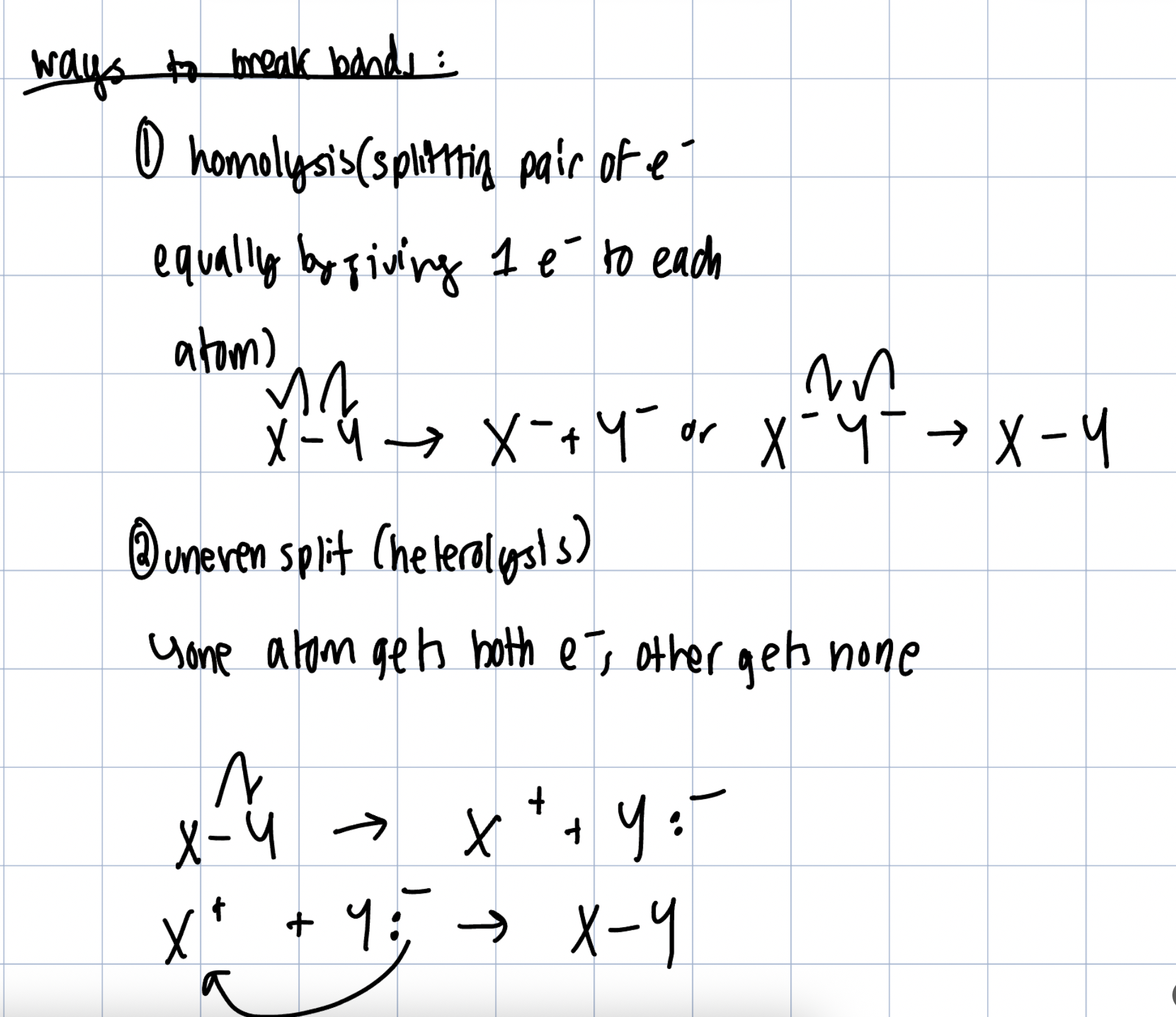
homolysis
breaking bonds via an event split, where you’re splitting a pair of electrons equally by giving one electron to each atom
use half arrows not full arrows

heterolysis
breaking bonds via an uneven split, where one atom gets both electrons, and the other gets none
carbocation
when a carbon loses an electron and gets a (+) charge
carbanion
when a carbon keeps an electron from a bond and gets a (-) charge
ΔH
enthalpy
state function (how you get there doesn’t matter)
heat
breaking vs making bonds
breaking bonds - costs energy
making bonds - releases energy

bond dissociation energy
energy required to break a bond, homolytically
kcal/mol
describes the formation of radicals
Δ H°
total bonds broken - total bonds formed
standard enthalpy change of a rxn
ΔS
ΔS negative → entropy decreases
ΔS positive → entropy increases
intermolecular vs intramolecular forces
intermolecular = between 2 molecules
intramolecular = within 1 molecule
ΔG
ΔG= ΔH -TΔS
for most organic rxns, ΔS is small. therefore: ΔG≈ΔH
ΔG = -RTlnKeq
R → CHOOSE GAS CONSTANT WITH CORRECT UNITS
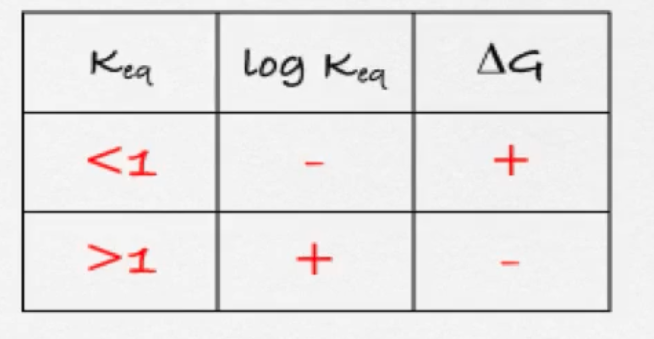
Keq
Keq<1 → reactants favored
Keq>1 → products favored