10/29 - Spinal Cord and Peripheral Nerves
 Call Kai
 Learn
 Practice Test
 Spaced Repetition
 Match
 Flashcards
 Knowt Play
1/16

There's no tags or description
Looks like no tags are added yet.
17 Terms
Cervical
Diseases in which spinal section presents with weakness, incoordination, CP deficits, quadriplegia, hyperreflexia in all legs, respiratory arrest, cardiac arrest, stiff neck, and death?
Thoracic
Diseases in which spinal section present with weakness in the front legs, hyperreflexia in hind legs, incoordination in hind legs, and dog-sitting posture?
Lumbar
Diseases in which spinal section present with normal front legs, hyperreflexia in hind legs, incoordination in hind legs, and abnormal urination and defecation control?
Sacral
Diseases in which spinal section present with normal front legs, weakness in rear legs, flaccid tail/anal tone, and abnormal urination and defecation control?
Acute
What presentation of spinal injuries, abscesses, and neoplasias will have CSF with increased RBCs, WBCs, and protein?
Subacute
What presentation of spinal injuries, abscesses, and neoplasias will have xanthochromia and increased protein in CSF?
Poor
What is the general prognosis for spinal injuries, abscesses, and neoplasias? They are usually diagnosed late in disease. Treatment can involve surgery (rare), anti-inflammatories, antibiotics, supportive care, and eventually euthanasia.
Female
Is tick paralysis caused by male or female ticks? Dermacentor species are the most commonly implicated, and it occurs based on the neurotoxin in saliva. All life stages can transmit this, and it takes only one tick. This toxin blocks acetylcholine release at the neuromuscular junction, preventing muscle contraction. It is a regional disease, and affects camelids more commonly than any other ruminants. Signs include recumbency, ascending flaccid paralysis, decreasing appetite, and multiple affected animals can be seen. P. tenuis, spinal disease, heat stress, rabies, and botulism must be ruled out. Diagnostics are based on ruling out other diseases and searching for ticks. Treatment is with injectable ivermectin to remove ticks, with supportive care. Prognosis worsens with increased duration, recumbency, or origin closer to the respiratory muscles. 2-3 days can be required for recovery, and the neurotoxin must be metabolized to get rid of it.
Botulism
What disease is caused by C. botulinum toxins and is a serious, often fatal disease caused by the neurotoxin it produces, which causes progressive paralysis? It is spread through ingestion of contaminated feed, water, or a carcass, and animals often die from respiratory failure as breathing muscles become paralyzed. Initial signs include difficulty swallowing, slow prehension, and weakness. Tongue protrusion occurs in the final stage. Prevention is best, and treatment is usually unproductive. Postmortem is the main form of diagnosis.
C. tetani
What species produces the toxin causing tetanus? This causes hypertonia and muscular spasms, and has regional risk factors such as soil contamination. Risk factors include tail docking, banding castrations, shearing wounds, disbudding, and metritis. Signs include incubation time of 2-4 weeks, anorexia, decreased rumen activity, eye retraction, raised tailhead, muscle stiffness, rigidity, sawhorse stance, and diagnosis with history/suspicion, and culture or gram stain. Treatment is with antitoxin, eliminating the infection, and supportive care. Penicillin can be used. Prognosis is fair-poor and signs persist for up to a month. Interneuron binding is irreversible. Prevention is based on husbandry, hygiene, preventing metritis, and vaccination/antitoxin.
Radial
Damage to what nerve is a common chute/recumbency injury, and presents with dropped elbow, flexion of the carpus/fetlock/pastern, and absent triceps reflex? Additional treatment can include bearing weight with leg held in extension, splinting, and resolution depends on duration.

Suprascapular
Damage to what nerve is also called Sweeney, and presents with neurologic atrophy of the supraspinatus and infraspinatus muscles? It can occur due to trauma, such as lateral subluxation or popping of the shoulder when weight-bearing. Treatment is stall rest until the nerve regenerates or fibrosis occurs to stabilize the joint.
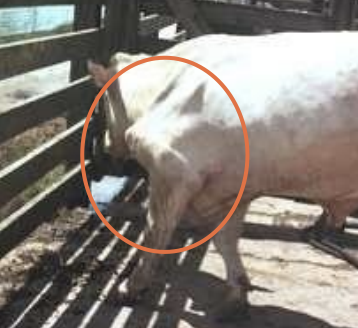
Femoral
Which nerve originates from the L5 spinal nerve, innervates the quadriceps muscles, extends the stifle, and when paralyzed can cause the stifle to collapse, leading to difficulty standing?
Obturator
Which nerve innervates the adductor muscles, bringing the hindlimbs together, and can be damaged during calving? This leads to paralysis and an inability to adduct one or both hind legs.
Sciatic
Which nerve is the largest in the body, forming from spinal segments L6-S2, and splits into the tibial and common fibular nerves further down the limb. The common fibular/peroneal nerve is superficial over the stifle joint, and is vulnerable to injury, which causes knuckling over the digit. The tibial nerve is more posteriorly, and paralysis is less common but can affect hock extension and digit flexion. The sciatic nerve can be damaged by dystocia injuries, improper IM injection location, and dog bites. Obturator injuries are most common in cattle, affect the adductor muscles, and can lead to hopping gait or splay legs, leading to hip dislocation (hobble to prevent this).
Calving
What type of paralysis involves both the sciatic and obturator nerves and is most commonly associated with dystocia injury? Sciatic nerve damage will prevent cow rising. Obturator injury alone will still allow the cow to rise.
Femoral
Which nerve can be damaged by hyperextension of the hip, such as slipping/falling or forced traction in posterior presentation during birth? Signs include inability to extend and fix the stifle, patellar laxity, lateral displacement, flaccid quadriceps, and flexion of the stifle/hock/fetlock/pastern.
