Cardiac Rhythms 2
 Call Kai
 Learn
Learn Practice Test
 Spaced Repetition
 Match
Match Flashcards
 Knowt Play
1/24

There's no tags or description
Looks like no tags are added yet.
Name | Mastery | Learn | Test | Matching | Spaced | Call with Kai | Chat |
|---|
No analytics yet
Send a link to your students to track their progress
25 Terms
First Degree Heart Block
cardiac conduction system is delayed in transmitting an electrical signal through the right atrium to the AV node.
conduction through the AV node is abnormally slow or prolonged, this results in a PR interval > 0.20 seconds.
First Degree Heart Block Cause
increasing of age
history of cardiac disease (such as MI or coronary artery disease)
electrolyte imbalances (including hypokalemia and hypomagnesemia)
certain antiarrhythmic medications
Sodium channel blockers (Lidocaine)
Beta blockers (Metoprolol)
Calcium channel blockers (Diltiazem)
Potassium channel blockers (Amiodarone)
Cardiac glycosides (Digoxin)
Magnesium
endocarditis, rheumatic fever, and COVID-19
rheumatoid arthritis, lupus, and sarcoidosis
Athletes
First Degree Heart Block Sx
Typically no manifestations
dizziness with changes in position or shortness of breath with activity
First Degree Heart Block Labs
serum electrolytes or drug toxicology testing
ECG : prolonged PR interval that will be > 0.20 seconds

First Degree Heart Block Education
avoid smoking and alcohol and to eat a healthy, low-cholesterol diet.
Exercise routines will need to be monitored to ensure that the client avoids excessive fatigue.
Information should be provided on potential adverse effects of prescribed medications.
First Degree Heart Block Tx
atropine or isoproterenol. Pacemaker insertion may be necessary to treat the underlying cause of the heart block.
Afib Patho
SA node is not firing appropriately. The electrical stimuli are being sent from multiple areas in the atria and are transmitting electrical impulses that are rapid, chaotic, and irregular.
These irregular impulses do not allow the atria to effectively contract and send blood into the ventricles.
Cardiac output is decreased + BLOOD CLOT FORMATION
Afib Risk Factors
Diabetes
Hyperthyroidism
OSA
Hx smoking or excessive alcohol
Sedentary Lifestyle
recovering from cardiac surgery
Afib Comorbidities
high blood pressure, heart failure, diabetes mellitus, overweight and obesity, chronic obstructive pulmonary disorder, thyroid disease, kidney disease, and stroke.
Untreated A-fib increases the incidence of stroke and heart failure
Afib Sx
Irregular pulse
hypotension
heart palpitations and increased heart rate
chest discomfort
shortness of breath (either at rest or with activity) or exertional fatigue
anxiety
dizziness or lightheadedness, and possible syncopal episodes.
Weight gain and increased urination may also be reported.
Pulse deficit
Afib Labs
Thyroid panel (decreased TSH, increased T4…hyper)
CBC
Creatinine
Glucose
INR
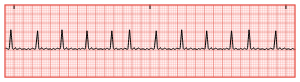
P waves are replaced by indiscernible (unidentifiable) atrial activity between QRS complexes. The ventricular rate can be within normal range (60 to 100/min) or increased range (100 to 200/min).
Afib Education
Educate on anticoagulant adherence and not “catch up” on any missed doses
precautions to prevent unexpected bleeding, such as using a soft-bristled toothbrush, shaving with safety razors or an electric razor, and avoiding contact sports or high-risk activities that may result in injury.
refrain from highly intensive physical activities
importance of maintaining a healthy weight, limiting the intake of alcohol, and the need to avoid smoking.
the need to avoid stimulants, including caffeine, over-the-counter decongestants, illicit stimulant drugs, and herbal supplement
adequately controlling sleep apnea, blood glucose levels, blood pressure, and weight gain.
Warfarin and vitamin K
Afib Tx
synchronized electrical cardioversion.
antiarrhythmic medications
Beta blockers, calcium channel blockers, amiodarone, and digoxin
anticoagulation therapy for stroke prevention
warfarin or DOACs (xa-)
Atrial Flutter Patho
occurs when the atria are beating in a regular rhythm and increased rate.
atrial rates can range from 240 to 400 bpm.
This is caused by multiple, rapid electrical impulses being sent from the atria too quickly for the AV node to process before the transmission to the ventricles.
Atrial Flutter Risk Factors
Recent cardiac surgery
Recent MI
beta blockers, calcium channel blockers, amiodarone, or digoxin
diabetes
hyperthyroidism
obstructive sleep apnea
obesity
alcohol use and smoking
history of cardiomyopathy or pericarditis
Atrial Flutter Sx
hypotension
lightheadedness or dizziness
palpitations or chest discomfort
shortness of breath (with activity or at rest)
fatigue
syncopal episodes.
Atrial Flutter Labs
electrolytes and liver, kidney, and thyroid functions.
ECG ; normal heart rhythm. P waves are replaced by multiple sawtooth or flutter waves between QRS complexes. The ventricular rate is typically normal, between 60 to 100/min, and the atrial rate is increased, between 240 to 340/min.

Atrial Flutter Tx
anticoagulants (to prevent blood clot formation)
antiarrhythmics (to control rhythm)
Rate control medications (beta blockers, calcium channel blockers, amiodarone, digoxin),
Procedures to convert the rhythm back to NSR (synchronized electrical cardioversion, cardiac ablation
Supraventricular Tachycardia (SVT) Patho
occur when electrical impulses are originating from above the AV node and these impulses cause excessive excitability of the atrial tissue, resulting in an increased heart rate.
SVT Cause
increased stress levels
smoking or intake of alcohol, caffeine, and other stimulating substances.
history of heart disease or failure, Wolff-Parkinson-White syndrome, pregnancy, or chronic lung disease.
SVT Comorbidities
CAD
HTN
Diabetes
Afib
HF
Cardiomyopathy
Hyperthyroid
Renal disease
Cardiac rhythm abnormalities, such as sinus tachycardia, atrial fibrillation, and atrial flutter, can lead to the development of SVT or PSVT.
SVT Sx
hypotension
syncope
shortness of breath
abrupt onset of heart palpitations or chest discomfort
dizziness or lightheadedness
SVT Labs
blood tests will include electrolytes, CBC, and thyroid function
ECG: regular rhythm, increased heart rate of 100 to 220 bpm, and a characteristic narrow QRS complex measuring < 0.12 seconds and undiscernible P wave

SVT Education
Provide information on vagal maneuvers that will be used in an attempt to terminate SVT or PSVT
Valsalva maneuver, the client will be asked to hold their breath for 15 seconds while bearing down as if having a bowel movement.
SVT Tx
Vagal maneuvers such as forceful coughing, gagging, carotid massage via the provider or Valsalva maneuver
intravenous adenosine may be administered.
Continuous heart monitoring
intravenous medications, including diltiazem, esmolol, or metoprolol, can be used in an attempt to slow down the increased heart rate.