UNIT 7: NERVOUS SYSTEM
 Call Kai
 Learn
Learn Practice Test
 Spaced Repetition
 Match
Match Flashcards
 Knowt Play
1/178

There's no tags or description
Looks like no tags are added yet.
Name | Mastery | Learn | Test | Matching | Spaced | Call with Kai | Chat |
|---|
No analytics yet
Send a link to your students to track their progress
179 Terms
nervous system
fast channel, body's main control and communication network
5 major functions of the nervous system
receiving sensory inputs
integrating information
controlling muscles and glands
maintaining homeostasis
establishing and maintaing mental activity
central nervous system
a division of the nervous system that consists of the brain and spinal cord
peripheral nervous system
a division of the nervous system that consists of the nerves outside the brain and spinal cord, subdivided into the motor (somatic and autonomic) and sensory division
somatic nervous system
conscious, voluntary motor responses
central nervous system to skeletal muscles
autonomic nervous system
involuntary body movement
central nervous system to cardiac and smooth muscles and glands
sympathetic nervous system
responsible for the fight or flight response
parasympathetic nervous system
responsible for rest and digest
enteric nervous system
sensory and motor neurons in the gastrointestinal tract
neuron
cell of the nervous system
accepts stimuli, sends action potentials, and trasmit signals to other nurons or effector glands
parts of the neuron
cell body, processes (dendrites, axons)
cell body
part of the neuron
contains the nucleus, primary site of protein synthesis
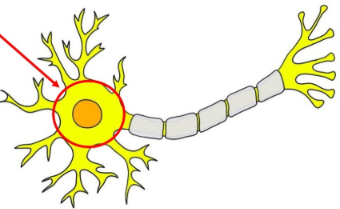
dendrites
part of the neuron
receives information from the cell body, shorter

axons
sends information away from the cell body, longer

nerve
multiple axons surrounded by various layers of connective tissue
these are bundled axons outside the brain and spina cord
plexus
bundle of nerves outside the brain and spinal cord
3 layers of connective tissue surrounding the nerves
endoneurium
perineurium
epineurium
endoneurium
a layer of connective tissue surrounding the nerves
surrounds each axon or nerve fiber

perineurium
a layer of connective tissue surrounding the nerves
heavier connective tissue that surrounds nerve fascicles
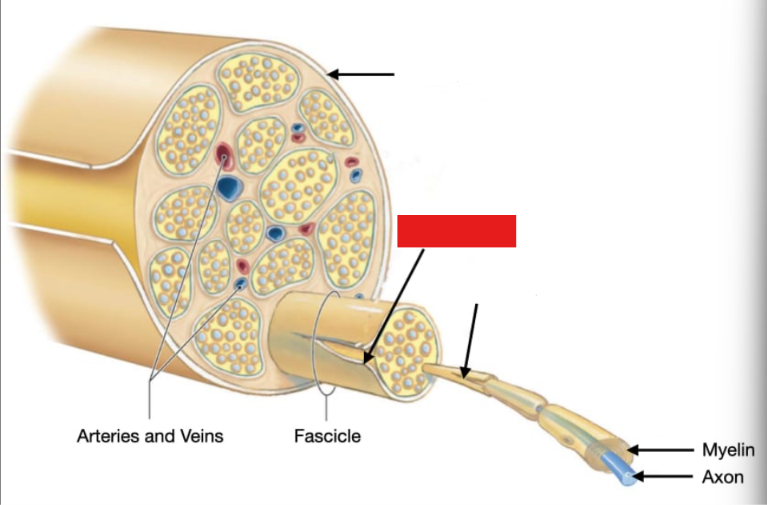
epineurium
a layer of connective tissue surrounding the nerves
surrounds the whole nerve, dense connective tissue that binds nerve fascicles together to form a nerve

multipolar neuron
many dendrites with one axon, such as interneurons and motor neurons

bipolar neuron
one dendrite and one axon, components of sensory organs

pseudo-unipolar neuron
single process from cell body and subdivides with an axon that splits into sensory receptors and CNS, most sensory neurons are this kind

glial cells of the central nervous system
astrocytes, ependymal cells, microglia, oligodendrocytes, myelin sheath, node of ranvier
astrocytes
provide structural support for neurons and blood vessels
form blood-brain barrier function and inhibit other signals from nearby neurons
ependymal cells
produce cerebrospinal fluid
microglia
immune defense cells that phagocytize
oligodendrocytes
provide insulation and cover axons, produce mlyelin sheath
myelin sheath
covers axons, not continuous
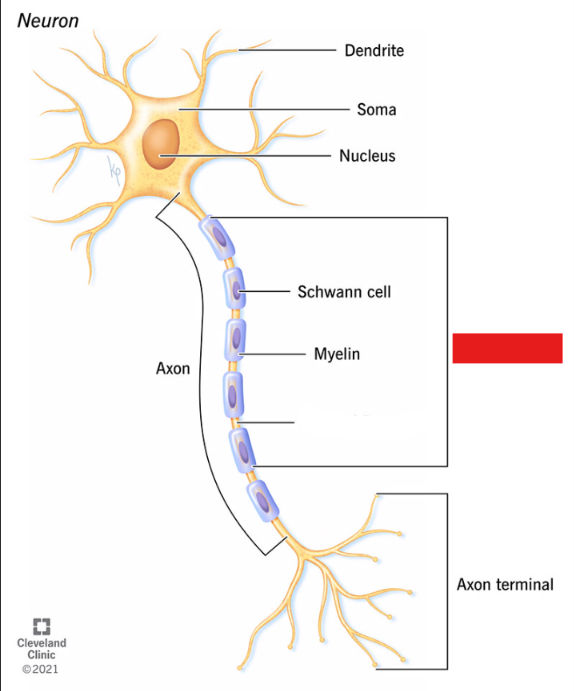
node of ranvier
gaps in myelin sheath

glial cells in the periphereal nervous system
schwann cells, satellite cells
schwann cells
enclose unmyelinated axons of PNS
has the neurilemma which is the outermost layer
satellite cells
surrounds cell bodies in sensory and autonomic ganglia, encompass work, support neurons, nutrients, protection from heavy metal
types of nervous tissue
gray matter, white matter
gray matter
group of neurons cell bodies and their dendrites, minimal myelin sheath
cns: cortex in brain surfaces, nuclei in deeper areas
pns: swelling cell bodies called ganglia
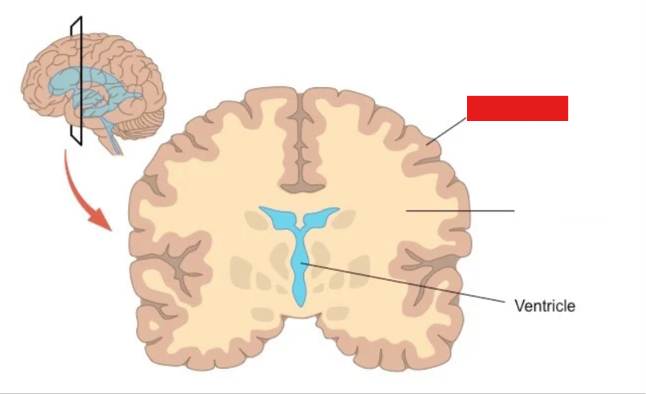
white matter
bundles of parallel axons with myelin sheath
cns: nerve tracts or conduction pathways propagating action potentials
pns: bundles of axon and connective tissue forming nerve bundles

action potential
electrical signals produced by the nervous system
membrane potential
measure of electrical properties by the nervous system
resting membrane potential
energy difference across the membrane of a resting cell
flow of ions across cell membrane
based on concentration and electrical charge
leak or nongated channels
flow of ions, always open, ion moves down their concentration gradient
gated channels
chemical, voltage-gated
sodium
outside the cell membrane, positive proteins
potassium
inside the cell membrane, negative proteins
nervous communication stages
stage 1: generation of action potential
stage 2: action potential conduction
stage 3: synapse
stage 1: generation of action potential
resting membrane potential
depolarization
repolarization
return to resting conditions
stage 2: action potential conduction
action potential is generated and propagated along the cell membrane through continuous conduction and saltatory conduction
continuous conduction
an action potential conduction
slow conduct of action potential in unmyelinated aons by activating local currents in adjacent parts of cell membrane
saltatory conduction
an action potential conduction
rapid transmission in myelinated axons through node of ranvier
stage 3: synapse
known as the neuromuscular junction, neuron to neuron, neuron to muscle, neuron to cells of effector organs, pass action potentials
3 major parts: presynaptic terminal, postsynaptic membrane, synaptic cleft
conditions to release neurotransmitters
reach action potential to presynaptic terminal
opening of calcium-gated channels
synaptic vescicles
contains neurotransmitters
na channels open
postsynaptic cleft is depolarized and action potential will result
k and ca channels open
postsynaptic cleft is more hyperpolarized, action potential is inhibited
types of neurotransmitters
cholinergenic, biogenic amines, amino acids, peptides
acetylcholine
a cholinergenic
excitatory at neuromuscular junctions (muscle contracts), can be both inhibitory and excitatory in autonomic nervous system
norepinephrine
a biogenic amine
excitatory effect at some cns and ans synapses
dopamine
a biogenic amine
excitatory at cns, inhibitory to ans, rush of adrenaline
serotonin
a biogenic amine
inhibitory effect at cns synapse
gamma-aminobutryic acid (GAMMA) and glycine
am amino acid
inhibitory effect at cns
endorphin
a peptide
blocks pain pathways, endogenous morphine
neuronal pathways
converging pathways, diverging pathways, local summation, temporal summation
converging pathways
a neuronal pathway
2+ neurons synapse with the same postsynaptic neuron (multipolar)
diverging pathways
a neuronal pathway
axon of one neuron divides and synapses with 1+ postsynaptic neuron (pseudo-unipolar)
spatial summation
a neuronal pathway
multiple local current potential synapse into 1 postsynaptic neuron
temporal summation
a neuronal pathway
local potential overlaps in time
major regions of brain
cerebrum, diancephalon, cerebellum, brain stem
cerebrum
largest, subdivided into left and right hemispheres
seperate hemispheres through longitudinal tissue
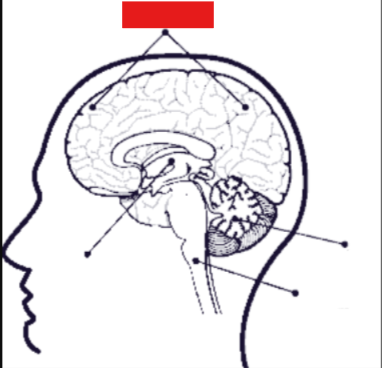
gyri
part of the cerebrum
folds on the surface that increseases surface area at cerebral cortex
sulci
part of the cerebrum
intervening grooves or tumors on the surface, small hills
corpus callosum
part of the cerebrum
white matter, connects the cerebral hemispheres
lobes of cerebral hemisphere
frontal love, parietal love, occipital love, temporal lobe
frontal lobe
controls voluntary and motor functions, motivation, aggression, mental action, mood, and olfactory

parietal lobe
main center for sensory info like touch, pain, temperature, and balance

central sulcus
part of the parietal lobe
separates the frontal and parietal lobes
insula
part of the parietal lobe
deep in the lateral fissure
perception of taste
independent
occipital lobe
receiving signal, responding visual inputs, not distinctly separate from other lobes

temporal lobe
olfactory and auditory

psychic cortext
part of the temporal lobe
anterior and inferior areas
lateral tissue
separates most of temporal lobe from other lobes
diencephalon
between cerebum and brain stem

thalamus
part of the diencephalon
largest, 2 large lateral parts, sensory input, passageway for cns to brainstem, autonomic response, influence mood, regulate all sensory inputs
epithalamus
part of the diencephalon
superior and inferior, emotional and visceral responses to odors, also influence pineal gland (puberty development)
hypothalamus
part of the diencephalon
controls body temperature, hunger, satiety, thirst mechanism, emotional response
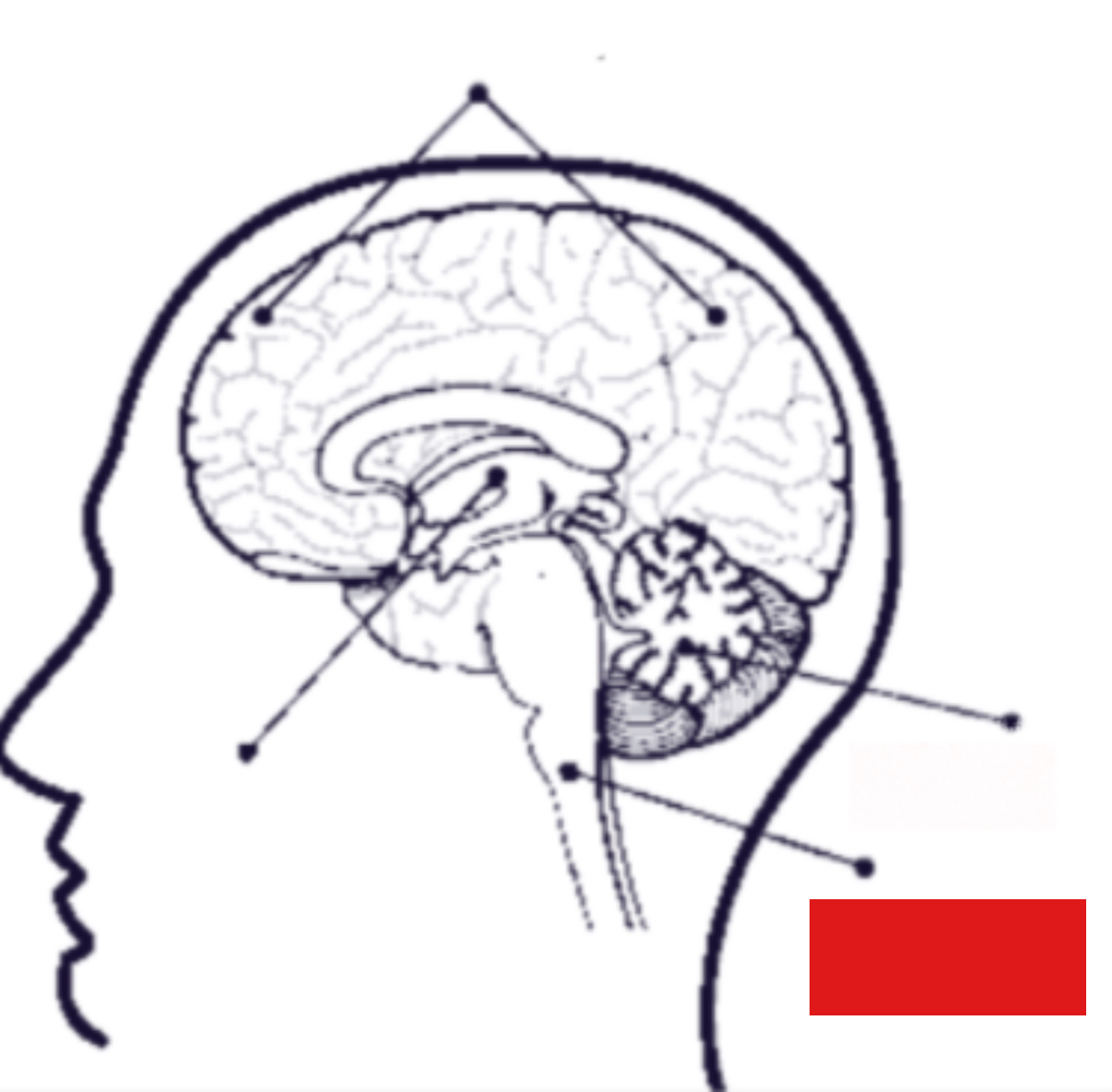
cerebellum
attached to brain stem by cerebral peduncles
maintain balance, muscle tone, and coordinating fine motor movements
communicate with propioceptive neurons (position sets)
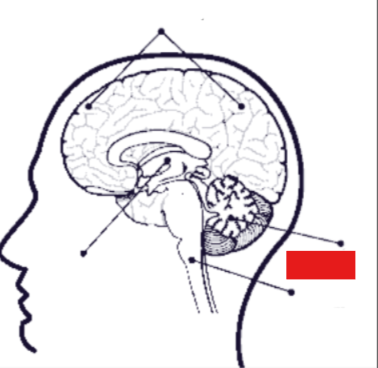
brain stem
connects brain and spinal cord
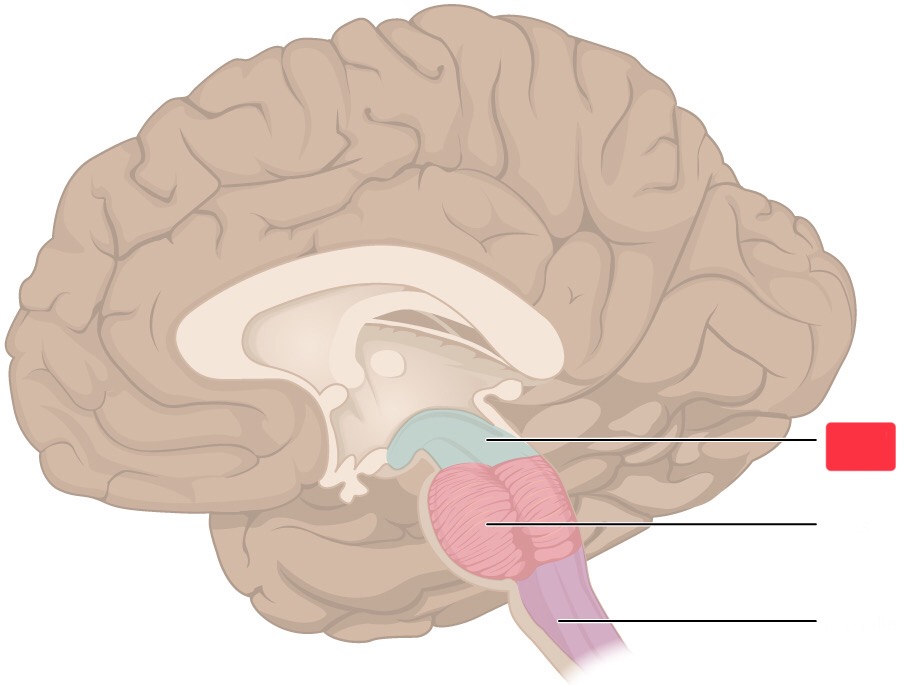
midbrain
part of the brain stem
above the pons, coordinate eye movement, pupil size, and lens shape
contains ascending tracts from spinal cord → cerebrum
descending tracts from cerebrum → spinal cord of cerebellum
substantia nigra
part of the brain stem (midbrain)
black nuclear mass that regulates general body movement
pons
part of the brain stem
bridging cerebrum and cerebellum, bridge between major brain regions and contain pathways responsible for breathing

medulla oblongata
part of the brain stem
important for 3 vital parts (heart, vessels, breathing)

pyramid decussation
descending nerve tracts that cross and go to somatic motor neurons of the spinal cord
the crossing of descending motor fibers in the medulla
foramen magnum
passageway of the medulla oblongata to the spinal cord
reticular formation in brainstem
group of nuclei scattered in brainstem
regulates cyclical motor function: respiration, walking, chewing
major part in reticular activating system: role in arousing and maintaining consciousness, regulates sleep-wake cycle
reticular activating system
maintaining consciousness and sleep-wake cycles
basal nuclei
group of functionally-related nuclei
responsible for planning, organizing, maintaining posture
ex. corpus striatum, substantia nigra
basal ganglia
founded deep, has 2 circulators (stimulatory, inhibitory)
stimulatory circuits
a basal ganglia
leads to voluntary muscle activity
inhibitory circuits
a basal ganglia
activate the opposite muscles, antagonist muscles, of the muscles
sensory input
travel to cerebrum, cerebellum, and provides info
allow cns to control motor and voluntary functions
brainstem and diencephalon helps maintain homeostasis
perception
conscious awareness of stimuli from sensory input
ascending tracts
transmit info from periphery to various parts of the brain
consists of: spinothalamic tract, dorsal column, sensory tract, spinocerebellar tract