DEP-2004 IRSC, EXAM 2
 Call Kai
 Learn
 Practice Test
 Spaced Repetition
 Match
 Flashcards
 Knowt Play
1/119

There's no tags or description
Looks like no tags are added yet.
120 Terms
The result of myelination on neural processing speed
better hand-eye coordination, progress in their attentional, memory, concept formation, and language skills

Activities that develop gross motor skills in early childhood
run across a room and jump, scramble over low jungle gyms, perform hair-raising stunts on practically any climbing object

The number of recommended hours of sleep by pediatricians in early childhood
11-13 hours of uninterrupted sleep
What is short sleep duration in early childhood associated with?
narcolepsy, insomnia, and nightmares
Cause and symptoms of anemia
A condition in which the blood is deficient in red blood cells, in hemoglobin, or in total volume; iron deficiency; fatigue, paleness, short of breath, chills
symbolic function
the first substage of the preoperational period, occurring between the ages of 2 - 4 years. During this substage, the young child gains the ability to mentally represent an object that is not present
Egocentrism
in Piaget's theory, the preoperational child's difficulty taking another's point of view

Animism
the belief that inanimate objects have lifelike qualities and are capable of action

conservation
the principle (which Piaget believed to be a part of concrete operational reasoning) that properties such as mass, volume, and number remain the same despite changes in the forms of objects

Centration (Piaget)
the act of focusing on one aspect of something. It is a key factor in the preoperational stage.
Zone of Proximal Development (Vygotsky)
the difference between what a child can do on his own and what can be accomplished with some assistance

Scaffolding (Vygotsky)
changing the level of support; over the course of a teaching session, a more-skilled person adjusts the amount of guidance to fit the child's current performance
Private Speech (Vygotsky)
Children's self-talk, which guides their thinking and action; eventually internalized as silent inner speech.
rehearsal
conscious repetition of information
Autism Spectrum Disorder (ASD)
autism is a brain dysfunction involving abnormalities in brain structure and neurotransmitters; a disorder that appears in childhood and is marked by significant deficiencies in communication and social interaction, and by rigidly fixated interests and repetitive behaviors

Emotion-coaching parents
monitor their children's emotions, view their children's negative emotions as opportunities for teaching, assist them in labeling emotions, and coach them in how to deal effectively with emotions
Emotion-dismissing parents
view their role as to deny, ignore, or change negative emotions
Freud: Id
raw, unorganized, inborn part of the personality that is present at birth (hunger, sex, aggression) -- pleasure principle
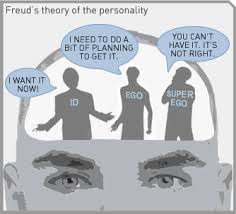
Freud: Ego
rational and reasonable -- reality principle

Freud: Superego
moral component of personality

empathy
the ability to understand and share the feelings of another
Piaget's stages of moral development
heteronomous morality and autonomous morality;
4 to 7 years of age, heteronomous morality - children think of justice and rules as unchangeable properties of the world, removed from the control of people.
10 years of age and older, autonomous morality - become aware that rules and laws are created by people, and in judging an action they consider the actor's intentions as well as the consequences.

Immanent justice (Piaget)
the concept that if a rule is broken, punishment will be meted out immediately
impact of parenting on moral development
relational quality, parental discipline, proactive strategies, and conversational dialogue
The gender most constrained by gender roles
female
Baumrind's Parenting Styles
authoritarian, authoritative, neglectful, indulgent
cultural differences in family orientation
cultures vary on effective parenting styles, i.e. a parenting style may be effective in Asia, where we'd see different results in the US.
Steurer, Applefield & Smith's study on cartoon violence
children who had seen the TV cartoon shows with violence kicked, choked, and pushed their playmates more than did the preschool children who watched nonviolent TV cartoon shows
The impact of Sesame Street on child development
produced positive outcomes in three areas: cognitive skills, learning about the world, and social reasoning and attitudes toward outgroups
how advances in the prefrontal cortex effect cognitive skills
allows planning, judgment, and decision making; early childhood is a period in which young children increasingly engage in symbolic thought
most common disability that students have
learning disabilities; dyslexia, dysgraphia, dyscalculia
ADHD (Attention-Deficit Hyperactivity Disorder)
disability in which children consistently show one or more of the following characteristics over a period of time: (1) inattention, (2) hyperactivity, and (3) impulsivity. Treated with Ritalin or Adderall.
Piaget's Concrete Operational Stage
the period of cognitive development between 7 and 12 years of age, which is characterized by the active, and appropriate, use of logic as long as reasoning can be applied to specific or concrete example
Seriation
the ability to order items along a quantitative dimension, such as length or weight

critical thinking
thinking reflectively and productively and evaluating the evidence
Sternberg's Triarchic Theory of Intelligence
states intelligence comes in 3 forms, analytical intelligence, creative, practical

Levels of Mental Retardation
intellectual disability, organic intellectual disability,cultural-familial intellectual disability
Most common level of retardation
down syndrome
whole language approach
An approach to reading instruction based on the idea that instruction should parallel children's natural language learning. Reading materials should be whole and meaningful.
phonics approach
The idea that reading instruction should teach the basic rules for translating written symbols into sounds.
effects of children receiving praise for mediocre performance
inflated self-esteem, have difficulty handling competition and criticism
self-efficacy
the belief that one can master a situation and produce favorable outcomes
Kohlberg's stages of moral development
6 identifiable developmental stages of moral reasoning which form the basis of ethical behavior, the pre-conventional (level 1) contains the first stage (obedience and punishment orientation and second stage (self-interest orientation)), the conventional (level 2) contains the third stage (interpersonal accord and conformity) and fourth stage (authority and social-order maintaining orientation) the post-convential (level 3) contains the 5th stage (social contract orientation) and 6th stage (universal ethical principles)

gender stereotyping
broad categories that reflect general impressions and beliefs about females and male
emotion that males report more than females
anger
coregulation
transitional stage in the control of behavior in which parents exercise general supervision and children exercise moment-to-moment self-regulation
characteristics of popular children
frequently nominated as a best friend and are rarely disliked by their peers
characteristics of neglected children
infrequently nominated as a best friend but are not disliked by their peers
best predictor of whether rejected children will engage in delinquent behavior or drop out of school later during adolescence
bullying
types of bullying most commonly experienced by boys and girls
boys: physical
girls: verbal
likely characteristics of teachers of students who live in poverty
social and emotional functioning not ignored
Self-image of most teens as found in the research
healthy
puberty
brain-neuroendocrine process occurring primarily in early adolescence that provides stimulation for the rapid physical changes that take place during this period of development
age difference in growth spurt for girls and boys
occurs approximately two years earlier for girls than for boys
Daughters of teenage mothers are at increased risk of
teenage childbearing
Mary Carskadon's research on teenagers and sleep findings
adolescents will sleep an average of 9 hours and 25 minutes a night
most commonly used illegal drug in the U.S. that increased in popularity from 2008 - 2011 in the adolescent population
marijuana
anorexia nervosa
an eating disorder in which an irrational fear of weight gain leads people to starve themselves
imaginary audience
adolescents' belief that others are as interested in them as they themselves are, as well as attention-getting behavior—attempts to be noticed, visible, and "on stage."
personal fable
type of thought common to adolescents in which young people believe themselves to be unique and protected from harm
Erikson's stage in adolescence
identity vs identity confusion
Marcia's Identity Statuses
identity diffusion, identity foreclosure, identity moratorium, identity achievement

narcissism
a self-centered and self-concerned approach toward others
National Longitudinal Study on Adolescent Health findings about the correlation between family dinners
those who did not eat dinner with a parent five or more days a week had dramatically higher rates of smoking, drinking, using marijuana, getting into fights, and initiating sexual activity
behavior associated with prolonged, intense parental conflict
movement out of the home, juvenile delinquency, school dropout, pregnancy and early marriage, membership in religious cults, and drug abuse
Cliques
small groups that range from 2 to about 12 individuals and average about 5 or 6 individuals; members are usually of the same sex and about the same age
Crowds
larger than cliques and less personal; usually members of a crowd based on reputation, and they may or may not spend much time together
reported by gay and lesbian youth as being the most difficult for them
coming out to their parents
percent of time adolescents spend on schoolwork as compared to their East Asian counterparts
60%
Focus of rites of passage
focus on the transition to adult status
main means of communication of adolescents with their friends
text
beginning in adolescence, females have ______ the rate of depression as males
twice
reason males are more likely to be successful in a suicide attempt than females
Males use more lethal means, such as guns
Where does the U.S place in childhood obesity rates
2nd Place
What is myelination
Nerve cells get covered and insulated with a layer of fat cells
What does myelination do?
It makes information travel faster and more efficiently through the nervous system
How big is the brain by age 6
About 95% of adult volume. Growth slows but comes in spurts, especially in the frontal lobes
Daily guidelines for young children to prevent obesity
5+ servings fruits/veggies, ≤2 hrs screen time, 1+ hr physical activity, 0 sugary drinks.
What is Iron Deficiency Anemia
body doesn't have enough iron to produce hemoglobin
How many preschoolers are malnourished?
11 million.
How much sleep do young children need?
10 to 13 hours each night, without interruption.
3 sleep problems
Narcolepsy, insomnia, nightmares
What is narcolepsy?
causes extreme daytime sleepiness and sudden "sleep attacks"
What are sleep problems linked to?
Attention problems, worse school readiness, being overweight, ADHD.
How does screen time relate to sleep, ages 2-5?
More daily screen time is associated with less sleep time
Other negative outcomes of screen time
Less play/peer time, less activity, more obesity, lower cognitive development, poor sleep habits
What reduces kids’ screen time?
Parents cutting their own screen time, plus closer parental monitoring
ADHD (Attention-Deficit Hyperactivity Disorder)
disability in which children consistently show one or more of the following characteristics over a period of time: (1) inattention, (2) hyperactivity, and (3) impulsivity. Treated with Ritalin or Adderall.
Most common cause of death in young children?
Accidents, homicide, congenital malformations, cancer, deformations
Effect of poverty?
Higher rates of accidents, death, and asthma.
What is Preoperational stage?
occurring from ages 2 to 7, where children begin to think symbolically and engage in imaginative play
What is the Symbolic function substage
The ability to mentally represent an object that isn’t present. Ages ~2-4
What is Intuitive thought substage
Primitive reasoning
Egocentrism
Inability to distinguish your own perspective from someone else’s
Animism
Belief that inanimate objects have lifelike qualities and can act
Centration
Focusing on one characteristic to the exclusion of all others
Conservation
Awareness that changing an object’s appearance doesn’t change its basic properties.
Zone of Proximal Development (ZPD)
Tasks too difficult to do alone but learnable with guidance
Scaffolding
Changing the level of support. As competence increases, less guidance is given.
Private speech
Using language to plan, guide, and monitor one’s own behavior. It becomes inner speech and plays a positive role.