skull
 Call Kai
 Learn
 Practice Test
 Spaced Repetition
 Match
 Flashcards
 Knowt Play
1/49

There's no tags or description
Looks like no tags are added yet.
50 Terms

skull

facial bones

cranial cavity


suture bones
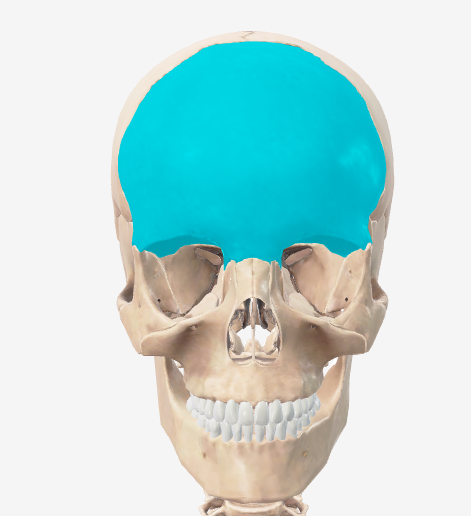
frontal bone

parietal bone

temporal bone

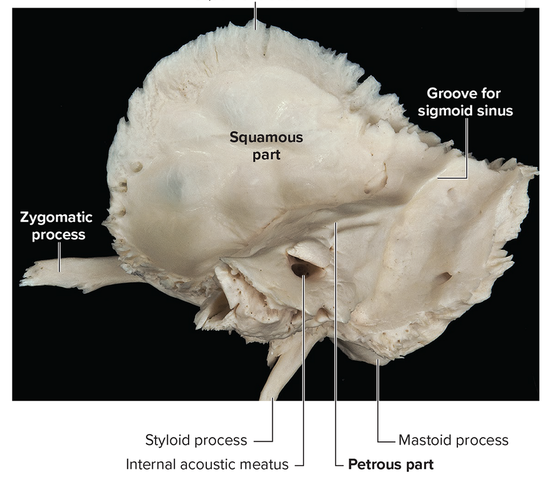
petrous region
thick region inside
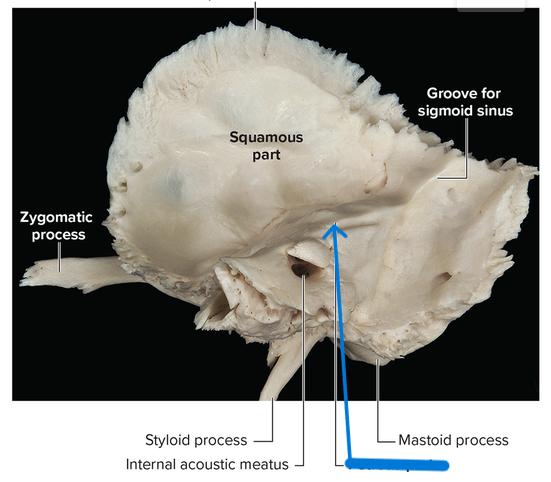

internal auditory canal


mastoid process
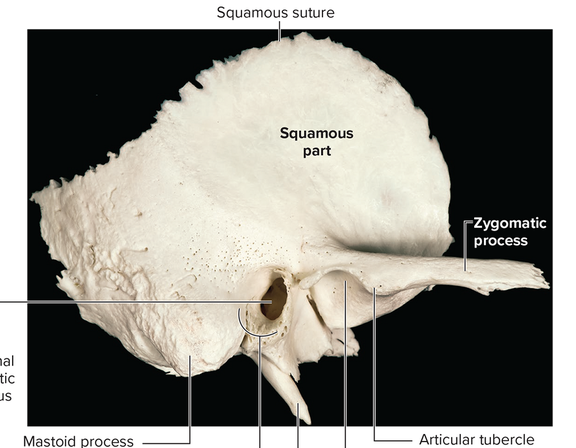

styloid process
long prong

stylomastoid foramen

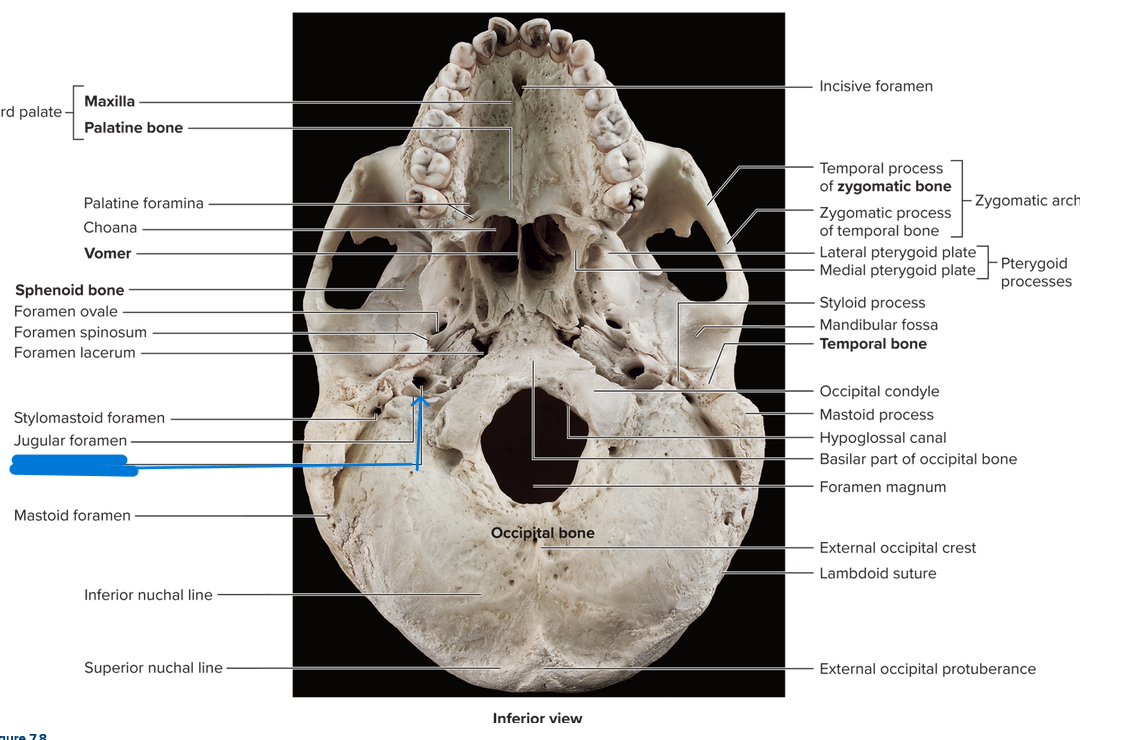
carotid canal


squamous region

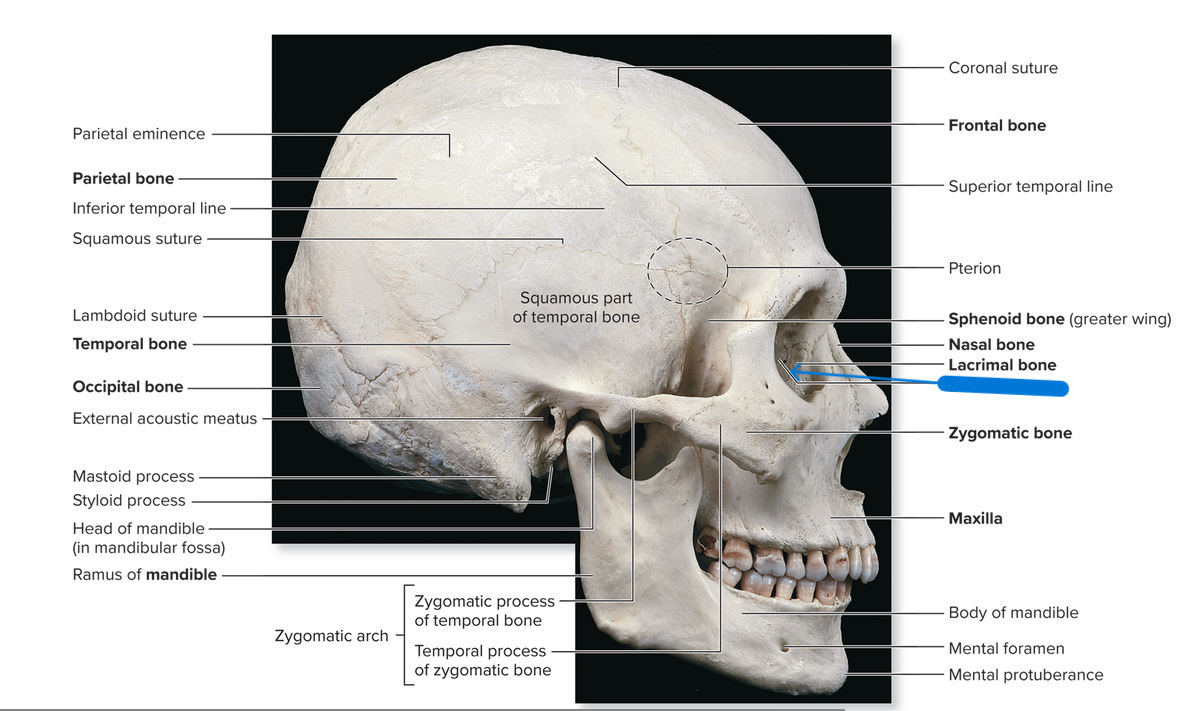
zygomatic process

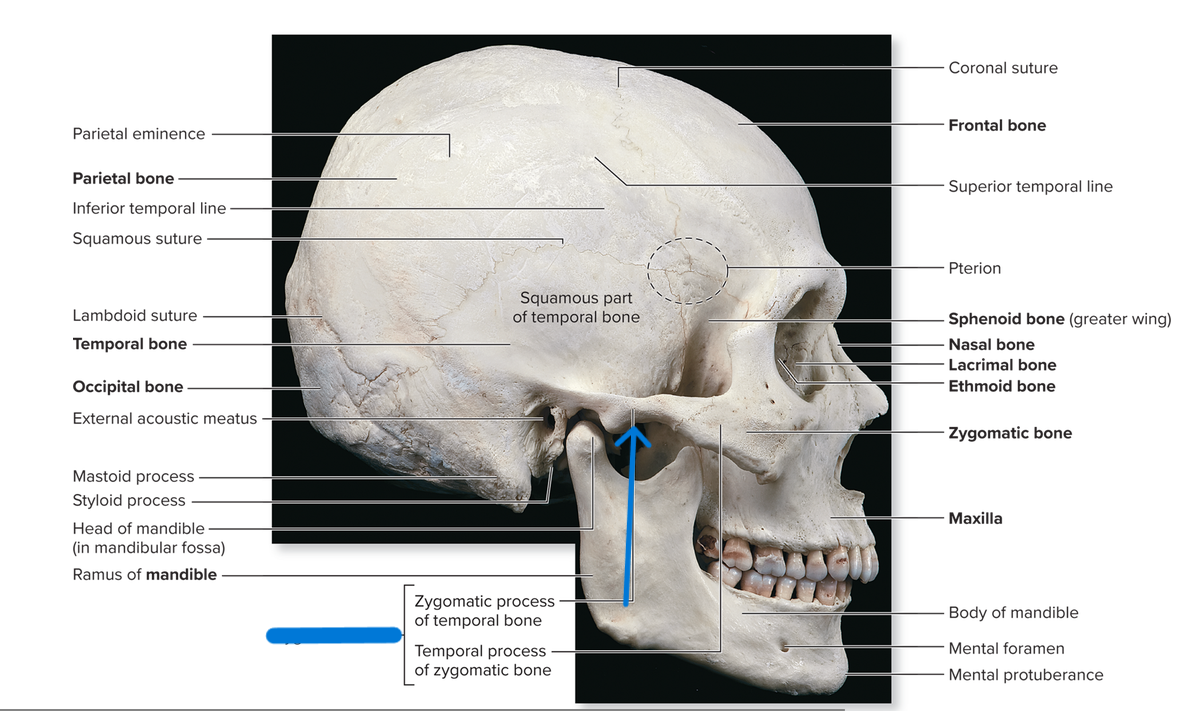
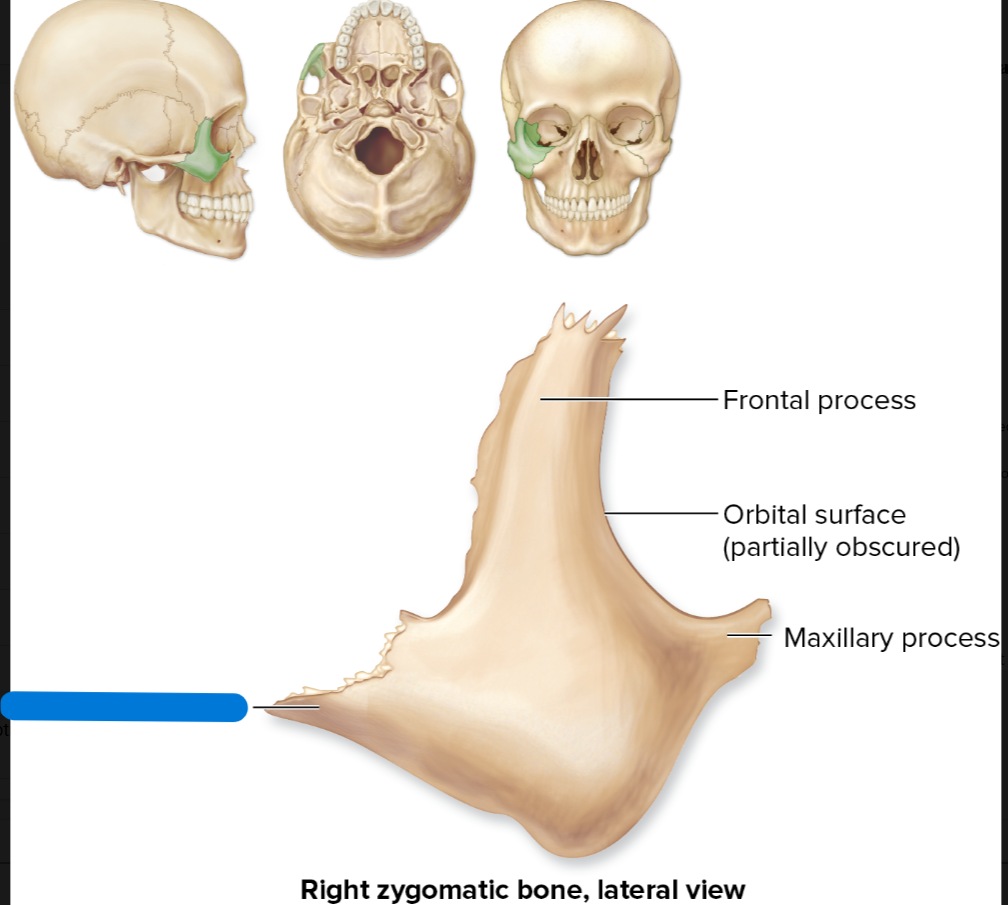
zygomatic arch

mandibular fossa


tympanic region
hole for ear

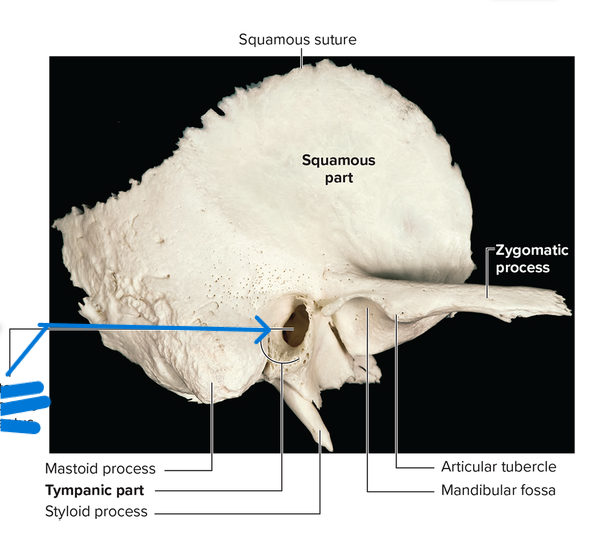
external auditory canal


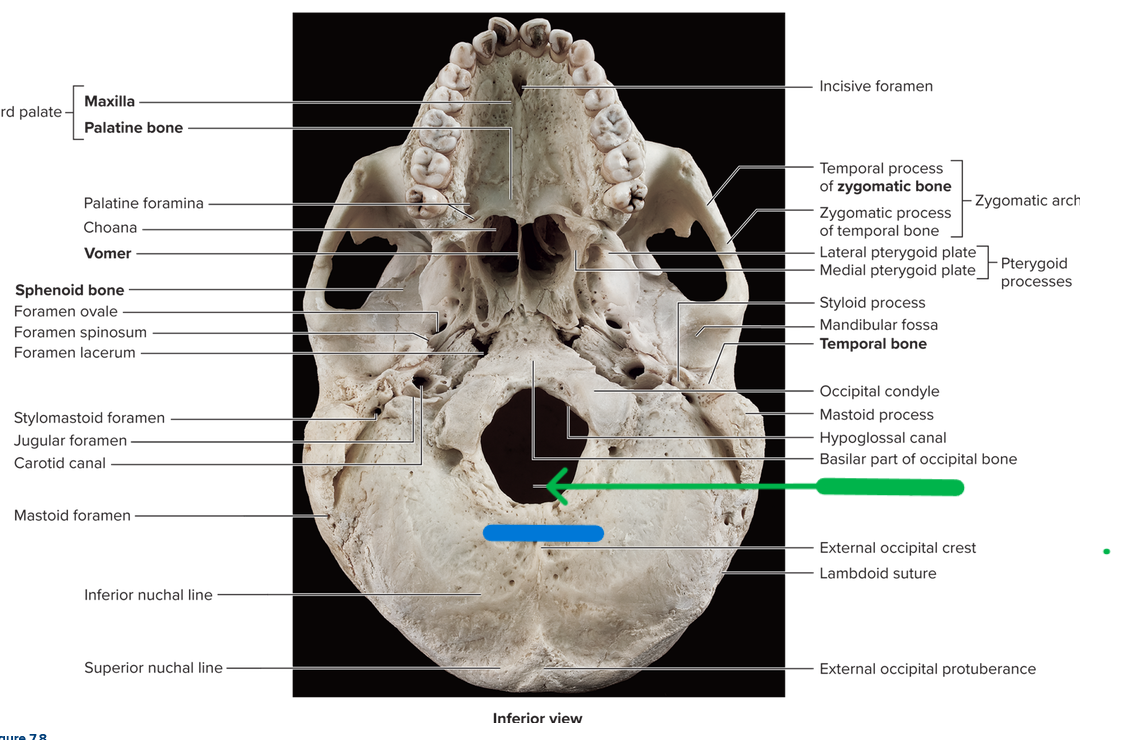
blue= occipital bone
green= foramen magnum

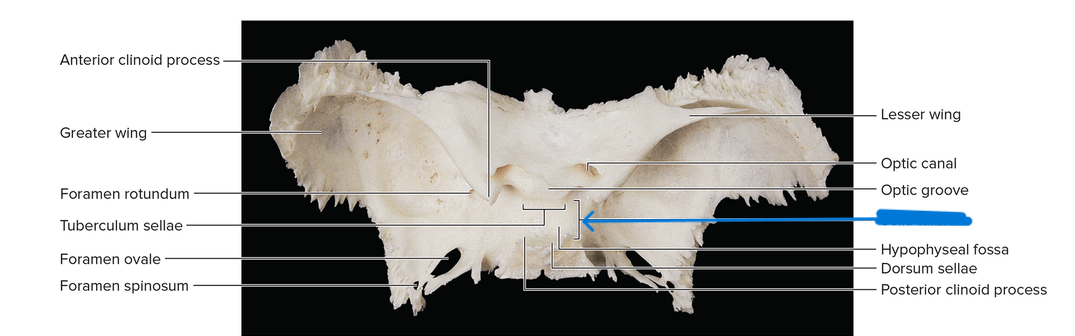
sphenoid bone


body of sphenoid bone


greater wing


lesser wing


sella turcica

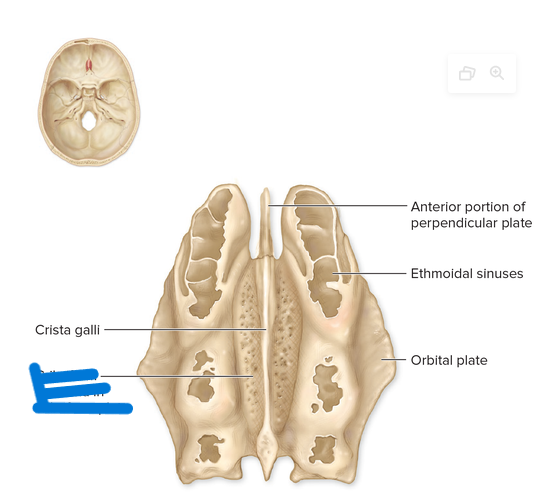
ethmoid bone

cribriform plate


ethmoid bone


cribriform foramina

pink= anterior cranial fossa
green= middle cranial fossa
purple= posterior cranial fossa
red= cribriform plate


temporal process of zygomatic bone

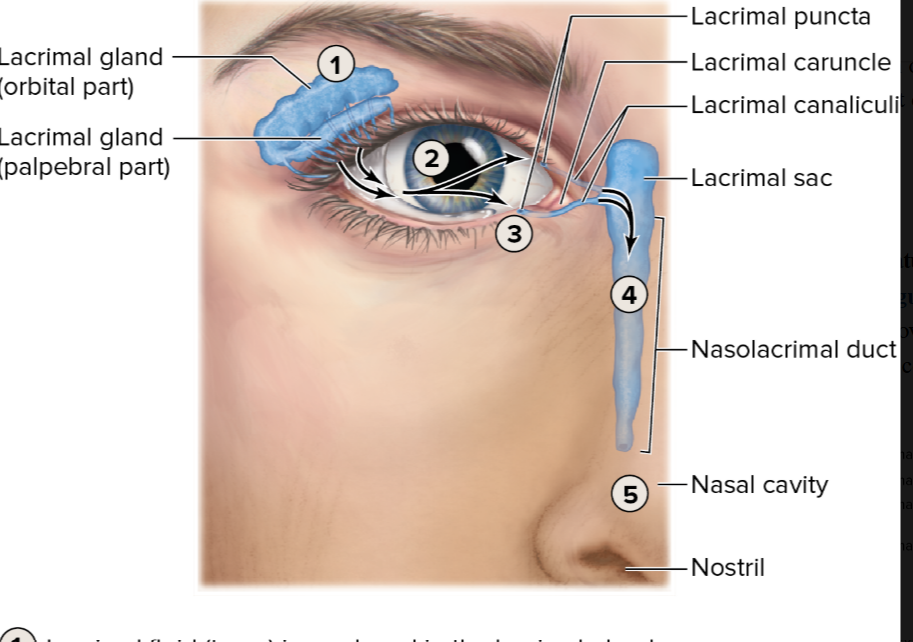
lacrimal bone
next to eye/nose


lacrimal groove
The groove itself is a depression in the bone that helps form the space for the lacrimal sac.

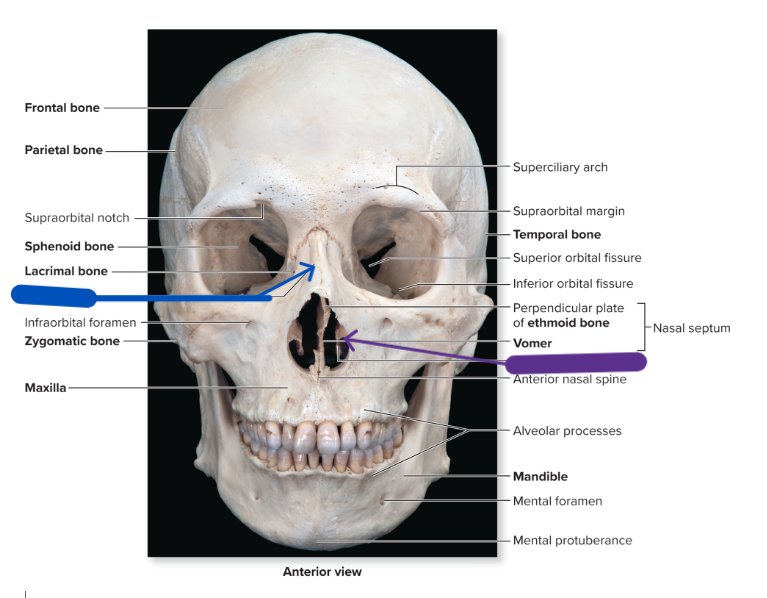
nasal bones
blue= 1st set on nose
purple= 2nd set inside nose and is flat
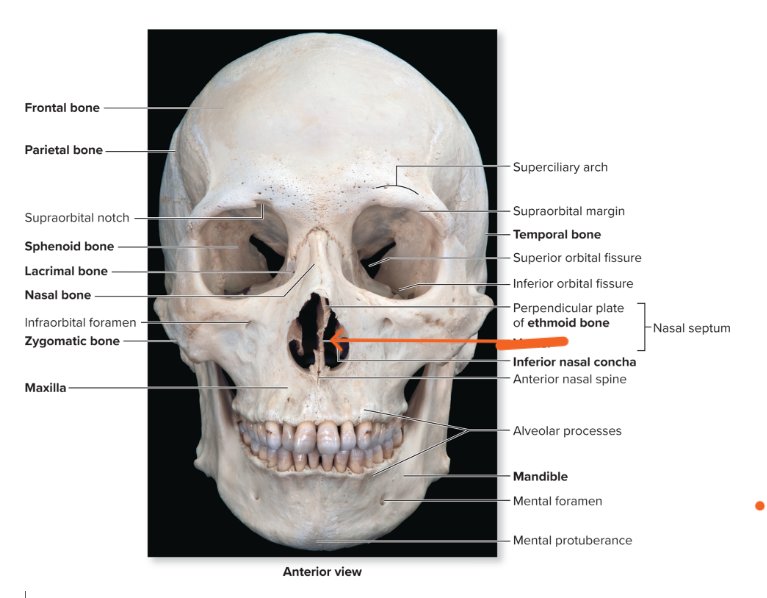
vomer
bottom of nose


palatine bone


blue= maxilla
purple= mandible


temporomandibular joint

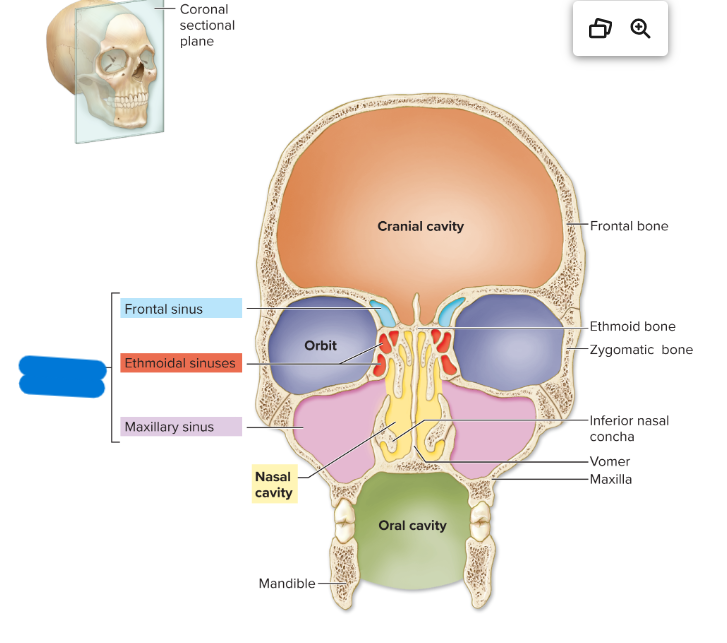
paranasal sinuses


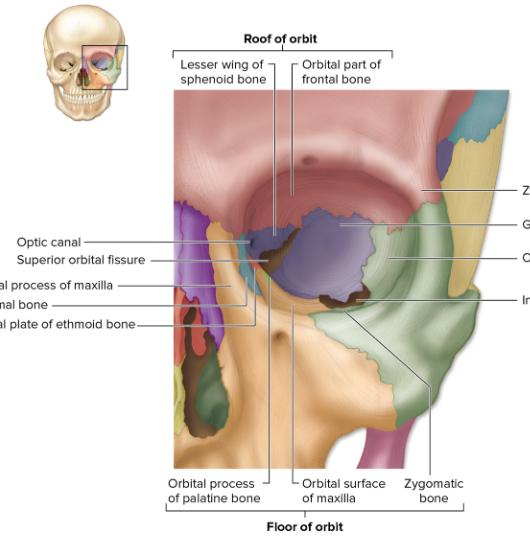
orbital complex

auditory ossicles


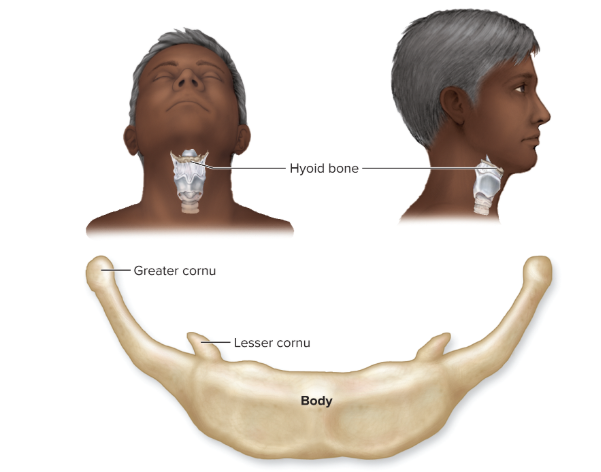
hyoid bone
What passes through the holes in the cribriform plate?
Olfactory nerve fibers (CN I).
What passes through the foramen magnum?
The spinal cord (continuing as the medulla oblongata), vertebral arteries, and spinal roots of the accessory nerves (CN XI).
Which two bones join to form the zygomatic arch?
The zygomatic bone and temporal bone.
Which two bones articulate to form the jaw joint?
The mandible and temporal bone (temporomandibular joint, or TMJ).
Which bone contains the middle ear cavity and inner ear?
The temporal bone.
Where does the eardrum sit?
At the boundary between the external acoustic meatus and the middle ear.
What sits in the sella turcica?
The pituitary gland (hypophysis).