Lecture 10 - Public health in the context of chronic disease
 Call Kai
 Learn
 Practice Test
 Spaced Repetition
 Match
 Flashcards
 Knowt Play
1/77

There's no tags or description
Looks like no tags are added yet.
78 Terms
What is chronic disease?
Conditions that persist for months, years, or a lifetime; often progress slowly; require ongoing management; and can reduce quality of life and increase disability
Unlike many infectious diseases, chronic diseases are rarely cured and are often managed over the life course
chronic disease example
• Examples: Cardiovascular disease, diabetes, cancer, chronic respiratory disease
Chronic disease in historical context

Chronic disease in Canada
• 3 / 5 people 20+ years have a chronic disease
• 4 / 5 people 20+ years are at risk for chronic disease
• Chronic disease in ON accounts for 79% of deaths (vs. 68% worldwide)
• Of ~230,000 deaths due to chronic disease in Canada annually, 27% affected individuals < 70 years
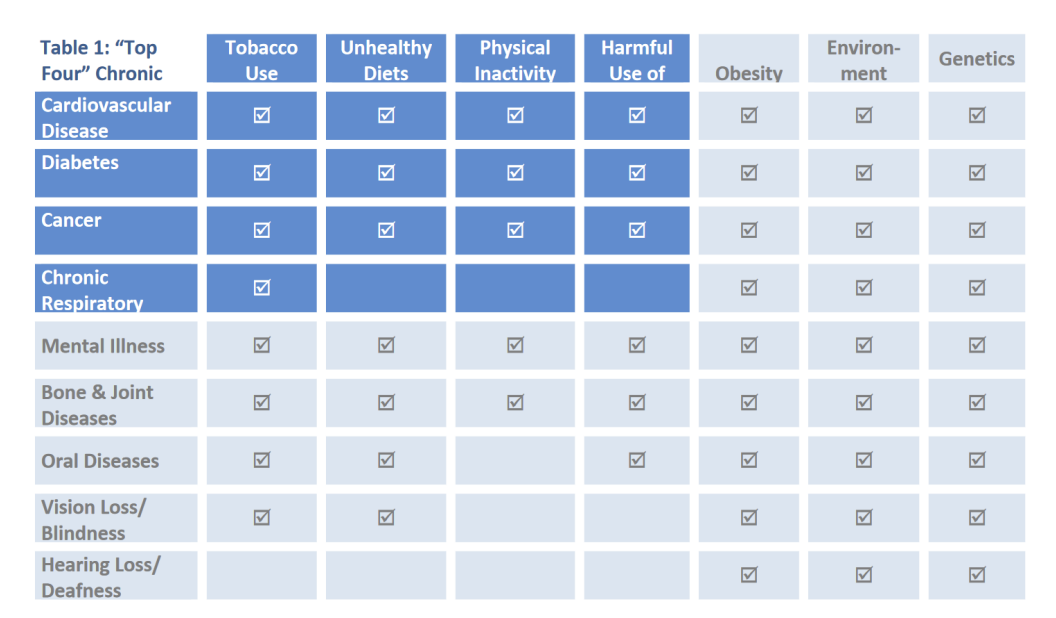
Common chronic diseases
Cardiovascular disease description
• Atherosclerosis is part of CVD development; cholesterol and fat in blood contribute to plaque formation
• Heart attack and stroke occur when plaque ruptures and clots are formed and can be released to heart or brain
Cardiovascular disease burden in canada
• Accounts for 22% of deaths in females, 26% in males; $21B in mortality costs, physician/hospital services, lost productivity
Challenge: Prevention using statins
Statins lower LDL cholesterol and reduce the risk of heart attacks and strokes.
Primary prevention: Prevent cardiovascular disease in at-risk individuals.
Secondary prevention: Prevent recurrence in individuals with existing cardiovascular disease.
Challenges include side effects, medication adherence, cost, and access.
Statins should complement lifestyle changes (healthy diet, exercise, smoking cessation).
Diabetes description
• Is a deficiency in ability to metabolize sugar (done by insulin)
• Type 1: failure of insulin-producing cells in pancreas
• Type 2: impaired insulin production and resistance to action
Diabetes burden in canada
• 3.7M Canadians have diabetes; 41,500 deaths/year; $12B in treating diabetes and its complications
Diabetes challange
20% of Canadians with diabetes are undiagnosed (= 1 million Canadians)
cancer description
• Not one, but 100+ diseases that differ in terms of risk factors, cellular appearance, and treatment response
• Commonality: occur when cell activities are transformed and cell growth is out of control (usually due to DNA mutation)
cancer burden in canada
• 40% of women, 45% of men develop cancer in lifetime; 1 / 4 Canadians die of cancer; $290B economic burden
cancer challenge
Prevention Using Regulation
Regulate carcinogens (e.g., chemicals, pesticides, and workplace exposures).
Enforce tobacco control measures, including advertising restrictions and smoking bans.
Require warning labels on products linked to cancer.
Regulate alcohol, processed foods, and environmental pollutants to reduce cancer risk.
Balance public health protection with business interests.
Chronic respiratory disease description
• Includes diverse diseases such as chronic obstructive pulmonary disease (COPD), asthma, cystic fibrosis
• COPD causes airflow blockage resulting in shortness of breath
Chronic respiratory disease burden in canada
• 4% of Canadians have COPD; $6B in health care costs in Canada related to COPD, asthma, and cystic fibrosis
Chronic respiratory disease challenge
Prevention in the face of Big Business
Tobacco companies promote products that increase the risk of COPD and other respiratory diseases.
Industrial pollution and air pollution contribute to respiratory illness.
Corporate lobbying and marketing can undermine public health regulations.
Prevention requires stronger tobacco control, reduced emissions, public education, and regulation of harmful products.
Chronic respiratory disease
Causes of chronic disease are more difficult to determine than causes of infectious disease:
1. Not caused by single pathogen
2. Caused by multiple factors
3. Develop over long time
Chronic respiratory disease-Randomized controlled trials
Considerations
- Ethical concerns
Chronic respiratory disease- Observational epidemiologic studies
Considerations
- Only observe what happens naturally
Chronic respiratory disease-Animal models
Considerations
- Control conditions
- Study effects across lifespan
- Biological processes may or may not differ
- May not be susceptible
Chronic respiratory disease - Laboratory cultures
Considerations
- Oversimplified conditions
Tobacco use
• Most common in young adults aged 20-34 years (21-23%)
• Responsible for 85% of lung cancer cases
• Deaths from COPD due to tobacco smoke will increase by 30% in next 10 years
• In Ontario, responsible for $7.5B in direct and indirect health care costs
Unhealthy diet
• Processed foods are cheap and available
• Salt and fat are major contributors to cardiovascular disease risk
• Poor diet responsible for 30-40% of cancers
• In Ontario, inadequate fruit and vegetable consumption (57.4% of those 12+ years) costs $2.9B in direct health care costs
Physical inactivity
• Most individuals spend 8.6 hours per day (62% of waking hours) in sedentary behaviours
• Increases risk of 25 chronic conditions (including cardiovascular disease, diabetes, cancer)
• In Canada, responsible for $6.8B in health care costs
Harmful use of alcohol
• Consumption highest in high income countries
• Third largest risk factor for chronic disease burden
• Worldwide, responsible for 3.3M deaths / year (cardiovascular disease, cancer, cirrhosis)
Beyond individual choice
• Why don’t people always choose healthy behaviours?
Environmental factors
Social factors
Healthy choices are easier in healthy environments
Environmental factors
• Environmental factors: Food availability, neighbourhood design, transportation systems, advertising
Social factors
• Social factors: Income, education, working conditions, housing
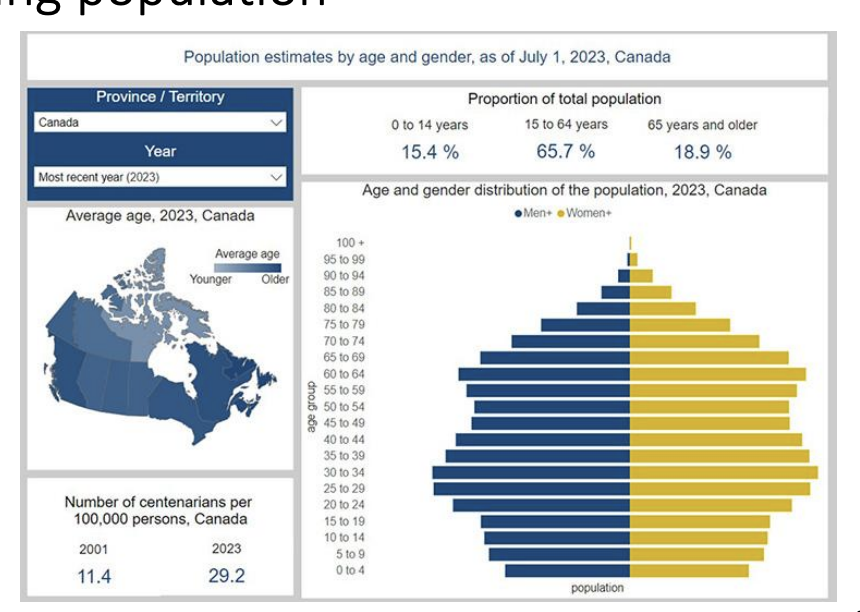
The aging population
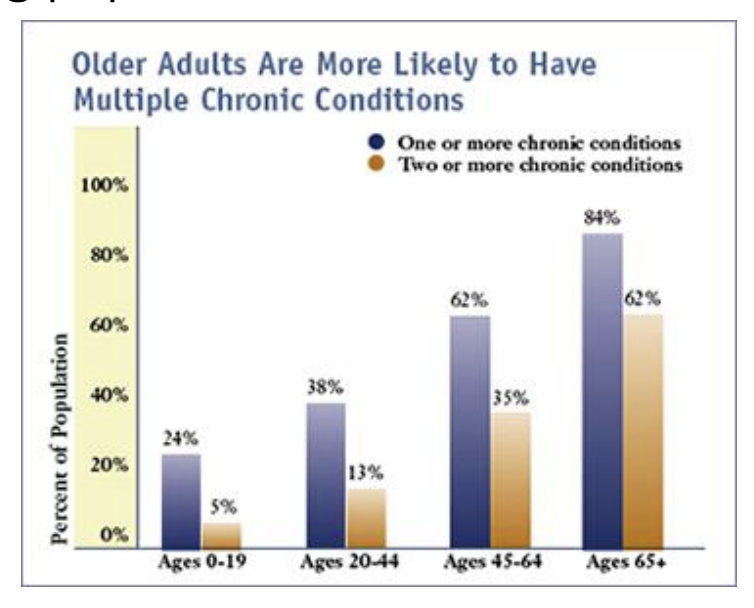
The aging population and chronic disease
Preventing chronic disease: Summary
• Top risk factors for chronic disease are modifiable
• Lifestyle behaviours are influenced by underlying social conditions
• Vulnerable populations bear the greatest burden
• Risk factors are shared by different diseases and are common in the population: = “hot spots” for prevention
• Health care dollars and political action tend to focus on treatment
• Requires cooperation from multiple disciplines
Public health success story in chronic disease
• The North Karelia Project (Finland): In the early 1970s, Finland had one of the highest rates of cardiovascular disease in the world
• Public health worked with farmers and food producers, reduced fat and salt in foods, promoted smoking cessation, changed food marketing, mobilized schools, communities, and local organizations
The North Karelia Project (Finland): impact
Smoking rates, cholesterol, blood pressure, and cardiovascular mortality fell substantially
Chronic disease prevention often requires changing environments and policies, not just individual behavior
Genetic diseases
• Caused by change or mutation in DNA sequence
Single-gene disorders:
• Single-gene disorders: Mutation affects just one specific gene, including autosomal dominant disorders (e.g., Huntington’s), autosomal recessive (e.g., sickle cell disease), and X-linked disorders (e.g., Duchenne muscular dystrophy)
Chromosomal disorders:
• Chromosomal disorders: Has a missing, extra, or damaged chromosome instead of the standard set (e.g., Down syndrome)
Complex (multifactorial) disorders
• Complex (multifactorial) disorders: Occur due to a mix of genetic and environmental or lifestyle factors (e.g., cancer)
Genetic disease as a public health issue: Population impact
• Population impact: Although individually rare, genetic diseases affect millions of people worldwide
Genetic disease as a public health issue: Public health concerns
• Public health concerns: Significant cause of childhood illness and disability, lifelong health needs, high treatment and support cost, impact on families and caregivers
Genetic disease as a public health issue: Public health perspective
• Public health perspective: Improve early detection, support affected individuals, and reduce health inequities
Congenital anomalies
• Abnormalities of structure, function, or metabolism in one or more parts of the body
• Have the potential to seriously affect health, development, or function
• Can be present at conception, but mostly occur in embryonic or early fetal period (up to 7-16 weeks)
• May not be diagnosed until months or years after birth
Congenital anomalies: Significance
• Occur in 3% of live births and 8-10% of stillbirths
• Account for 23.2% of infant deaths
• Are second only to prematurity as leading cause of infant death (1.1 and 1.5 deaths per 1,000 live births)
• Are associated with enormous costs to health care system
Environmental teratogens:Rubella
impact and Public health measure
Impact: Deafness
Public health measure: Immunization
Environmental teratogens: Toxoplasmosis
impact and Public health measure
Impact: Neurological damage
Public health measure: Education
Environmental teratogens: Syphilis
impact and Public health measure
Impact: Blindness, intellectual disability
Public health measure: Screening
Environmental teratogens: Chemicals (e.g., mercury)
impact and Public health measure
Impact:Neurological damage
Public health measure: Regulation
Environmental teratogens: Medications (e.g., thalidomide)
impact and Public health measure
Impact: Limb deformities
Public health measure: Regulation, education
Screening programs for genetic diseases
Public health mandate: Prevent death and disability from genetic disease
Screening programs for genetic diseases options
• Screening before pregnancy
• Screening during pregnancy
• Newborn screening
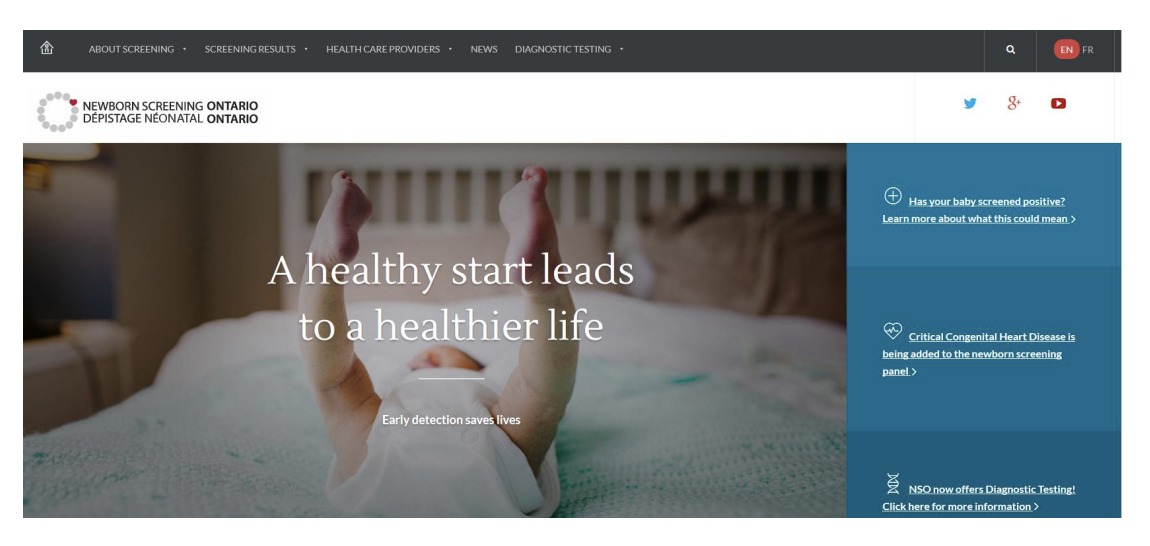
Newborn screening in Ontario
Newborn screening: Considerations
1. Screening tests can search for more than 20 metabolic disorders using one dried blood spot
2. Resources are needed to follow up on abnormal test results
3. There is sometimes uncertainty over who should administer treatment following positive test result
4. There is no treatment for some conditions
Newborn screening in Ontario
• Tests shortly after birth for 29 rare, treatable diseases:
1. Metabolic diseases
2. Endocrine diseases
3. Sickle cell disease
4. Cystic fibrosis
5. Severe combined immune deficiency
Public health success story in genetic disease
• Phenylketonuria (PKU) is a rare genetic disorder in which individuals cannot properly metabolize phenylalanine, an amino acid found in many foods; before newborn screening, babies appeared healthy at birth, but symptoms developed months later and severe intellectual disability often resulted
• Researchers discovered the disease could largely be prevented through a special diet if identified early enough; a simple blood test performed shortly after birth could identify affected infants before symptoms developed
Public health success story in genetic disease impact
• Impact: Children who would previously have developed severe disability could grow up with largely normal cognitive development if treatment began early
Early detection and intervention can dramatically alter outcomes
Genomic medicine
• Also called personalized medicine or precision medicine
• Studies how genes act in the body and interact with the environment
Genomic medicine Public health implications:
• More frequent screening
• More appropriate drugs
What are some potential advantages and disadvantages of genomic medicine as a component of public health?
Advantages:
Early detection: Identifies genetic risks before symptoms develop.
Personalized prevention: Allows targeted screening and prevention based on genetic risk.
Better treatment: Helps select treatments that are most effective for individuals.
Population health: Identifies groups at higher risk for certain diseases.
Disadvantages:
Privacy concerns: Risk of misuse or discrimination based on genetic information.
High costs: Genetic testing may be expensive and not accessible to everyone.
Health inequities: Benefits may disproportionately favour wealthier populations.
Psychological impact: Learning about genetic risks can cause anxiety or stress.
Limited predictability: Having a genetic risk does not guarantee someone will develop a disease.
Ethical issues in public health genetics
• Privacy: Who should have access to genetic information?
• Informed consent: Do individuals fully understand the implications of testing?
• Discrimination: Could people face discrimination from employers or insurers?
• Equity: Who benefits from advances in genetic technologies?
Chronic and genetic disease present a particular burden to public health:
1. Long-lasting
2. Significant personal burden
3. Clusters of common but complex risk factors
Prevention efforts must target determinants, identify the presence of disease early, and be open to innovative approaches
Major categories of mental illness
• Anxiety disorders:
• Mood disorders:
• Psychotic disorders:
• Personality disorders:
• Eating disorder:
• Anxiety disorders:
Characterized by excessive fear or anxiety (e.g., generalized anxiety disorder, panic disorder)
Mood disorders:
Characterized by persistent feelings of sadness or fluctuations in mood (e.g., depression, bipolar disorder)
Psychotic disorders:
Cause distorted thinking and perception (e.g., schizophrenia)
Personality disorders:
Involve enduring patterns of behaviour and inner experiences that are different than societal expectations (e.g., borderline personality disorder)
Eating disorder:
Involve unhealthy eating behaviours and preoccupations with body weight (e.g., anorexia nervosa)
Prevalence of mental illness

Causes of mental illness

Burden of mental illness - Individual-level:
• Emotional distress
• Impacts on quality of life
• Barriers to education and employment
Burden of mental illness - Population-level:
• Increased healthcare costs
• Reduced workforce participation
• Greater social service demands
• Increased disability
Connection between physical and mental health
• People with mental illness experience higher rates of cardiovascular disease, diabetes, and premature mortality, and have barriers accessing health care
• People with chronic physical conditions are at elevated risk of mental illness due to stressors associated with managing chronic condition
Mental health across the life course

primary Prevention of mental illness
Parenting support programs, anti-bullying initiatives, school mental health promotion, income support policies
secondary Prevention of mental illness
Mental health screening, early intervention services, crisis response programs
tertiary Prevention of mental illness
Treatment programs, rehabilitation services, community support programs
Role of public health in mental health
• Monitoring and surveillance: Track mental health trends, identify vulnerable populations
• Health promotion: Build resilience, promote mental wellbeing, reduce stigma
• Prevention: Address risk factors before illness develops, support health schools and workplaces
• Policy development: Advocate for mental health equity, improve housing, education, and social supports
• Emergency response: Address mental health impacts of disasters, pandemics, and crises
Public health success story in mental health
• For many years, homelessness and severe mental illness were treated separately; people experiencing schizophrenia, bipolar disorder, severe depression, or substance use disorders were often expected to get treatment first, become "stable,“ and then qualify for housing
• Housing First: Provide stable housing first, without requiring treatment or sobriety, and then offer mental health and social supports
Public health success story in mental health impact
• Impact: Most Housing First participants achieved stable housing; quality of life and community functioning improved, use of crisis and inpatient services declined
Health and social policy are deeply connected