BIOL1190: Lab 7 - Cardiovascular System II and the Lymphatic System
 Call Kai
 Learn
 Practice Test
 Spaced Repetition
 Match
 Flashcards
 Knowt Play
1/124

There's no tags or description
Looks like no tags are added yet.
125 Terms
what is the major function of the cardiovascular system?
transportation
how does the cardiovascular system function in transportation?
oxygen is picked up and carbon dioxide is eliminated as the blood passes through the pulmonary circuit
what does the systemic circuit do?
supplies oxygenated blood to all body tissues
what does the cardiovascular system transport in addition to oxygen and carbon dioxide?
heat, hormones, WBCs, nutrients, and waste products
how does the cardiovascular system transport nutrients?
transports nutrients from the gastrointestinal (GI) tract to all body cells
how does the cardiovascular system transport hormones?
transports hormones from the endocrine glands to specific target tissues
how does the cardiovascular system transport waste products?
transports waste products from various organs to kidneys and other organs
how does the cardiovascular system transport heat?
transports heat from muscles and various organs to skin and other organs
how does the cardiovascular system transport WBCs?
transports WBCs from lymphatic tissues, etc to site of infection/inflammation
which ventricle has thicker walls and why might this difference exist?
the left ventricle has thicker walls than the right ventricle because it pumps blood throughout the body. it participates in systemic circulation, which requires higher pressure to move blood over greater distances. in contrast, the right ventricle is part of pulmonary circulation, which only needs to pump blood a short distance to the lungs and therefore requires less pressure.
what do arteries do?
carry blood away from the heart
what happens as blood leaves the ventricles?
it enters large arteries, moving into successively smaller arteries, which branch into smaller arterioles that further divide into capillaries
what happens in the capillary beds?
the blood vessel walls are very thin, allowing gases, nutrients, and wastes to diffuse down their respective concentration gradients, moving between the blood and the interstitial fluid in the surrounding tissue
where does blood from the capillary beds drain into?
the venules, which merge to form successively larger veins
what do veins return?
blood to the heart
why is blood under high pressure when leaving the ventricles?
due to the force generated by cardiac muscle contraction
what do high pressure in the vessels of the arterial system allow?
blood to move through the arteries towards the capillaries
what happens as blood flows further from the heart?
the pressure in the vessels decreases
what happens to pressure after passing through the capillary bed?
pressure in the venules and veins is so low that the blood cannot rise against gravity
what are the three mechanisms that help blood flow back towards the heart in the venous system?
- valves
- skeletal muscle pump
- respiratory pump
how do valves help with pumping blood back towards the heart?
in the limbs, larger veins have folds of the inner layer, called valves, which permit blood to flow in only one direction
how do skeletal muscle pumps help with pumping blood back towards the heart?
compression of the blood vessels by skeletal muscle contraction squeezes the blood towards the heart
how do respiratory pumps help with pumping blood back towards the heart?
- during inhalation, contraction of the diaphragm compresses abdominal veins, causing blood to move into the decompressed thoracic veins
- during exhalation, the diaphragm relaxes, and venous valves prevent backflow of blood into the abdominal veins
what does an artery and vein look like under a microscope?

why do arteries have a thicker muscle layer?
to withstand high pressure from the heart and to regulate blood flow and pressure through vasoconstriction and vasodilation.
what type of epithelium lines blood vessels?
simple squamous epithelium
what is the function of the ascending aorta?
carries oxygenated blood from the left ventricle to the aortic arch

what is the function of the aortic arch?
carries oxygenated blood from the ascending aorta to the brachiocephalic trunk, left common carotid artery, and the left subclavian artery

what is the function of thoracic aorta?
carries oxygenated blood from the aortic arch to the abdominal aorta

what is the function of the abdominal aorta?
carries oxygenated blood from the thoracic aorta to the organs of the abdomen, pelvis, and the lower limbs

what is the function of the brachiocephalic trunk?
carries oxygenated blood from the aortic arch to the right subclavian artery and the right common carotid artery

what is the function of the right common carotid artery?
carries oxygenated blood from the brachiocephalic trunk to the right internal carotid artery and the right external carotid artery

what is the function of the left common carotid artery?
carries oxygenated blood from the aortic arch to the left internal carotid artery and the left external carotid artery

what is the function of the celiac trunk?
carries oxygenated blood from the abdominal aorta to the common hepatic artery and the splenic artery

what is the function of the common hepatic artery?
carries oxygenated blood from the celiac trunk to the liver, stomach, duodenum, and pancreas

what is the function of the splenic artery?
carries oxygenated blood from the celiac trunk to the spleen, pancreas, and stomach

what is the function of the renal artery?
carries oxygenated blood from the abdominal aorta to the kidneys

what is the function of the common iliac artery?
carries oxygenated blood from the abdominal aorta to the external and internal iliac arteries

what is the function of the external carotid arteries?
carries oxygenated blood from the common carotid arteries to all the structures of the head except the brain (like the dura mater and arachnoid mater of the meninges)
*picture is not accurate, refer to lab model*

what is the function of the internal carotid arteries?
carries oxygenated blood from the common carotid arteries to the anterior cerebral artery

what is the function of the vertebral artery?
carries oxygenated blood from the subclavian artery to the basilar artery

what is the function of the basilar artery?
carries oxygenated blood from the vertebral artery to the posterior cerebral artery and the cerebellar arteries

what is the function of the anterior cerebral artery?
carries oxygenated blood from the internal carotid artery to the brain

what is the function of the anterior communicating artery?
carries oxygenated blood from one anterior cerebral artery to the opposite anterior cerebral artery

what is the function of the posterior communicating artery?
carries oxygenated blood from the internal carotid artery to the posterior cerebral artery

what is the function of the posterior cerebral artery?
carries oxygenated blood from the basilar artery to the brain

what is the function of the cerebral arterial circle?
- equalizes blood pressure to the brain
- provides alternate routes for blood flow to the brain, should arteries become damaged
what is the function of the right subclavian artery?
carries oxygenated blood from the brachiocephalic trunk to the right axillary artery

what is the function of the left subclavian artery?
carries oxygenated blood from the aortic arch to the left vertebral artery and left axillary artery

what is the function of the axillary artery?
carries oxygenated blood from the subclavian artery to the brachial artery

what is the function of the brachial artery?
carries oxygenated blood from the axillary artery to the radial artery and the ulnar artery

what is the function of the ulnar artery?
carries oxygenated blood from the brachial artery to the muscles of the anterior compartment of the forearm
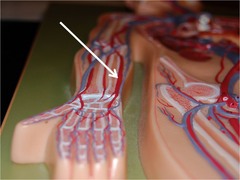
what is the function of the radial artery?
carries oxygenated blood from the brachial artery to the muscles of the posterior compartment of the forearm

what is the function of the external iliac artery?
carries oxygenated blood from the common iliac artery to the femoral artery

what is the function of the internal iliac artery?
carries oxygenated blood from the common iliac artery to the buttocks and medial muscles of the thigh

what is the function of the femoral artery?
carries oxygenated blood from the external iliac artery to the popliteal artery

what is the function of the popliteal artery?
carries oxygenated blood from the femoral artery to the muscles of proximal leg, knee joint, femur, patella, tibia, and fibula

what is the function of the superior vena cava?
carries deoxygenated blood from the brachiocephalic vein to the right atrium

what is the function of the brachiocephalic vein?
carries deoxygenated blood from the subclavian vain and the internal jugular vein to the superior vena cava

what is the function of the internal jugular vein?
carries deoxygenated blood from the brain to the brachiocephalic vein

what is the function of the external jugular vein?
carries deoxygenated blood from the scalp and skin of the head and neck to the subclavian vein

what is the function of the inferior vena cava?
carries deoxygenated blood from the abdomen, pelvis, and lower limbs to the right atrium

what is the function of the renal vein?
carries deoxygenated blood from the kidneys to the inferior vena cava

what is the function of the splenic vein?
carries deoxygenated but nutrient-rich blood from the spleen to the hepatic portal vein

what is the function of the hepatic vein?
carries deoxygenated blood from the liver to the inferior vena cava

what is the function of the hepatic portal vein?
carries deoxygenated but nutrient-rich blood from the gastric vein, splenic vein, and the superior mesenteric vein to the liver

what is the function of the subclavian vein?
carries deoxygenated blood from the axillary vein to the brachiocephalic vein

what is the function of the axillary vein?
carries deoxygenated blood from the cephalic vein and the brachial vein to the subclavian vein

what is the function of the cephalic vein?
carries deoxygenated blood from the integument and superficial muscles of the lateral aspect of the upper limbs to the axillary vein

what is the function of the brachial vein?
carries deoxygenated blood from the ulnar and radial veins to the axillary vein

what is the function of the basilic vein?
carries deoxygenated blood from the integument and superficial muscles of the medial aspect of the upper limbs to the brachial vein

what is the function of the ulnar vein?
carries deoxygenated blood from the muscles of the medial aspect of the forearm to the brachial veins

what is the function of the radial vein?
carries deoxygenated blood from the muscles and bones of the lateral hand and forearm to the brachial vein

what is the function of the common iliac vein?
carries deoxygenated blood from the internal and external iliac veins to the inferior vena cava

what is the function of the external iliac vein?
carries deoxygenated blood from the femoral vein to the common iliac vein

what is the function of the internal iliac vein?
carries deoxygenated blood from the muscles of the pelvic wall and gluteal region to the common iliac vein

what is the function of the femoral vein?
carries deoxygenated blood from the popliteal and great saphenous veins to the external iliac vein

what is the function of the great saphenous vein?
carries deoxygenated blood from the integumentary tissues and superficial muscles of the lower limbs to the femoral vein

what is the function of popliteal vein?
carries deoxygenated blood from the knee joint, and skin, muscles, and bones around the knee to the femoral vein

what is the blood vessel that passes through the transverse foramina of the cervical vertebrae?
vertebral artery

why is the blood in the hepatic portal vein carried to the liver before it returns to the systemic veins?
so the liver can process, detoxify, and store nutrients absorbed from the digestive tract before the blood enters general circulation.
what is the source of the blood in the hepatic portal system?
capillary beds of the digestive organs, spleen, pancreas, and gallbladder
what happens prior to birth?
a number of fetal systems are non-functional, such as the pulmonary and digestive systems
what is the function of the placenta?
nutrients and has exchange occurs via the placenta, diffusing from the maternal blood into the fetal blood
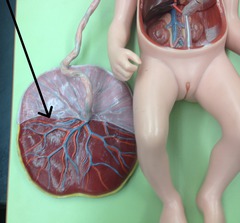
what is the function of the two umbilical arteries?
carries deoxygenated, waste-laden blood from the fetus to the placenta

what is the adult structure of the umbilical arteries?
medial umbilical ligaments
what is the function of the umbilical vein?
carries oxygenated and nutrient-rich blood from the placenta to the fetus
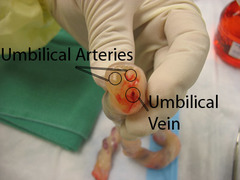
what is the adult structure of the umbilical vein?
ligamentum teres
where do the blood from the umbilical vein go to?
some supplies the liver, but most shunts into the inferior vena cava via the ductus venosus
what is the function of the ductus venosus?
shunts oxygenated and nutrient-rich blood from the umbilical vein to the inferior vena cava, bypassing the liver

what is the adult structure of the ductus venosus?
ligamentum venosum
what is the function of the foramen ovale?
opening between the right and left atrium that shunts oxygenated blood from the right atrium to the left atrium, bypassing the non-functional fetal lungs

what is the adult structure of the foramen ovale?
fossa ovalis
what is the function of the ductus arteriosus?
shunts oxygenated blood from the pulmonary trunk to the aorta, bypassing the non-functional fetal lungs

what is the adult structure of the ductus arteriosus?
ligamentum arteriosum
what is the opening in the fetal interatrial septum?
foramen ovale
what is the function of lymphatic capillaries and veins?
- absorb large molecules such as proteins and lipids
- absorbs interstitial fluid
- after absorption, pass lymph to afferent lymphatic vessels
what is the function of lacteals?
carry dietary lipids into the lymphatic vessels and ultimately into the blood

what is the function of the cisterna chyli?
carries lymph from the right and left lumbar trunks and from the intestinal trunk to the thoracic duct

what is the function of the left thoracic duct?
forms the main duct for the return of lymph to the blood
