Biological Principles for Non-Majors EXAM 2 (Mods 4-6)
 Call Kai
 Learn
 Practice Test
 Spaced Repetition
 Match
 Flashcards
 Knowt Play
1/120

There's no tags or description
Looks like no tags are added yet.
121 Terms
Two types of nucleic acids
DNA and RNA
What is a polymer?
a large molecule made by repeating a smaller unit
What makes up nucleic acids?
nucleotides
What makes up proteins?
amino acids
Gene
A segment of DNA on a chromosome that codes for a specific trait
What does RNA do?
transfers genetic information from DNA to ribosome for protein synthesis
What is DNAs role in protein synthesis?
"DNA makes RNA, and RNA makes proteins"
Transcription
in the nucleus, information in a DNA gene is converted to an RNA molecule
Translation
in the cytoplasm, the RNA message is converted to protein
What is the unique base-pair in mRNA?
Uracil (U) replaces Thymine (T) and pairs with Adenine (A)
Codons
sequences of three nucleotides, each of which specifies one amino acid

What are tRNAs?
translates RNA language to protein language with the help of an anticodon

Triplet code
correspondence between an mRNA codon and its amino acid
Start codon
AUG
Stop codons
UAA, UAG, UGA
Biotechnology
the manipulation of organisms or their components to make useful products

DNA technology
a set of methods for studying and manipulating genetic material
Genetic engineering
the direct manipulation of genes for practical purposes

DNA cloning
producing multiple identical copies of a piece of DNA

Plasmid
A small ring of DNA that carries genes

Restriction site
Specific DNA sequence recognized by a restriction enzyme to cut
Restriction enzymes
proteins that cut DNA only at specific nucleotide sequences
Restriction fragments
Fragments of DNA that result from the cuts made by restriction enzymes
Sticky ends
Single-stranded ends of DNA left after cutting with enzymes (ends of restriction fragments)
DNA ligase
enzyme that pastes two DNA fragments together
Recombinant plasmid
a plasmid with foreign DNA inserted into it

Recombinant DNA
a segment of DNA containing sequences from two different sources
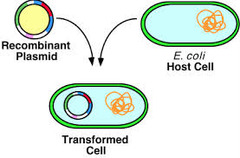
Genetically Modified Organisms (GMOs)
organisms that have acquired one or more genes by artificial means

Transgenic organism
an organism that contains genes from another species (ex. goat carrying a human gene)
4 pros to GMOs
1. No scientific evidence that GMOs harm humans or environment
2. Safety measures in place
3. Can be more nutritious and grow in a wider variety of habitats compared to standard crops
4. Strains of microorganisms are genetically crippled
4 cons to GMOs
1. May be harmful to humans or the environment in ways we don't know
2. GMOs might escape into the environment and pass on genes to wild organisms
3. Possible loss of diversity
4. No labeling standard for GMOs (unaware consumers)

What is a major similarity in the production of GM plants and mammals?
Both use a plasmid to introduce foreign DNA
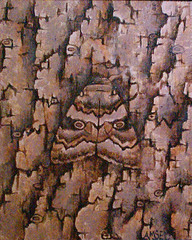
Natural Selection
Individuals with traits that make them better-suited to compete for available resources/environment will survive/have more offspring

Evolution
The gradual change in a species over time (continuous natural selection)
Adaptation
inherited characteristic that increases an organism's chance of survival --OR-- accumulation of favorable traits in a population over time
Antibiotics
natural or synthetic drugs that inhibit or kill bacteria (ex. penicillin)
Artificial Selection
selective breeding of domesticated crops and animals

Why is the domestication of animals considered "artificial" selection?
Because humans, rather than the environment, decide the reproductive success
1. Most abundant GMO food?
2. First GMO animal approved for human consumption?
1. Bt corn (80%)
2. AquAdvantage salmon
How is human insulin produced, and why?
HOW: DNA cloning process
1. Isolate human gene for insulin
2. Get plasmid from a bacterium
3. Insert human gene into bacterium DNA
4. Insert recombinant DNA into a bacterial cell
5. Grow bacteria with human insulin gene
6. Isolate and extract insulin
WHY?: Needed for people with T1 Diabetes (insulin injections)

What in Bt corn has been modified, and why?
Pesticide gene from the bacterium Bacillus thuringiensis produces a protein toxic to insects

What in GloFish has been modified?
single fluorescent gene from jellyfish introduced to the fish
What in AquAdvantage salmon has been modified?
Growth gene combo from a Pacific salmon and a gene regulator from a cold-water fish. Causes salmon to grow year-round and get bigger.
Emerging infectious disease (EID)
a contagious disease that is rapidly increasing in number of cases
Zoonotic disease
disease passed from an animal to a human (75% make up EIDs)
ex. rabies
Spillover event
When an infectious disease that normally infects one species spreads to a new species
Reservoir host
Preferred animals/hosts that viruses live and reproduce in

Direct contact
Coming into direct contact with saliva, blood, urine, feces, mucous, or other bodily fluids, of an infected animal
(ex. rabies)
Indirect contact
Coming into contact with areas or surfaces where infected animals have been, such as chicken coups, barns, or soil
(ex. Lassa fever)
Dead end/incidental host
virus can't be transmitted from one human to another--OR-- the host the virus is stuck in, unable to spread
Epidemic
an unexpected increase in the # of disease cases in a specific region; "outbreak"

Pandemic
An epidemic with an exponential growth in cases and is geographically widespread (skyrockets)

Endemic
A disease that's consistently present but limited to a specific area; generally predictable

Infectious disease
A disease that is caused by a pathogen and that can be spread from one individual to another.
Virulent
refers to pathogen's ability to harm host
How do land use changes affect the emergence and/or spread of infectious diseases?
destruction of habitats --> Increased interactions with wildlife increase the chances of zoonotic disease emergence

How does food production affect the emergence and/or spread of infectious diseases?
animals crowded together, provides a perfect environment for rapid disease spread, viral mutations, and spillover to farm workers

How does wildlife trade affect the emergence and/or spread of infectious diseases?
wildlife can interact with new animal species and humans, increasing the chances for viral mutations and spillover events

How does climate change affect the emergence and/or spread of infectious diseases?
As the planet warms, disease vectors like ticks and mosquitoes are able to survive and transmit disease

How does travel and transportation affect the emergence and/or spread of infectious diseases?
People, wildlife, food, and disease vectors can all be moved about the planet easily and quickly, increasing the potential for disease emergence and disease spread

Bacteria
single-celled organisms that lack a nucleus; prokaryotes
Protist
all eukaryotes that do not belong to the plant, animal, or fungus kingdoms
Protozoans
protists that obtain nutrients primarily by eating
Amoebas
single-celled protists with great flexibility in their body form
Slime molds
protists that resemble fungi in appearance and lifestyle.
Algae
photosynthetic protists able to produce their own food from sunlight
Seaweeds
large, multicellular marine algae that grow on rocky shores and in shallow marine habitats
Two defining characteristics of life
1. Must grow
2. Can reproduce on its own
Virus
A tiny, nonliving particle that invades and then reproduces inside a living cell.
What is a virus made up of?
Nucleic acid, capsid, and recognition spike(s)
Capsid
"genes in a box": nucleic acid (either DNA or RNA) wrapped in a protein container
Nucleic acids in viruses
DNA or RNA, single- or double-stranded
(living cells always use double stranded)
Recognition spike
a protein structure that sticks out from the surface of a virus
How does a virus reproduce?
Attaches to a host cell, enters, and inserts its genetic material. It then directs the host to produce more viruses until the host cell ruptures, spreading to other healthy cells.
Bacteriophage
A virus that infects bacteria
Virus examples
Influenza, Herpes, Measles, Tobacco mosaic
Pathogen
A microorganism that causes disease
What types of organisms can be pathogens?
bacteria, fungi, protists (alive), viruses (not-alive)
Prion
infectious protein; misshapen versions of normal brain proteins; incurable and fatal
Viroids
small, circular single-stranded RNA molecules that cause disease in plants
Strain
A variant with distinct characteristics compared to the original
Variant
A virus with a mutation
How might mutations affect a virus?
Mutations can alter viruses into deadlier or more contagious variants
If a virus mutates faster or more frequently, how might this affect the behavior of the virus or how it spreads through a population?
Viruses that mutate frequently generate new genetic variants at a high rate. Frequent mutations, combined with contact between populations and hosts, can make a virus spread rapidly
COVID-19 (CoronaVirus Disease 2019)
a contagious disease caused by virus SARS-CoV-2* (*Severe acute respiratory syndrome coronavirus 2)
Symptoms of COVID-19
flu-like symptoms including fever, cough, headache, fatigue, shortness of breath, and loss of smell and taste
(1 in 6 ppl develop severe versions)
Prevention of COVID-19
hand washing, masks/shields, avoiding large gatherings, social distancing, increasing ventilation, vaccines
What factors increase risk of infection?
crowding, time, and poor ventilation
Vaccine
substance prepared from killed or weakened pathogens and introduced into a body to produce immunity
First successful vaccine
Smallpox vaccine

Inoculation
introducing a pathogen to an organism to elicit disease/ immune response
Vaccination
introducing a vaccine to stimulate the immune system and production of memory cells
(aka immunization)

Difference between Inoculation and Vaccination?
Inoculation introduces a pathogen (Broader/umbrella term)
Vaccination introduces a formulated vaccine
A person is infected when
a virus enters a person and takes up residence
antibodies
small proteins that bind to surface molecules of pathogens and kill them, or prevent them from infecting cells and replicating, or flag them for destruction
antigen
a molecule that elicits an immune response
Memory response
second more effective immune response
Booster
A repeat vaccine to boost protection
Lymphatic system
helps remove toxins and pathogens from the blood and interstitial fluid
Lymphocytes
white blood cells that reside in the lymphatic system (T + B cells)
