Fashion and costuum
 Call Kai
 Learn
 Practice Test
 Spaced Repetition
 Match
 Flashcards
 Knowt Play
1/83

Earn XP
Description and Tags
period 1
Name | Mastery | Learn | Test | Matching | Spaced | Call with Kai | Chat |
|---|
No analytics yet
Send a link to your students to track their progress
84 Terms
Archaic Period
800 – 480BC
Classical Period
480–323 BC

Hellenistic Period
323–146 BC Alexander the Great founded and conquered cities far beyond Greece
Materials ancient Greece
Linen is made from flax
The Greeks also had wool
Silk: only from the 4th century BC, in the Hellenistic period

Chiton: ancient Greece a simple linen undershirt (tunic)
Ancient greece
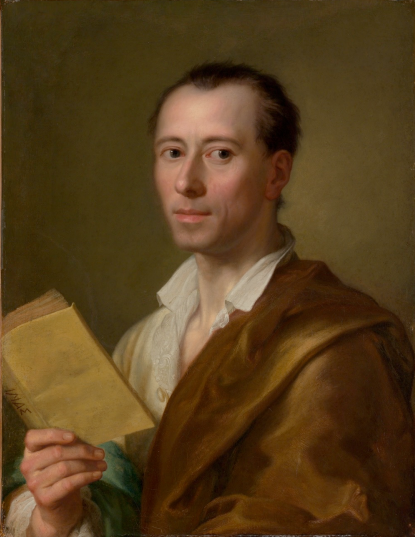
Johann Joachim Winckelmann not Steeling , first archaeologist and art historian
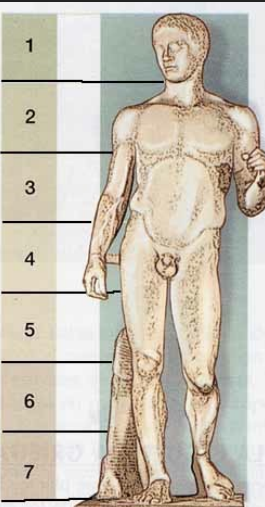
Ancient Greece
Size ratio’s: left by Polykleitos

Ancient greece peplos a woollen dress for women
For married women, and coloured
Sometimes stitched
The more layers, the richer
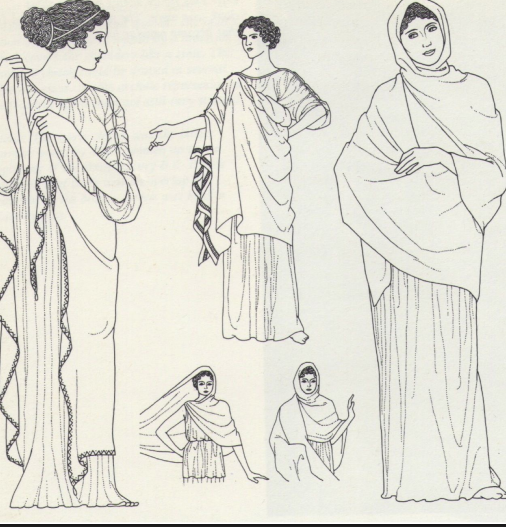
Ancient greece Himation Used to cover the hair if a woman was at the market, or worn as a cloak

ancient greece Chlamys
A sturdy woollen cloak for men. More of a travelling cloak
ancient Rome
53 BC to 476

Ancient Rome Strophium: a cloth worn over the breast, basically a bra

Ancient Rome Loincloth: worn on the bottom half, by both women and men

Ancient Rome Tunic (tunica): the basic undergarment
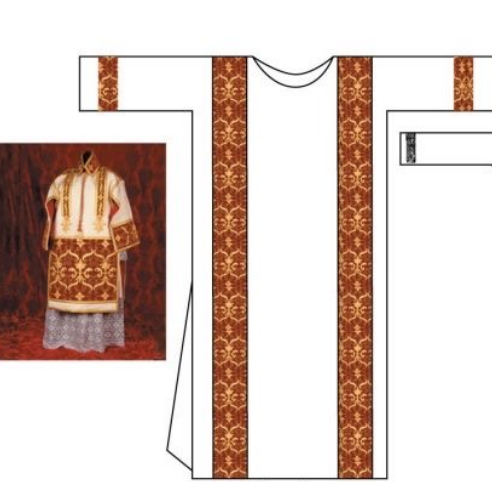
Ancient Rome Dalmatica: developed from the tunic. Fore men It is similar to what the pope would wear

Ancient Rome Palla a cloak for women, but for richer women

Layers (from the inside out)
under tunic → stola → palla

Ancient Rome The toga A man with status wore a toga
You can't put it on by yourself, it is super big
Ancient rome toga pura or toga virilis
an avarge toga for citizens , without decorations and left undyed in natural colours of white or grey tints
Ancient rome toga candida
a bleached white toga for people applying for higher office
Ancient Rome toga praetexta
A toga of natural colours with purple bands at the edge, for magistrates and priest, but also for young boys and girls that have not entered puberty
Ancient Rome toga purpurea
a entirely purple toga that represent status worn by the emperor
Ancien rome toga picta
in bright collors and richly embroidered, sometimes stiff wiht gold treats. this tyoe of toga is costume worn by triumphant warlords but also by emperors and consuls during such events as circus festivals
Ancient rome Toga pulla
Adarkuly dued toga, worn in times of mourning
West Roman Empire
394-467
East Roman Empire
394- 1453
Start of Medieval Europe
5th -11th century

Constantine the Great
late Roman emperor Constantine freed the Christians
Ancient rome Colour and status dyes
Oak (bark and galls): brown, grey or black
Onion (skins): yellow to orange
Weld: yellow
Madder: red
Woad: blue
Indigo: blue, imported from India and more expensive than woad
snails -Purple
Byzantine culture
394 -145 The church was very important. Christianity was the main religion

Byzantine culture art
The art changed. The body became a sin and needed to be covered up
Bodies in the art are unrealistic, because the body was sin. Humans are not important, God is
People were completely covered up

Byzantine Tunic (tunica): allone For rich people it was made of linen or silk

Byzantine headpeace
Byzantine Tablion
a piece of rich material, purple or gold, worn at the front or back
Byzantine Brocade
a textile in which a golden (or silver) thread is woven in with other materials. It is expensive
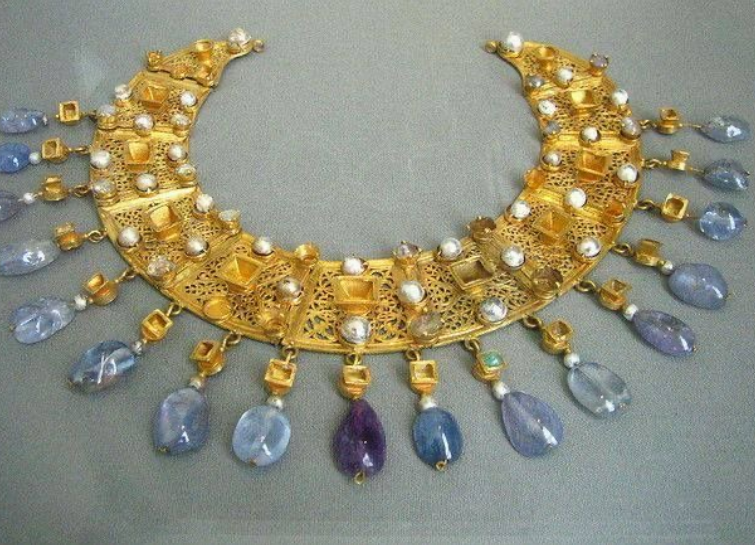
byzantine Superhumeral: a really rich necklace (collar) for the empress

Feudal system
a power structure to secure stability
Feudal system Hierarchy
a king , bishop, noblemen, knights (soldiers), clergy, workmen, peasants
Crusades:
groups of Christians travelled to the East and tried to convert people there to Christianity
Accentuation
ear;y middle ages
1050-1350
Long garments
Long hair
Early attempts to fit clothing more closely to the body
early middel ages
Taking in the side seams
Cutting the sides open and tying them with lacing
Gusset
Gores
tailering exist since the 12th
Chainse: an under-tunic, made of linen or silk
It is an undergarment. On top they wore a cotte, likely lined
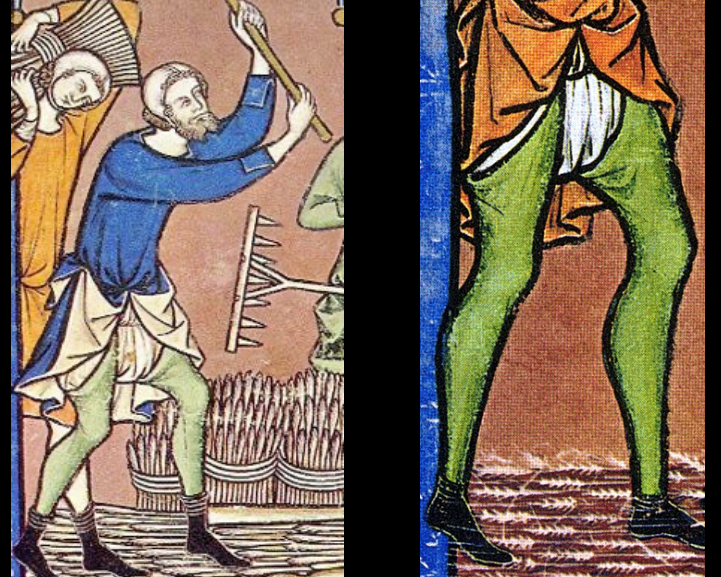
braie or bracca early pants version
sumptuary laws
they instructed differences: issued by law what to wear keeping everyone in rak in society
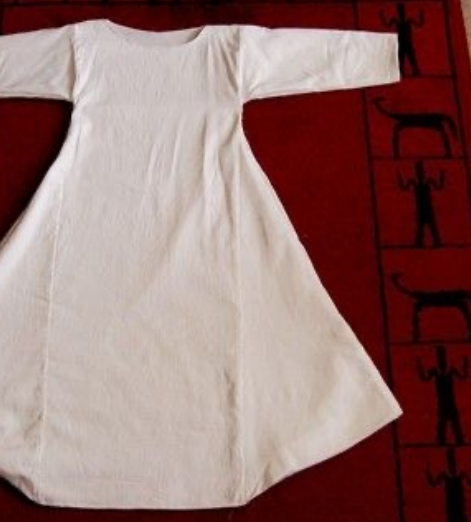
Middel ages chainse: under tunic (fine pleated linen or silk) worn under outergarment
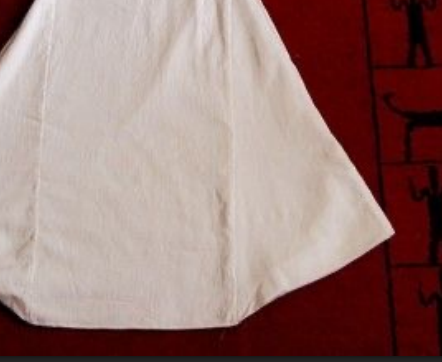
Middel ages Gores: They are wedge-shaped (triangular) pieces added to give the skirt more width.

Middel ages cotte likely lined split at the front fore men

Middel ages bliaud outer garment with train lacing at the side or the back long, hanging sleeves v shaped neck soft material, not lined. split at the front/back fore men
escarpins low, slip on shoes women

middel ages chemise undershirt men

The 13th century
The bliaud develops into a surcot, worn on top of a cotte
The surcot has lots of colour and patterns

gusset riangled or diamond shaped piece of fabric

trips mideval age sandel
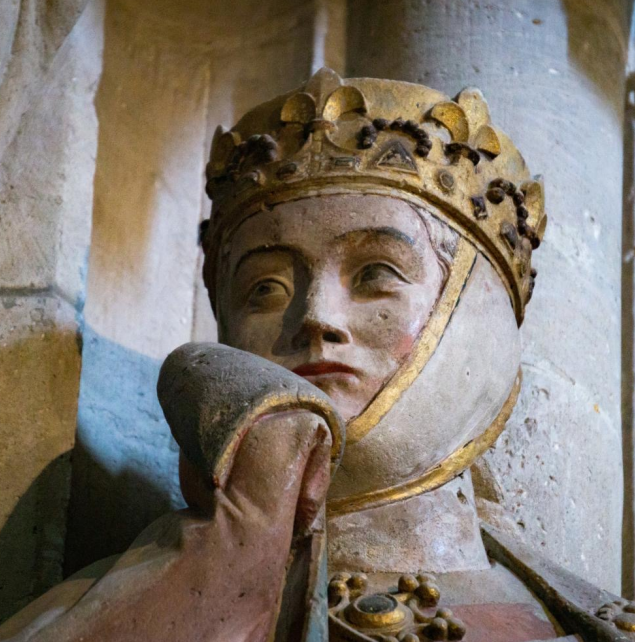
touret

crespine

chaperon

dyes collor chloting where a status symbol
only for nobility: purple crimson, scarlet and white

mi-parti coller patern
Late Middle Ages & Early Renaissance
ca. 1350 - 1500

14th century
plague epidemic
slow decline of church power
merchant classes
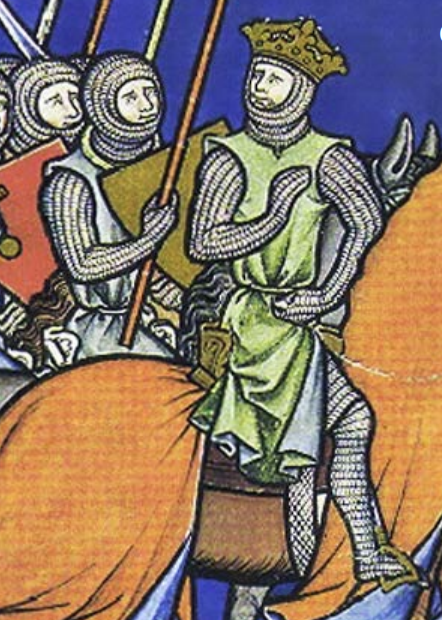
Chain mail was made to go over undergarments, with straight-cut doublets

late middel ages
Suits of armour or plate armour
fitted perfectly to the soldier, with a fitted double (also called a pourpoint) underneath
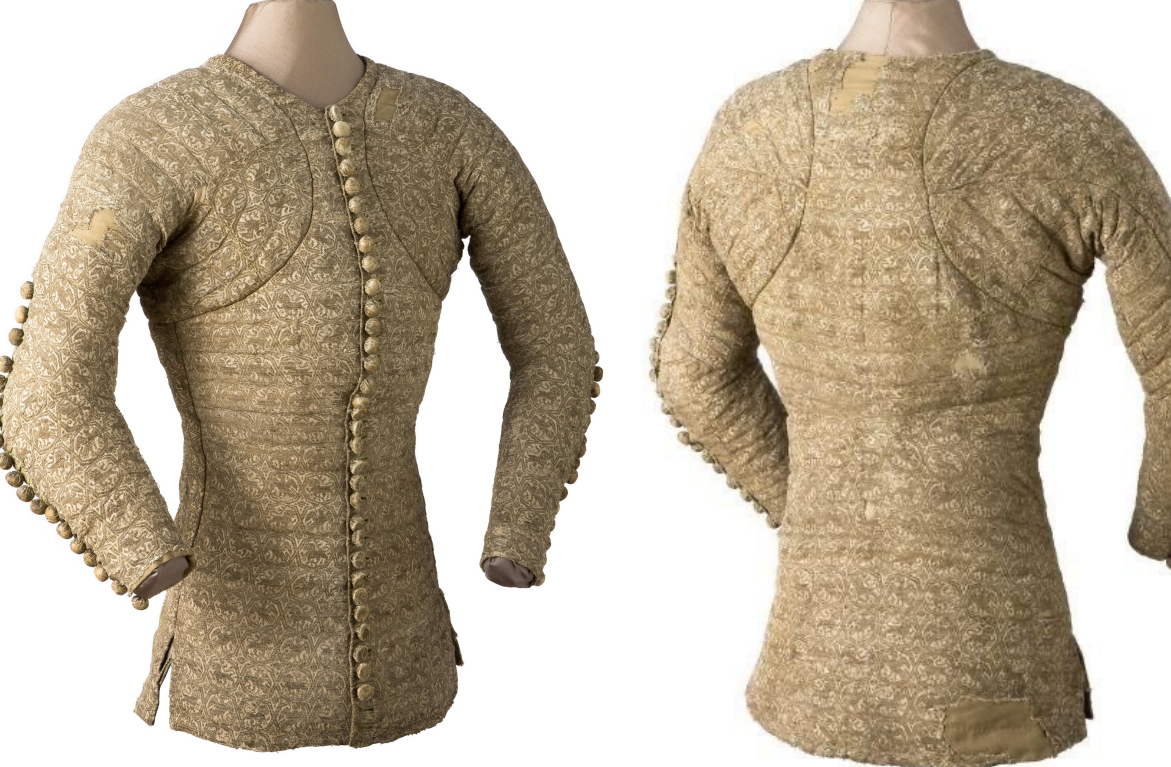
late middel ages
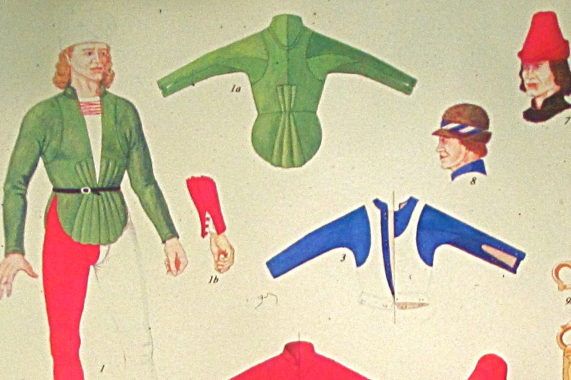
Doublet: jacket-like, built up from around 30 pieces. Broad shoulders, narrow hips, long, with slits at the sides, very fitted. All pieces were quilted

Jaque (upper garment, derived from the doublet) various sleeve constructions possible
late middel ages
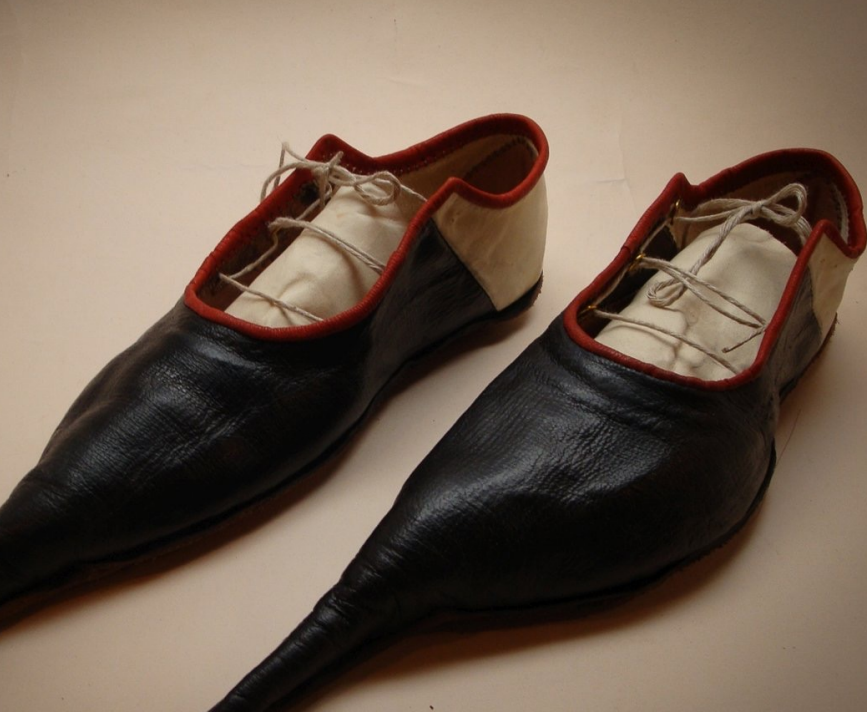
Poulaines: crazy pointy shoes, really long

late middel ages
Cotardie (cotehardie): a fitted underdress with an open neckline
above Cotardie
Surcot: the upper layer, with open armpits

late middel ages
Houppelande: the upper layer. A heavy, voluminous garment, pleated, in wool, velvet or brocade, with a high waist. (Pillow) It looks pregnant. For rich people. Worn over the cotardie, perhaps with fur

late middel ages
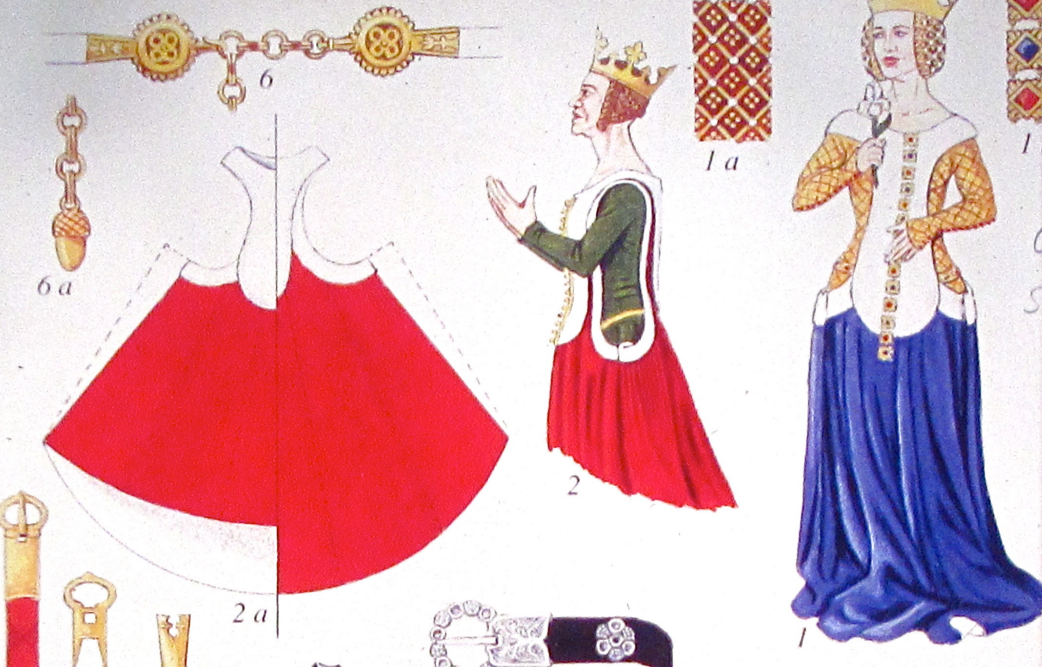
Corset- tightly fitted low cut dress, with a laced split in the middle front
late middel ages
Surcot ouvert: an opened surcot, with low cuts at the sides

late middel ages
Cotardie (for men): an upper garment that replaced the surcot

late middel ages
bourrelet (horned headdress, horns filled with wool /cotton)
kruseler (construction of several veils with frilled borders)
late middelages
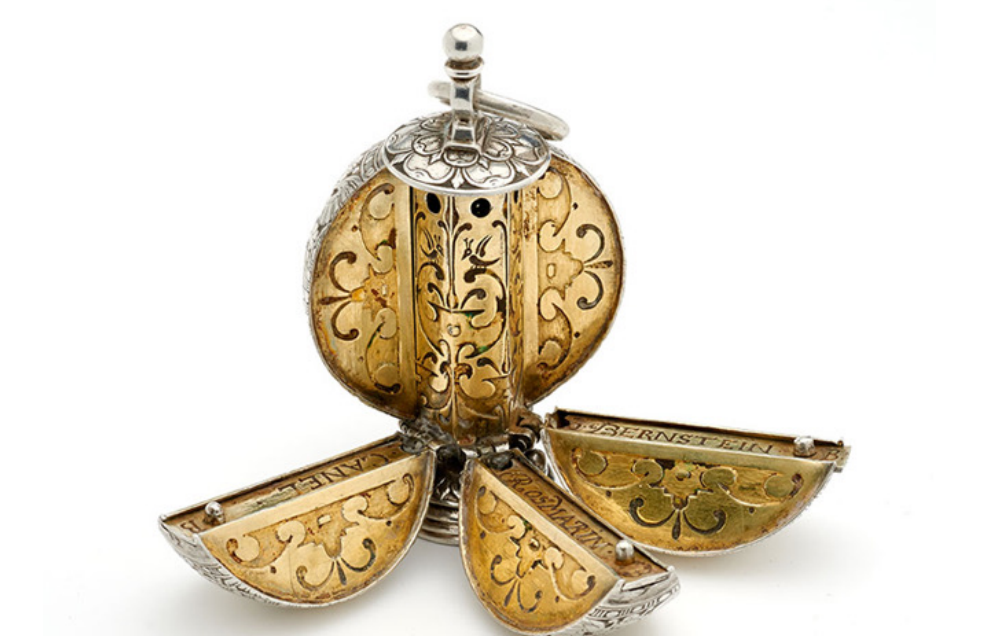
pomander: a silver or gold ball with small segments, in which to put aromatic material. Worn as a necklace, as perfume
Burgundy
ca. 1420-1480

Burgundy
Hennin a pointy, triangular headdress. It can be cut off at the top (truncated)
Burgundy
Doublet and jaque: hardly any difference anymore

bugundy
Robe worn as outerwear derived from houppelande but more slim and compact combined with double

burgundy
Robe for women: over-frock with V-neckline, worn over corset/cotardie
horizontal separation (seam)
A meaningful technical step involving the robe

burgendy
Giornea a loose, hanging cloak with open sides

burgendy
Black was the new red

begin renesanse Textiles
Two toned changeant effect fabric, moiré

begin renesanste textiles
Pomegranate (also artichoke) motive in fabric design in brocades for example

1430s to the 1480s
Hennin: A tall, cone-shaped headdress, worn usually with a veil. Flat-topped (truncated) versions existed