9. Life Histories
 Call Kai
 Learn
 Practice Test
 Spaced Repetition
 Match
 Flashcards
 Knowt Play
1/17

There's no tags or description
Looks like no tags are added yet.
18 Terms
Life History
Regards reproductive strategies, growth, development, and longevity
- Try to maximize FITNESS
Ecological Fitness
An organisms ability to survive and produce viable offspring; how their adaptations fair in their environment
Principle of Allocation
If you spend energy for one thing, you have less energy for something else (Trade Offs)
Trade Off Examples
- Having many offspring but you have to have low parental investment (flies)
- Having large eggs helps offspring survival but reduces the # of offspring you can have because it takes a lot of energy to make large eggs (kiwis)
- Having many offspring but they have to be smaller in size (mice vs elephants)

Blue-footed Booby
Before, the bird but in energy to make their feet bluer to attract a mate
After reproduction, their feet lose pigment because energy has to be put into the offspring
Fecundity
The number of offspring had per reproductive episode
- Reproductive ability
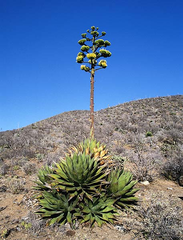
Semelparity
When organisms reproduce only once during their life then die
- Reproduction takes a LOT of energy
- Salmon
- Agave
- Bamboo

Iteroparity
When organisms reproduce many times in their lifetime
- Reproduction takes less energy
- Birds
- Humans
- Mosquitoes

David Lack and Bird Clutch Sizes
He hypothesized that natural selection allowed birds to have the MOST amount of successful offspring
- Trying to reach a median egg amount
Test: Add or remove eggs from clutches
Reality:
- birds with big clutches produced smaller clutches later
- large clutches decreased adult survival
- natural selection allows for the most successful offspring AND good parent health (having fewer eggs than expected)

Reznick and Endler's Guppies
Test: Reciprocal transplant to confirm that the two guppy populations were the same species. Their differences were caused by environmental differences.
High Elevation:
- No predators
- Larger guppies
- Fewer Offspring
- Guppies don't need to reproduce quickly because they will likely survive from a lack of predators
Low Elevation:
- Predators
- Smaller guppies
- More offspring
- Guppies needed to reproduce earlier because there was no guarantee that they would live later due to predation
r - selection
Think 'r' for rapid -- fast life history
- Fast growth rate
- Early reproduction time
- Small body size
- Many offspring
- Short lifespans
- Low parental investment
Ex: rabbits, shrimp, grass
K - selection
Slow life history
- Slow growth rate
- Later reproduction time
- Larger body size
- Few offspring
- Long lifespans
- High parental investment
Ex: elephants, albatross, whales
Senescence
Signs of aging
- Decreased fecundity
- Physical decline
Elephants have mechanisms that repair damaged molecules, which delays senescence (live longer, less cancer)
- Mice do not have these mechanisms (short lives, high cancer rate)

Grandmother Hypothesis:
Case Study: Why menopause in orcas?
Older female whales live a while past their final reproductive episode because they carry knowledge that helps the pod's survival (feeding area locations)
-- Grandmothers increase their own fitness by helping their offspring survive; increase the pod's fitness by ensuring their ability to reproduce --
Giant pandas live for about 20 years in the moist bamboo forests of southwestern China. Beginning around age 6, females give birth approximately every two years. Offspring are tended by the female over the first 18 months of their life. Which life history strategy fits most of these characteristics?
a. r-strategist
b. K-strategist
b. K-strategist
K-strategist have slow life histories, which include later sexual maturity and higher parental investment.
Match the following characteristics with either a "fast" or "slow" life history strategy:
a. greater number of offspring fast or slow
b. longer life span fast or slow
c. delayed reproduction fast or slow
d. smaller parental investment fast or slow
e. fewer offspring fast or slow
a. fast
b. slow
c. slow
d. fast
e. slow
Senescence is more likely a trait associated with
a. iteroparous species.
b. semelparous species.
c. neither iteroparous nor semelparous species, since senescence is only observed in the laboratory.
d. both iteroparous and semelparous species, but occurs more frequently in males than females of the species.
e. pioneer species
a. Iteroparous species

The figure represents an experimental test of Lack's Hypothesis. The dark line represents the number of young that survived when eggs were added to bird nests. The gold histogram represents the clutch sizes normally observed in the same population of birds. In both years of this experiment resources were abundant and were not seen to be a cause of the difference between clutch size. Explain why we see this difference between the observed clutch size and the number of offspring birds can actually raise in a given season?
Selection will favor the clutch size that produces the most surviving offspring while ALSO maintaining the parent healthy. Having to take care of too many eggs puts a lot of strain on the parent, which decreases their survivability. If the parent dies because of the stress of taking care of too many chicks, there will be no one to ensure the chicks' survival. Having too few eggs means the population may not grow at an adequate rate. Just because an individual can theoretically take care of many babies does not mean it is healthy or sustainable to do so.