Cardiovascular System: Vessels
 Call Kai
 Learn
Learn Practice Test
 Spaced Repetition
 Match
Match Flashcards
 Knowt Play
1/86

There's no tags or description
Looks like no tags are added yet.
Name | Mastery | Learn | Test | Matching | Spaced | Call with Kai | Chat |
|---|
No analytics yet
Send a link to your students to track their progress
87 Terms
artery
blood vessel that carries blood away from the heart

vein
blood vessel that carries blood back to the heart

tunica intima
the innermost layer of a blood vessel, composed of a single layer of squamous epithelial cells over a sheet of connective tissue; its smooth, frictionless surface allows blood to flow smoothly through the vessel
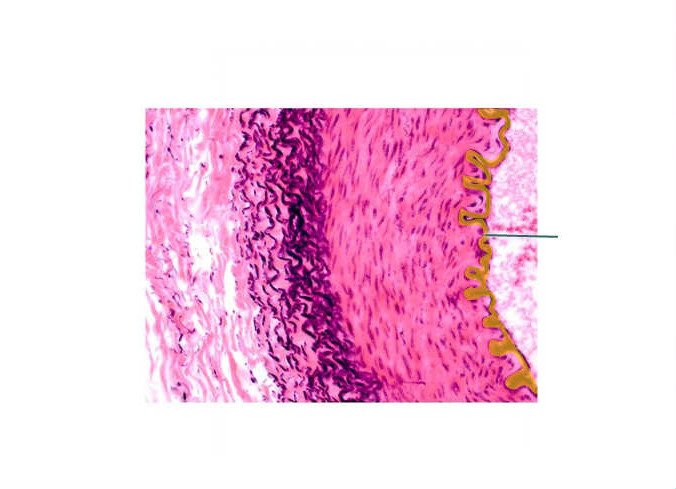
tunica media
middle layer of artery; made up of smooth muscle fibers and thick layer of elastic connective tissue

tunica externa
outer layer of a blood vessel which connects it to surrounding tissues; comprised of connective tissue

aorta
largest artery that carries oxygenated blood from the heart to be distributed by branch arteries through the body

ascending aorta
the ascending part of the aorta as it emerges from the left ventricle

aortic arch
a curved blood vessel from which arteries branch to the head and neck
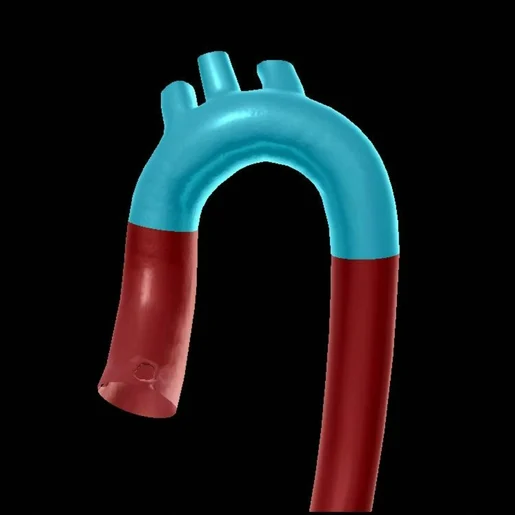
descending aorta
the descending part of the aorta that branches into the thoracic and abdominal aortae

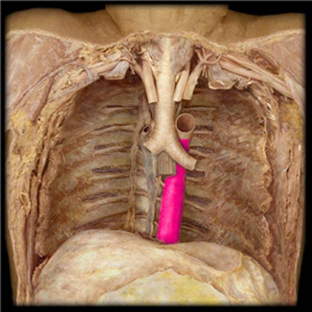
thoracic aorta
part of the aorta the descends from the aortic arch through the thorax to the diaphragm
abdominal aorta
lower part of the descending aorta; continues below the diaphragm through the abdomen until it splits near the lower back/pelvis into common iliac arteries

brachiocephalic trunk
first large artery arising from the aortic arch; carries oxygenated blood to the neck, head, and right arm

right common carotid artery
branches off brachiocephalic artery
supplies blood to right side of head and brain

right internal carotid artery
supplies internal skull structures (eyes, parts of forehead, and nose) and brain, right side

right external carotid artery
supplies structures external to skull; neck, face, and scalp

right subclavian artery
branched off of the brachiocephalic; courses beneath clavicle towards armpit to become axillary artery; supplies right arm

right axillary artery
takes blood from right subclavian to brachial artery; blood to right shoulder and upper arm

left subclavian artery
third branch of the aortic arch that distributes blood to the left arm, chest, and brain

left axillary artery
runs through armpit area to supply blood to left shoulder, chest wall, and upper arm

left common carotid artery
supplies left side of head and neck
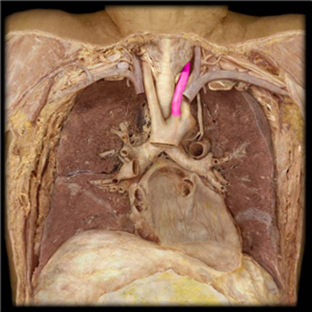
Left internal carotid artery
supplies internal skull structures (eyes) and brain, left side

left external carotid artery
supplies structures external to skull, left side; neck, face, and head

brachial artery
artery of the upper arm; goes to upper arm, elbow, forearm, and hand
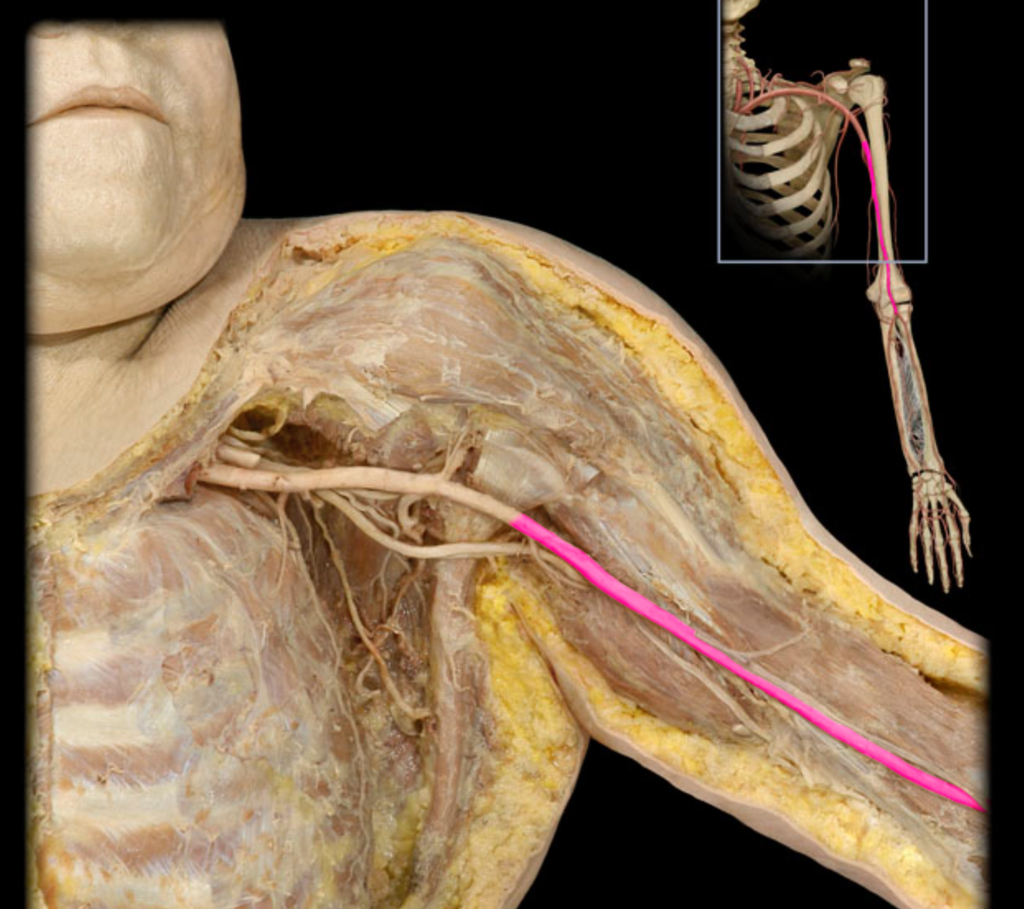
radial artery
major artery in the forearm; blood to wrist, lower arm, and hand from lateral side

ulnar artery
artery that supplies blood to the forearm, wrist and hand from medial side

internal thoracic artery
branch of subclavian artery; supplies anterior chest wall, breasts, and upper abdominal wall

lateral thoracic artery
serves lateral chest wall; side of breast and outer chest wall

anterior/posterior intercostal arteries
supply the area between the ribs on the anterior and posterior respectively, as well as chest wall and overlaying tissues

pericardial arteries
supply the pericardium

bronchial arteries
supply oxygenated blood to lung tissues

esophageal arteries
supply the esophagus with oxygen and nutrients
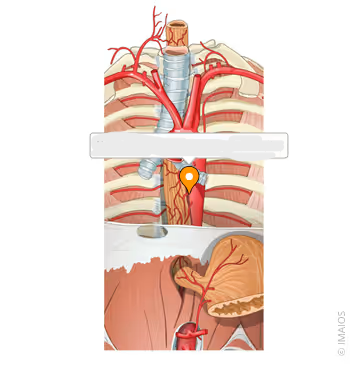
superior phrenic arteries
deliver blood to the superior surface of the diaphragm

Inferior phrenic arteries
supply the inferior surface of diaphragm

celiac trunk
major artery supplying abdominal organs

left gastric artery
smallest most superior branch; supplies blood to lower esophagus and lesser curvature of the stomach

splenic artery
supplies blood to the spleen, pancreas, and stomach

common hepatic artery
supplies liver, stomach, gallbladder, duodenum

middle suprarenal artery
supplies each adrenal gland

renal artery
supplies blood to the kidneys from aorta

superior mesenteric artery
large abdominal artery; feed first 2/3 of colon, small intestine, and lower half of pancreas

gonadal artery
supplies blood to the male and female gonads

inferior mesenteric artery
Supplies the distal areas (last 1/3) of the large intestine, splenic flexure, descending colon, sigmoid colon, and rectum and upper anal canal

lumbar arteries
supply blood to the lumbar region, the abdominal wall, and spinal cord

common iliac artery
terminal branches of the abdominal aorta, supplies pelvic organs and lower limbs

internal iliac artery
supplies walls and organs of pelvis, gluteal region, and perineum

external iliac artery
supplies lower limbs

femoral artery
the major artery supplying the leg. thighs, and groin

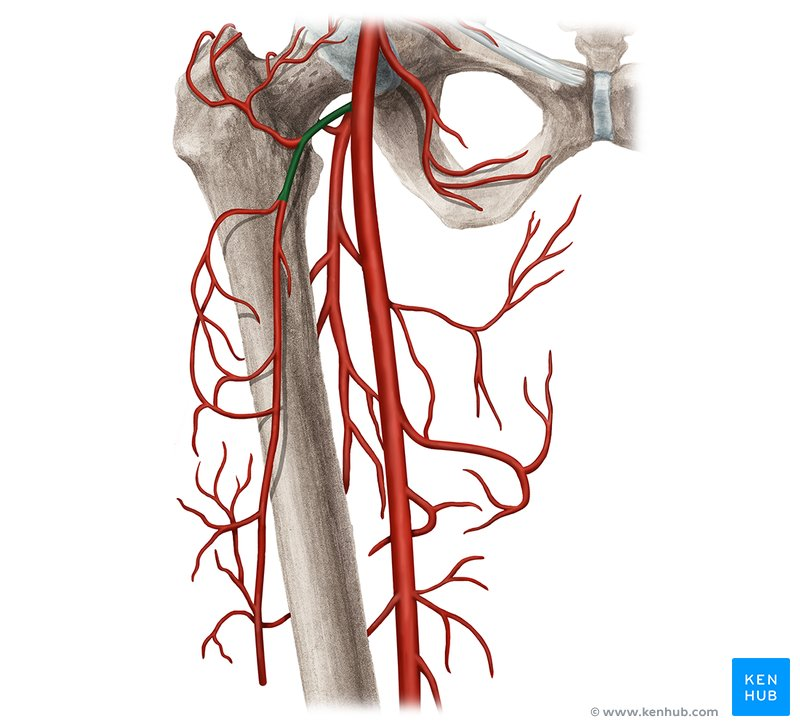
lateral circumflex femoral artery
upper femur, thigh muscles, knee, and joints of hip
popliteal artery
artery that supplies blood to the foot, leg, and knee; divides into two separate arteries known as the anterior tibial artery and the posterior tibial artery

anterior and posterior tibial arteries
delivers blood to the lower leg and foot

fibular artery
branches off posterior tibial artery; supplies lateral compartment of leg and fibula bone

radial vein
drain deoxygenated blood from lateral side of the hand and forearm

ulnar veins
deep; carry oxygen depleted blood from the lower medial portion of the forearm and hand

basilic vein
superficial: carry oxygen depleted blood from the lower medial portion of the forearm and hand
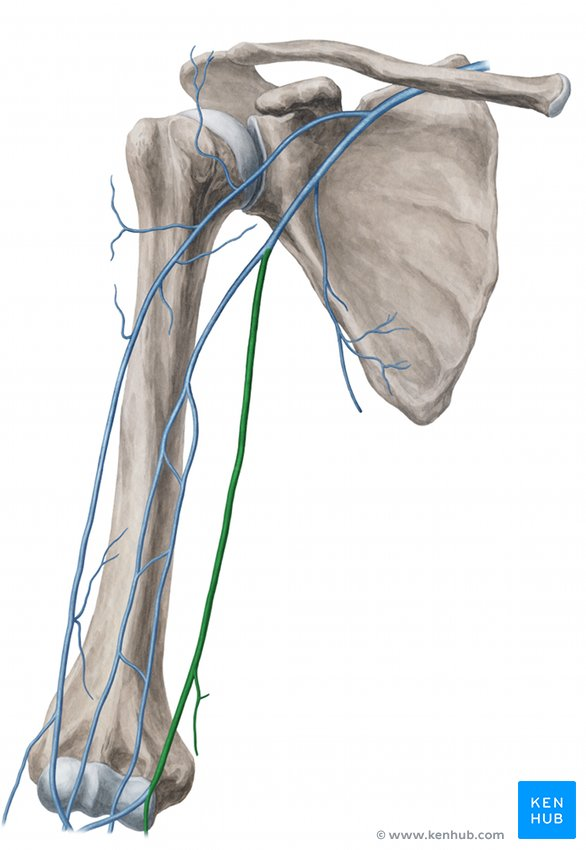
cephalic vein
on the outermost side of the upper arm; carry oxygen depleted blood from outer arm and forearm (lateral)

median antebrachial vein
drains blood from palm and wrist

median cubital vein
drains the anterior elbow; lower arm and hand; connects superficial to deep veins

brachial vein
drain oxygen-poor blood from the muscles and tissues of the upper arm and forearm into the larger central veins

axillary vein
drain blood from upper limbs, shoulder, and lateral chest wall

external jugular vein
carries blood returning to the heart from the scalp, skull outside, and deep face

subclavian vein
blood drain from upper extremities
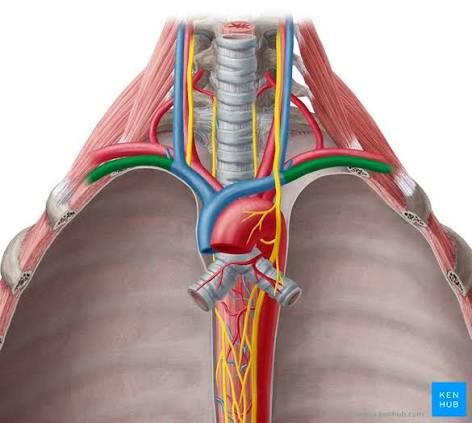
internal jugular vein
drains the brain, face, and head

brachiocephalic vein
drains head, neck, and upper arms

anterior and posterior intercostal veins
drain chest intercoastal spaces

hemiazygos vein
drains the esophageal veins from the esophagus, left subcoastal spaces, and mediastinum

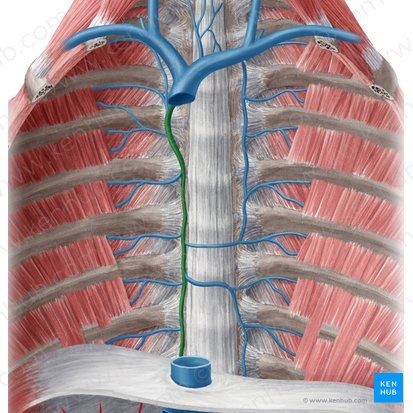
azygos vein
drains blood from the back chest wall and abdomen
anterior and posterior tibial veins
drains from the deep veins of the foot/ lower extremities

fibular veins
drain blood from the lateral compartment of the lower leg

small saphenous vein
superficial drainage of lateral foot and posterior calf

popliteal vein
the vein that forms when the anterior and posterior tibial veins unite at the knee; calf and feet

great saphenous vein
longest vein in body; drains blood from foot, leg, and thigh;
joins with femoral vein

femoral vein
major vein of the thigh that receives blood from the deep femoral and great saphenous vein

common iliac vein
receives blood from the internal and external iliac veins and returns blood to the inferior vena cava; pelvis and lower legs

external iliac vein
receives venous blood from the lower extremities; leg, lower anterior abdominal wall, and pubic region

internal iliac vein
drains pelvic organs, walls, and deep gluteal regions

lumbar veins
drain the lumbar portion of the abdominal wall, muscles, skin of the back, and spinal cord

right gonadal vein
drains the right ovary in females and right testicle in males

left gonadal vein
drains into the left renal vein: drains the left ovary in females and left testicle in males

renal veins
drain the kidneys


suprarenal vein
drain the adrenal glands
inferior phrenic vein
drains lower surface of the diaphragm

hepatic veins
drain the liver

hepatic portal vein
carries nutrient-rich and toxin-rich blood from the capillaries of the villi, digestive organs, and spleen to the liver, then to the heart

splenic vein
drains the spleen, pancreas, and parts of stomach into hepatic portal system

gastric veins
drains stomach and lower esophagus into hepatic portal system

inferior mesenteric vein
drains rectum, sigmoid colon, and descending colon into hepatic portal system

superior mesenteric vein
drains small intestines and parts of large intestine into the hepatic portal system
