Harvill Bio 1305: Exam 2
 Call Kai
 Learn
 Practice Test
 Spaced Repetition
 Match
 Flashcards
 Knowt Play
1/240

There's no tags or description
Looks like no tags are added yet.
241 Terms
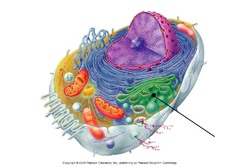
Mitochondria
Site of ATP synthesis in animal cells. And contain the enzymes for cellular respiration
Nucleolus
Where rRNA synthesis happens
Glycoproteins
Molecules important to cell recognition/ identity its a protein with a carbohydrate attached usually found in the cell membrane
Desmosome
Anchoring junctions that prevent cells subjected to mechanical stress from being pulled apart; button like thickenings of adjacent plasma membranes connected by fine protein filaments

Golgi apparatus
Produces vesicles that replenish cell membranes. Think UPS they receive packages modify them a bit then ship them out.
Lipid A
Endotoxin component of gram negative cell walls
Cholesterol
Stabilizes cell membranes in mammals. Its a lipid and is hydrophobic and considered the precursor to steroids; estrogen and testosterone.

Cellulose
Component of plant cell walls made up of carbohydrates we can't digest it so its fiber
actin microfilaments
Forms the constriction between 2 new cells following mitosis. The diameter is 7nm Main function is cell motility. Think muscles.

Microtubules
A hollow rods composed of tubulin proteins that makes up part of the cytoskeleton in all eukaryotic cells and is found in cilia and flagella. Diameter is 25mn with 15 nm lumen. Think of spindle fibers during Mitosis.
intermediate filaments
fibrous proteins supercoiled into thicker cables. Diameter is 8-12 nm. Purpose is anchorage. Think about holding nucleus in place
Nucleus
Contains chromosomes (DNA + histones) Site of DNA synthesis
Plant AKA central vacuole
Starch storage site and holds water, ideally its turgid. to keep plant from wilting

Cell membrane
Composed of phospholipids and protein its semipermeable and allows most nonpolar molecules and very few small polar molecules like H2O. Site where aquaporins are found

Lysosomes
Contain digestive enzymes. They go to vesicles produces from phago and Pinocytosis and digest whatever is in there. They also eat bacteria found abundantly in saliva and immune cells.
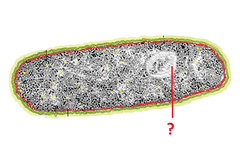
Nucleoid
Site where bacterial DNA clumps
Smooth ER
Synthesis of fats and phospholipids, storage of calcium ions. Site where fats, steroids and phospholipids are made connected to rough but doesn't have any ribosomes.

Rough ER
Synthesis of proteins to be excreted by the cell. Covered in ribosomes (proteins factories)

Lipotechoic acids
Anchor peptidoglycan to the cell membrane
Integrins
Proteins that are Binding sites for fibronectin

Chloroplast
Site of photosynthesis; contains chlorophyll and accessory pigments. Inside they have little Pancake shaped things called thykoloids. It has stroma inside thats like its version of cytosol and it has its own DNA. Transform light E into the chemical energy of ATP

Capsule
Exterior carbohydrate composite that protects bacteria from the human immune system
Aquaporin
Integral protein important to osmosis. Its still passive transport just has a special name cos its water

Metabolism
The totality of an organism's chemical reactions
Metabolic Pathway
Begins with a specific molecule and ends with a product
Catabolic Pathway
Release energy by breaking down complex molecules into simpler compounds; creation of ATP (energy) (exergonic)
Cellular Respiration
The breakdown of glucose in the presence of oxygen (example of catabolic pathway) 3 not so easy steps; Glycolysis, Citric Acid Cycle, and the ETC (Oxidative phosphorlyzation).

Anabolic Pathway
Consume energy to build complex molecules from simpler ones; costs ATP (energy) (endergonic)
Energy
The capacity to cause change (work)
Kinetic energy
Energy about the movement of something (Heat, how fast particles are moving)
Potential energy
Energy about the location of something (bowling ball at top of stairs)
Kinetic energy produces ___________ energy.
Heat
Potential energy produces ____________ energy.
Chemical
First Law of Thermodynamics
States that the energy of the universe is constant
Second Law of Thermodynamics
Every energy transfer/transformation, some energy is unusable and lost as heat
Entropy
"disorder"
Heat
Causes molecules to move faster
Free energy
a measure of a system's instability, its tendency to change to a more stable state. Delta G is the change in free energy

Equilibrium
A state of maximum stability, if a cell is in it its dead.
negative; spontaneous
Only processes with a __________ delta G are ______________.
Work
Spontaneous processes can be used to perform ____________.
Exergonic
Reaction that proceeds with a net release of free energy and is spontaneous, the electron transport chain is this.
Endergonic
Reaction that absorbs free energy from its surroundings and is non spontaneous
Reactions in a closed system eventually reach ___________________ and then do no work
equilibrium
Open systems
Cells are not in equilibrium; they are ________ ____________ experiencing a constant flow of materials
Metabolism
__________________ is never at equilibrium.
Mechanical, Transport, and Chemical
The three main types of work
Energy Coupling
To do work, cells manage energy resources by ___________ ______________, the use of an exergonic process to drive an endergonic one
ATP
Most energy coupling in cells is mediated by _______.
ATP
The cell's energy shuttle
ATP
A nucleotide composed of ribose, adenine, and three phospholipids
Hydrolysis
When the bonds between the phosphate groups of ATP's tail are broken
Energy
Released from ATP when the terminal phosphate bond is broken
Chemical potential energy
The _____________ ______________ ___________ stored in ATP drives most cellular work
Catalyst
A chemical agent that speeds up a reaction without being consumed by the reaction
Protein
An enzyme is a catalytic ____________.
Activation energy (EA)
The initial energy needed to start a chemical reaction
lower
Enzymes _________ the EA barrier.
don't
Enzymes ________ affect the change in free energy
temperature, pH, and chemicals
What affects an enzyme's activity?
optimal temperature and pH
What does each enzyme have?
Coenzyme
organic cofactor (ex: vitamins) Helps the substrate fit

Cofactors
Any nonprotein molecule or ion that is required for the proper functioning of an enzyme. Cofactors can be permanently bound to the active site or may bind loosely with the substrate during catalysis
Competitive inhibitors
Bind to the active site of an enzyme, competing with the substrate; not permanent can be used for negative feedback

Noncompetitive inhibitors
Bind to another part of an enzyme, causing the enzyme to change shape and making the active site less effective; many are permanent can be used for negative feedback

Toxins, poisons, pesticides, and antibiotics are examples of?
Inhibitors
Metabolism within a cell is controlled by.....
switching on and off the genes
Allosteric Regulation
Occurs when a regulatory molecule binds to a protein at one site and affects the protein's function at another site
Polypeptide subunits
allosterically regulated enzymes are Mostly made from
Each enzyme has ___________ and _____________ forms.
active; inactive
Binding of an ___________ stabilizes the active form of the enzyme.
activator
Cooperativity
A form of allosteric regulation that can amplify enzyme activity

Feedback Inhibition
The end product of a metabolic pathway shuts down the pathway; prevents cells from wasting chemical resources by synthesizing more product than is needed
In cooperativity, binding by a ____________ to one active site stabilizes favorable conformational changes at all other subunits.
substrate
Enzymes
They are catalysts that lower the activation energy required for a reaction to occur and speed up the rate of the reaction. And can act as structural components of membrane.
Fermentation
Partial degradation of sugars; O2 not required
Aerobic respiration
Consumes organic molecules; requires O2 as the final electron acceptor; produces ATP
Anaerobic respiration
Uses a molecule other than oxygen as the final electron acceptor (bacteria)
transfer of electrons
The _________ ____ __________ during chemical reactions releases energy stored in organic molecules.
redox reactions
Chemical reaction that transfer electrons between reactants are called oxidation- reduction reactions
Oxidation
A substance that looses electrons
Reduction
A substance that gains electrons
Electron donor
The reducing agent
Electron acceptor
The oxidizing agent
NAD+
Electrons from organic compounds are usually first transferred to ______.
oxidizing
NAD+ functions as an _____________ agent during cellular respiration.
NADH
Each _________ (the reduced form of NAD+) represents stored energy that is tapped to synthesize ATP.
Glycolysis, citric acid cycle, and oxidative phosphorylation
The three stages of cellular respiration:
Glycolysis
Breaks down glucose into two molecules of pyruvate (every cell)
Citric acid cycle
Completes the breakdown of glucose
Oxidative phosphorylation
(accounts for most of the ATP synthesis) through the electron transport chain and chemiosmosis
Cellular respiration
90% of the ATP generated by....
redox
Powered by __________ reactions
electron transport chain
Occurs in the ____________ ___________ _______ in the inner membrane of the mitochondrion.
Cytoplasm
where glycolysis is located
energy investment phase; energy payoff phase
The two major phases of glycolysis:
Kinase
Enzymes transfer phosphate groups
Mitochondrion
In the presence of O2, pyruvate enters the ________________.
Mitochondrial matrix
Location of citric acid cycle
Pyruvate
The cycle oxidizes organic fuel derived from _________.