Boards Math Equations (copy)
 Call Kai
 Learn
 Practice Test
 Spaced Repetition
 Match
 Flashcards
 Knowt Play
1/28

There's no tags or description
Looks like no tags are added yet.
29 Terms
When a question asks about shortest or longest scale of contrast, just focus on the kvp
Look at the kvp, not the mAs!
When the equation includes a grid, remember that the lower the grid, the more scatter is left, so it is a longer scale of contrast.
The SMALLER grid ratio has a longer scale of contrast
(SMALLER grid ratio not as efficient)

Lower grid ratio means
More grayscale
Beam filtration affects contrast by
Decreasing contrast
Beam restriction affects contrast by
Increasing contrast
Smaller grid ratio
does not clean up as much scatter, leaving it a longer scale of contrast
math questions about receptor exposure
focus on mAs, choose the answer with the highest mAs
does OID affect receptor exposure
No, but it does affect spatial resolution
Does KVP affect spatial resolution?
No
Does mAs affect spatial resolution?
No
kVp indirectly affects receptor exposure
through the 15% Rule
Grid Ratio Formula
H/D
Calculating from non-grid to grid
Simply multiply the original mAs by the grid bucky factor
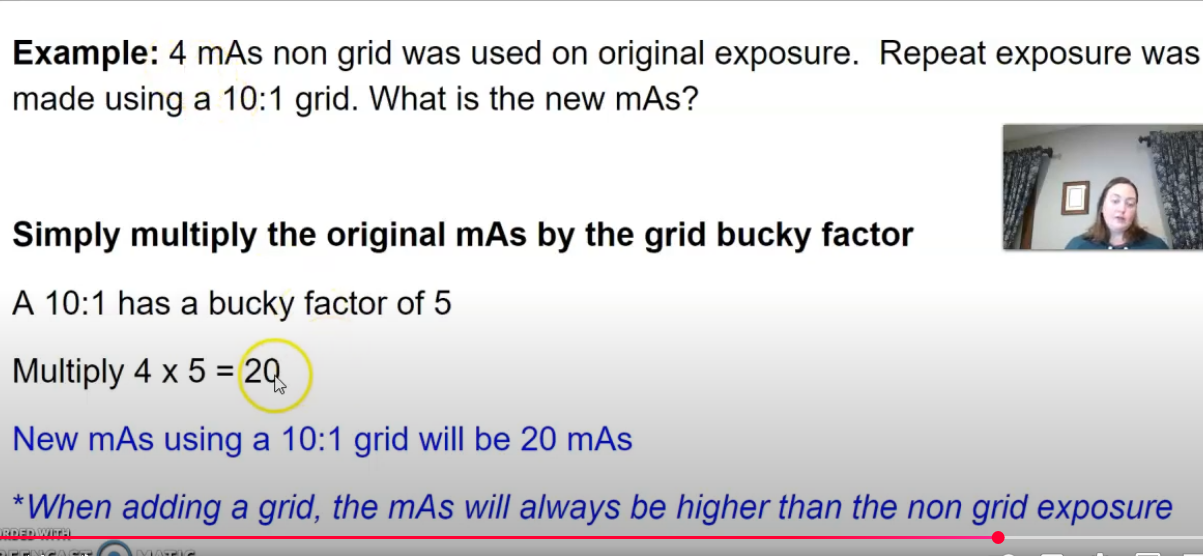
Calculating from grid to non-grid
Is reverse. Divide the new mAs by the Bucky factor
Higher grid ratio
More mAs required
Moving from one grid ratio to a higher grid ratio
If you increase your grid, you must increase your mAs.
Figure out grid factors, then cross multiply, then divide!
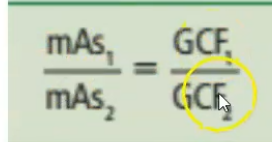
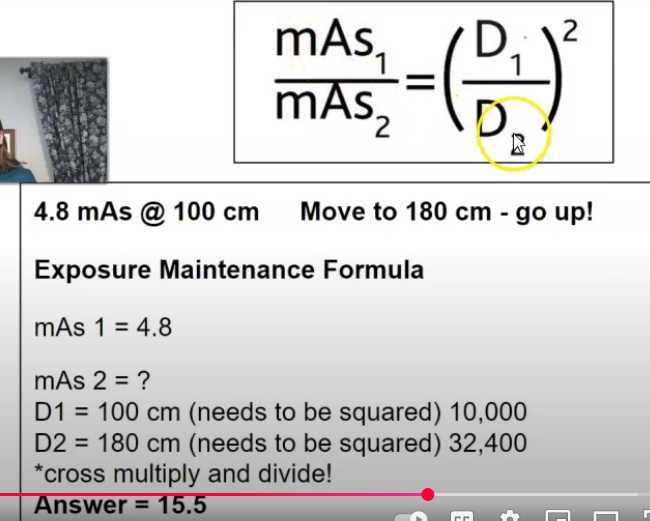
If the equation includes SID, do a second step and do the Exposure Maintenance formula
Example
Grids are used on parts
Greater than 10 cm
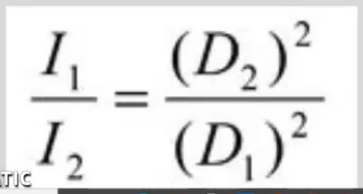
Inverse Square Law
inches to centimeters
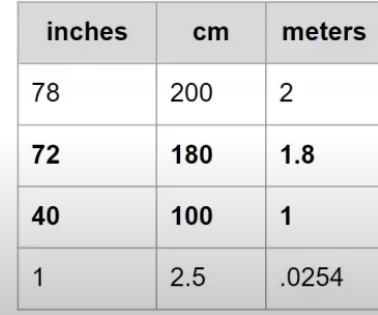
Inverse square law equation example
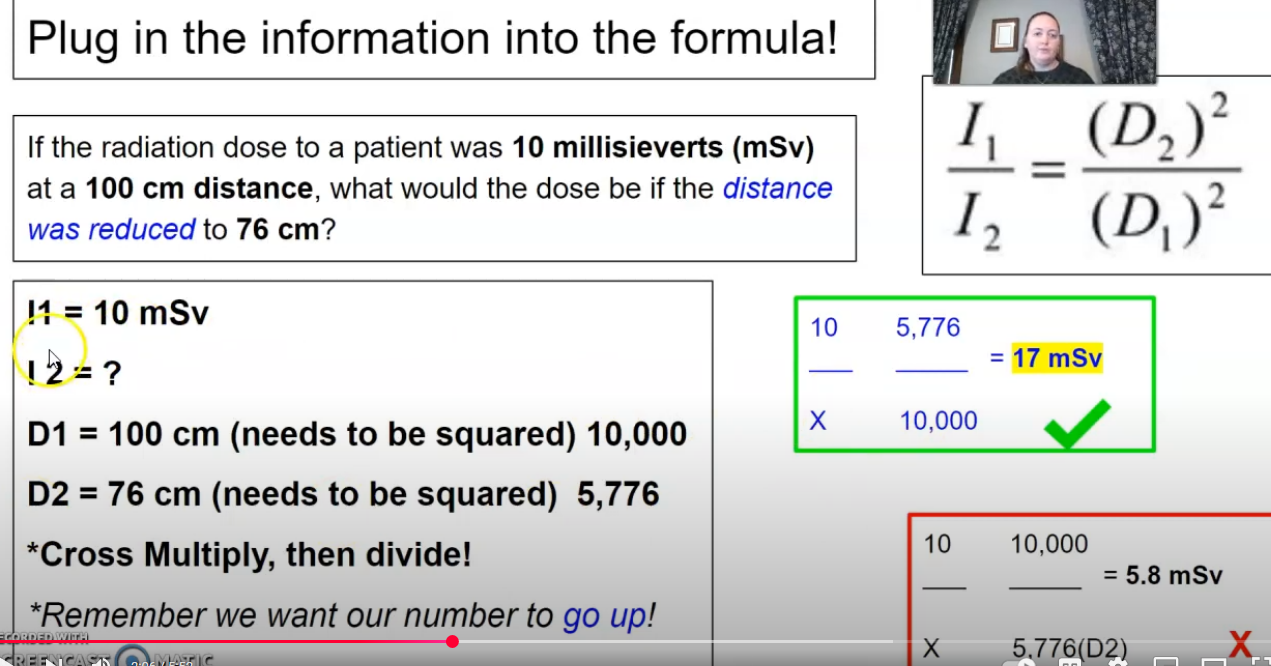
Inverse square law
New dose at a new distance
Direct Square Law or Exposure Maintenance Formula
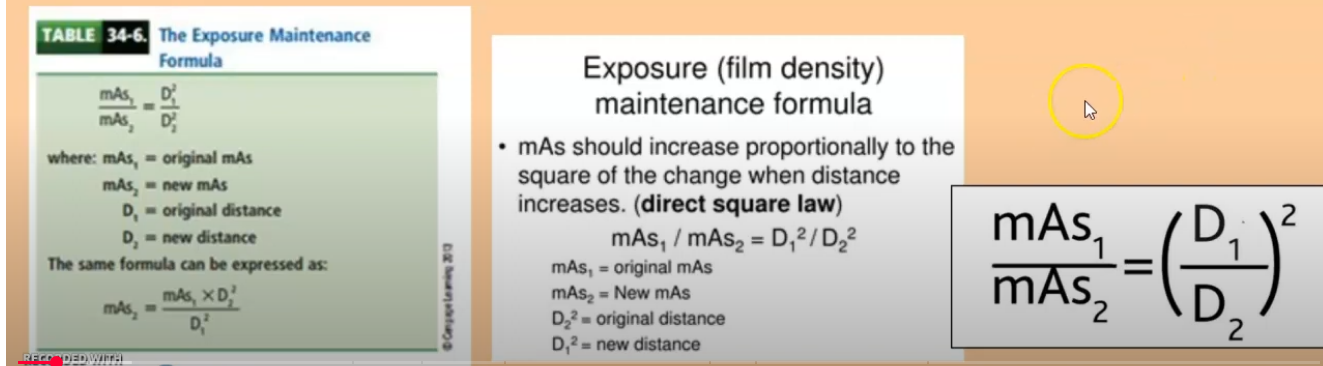
Direct Square Law
New mAs for new SID to maintain exposure
Hint
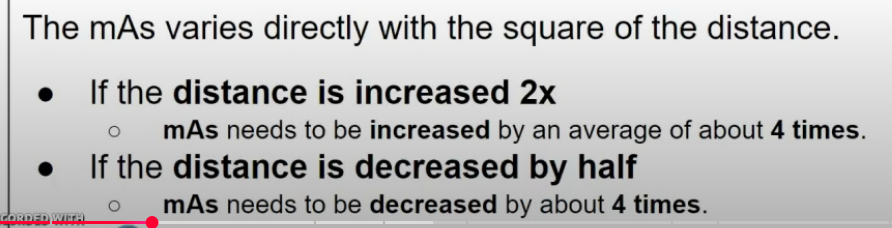
Tip
Multiply or divide mAs by 4
If it’s asking about exposure, use
Indirect Square Law
If it’s asking for new mAs, use
Direct Square Law