ABI102 HACKMANN 2
 Call Kai
 Learn
 Practice Test
 Spaced Repetition
 Match
 Flashcards
 Knowt Play
1/152

There's no tags or description
Looks like no tags are added yet.
153 Terms

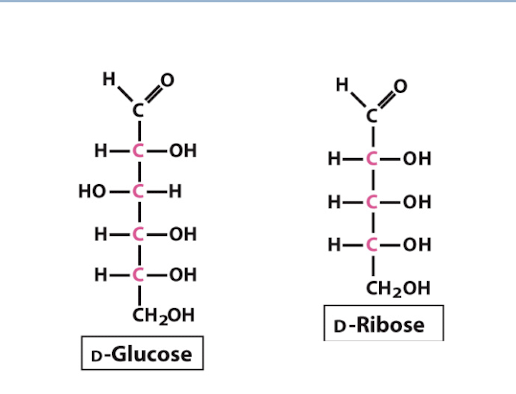
monosaccharides are most commonly what
most monosaccharides are hexoses or pentoses

monosaccharides range from how many carbons
3-8 carbons

monosaccharides include what kind of bonds
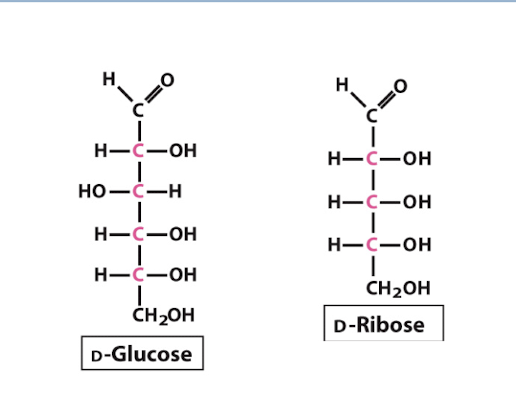
aldoses and ketoses

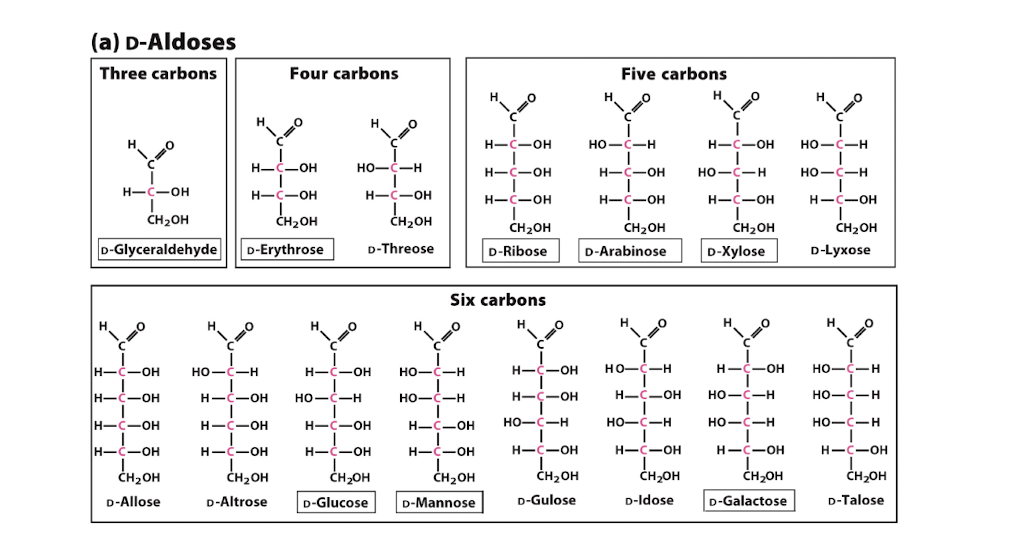
aldose is
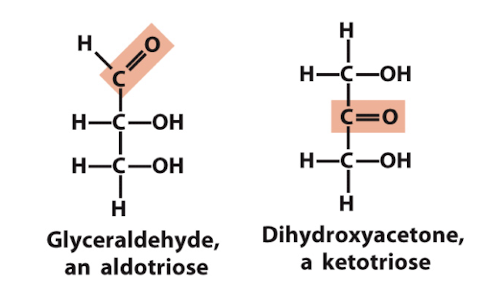
are carbonyl at the end of carbon chain (aldehyde group)

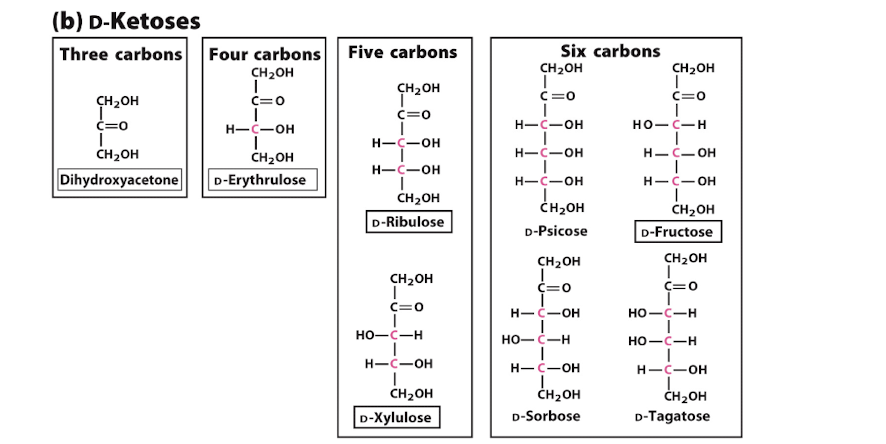
ketose is
carbonyl elsewhere (in ketone group)

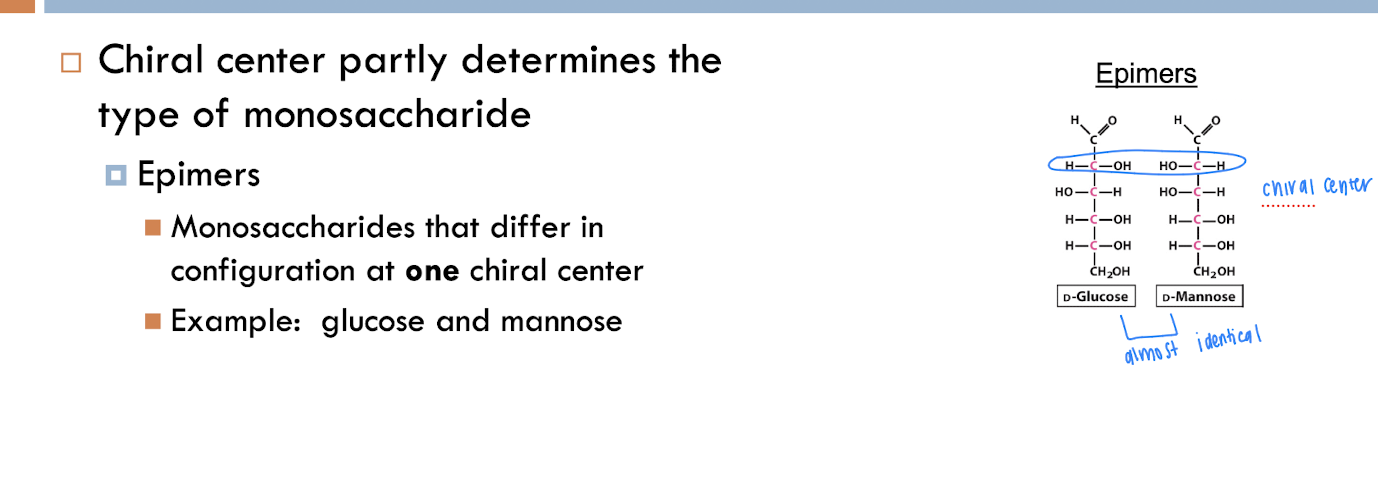
what is a chiral center
carbon with four different substituents
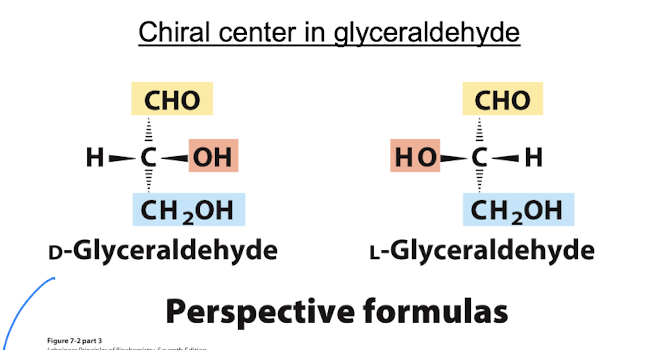

why is chiral center significant
helps determines type of monosaccharide

chiral centers in red
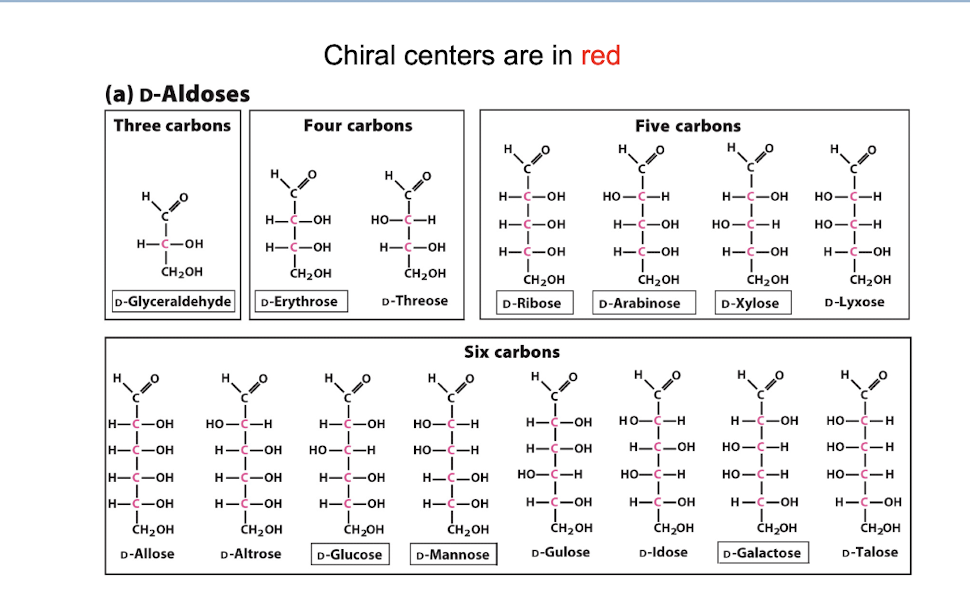

what is an epimer
a type of chiral center that differs at one chiral center

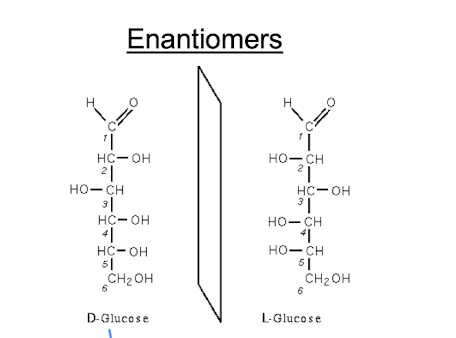
what is an enantiomers
chiral centers at all carbons differ, *in fact, most carbohydrates live in organisms are d-isomers

T or F monosaccharides can have s straight chain but also cyclic structure?
true!

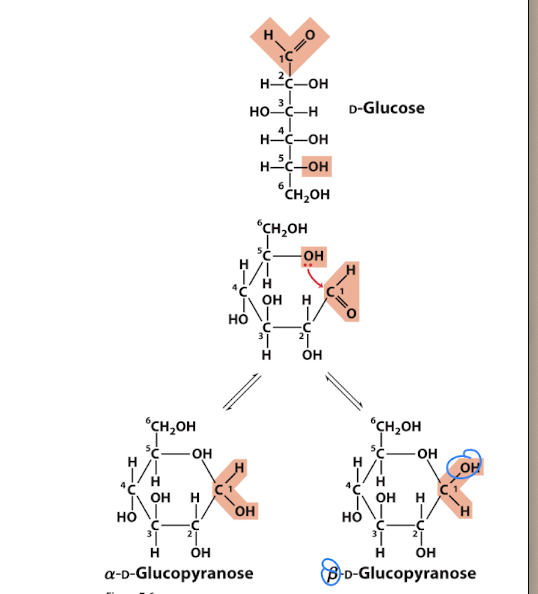
what are the type of cyclic structures that monosaccharides have
B anomer:
-Oh of anomeric (carbonyl) C up
same side as C-6
a anomer
-OH of anomeric C down
opposite side from C-6

what is the importance of a and b anomers?
Anomeric configurations helps determine the structural properties of carbohydrates
starch (good for eating)
contains an a-glucose
cellulose (good for wearing)
contains a b-glucose

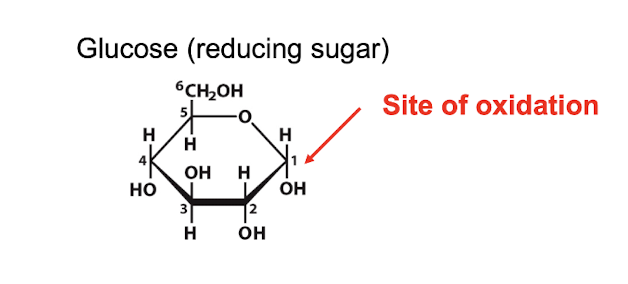
some monosaccharides are reducing sugars
it can easily reduce copper ions (Cu2+) or other ions
sugar is itself oxidized during the process
Sit of oxidation is anomeric carbon (carbonyl)
oxidized to carbonxyl
Example: glucose

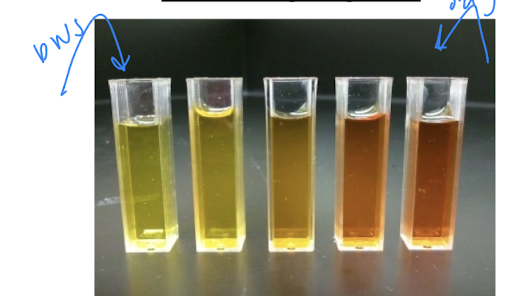
how were they able to tell how many sugars in monosaccharides
they detected using an oxidizing agent that turns color when reduced
they used the common agent of (DNS) 3.5-dinitrosalicylic acid
this is important historically in detecting diabetes

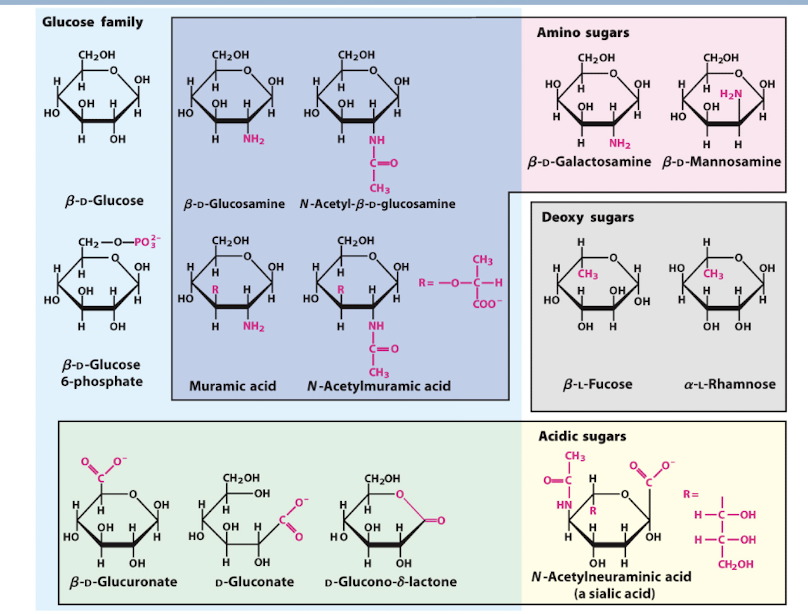
monosaccharides have a lot of dervatives
hydroxyl group can be replaced w/ absent substituent, carbon can be oxidized or hydroxyl can be phosphorylated
amino acids
-OH→ -NH2
deoxy sugars
-OH→ -H
acidic sugars
-CH2OH→ COO-
sugar phosphates
-OH→ -OPO32-

examples of monosaccharides have derivatives
image of derivatives

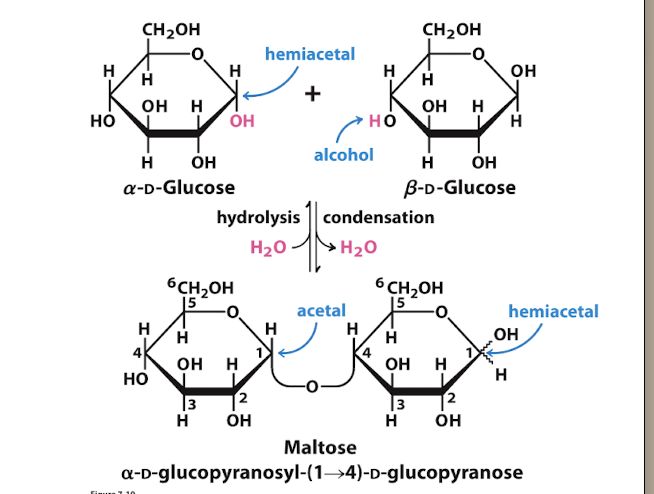
how are disaccharides formed?
combination of monosaccharides
specifically, the anomeric carbon of one monosaccharide is linked with another and its linkage is called a glycosidic bond

some common disaccharides
maltose (starch)
lactose (milk)
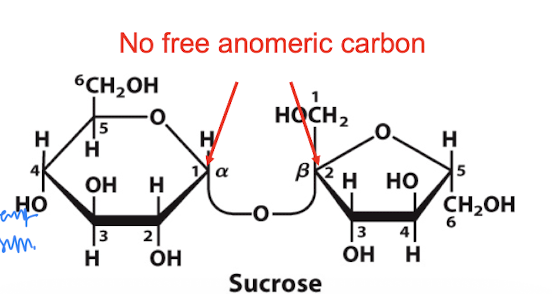
sucrose (from photosynthesis)
cellobiose (cellulose)
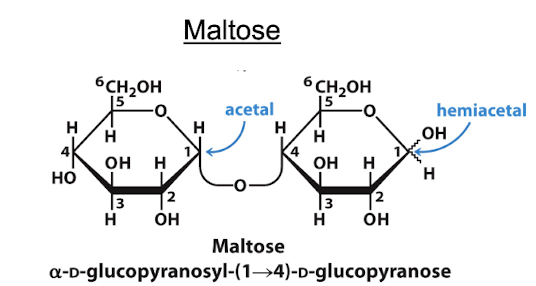

where does glycosidic bond named by
position of carbon involved
anomeric configuration of those carbons
maltose: Glc(a1→4)Glc
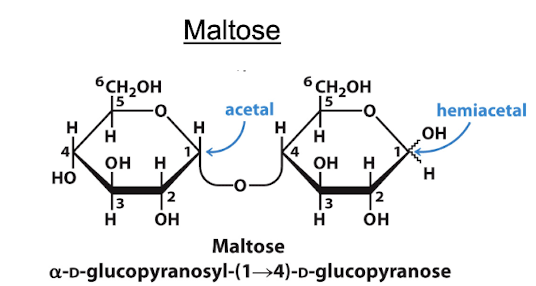

name more examples of glycosidic bonds
maltose: Glc(a1→4)Glc
cellobiose: Glc(B1→4)Glc
sucrose: Glc(a1<→B2)Glc
lactose: Glc(B1→4)Glc

what is the glycosidic bond here?
Glc(a1→a)Glc
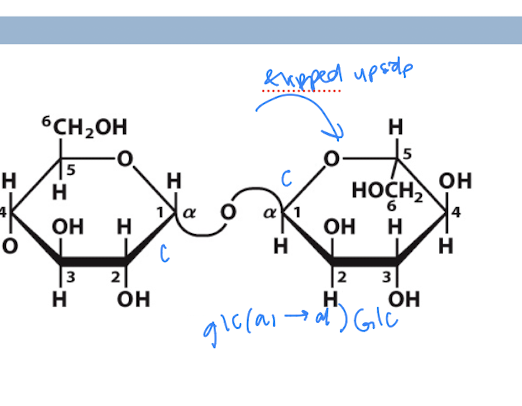

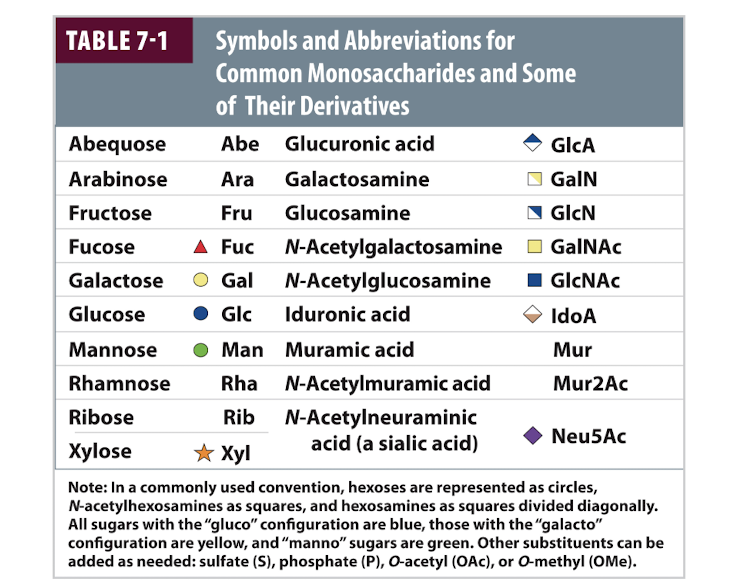
table of disaccharides
image of table

what is a reducing sugar?
it is the end of a disaccharide with free anomeric carbon
this is detected in DNS or other oxidizing agent
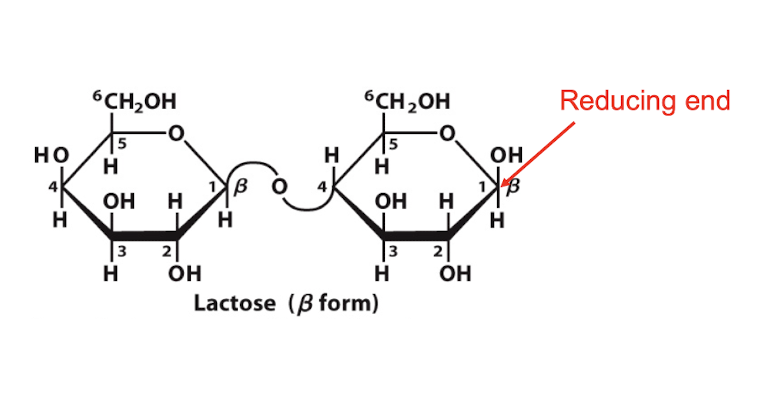

is there always a reducing end?
no! for example sucrose, its resistance to oxidation makes sucrose good storage compound in plants

there are some examples of polysaccharides are important what is one of them?
cellulose— its the most abundant in the world

along with cellulose, what is another important biomolecule?
chitin—it’s the second most abundant biomolecule on earth
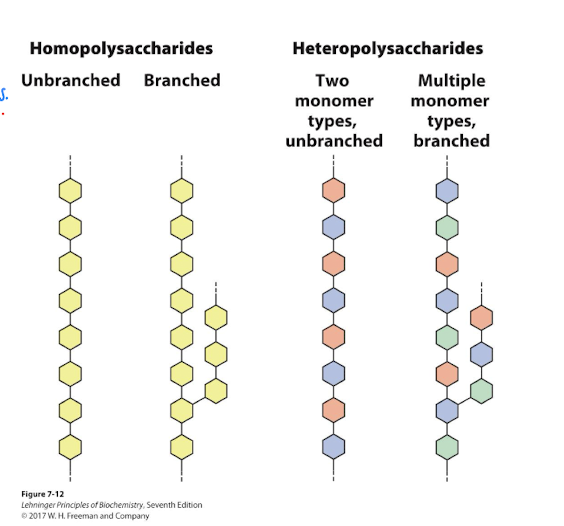
polysaccharides can take one many forms, what are the 4 structural classes
homopolysaccharides, heteropolysaccharides, branched, unbranched


what are the functional classes
storage, structural, and other

what are the specific storage examples in functional classes
starch, glycogen,fructan

one of two specific starch is
amylose
unbranched Glc(a1→4)Glc
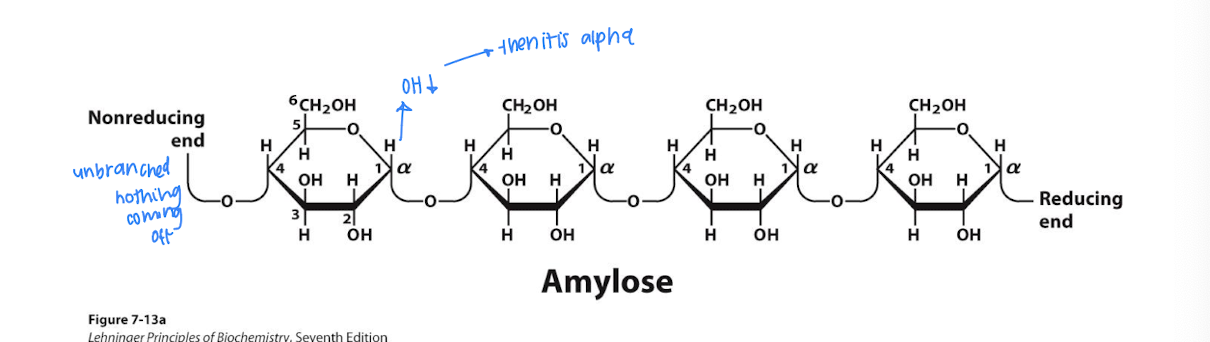

two of two specific starch is
amylopectin
includes Glc(a1→ 6)Glc branches every 24 to 30 residues
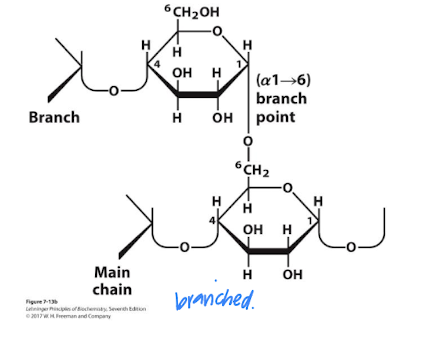

fill-in-the-blank: corn starch is ___ amylose and ___ amylopectin
24%, 76%
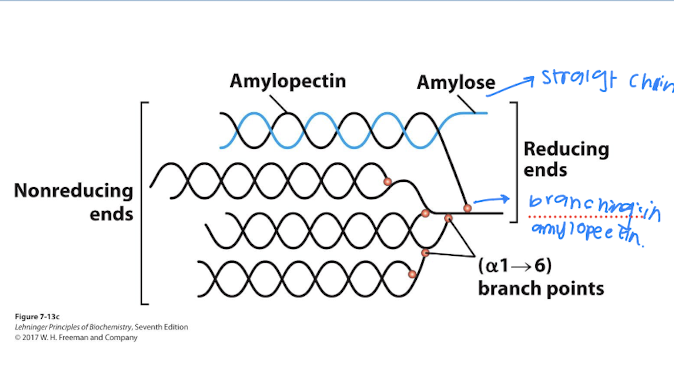

glycogen is similar structure to what?
amylopectin, but more frequent branching (every 8 to 12 residues)

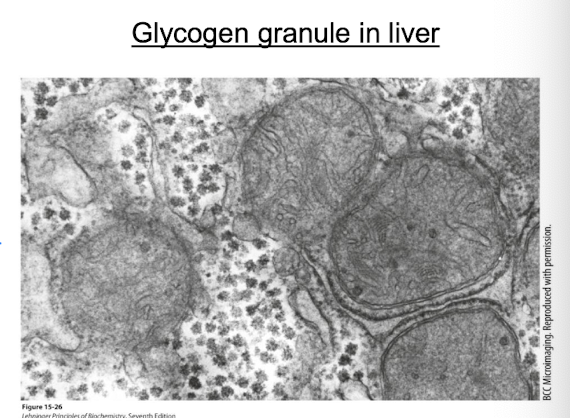
the second storage glycogen can be found where?
in animal liver and muscle
fun fact: it can also be found in microbes (glycogen granule in liver)

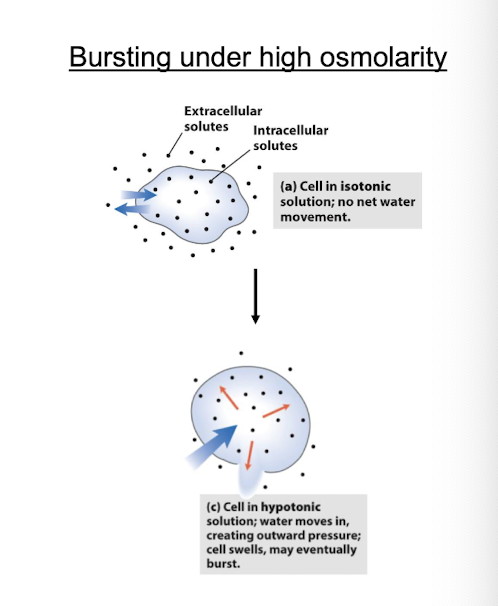
in glycogen what are the reasons glucose are found in polysaccharides
it protects cell from high osmolality
glycogen in human liver
if hydrolyzed, it would form concentrated (0.4M) glucose solution
(high, burst all cells from liver, water will enter cells)
this would burst the cell

the third storage fructan linkage is what
Fru(b2→6)Fru and Fru(B2→1)Fru
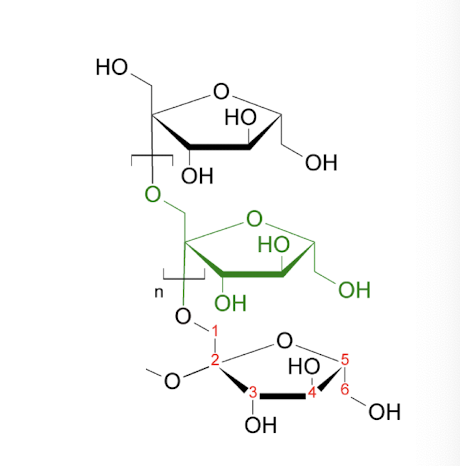

fructan can be found where
plants (up to 30% of grass dry weight (ex.horses))

fructan solubility is what?
slightly to highly soluble

the second function classes storage examples is what?
cellulose
hemicellulose
pectin
b-glucan
chitin
peptidoglycan
agarose

while cellulose brings structural support, its linkage is called
Unbranched Glc(B1→4)Glc
it’s identical to amylose, except linkage is B
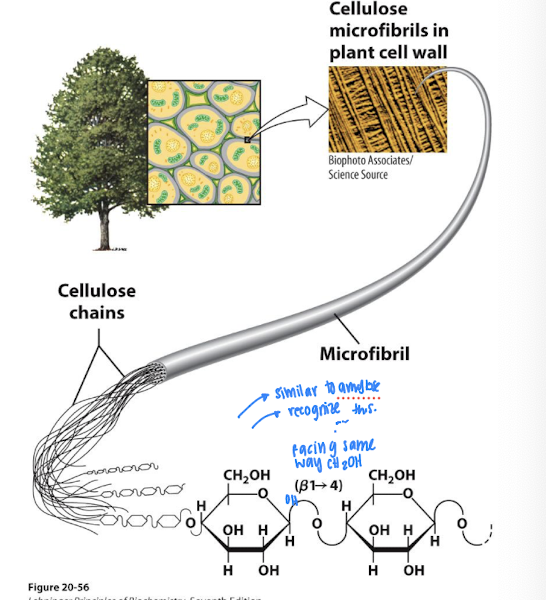

cellulose is…
Tough, Insoluble, and indigestible

cellulose can be found in
Cotton and Plant cell wall (with other polysaccharides)
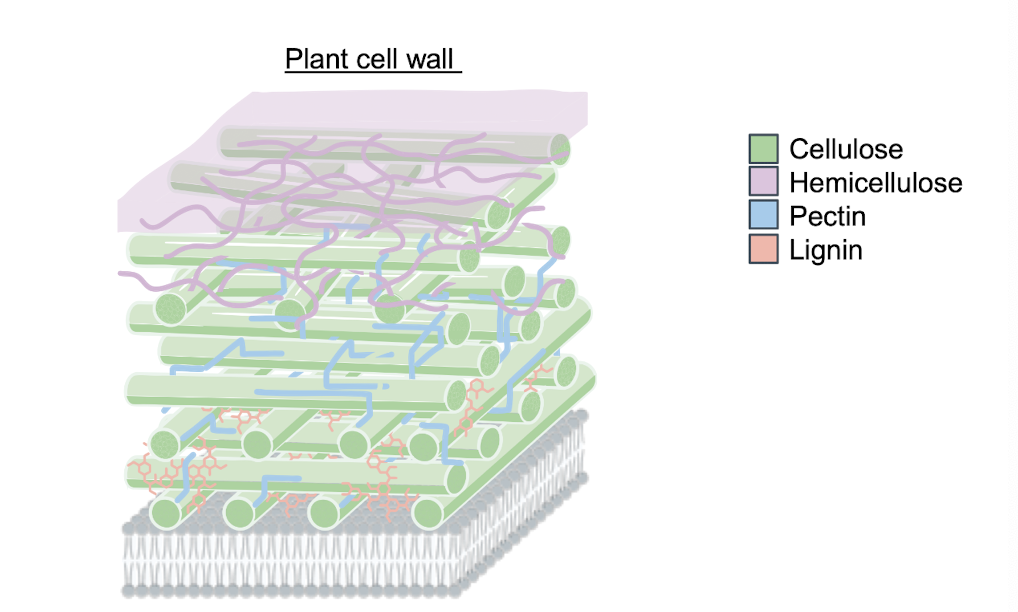

the plant cell wall in cellulose has other components of what (1 of 4)
hemicellulose
xylose core: Xy1(B1→4)Xyl
branches that include arabinose and other sugars

the plant cell wall in cellulose has other components of what (2 of 4)
pectin
Galacturonic acid core: GalA(a1→4)GalA
Branches that include arabinose, galactose, and other sugars
the plant cell wall in cellulose has other components of what (3 of 4)
B-glucan (not shown)
Glc(B1→4)Glc core with Glc(B1→3)Glc branches *Similar to cellulose
found in plants and microbes

the plant cell wall in cellulose has other components of what (4 of 4)
Lignin→ a part of the cell wall
not a carbohydrate
polyphenolic compound


plant cell wall facts
indigestible by mammalian enzymes
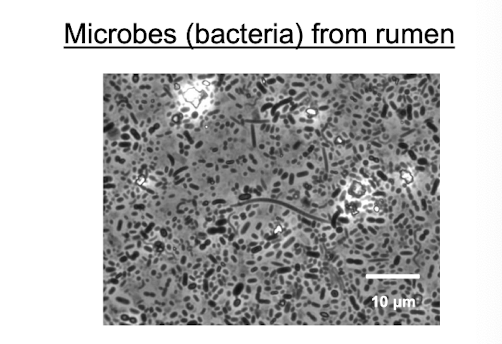
digestible by
gastrointestinal microbes (in conc break down glass)
some arthropods (termites produce enzyme)

chitin linkage is what?
unbranched N-acetylglucosamine GlcNAc(B1→4)GlcNAc
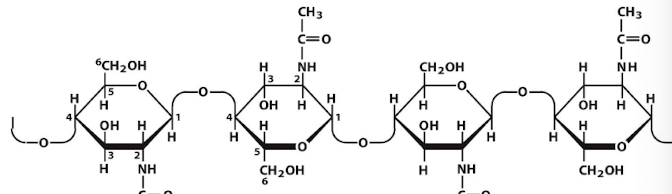

chitin is found in
exoskeletons of arthropods

peptidoglycan(antibacterial agent) linkage is what?
unbranched N-acetylglucoseamine and N-actylmuramic acid: GlcNAc(B1→4)Mur2Ac
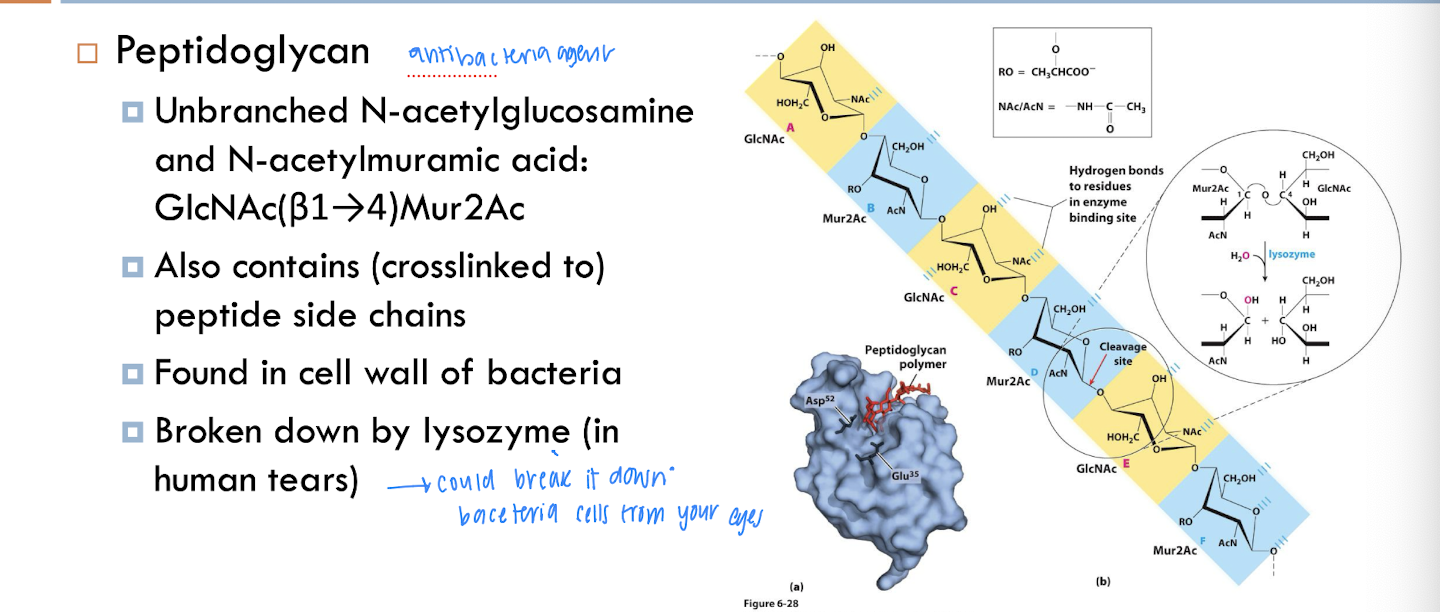

peptidoglycan contains what
(croslinked to) peptide side chain

peptidoglycan founded where
in cell wall of bacteria

peptidoglycan is broken down by
lysozyme in human tears

Agarose is made up of
made up of D-galactose and an L-galactose derivative
contains charged groups (sulfates and pyruvates)
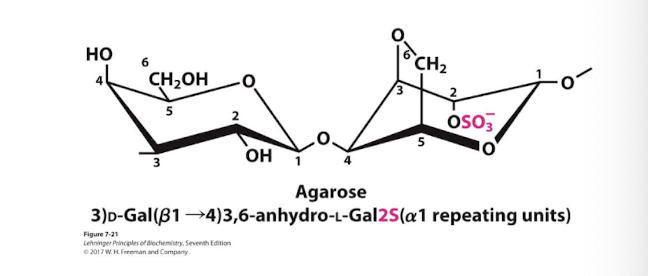

Agarose is comes from
red algae

Agarose is used in
gel electrophoresis

other: glycosaminoglycans made up from
made up alernating aciidic and amino sugars
some contain charged groups (sulfates), forcing an extended configuration
example: chondroitin sulfate
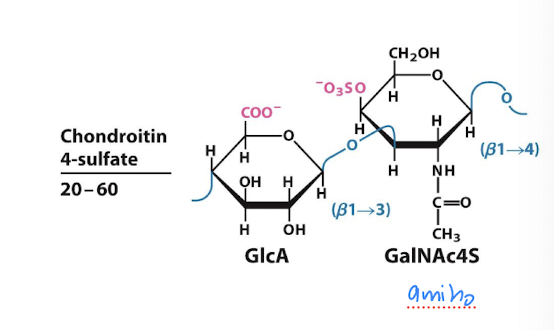

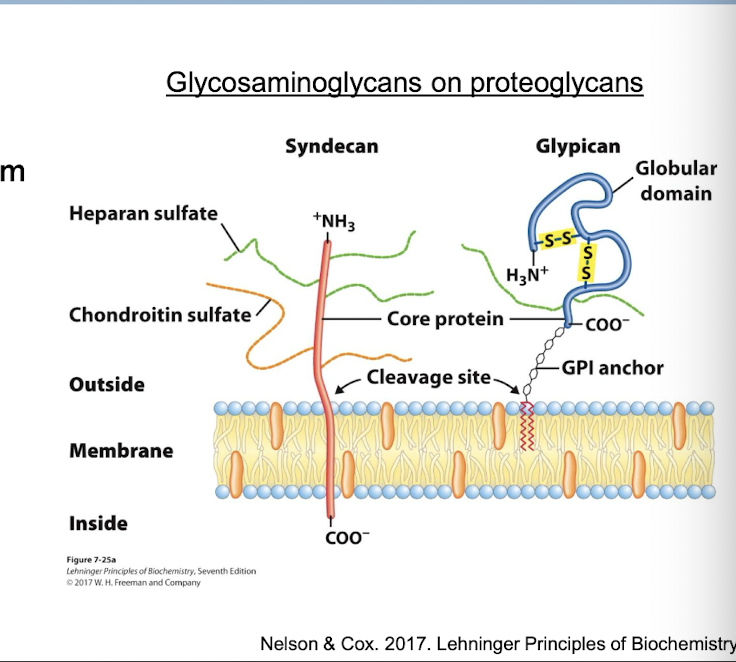
other: glycosaminoglycans come from where
polysaccharides from the extracellular matrix of animals
extracellular matrix: space between the cells

glycosaminoglycans exist
not in free form, rather, attached to proteins to form proteoglycans
roles in cell include
adhesion
recognition
signaling
oligosaccharides are covalently attached to glycoproteins (1)
they’re rare except when attached (covalently) to proteins
attachment is called glycosylation
proteins formed are glycoprotein
common in mammals
make up 50% of total proteins

oligosaccharides are covalently attached to glycoproteins (2)
oligosaccharides are short and highly branched
acetylated residues (e.g., N-acetylglucoseamine) common
carbohydrate-protein linkage involves
ser/thr or Asn on protein
O- or N- on oligosaccharide
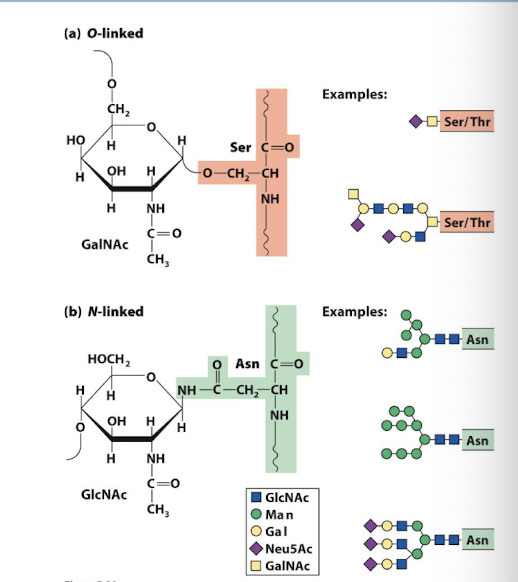

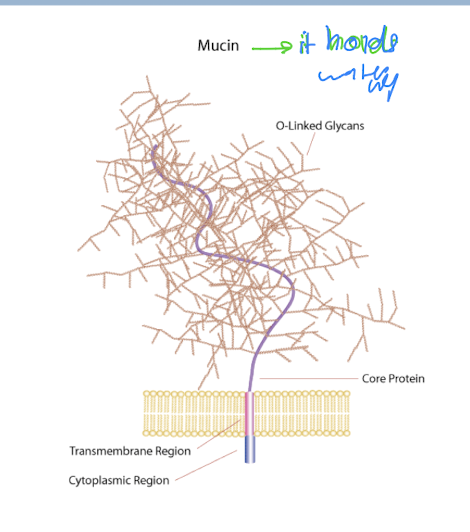
glycoproteins example
mucins
component of mucus
hold water and form gels
glycoproteins recognized by
viruses
toxins
bacteria
other mammalian cells (e.g., leukocytes)
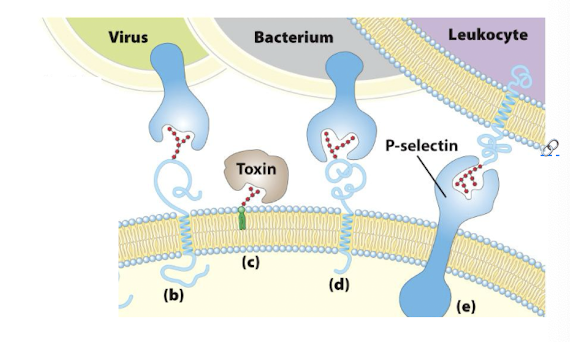
glycoproteins important
important to virulence and immunity
Lipids I: Lipids are structurally diverse
definition of lipids: biomolecules are soluble in organic solvents
ether, benzene, chloroform
otherwise, no shared feature
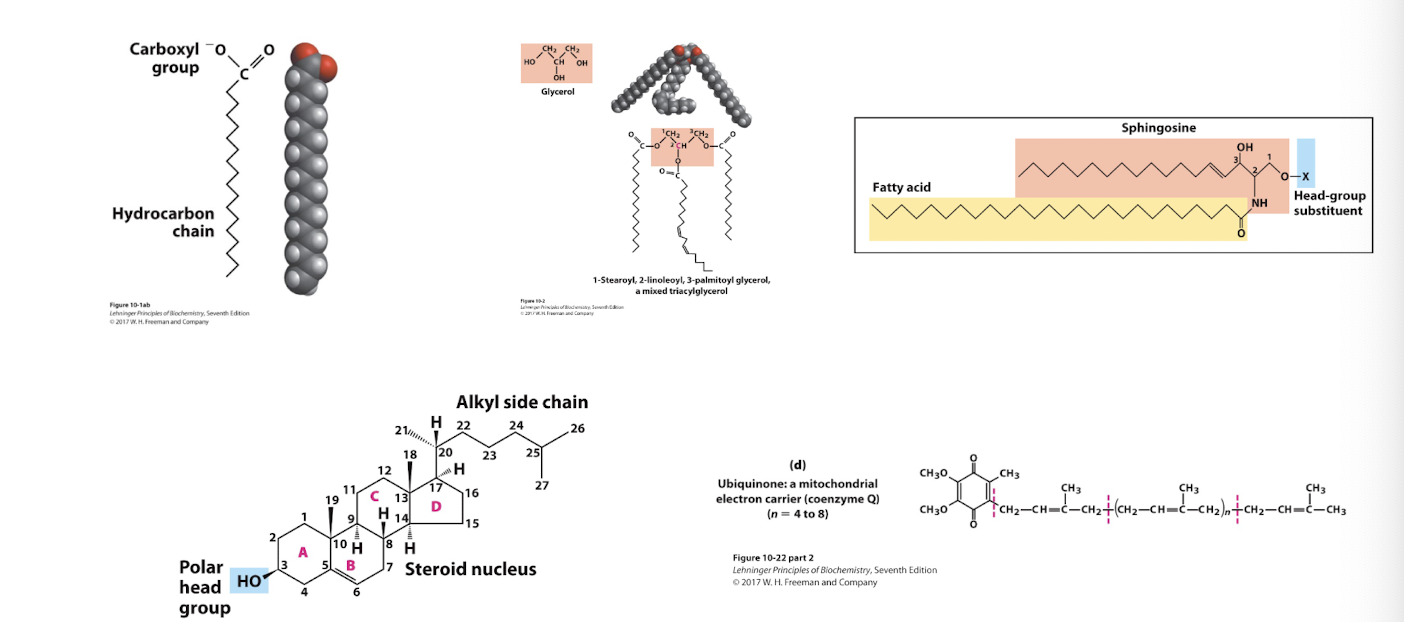
Lipids I: structures and properties of lipids that contain fatty acids
fatty acids themselves
triacylglycerols
waxes
membrane lipids
Lipids I: classification
lipids that contain fatty acids
fatty acid themselves
triacylglycerols
waxes
membrane lipids
lipids that don’t contain fatty acids
sterols
fat soluble vitamins
pigments
polyketides
Lipids I: fatty acids are a major class, what is the nomenclature rules ( lipid number)
fatty acid= carboxylic acids with hydrocarbon chains between 4 to 36 carbons
saturated
no double bonds
unsaturated
one more double bonds
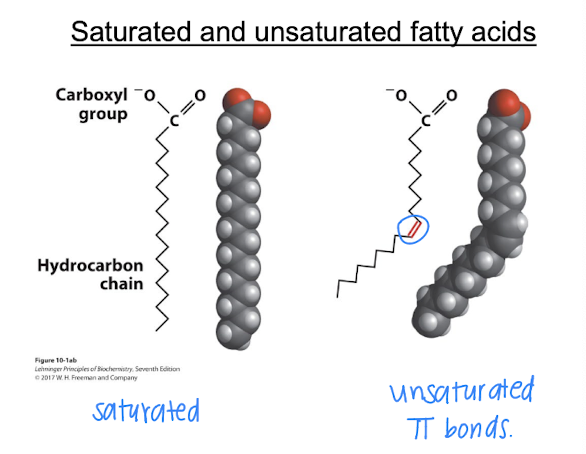
Lipids I: fatty acids are a major class, what is the nomenclature examples ( lipid number)
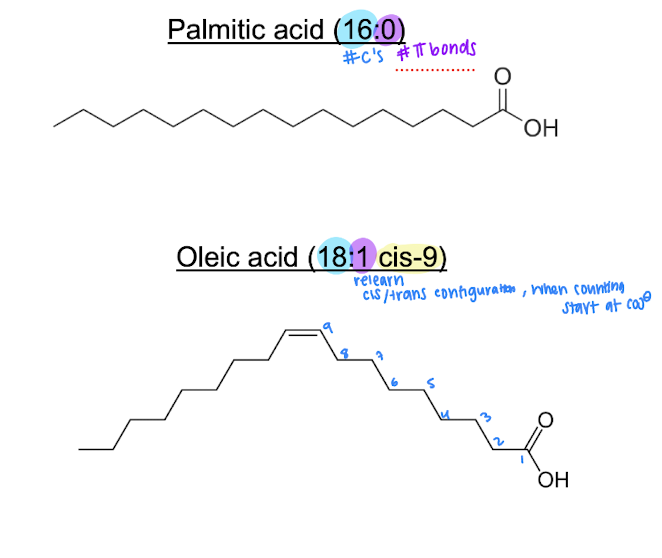
nomenclature (lipid number)
palmitic acid (16:0)
16 c
0 double bonds
oleic acid (18:1 cis-9)
18 c
1 double bond in cis configuration beginning at c9
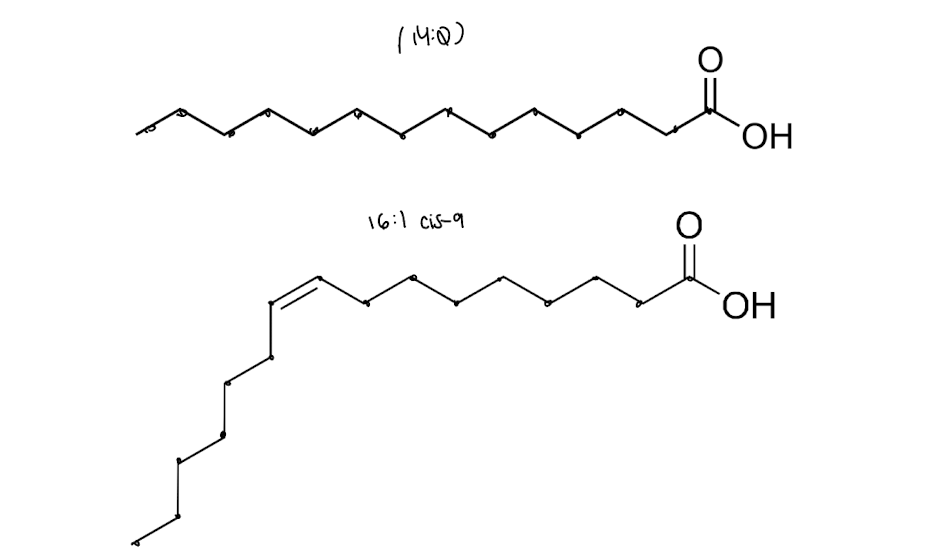
Lipids I: fatty acids are a major class, question examples
(14:0), (16-1 cis-9)
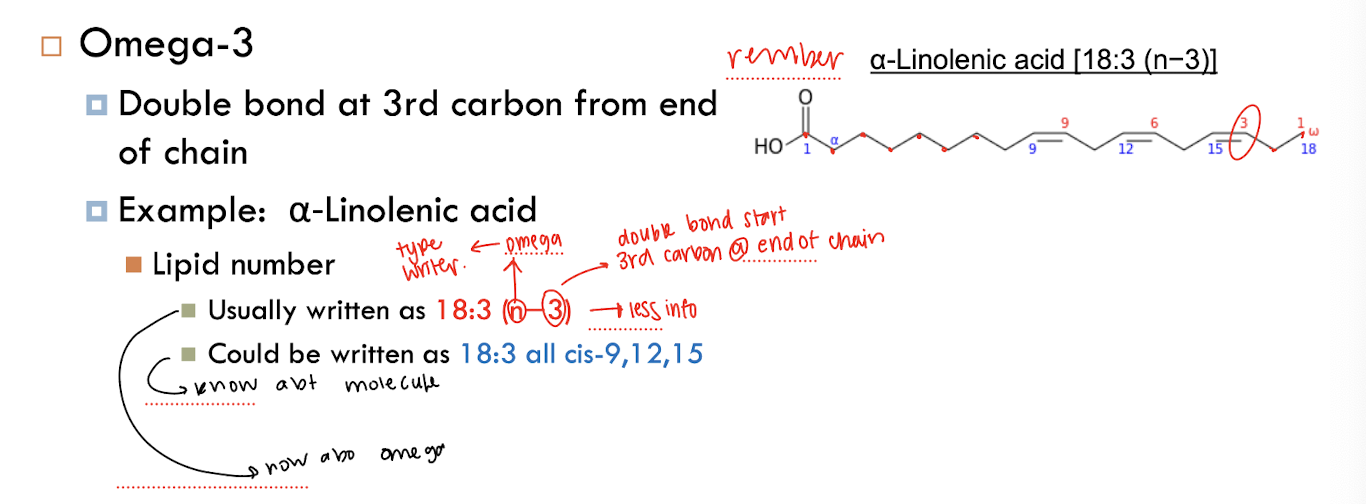
Lipids I: fatty acids (Omega-3) example
double bond at 3rd carbon from end of the chain
example: a-linoleic acid
lipid number
usually written as 18:3 (n-3) → less info, specificity
could be written as 18:3 all cis-9,12.15
Lipids I: fatty acids (Omega-3) importance
many required in diet
a-Linolenic acid
cannot be synthesized
animals lack the desaturase enzymes to form the unsaturated bonds→ causes deficiency
Eicosapentanoic acid (EPA) (20:5 n-3)
can be synthesized from a linolenic acids if enough of this precursor
otherwise required in diet
Docosahexaenoic acid (DHA) 22:6 n-3)
same as EPA
Deficiency causes dermatitis, skin lesions, poor growth, reproductive failure
Lipids I: fatty acids (Omega-6) example
double bond at 6th carbon from end of chain
example: linoleic acid
lipid number
usually written as 18:2 (n-6)
could be written as 18:2 cis,cis-9,12
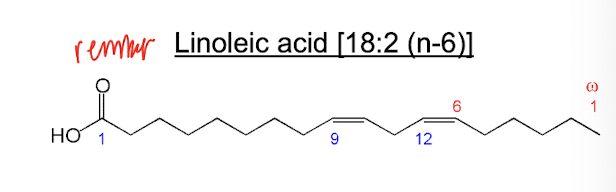
Lipids I: fatty acids (Omega-6) importance
many required in diet
linoleic acid
Arachidonic acid (AA) (20:4 n-6)
if not enough linoleic acid avaliable as a precursor
always required by cats
cats lack enzymes to synthesize from linoleic acid
omega-3 and omega-6 rich in fish oil
Lipids I: fatty acids (Conjugated linoleic acid (CLA)) importance
family of 28 isomers of linoleic acid
have conjugated double bonds
alternating double and single bonds
formed in rumen by microbes
process known as biohydrogenation
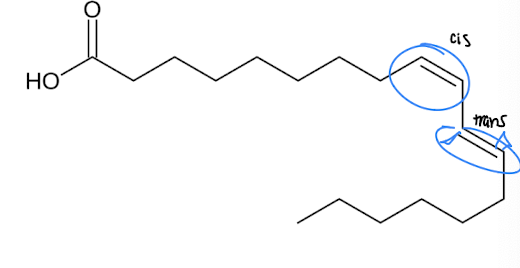
Lipids I: fatty acids melting point (1 of 2)
decreases as the number of unsaturated bonds increases
decreases as the chain length decreases
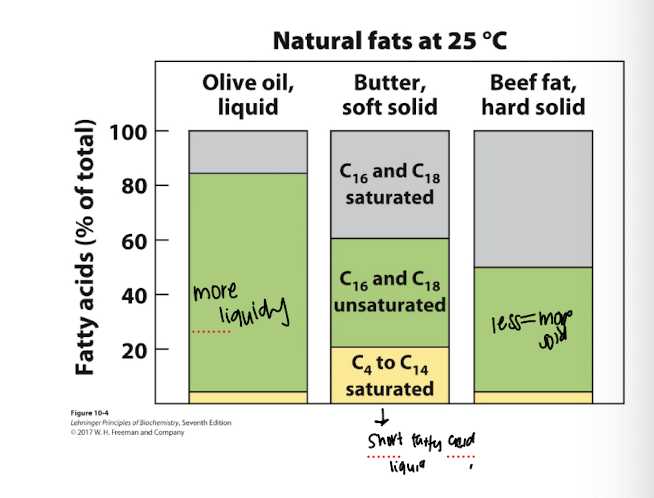
Lipids I: fatty acids melting point (2 of 2)
decreasing as the number of unsaturated bonds increases
especially for unstaturated bonds in cis configuration
kinks prevent close packing of fatty acids
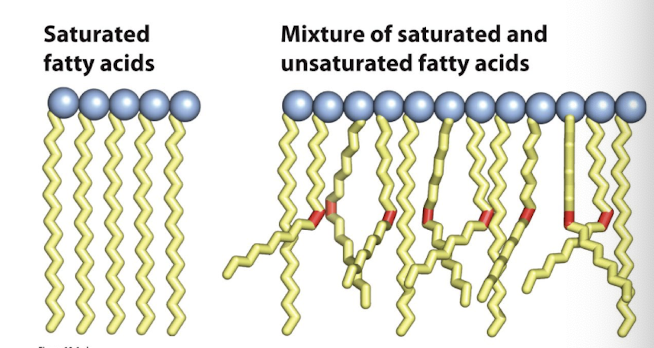
Lipids I: what stores fatty acids?
triacylglycerol= ester of glycerol and fatty acids
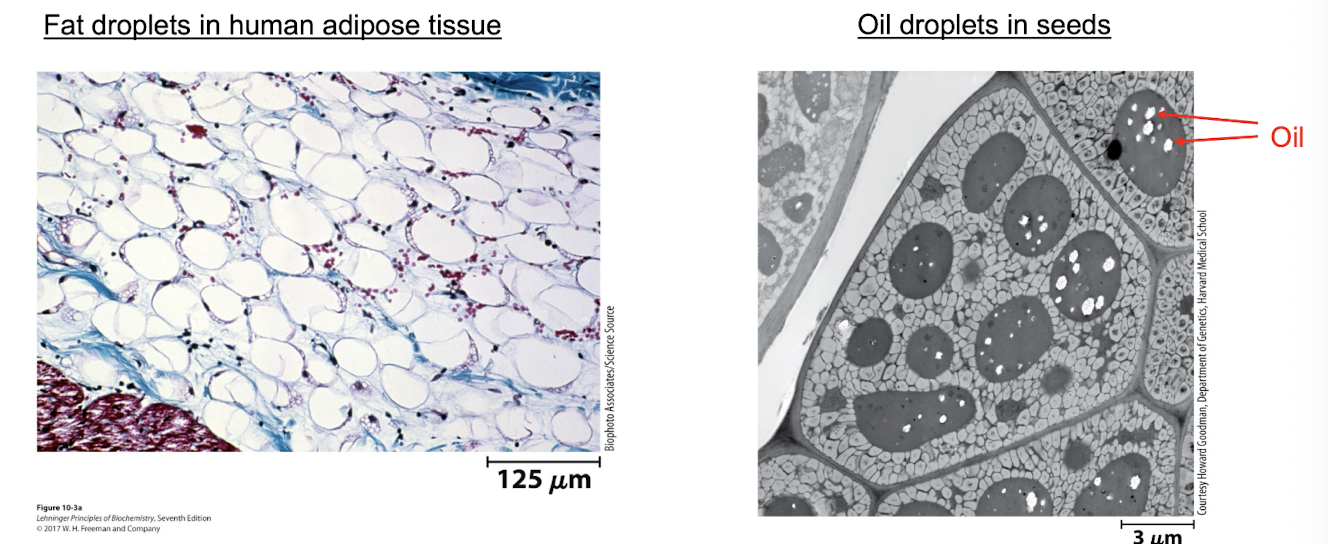
location of most fatty acids stored in cells
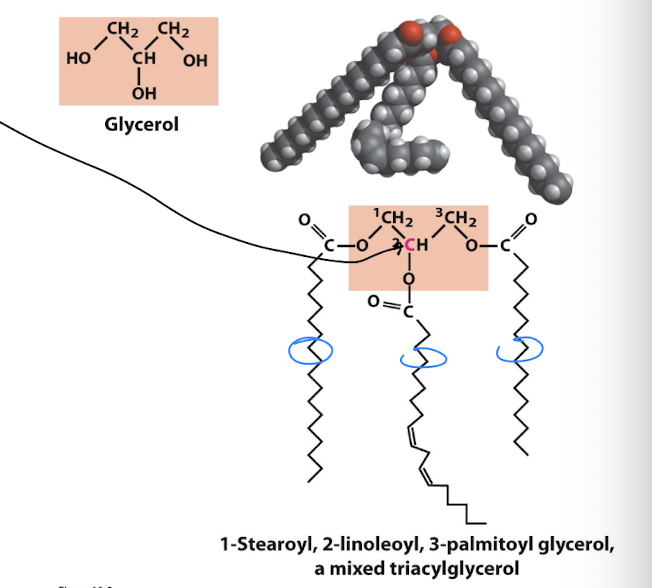
Lipids I: triacylglycerols about
major form of energy storage in plants and animals
used over polysaccharides because fatty acids
are more reduced carry more energy per carbon
are nonpolar and carry less water per gram
Lipids I: waxes store fatty acids and repel water (about)
ester of long-chain fatty acids with long-chain alcohols
insoluble and have high melting points
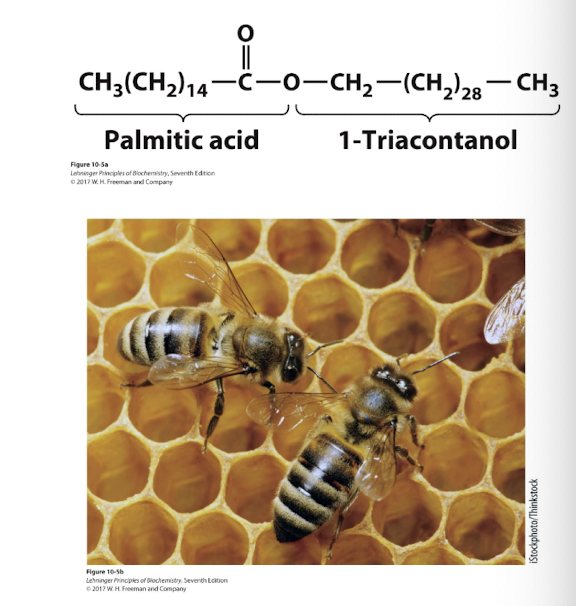
Lipids I: waxes store fatty acids and repel water (functions)
storage of fatty acids in plankton
protection and pliability for hair and skin in vertebrates
waterproofing of feathers in birds
protection from evaporation in plants
useful as lotions, ointments, and polishes
Lipids I: membrane lipids envelope cells
components of the membrane of cels
types
phospholipids
glycolipids
archaeal ether lipids
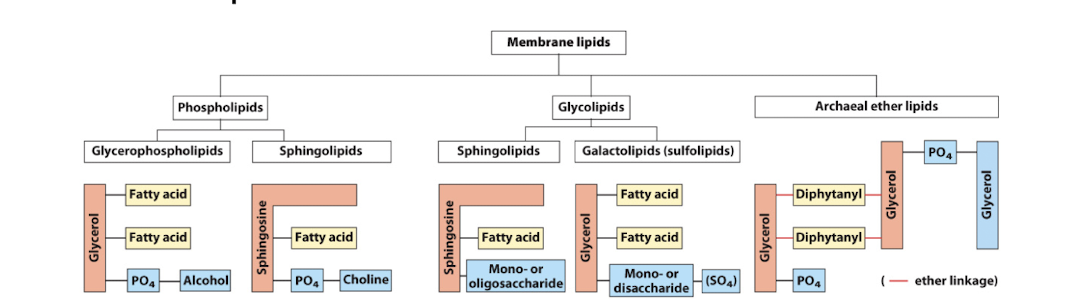
Lipids I: membrane lipids envelope cells (phospholipids 1 of 6)
similar structure to triacylglycerol but
one fatty acids substituted with polar head group
backbone may or may not be glycerol
backbone is glycerol in glycerophospholipids
backbone is sphingosine in sphingolipids
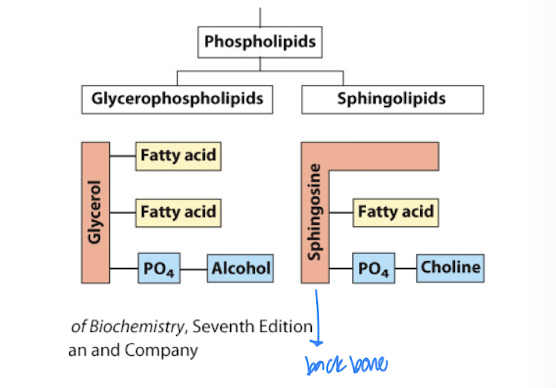
Lipids I: membrane lipids envelope cells (phospholipids 2 of 6)
polar head group
contains phosphate
may contain other constituents (X)
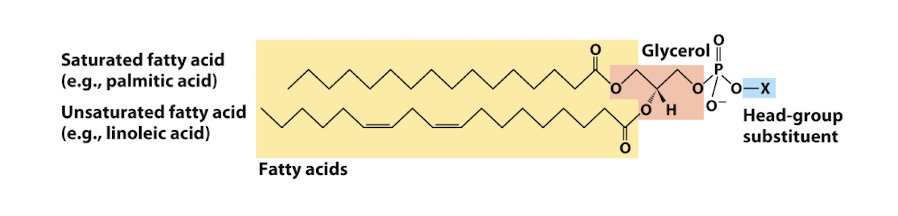
Lipids I: membrane lipids envelope cells (phospholipids 3 of 6)
head groups of glycerophospholipids
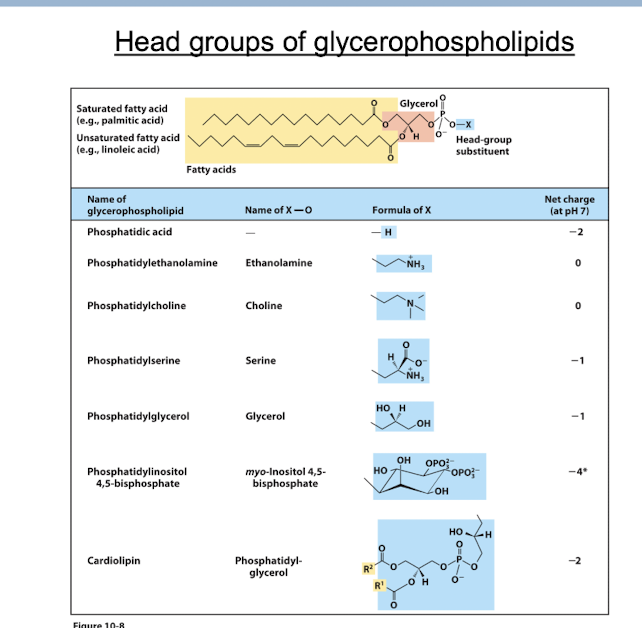
Lipids I: membrane lipids envelope cells (phospholipids 4 of 6)
head groups of sphingolipid
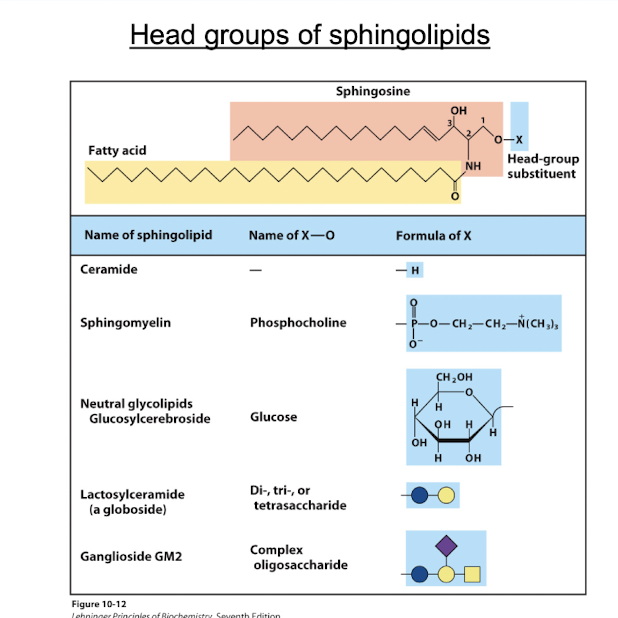
Lipids I: membrane lipids envelope cells (phospholipids 5 of 6)
phosphotidylcholine
A glycerophospholipid
has phosphocholine head group
one fatty acid is usually unsaturated
major membrane lipid for animals
absent in most bacteria
lack enzymes for synthesis of choline

Lipids I: membrane lipids envelope cells (phospholipids 6 of 6)
sphingomyelin
a sphingolipid
like phosphotidylcholine, has a phosphocholine head group
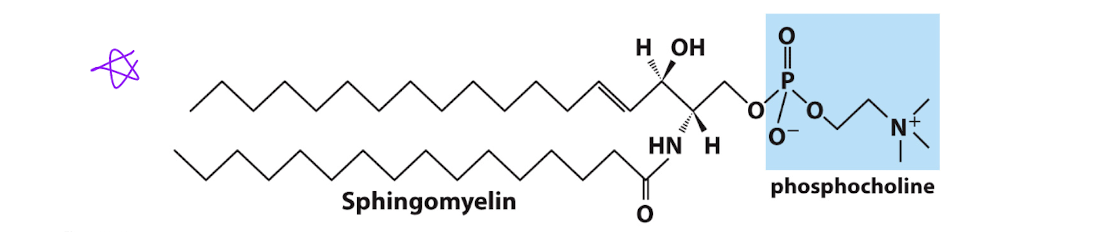
Lipids I: membrane lipids envelope cells (glycolipids 1 of 3) about
similar structure to phospholipids but
polar head group is carbohydrate, not phosphate
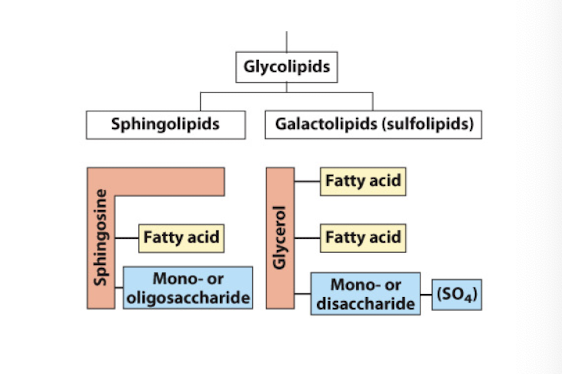
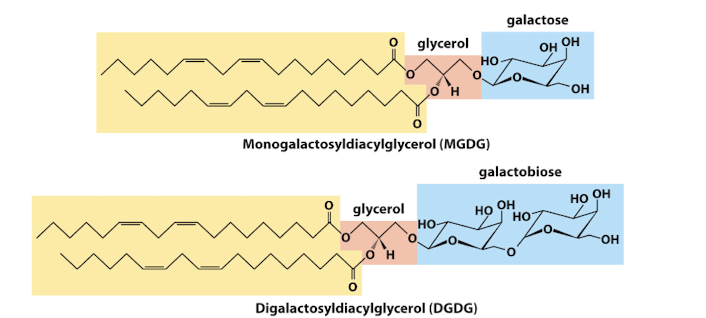
Lipids I: membrane lipids envelope cells (glycolipids 2 of 3) example
galactolipids
polar head group is one or two galactose residues
major membrane lipid in plants
Lipids I: membrane lipids envelope cells (glycolipids 3 of 3)
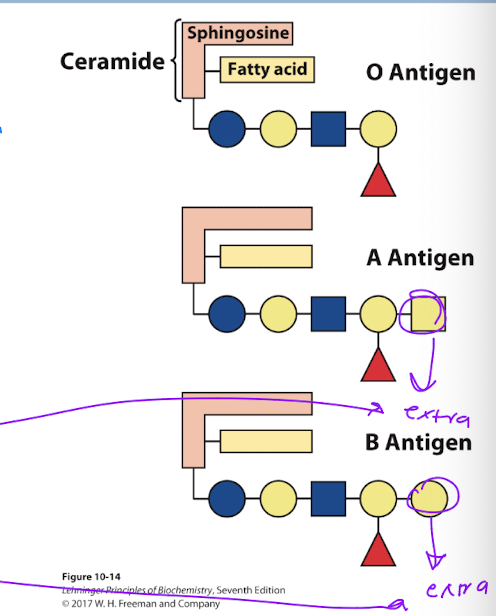
glycosphingolipids
polar head group is an oligosaccharide
determine blood types
o antigen= type o blood
a antigen= type a blood
b antigen = type b blood
difference is due to single residue
a antigen → extra N-acetylgalactosamine
b antigen→ extra galactose
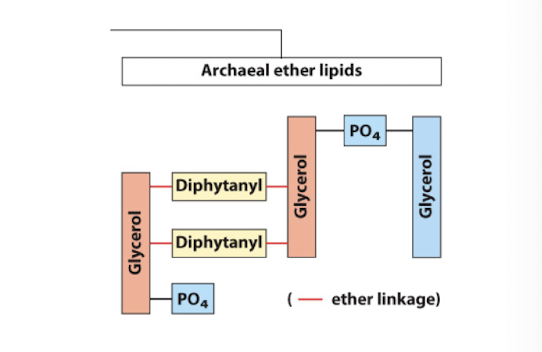
Lipids I: membrane lipids envelope cells (Archaeal ether lipids 1 of 3)
found in archaea
unusual structure
don’t contain fatty acids
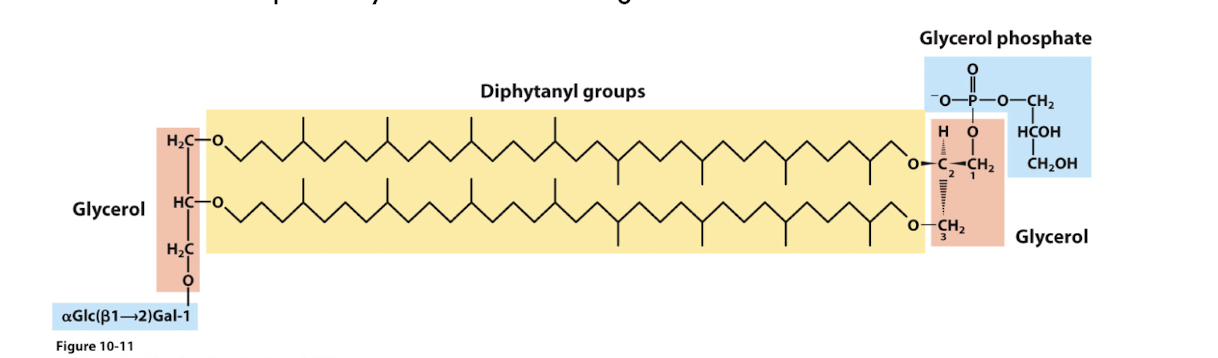
hydrocarbon is instead diphytanyl
contains 3 glyercol residues
one is a head group, and two are linked to the diphytanyl hydrocarbons
linkages are ether not amid or ester
Lipids I: membrane lipids envelope cells (Archaeal ether lipids 2 of 3)
Diphytanyl groups
long (32 carbons) and span the entire membrane
don’t form lipid bilayer found in most organisms
Lipids I: membrane lipids envelope cells (Archaeal ether lipids 3 of 3)
reasons for unusual structure
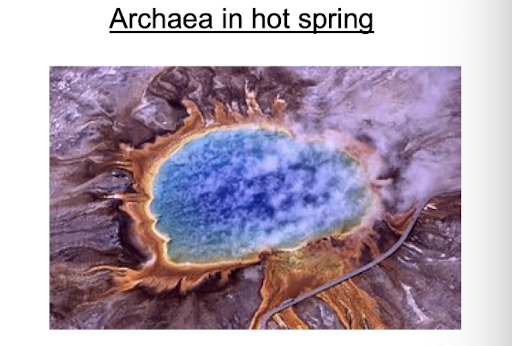
more stable under low pH and hot environments of some archaea
ether linkage more resistant to hydrolysis than ester
the lipid “unilayer” they form is more stable than a bilayer
Lipids II: structure and prpoperties of lipids that don’t contain fatty acids are
sterols
fat soluble vitamins
pigments
polyketides
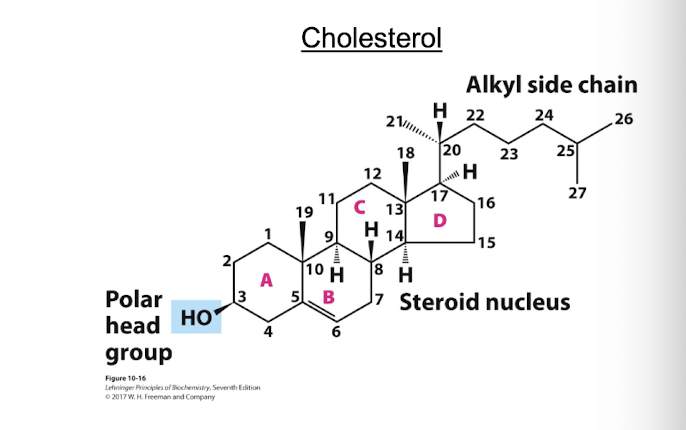
Lipids II: sterols contain fused rings
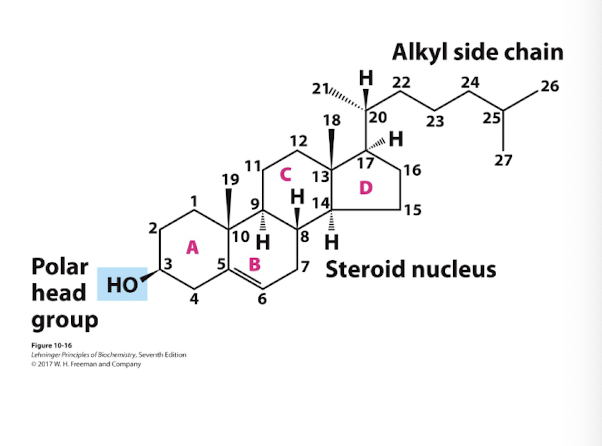
rings make up structure called steroid nucleus
3 rings with 6 carbons
1 ring with 5 carbons
structure is flat (planar) and rigid
polar head group (hydroxyl group) and nonpolar side chains also present
Lipids II: what are the types of sterols
cholesterol
steroid hormones
bile acid
vitamin D precursors
Lipids II: sterol (cholesterol)
most abundant sterol in animal tissue
component of cell membranes
change fluidity of membrane
can be obtained from diet or synthesized in liver
transported in blood via lipoproteins
lipoproteins include HDL (good cholesterol), LDL (bad cholesterol), and others
Lipids II: sterol (steroid hormones)
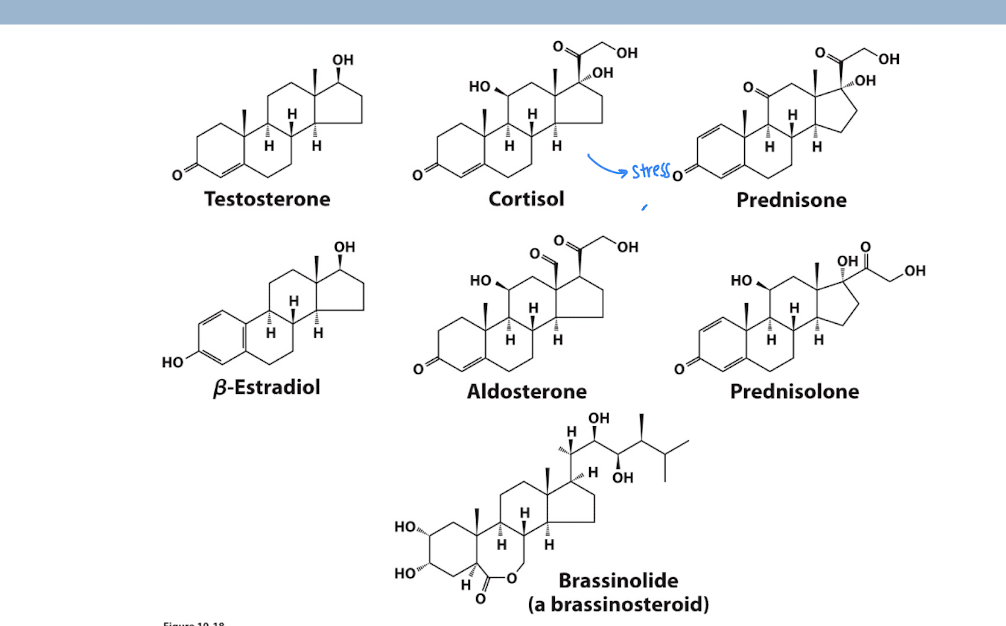
examples: estrogen and testosterone
don’t contain alkyl side chain, so more polar than cholesterol
synthesized from cholesterol in gonads and adrenal glands
carried through the body in the bloodstream, usually attached to carrier proteins
many are s*x hormones or reduce inflammation