Bio Unit 2 - Exchange of Materials
 Call Kai
 Learn
 Practice Test
 Spaced Repetition
 Match
 Flashcards
 Knowt Play
1/50

There's no tags or description
Looks like no tags are added yet.
51 Terms
Carbon Compounds
The building blocks of life, found in molecules that are essential to an organism’s survival, such as carbohydrates, lipids, proteins and nucleic acids
Carbon atoms can form four covalent bonds allowing a variety of stable compounds to exist

Covalent bonds
A covalent bond is a type of bond in which electrons are shared between two neighbouring atoms.
The covalent bond is considered to be a stable bond and therefore, its presence gives stability to molecules.
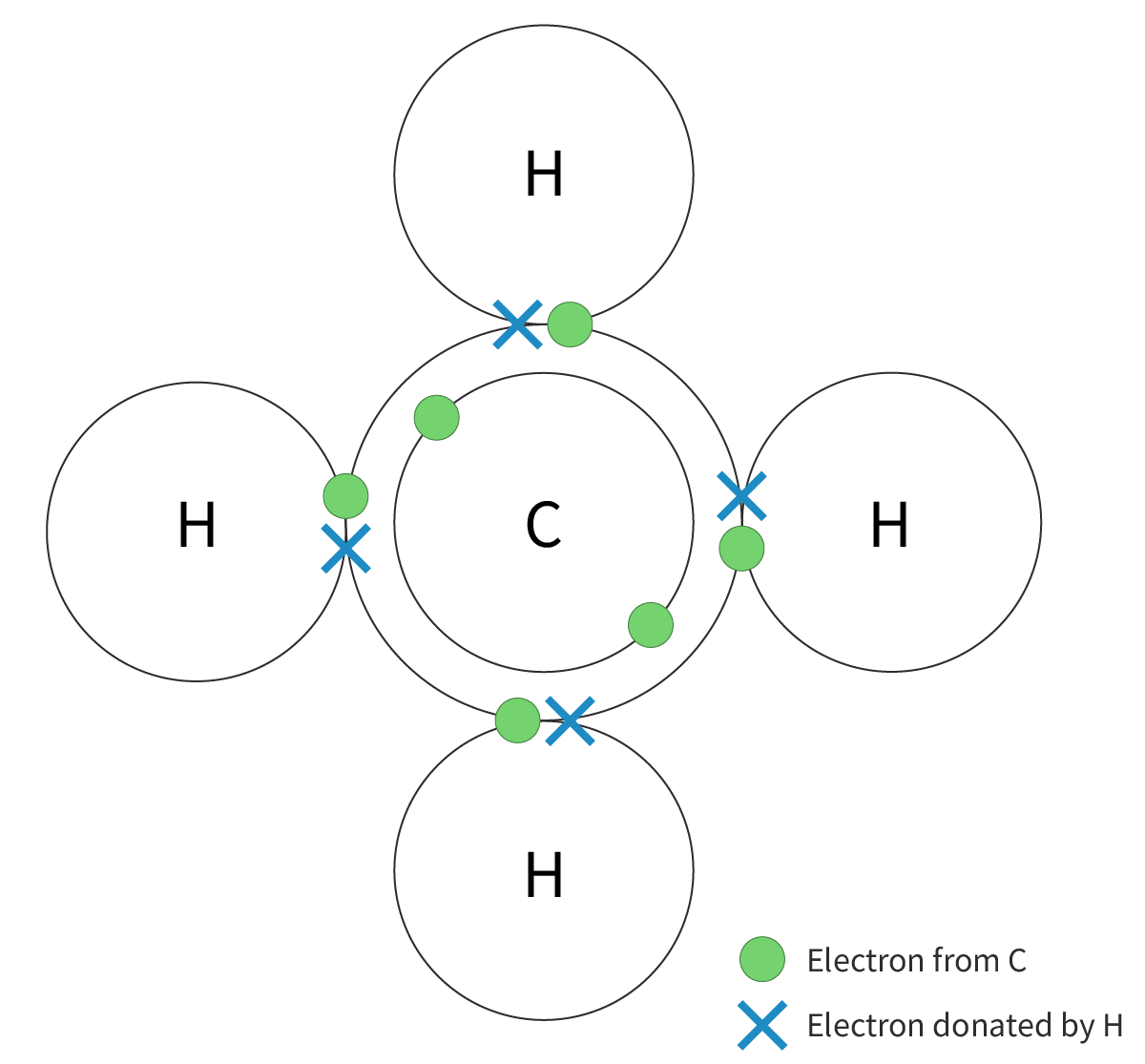
Carbon–carbon bonds
Carbon–carbon bonds specifically are strong and stable; therefore, long-chained carbon compounds provide the basic framework for many molecules.
The longer the chain of carbon–carbon bonds, the more stable the molecule, as there are more covalent bonds holding it together.
Carbons can also form carbon rings and branched structures
Carbon can bind to other carbon atoms or to non-metallic elements through either single or double bonds
Example of carbon compound with one ring
Glucose
Example of carbon compound with multiple rings
glycogen: a polymer of many glucose molecules
Macromolecules and its 4 main classes
Macromolecules are large molecules that are made up of smaller building blocks called monomers
carbohydrates
lipids
proteins
nucleic acids
Monomers
Monomers are individual subunits that can be linked together to form longer chains called polymers.
Formation by condensation reactions
A polymerisation reaction in which two molecules join together, where one molecule loses a hydroxy group (−OH) and the other loses a hydrogen atom (−H), forming a water molecule and resulting in formation of a new covalent bond.
Condensation reactions are responsible for formation of macromolecules.
glucose molecules joining through a condensation reaction
In a condensation reaction between two glucose molecules, the −OH group on carbon 1 of one glucose molecule attaches to the −OH group on carbon 4 of the other glucose molecule
This results in formation of a covalent bond between the two glucose molecules, and the release of a molecule of water.
The resulting covalent bond that links glucose molecules together is called a 1,4-glycosidic bond.
In a glycosidic bond, an oxygen atom is shared between the two glucose molecules that are joined together.
Polysaccharides
complex carbohydrate polymers made of long chains (often hundreds to thousands) of carbohydrate molecules, composed of monosaccharides, linked together by glycosidic bonds
starch, glycogen, cellulose
Breakdown by hydrolysis reactions
Hydrolysis is a chemical reaction in which water molecules are used to break the covalent bonds between the monomers that make up a polymer, breaking down large, insoluble polymers into monomers
monosaccharides
A monosaccharide is the simplest form of a carbohydrate consisting of a single sugar unit that cannot be broken down into smaller molecules by hydrolysis, that serve as a source of energy for cells and are involved in various cellular processes.
Types of monosaccharides
Monosaccharides are classified by the number of carbon atoms they contain
Pentoses have five carbon atoms: ribose
Hexoses have six carbon atoms: glucose and galactose

Digestion
Digestion is the breakdown of large, insoluble biological polymers into small, soluble monomers that can be absorbed by an organism.
This occurs through hydrolysis reactions
Properties and uses of glucose
Glucose is the most common monosaccharide found in nature
1. Glucose has two isomers: alpha-glucose (α-glucose) and beta-glucose (β-glucose).
In alpha-glucose, the hydroxy (–OH) group is oriented downwards
In beta-glucose, the hydroxy (–OH) group is oriented upwards’
The difference in orientation between these two isomers plays a critical role in the formation of polysaccharides such as starch, glycogen and cellulose
2. Glucose is a soluble molecule.
Polar molecule: as it contains several –OH groups, which are polar functional groups
It can be easily transported in blood as it can dissolve in plasma, essential for cellular respiration
3. Glucose is a stable molecule.
Glucose is a cyclic molecule with the –OH groups situated in the equatorial regions of the molecule, making it chemically stable
Key feature for the structural and storage role
4. Glucose can be oxidised.
Oxidation is a chemical reaction that involves the loss of electrons from an atom or molecule
Oxidation is an important process in many biological systems as it involves production of energy in the form of ATP through cellular respiration
Starch
Primary storage form of glucose in plants, stored in specialised plant structures such as seeds and roots.
2 types of starch
amylose
A linear polysaccharide made up of glucose monomers that are linked together through alpha-1,4-glycosidic bonds
Has a coiled structure and is typically composed of between 300 and 3000 glucose units.
amylopectin.
Highly branched polysaccharide made up of glucose units linked together through alpha-1,4-glycosidic bonds, with occasional alpha-1,6-glycosidic bonds that create branches in the molecule
Allows amylopectin to form a more complex three-dimensional structure, allowing for more efficient storage of glucose
Starch is compact in structure due to its coiling and branching, which allows for efficient storage in a small space.
Relatively insoluble due to their large molecular size
Relative ease of adding or removing alpha-glucose monomers by condensation and hydrolysis to build or mobilize energy stores
Glucose can then be used as a source of energy by the plant to carry out various cellular processes such as growth and photosynthesis.

Glycogen
Glycogen is the primary storage form of glucose in animals, mainly in the liver and muscle cells of animals.
A branched polymer of glucose molecules that form a highly compact, coiled structure in cells.
Linked together through both alpha-1,4-glycosidic bonds, forming a backbone, and frequent alpha-1,6-glycosidic bonds that occur about every 8–12 glucose units.
Coiled structure of glycogen due to the branching pattern of the molecule, which allows for efficient storage and mobilisation of glucose when energy is needed.
Like starch, glycogen is relatively insoluble due to its large molecular size, helping maintain osmotic balance within an organism.
Relative ease of adding or removing alpha-glucose monomers by condensation and hydrolysis to build or mobilize energy stores
The liver stores glycogen primarily to maintain blood glucose levels,
Muscle cells store glycogen primarily to provide energy for muscle contraction during exercise.
Polysaccharides as structural compounds: cellulose
Complex polysaccharide that is composed of beta-glucose molecules - an essential component of the plant’s cell wall
Cellulose forms a straight chain because the beta-glucose molecules alternate in orientation.
This unique structure allows the cellulose molecules to form long, unbranched chains that can be grouped into bundles called microfibrils
The microfibrils are held together by hydrogen bonding that occurs between adjacent cellulose molecules, creating a strong lattice structure with a lot of tensile strength

Role of glycoproteins in cell–cell recognition
Glycoproteins: proteins that have one or more carbohydrates attached to them.
Cell–cell recognition:
Act as markers on the surface of cells, allowing them to identify each other and interact appropriately.
The ABO blood group system is based on the presence of specific glycoproteins on the surface of red blood cells.
These glycoproteins are called A and B antigens. Individuals can have one, both or neither of these antigens on their red blood cells.
Individuals with the A antigen have type A blood, whereas individuals with the B antigen have type B blood. Individuals with both A and B antigens have type AB blood, whereas individuals with neither antigen have type O blood.
Hydrophobic properties of lipids
Lipids are non-polar molecules that are characterised by their low solubility in water. Due to their hydrophobic nature, lipids ‘repel’ water and are typically insoluble in aqueous solutions.
In contrast, if you place lipids in non-polar solvents they have the ability to dissolve. This is because non-polar solvents have a similar polarity to the lipid molecules, allowing them to dissolve.
Lipids include fats, oils, waxes and steroids.
Formation of triglycerides and phospholipids by condensation reactions
Triglycerides are formed by condensation of one glycerol molecule and three fatty acid molecules.
Each time a fatty acid molecule joins the glycerol molecule with an ester bond, a water molecule is released.

What is an ester bond
The bond that forms between the glycerol and fatty acid is called an ester bond.
Formation of phospholipids by condensation reactions
A phospholipid is formed by condensation reactions and consists of one glycerol molecule modified with one phosphate group and two fatty acids
When the two fatty acids join to the modified glycerol phosphate molecule, an ester bond is made and water is released.

Saturated fatty acids
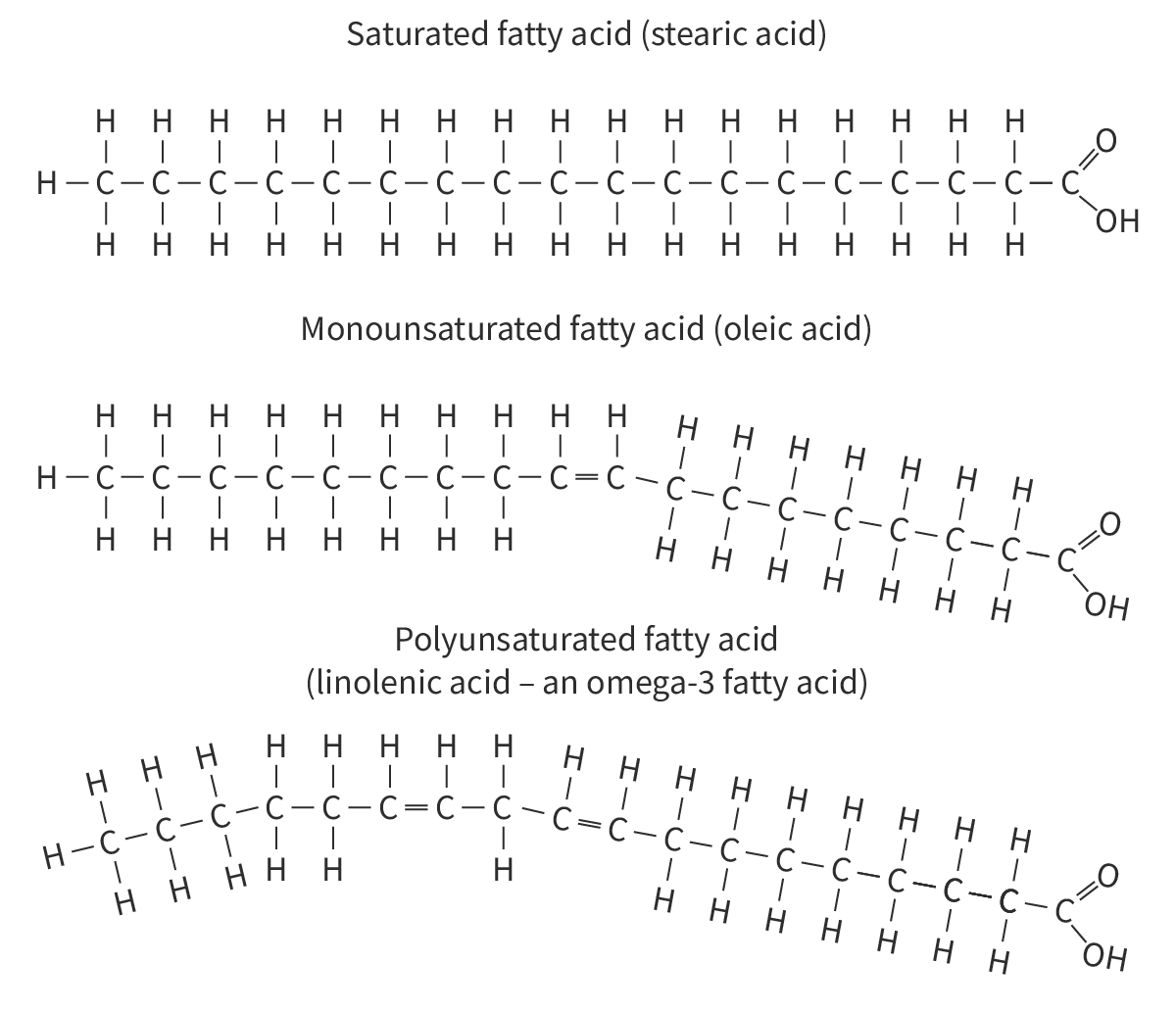
Saturated fatty acids have a straight, linear shape because there are no double bonds between the carbon atoms.
This allows the fatty acids to pack tightly together with many intermolecular interactions, forming a solid at room temperature.
Hydrocarbon chains in fatty acids
Hydrocarbon chains in fatty acids are long, linear chains of carbon and hydrogen atoms that make up the backbone of fatty acid molecules, and vary in length
The carbon atoms in the chain are bonded together by single and/or double covalent bonds, and each carbon atom is also bonded to a hydrogen atom.
The more double bonds there are, the lower the melting point.
The arrangement and number of these bonds determine the structure and properties of the fatty acid.
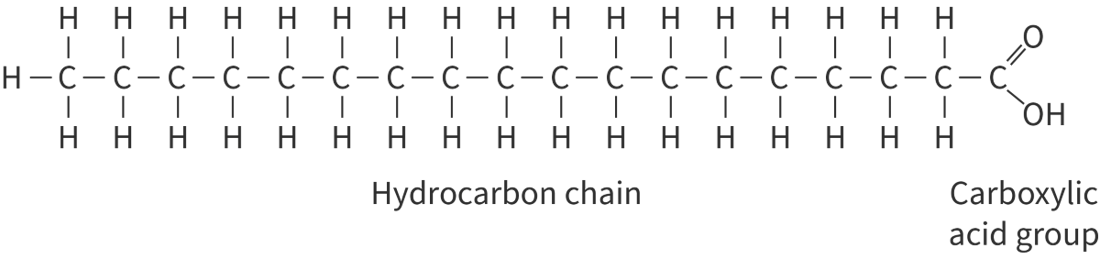
Unsaturated fatty acids
Unsaturated fatty acids have one or more double bonds (C=C), which introduce kinks in the fatty acid chain.
These kinks prevent the fatty acid molecules from packing closely together, resulting in a liquid at room temperature.
What molecules can pass through the lipid bilayer
Small hydrophobic molecules (O2, CO2, N2, benzene)
Small, uncharged polar molecules (H2O, glycerol, ethanol)
Freely diffuse through the lipid bilayer
what molecules cannot pass through the lipid bilayer
Large, uncharged polar molecules (amino acids, glucose, nucleotides)
Ions (Na+, Cl-)
Movement across membranes requires specialized transport proteins
monounsaturated fats
These fats have one double bond in their hydrocarbon chain, which causes a kink or bend in the chain.
This kink makes it difficult for the molecules to pack together tightly, resulting in a liquid state at room temperature.
Examples of monounsaturated fats include oleic acid which is found in olive oil, and palmitoleic acid, which is found in macadamia nuts.

polyunsaturated fats
These fats have two or more double bonds in their hydrocarbon chain, causing multiple kinks or bends in the chain
This structure makes it even more difficult for the molecules to pack together, resulting in a liquid state at room temperature.
Examples of polyunsaturated fats include linoleic acid, which is found in vegetable oils like soybean oil, and alpha-linolenic acid, which is found in fatty fish like salmon.
diffusion
Diffusion is the net movement of molecules from an area of higher to low concentration
osmosis
Osmosis is the spontaneous net movement of water through a selectively permeable membrane from low solute concentration to high solute concentration
aquaporin
and integral protein channel for water in the lipid bilayer
Triglycerides in adipose tissue for energy and thermal insulation
triglycerides can serve as effective thermal insulators helping to regulate body temperature and protect against the cold
Fat is stored in adipocytes as liquid droplets and can be broken down into ATP
The blubber found in whales which is primarily composed of adipose tissues containing large amounts of triglycerides.
Formation of phospholipid bilayers as a consequence of the hydrophobic and hydrophilic regions
A phospholipid is an amphipathic molecule and consists of a negatively charged phosphate head (hydrophilic) and a hydrocarbon tails consisting of long non-polar fatty acid chains (hydrophobic)
The term amphipathic refers to any molecule that has both hydrophobic and hydrophilic properties.
The phospholipid bilayer is made up of a double layer of phospholipids
When placed in water hydrophilic heads face the aqueaous solution while the hydrophobic tails orient themselves towards each other as they are more attracted to each other than to the water molecules
Non-polar steroids have the ability to pass through the phospholipid bilayer
Steroids are a group of naturally occurring hormones
Composed of four carbon-based rings as the basic structure but the difference in functional groups allows steroids to have a diverse array of functions
Oestradiol and testosterone play key roles in the development of female and male reproductive systems.
As steroids are hydrophobic molecules, they are capable of passing through the phospholipid bilayer of cells.
This allows these cells to have a faster response to the presence of these steroids allowing the signal to occur more efficiently.

What is a protein
Proteins are complex macromolecules composed of one or more chains of amino acids.
They play essential roles in many biological processes, including structural support, catalysis and signalling pathways.
Structure of amino acids
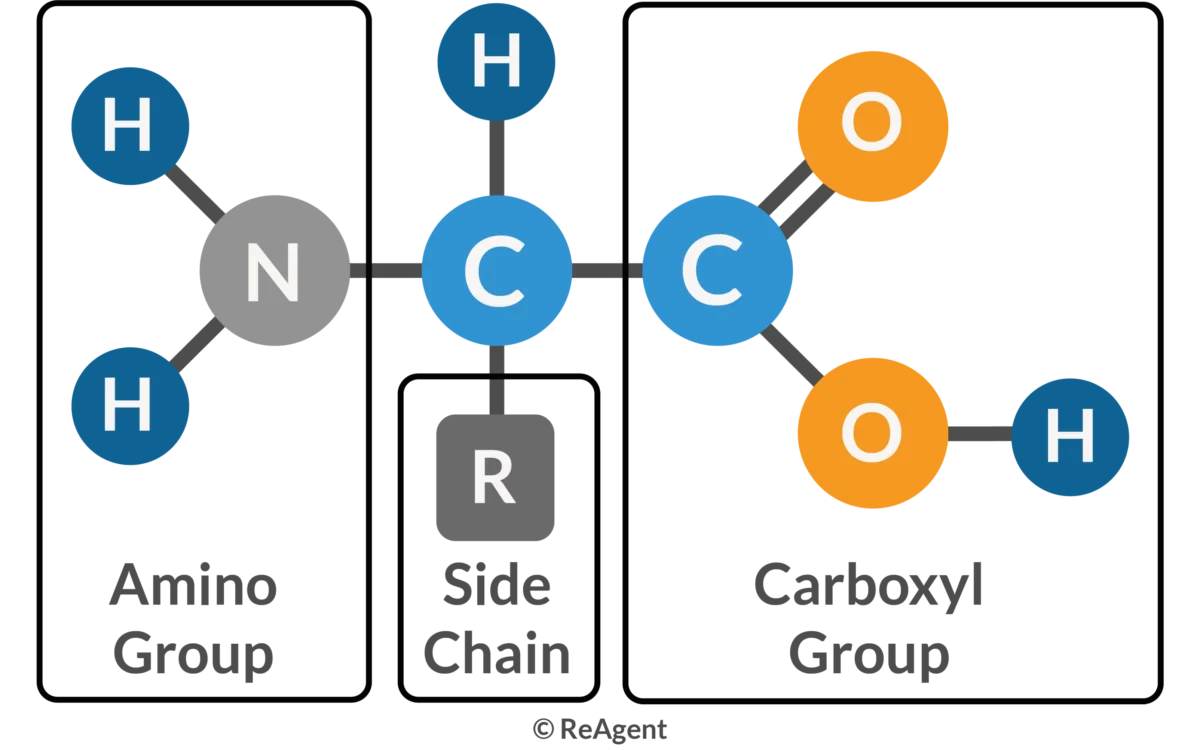
The central carbon is known as the alpha (α) carbon and it is covalently bonded to four different chemical groups:
a carboxyl group (–COOH)
an amino group (–NH2)
a hydrogen atom (–H)
a unique organic side chain called the R-group.
Diversity in R groups
Each of the 20 amino acids has a different R-group.
Can be non-polar or polar
Polar contains electronegative atoms like oxygen, nitrogen, or sulfur, such as a hydroxyl group (-OH) that form hydrogen bonds with water.
Can be linear or in ringed form
Acid or basic R groups
Acidic: negatively charged cellular pH: Aspartate (Aspartic acid) and Glutamate (Glutamic acid),
End in carboxyl groups (-COOH)
Basic positive charged cellular pH: Lysine, Arginine, and Histidine
They provide each amino acid with distinct chemical and physical properties.
Condensation reactions forming dipeptides and longer chains of amino acids
Word equation: amino acid + amino acid → dipeptide + 1 water molecule
Amino acids join together through a condensation reaction
A peptide bond is formed when the carboxyl group (–COOH) of one amino acid reacts with the amino group (–NH2) of another amino acid to form a dipeptide.
A molecule of water (H2O) is released as a byproduct. T
he peptide bond formed is a type of covalent bond and, therefore, is very stable.
This process can be repeated multiple times to form longer chains of amino acids, called polypeptides.
Dietary requirements for amino acids
Essential amino acids cannot be synthesized and must be obtained from food.
Non-essential amino acids can be made from other amino acids.
Vegan diets can provide all the essential amino acids necessary for a healthy diet through plant-based protein sources such as beans and nuts, however they require attention to ensure essential amino acids are consumed.
Infinite variety of possible peptide chains
20 amino acids are coded for in the genetic code
Peptide chains can have any number of amino acids, from a few to thousands, and that amino acids can be in any order.
Examples of polypeptides - LAGM
Lysozyme -129 AAs - present in tears and saliva, it has antimicrobial properties, providing a defense mechanism against microbial infections.
Alpha-neurotoxins -60-75 AAs- polypeptides that are present in snake venom which specifically target and disrupt the nervous system, inducing neurotoxic effects, paralysis and possibly death.
Glucagon -29 AAs- a hormone secreted from the pancreas when glucose levels in the blood are low, stimulating the liver to release stored glucose into the bloodstream, raising blood sugar levels.
Myoglobin -153 AAs - an oxygen-binding protein, mainly found in muscle tissues, which facilitates the storage and release of oxygen to muscle fibres, particularly during periods of low oxygen availability, such as strenuous physical activity.
Effect of pH on protein structure
All proteins have a specific range of pH for their optimal activity
As most enzymes are proteins, it is essential for them to be exposed to their ideal conditions to maintain efficiency.
Extreme changes in pH can affect protein solubility and shape by altering the protein’s charge.
This can lead to irreversible changes in protein structure, causing inactivity and denaturation

Effect temperature on protein structure
Temperature is another critical factor that can cause protein denaturation. High temperatures can break the weak hydrogen bonds holding the protein structure together, causing the protein to unfold and denature
Most human proteins function optimally at body temperature (~37 °C).
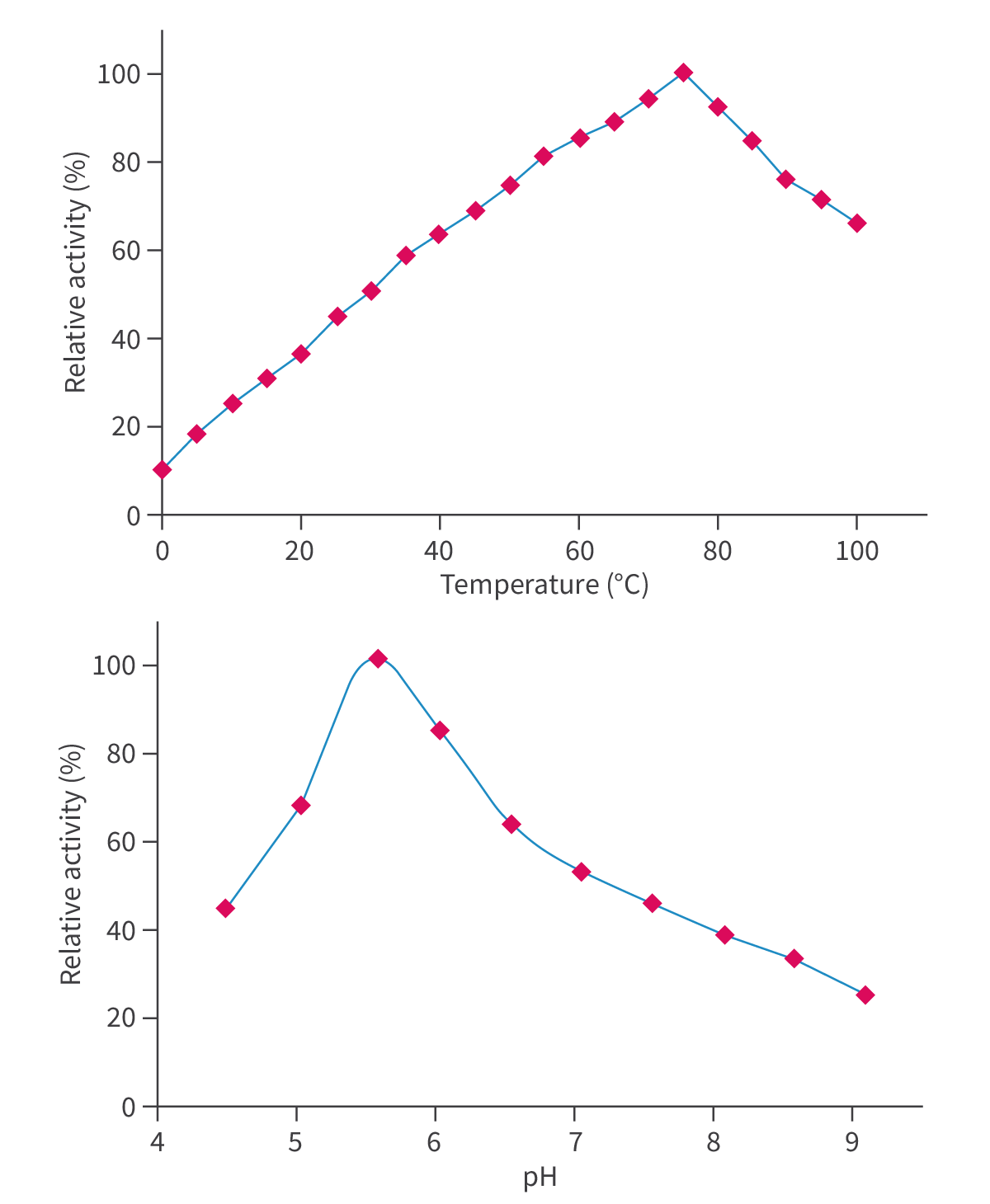
Denaturation
Denaturation is a process in which the structure of a protein is altered causing it to lose function, usually permanently.
Two factors that can cause denaturation of proteins are pH and temperature.
Facilitated diffusion
the movement of molecules down the concentration gradient facilitated by transport proteins
Facilitated diffusion aided by channel proteins
Channel proteins are transmembrane proteins that assemble to form channels for the passage of polar molecules.
One example are ion channels, the tiny pores of which act as pathways for ions, which are highly selective and often, different channels are needed for the transport of different ions.
The selectivity of the ion channels is due to:
the binding sites of the hydrophilic amino acid side chains lining the channel being highly ion-specific
the size of the pore acting as a size filter.
Response to specific stimuli, such as:
changes in voltage across the membrane or voltage-gated channels
binding of small molecules to the channel proteins or ligand-gated channels
mechanical forces like pressure.
Ion channels are gated, when the gates are open, the ions pass through the pore down the concentration gradient. But in a closed state, the pore is plugged, preventing the passage of the ion
Facilitated diffusion aided by carrier proteins
Carrier proteins are transmembrane transport proteins that binds to the solute molecules, undergoes a conformational change and transfers the molecules to the other side of the membrane
Carrier proteins have sites specific for the solute or class of solutes to be transported and hence are highly specific.
Active transport and pump proteins
Active transport is when molecules need to be transported against their concentration gradient.
The transport of the molecules needs energy from the exergonic reaction of the breakdown of ATP.
Active transport helps to:
take up essential nutrients – an example is the uptake of glucose from the lumen of the intestine to the epithelial cells lining the small intestine
remove secretory or waste materials from the cell into the extracellular fluid
maintain the right concentrations of ions in the cells; for example, active transport helps red blood cells (RBCs) maintain their internal sodium and potassium levels.
Selectivity in membrane permeability
The movement of molecules by simple diffusion is based on two factors: the size of the molecules and their hydrophobic or hydrophilic nature. In other words, the permeability of the membrane depends on the physical properties of the molecules. Any molecules that fit these criteria, irrespective of whether they are useful or harmful, pass through the cell membrane. Thus, in the instance of simple diffusion, permeability of the cell membrane is not selective.
However, facilitated diffusion and active transport involve proteins that transport molecules from one side of the membrane to the other. These transport proteins, whether channel proteins or carrier proteins, exhibit selectivity as they recognise specific molecules or classes of molecules. For example:
Gated ion channels like calcium-specific ion channels in muscle cells regulate the movement of calcium ions alone.
Carrier proteins are highly specific. For example, GLUT (glucose transporter) recognises and binds only to glucose and a few other monosaccharide molecules.
The selective permeability of the membrane is hence due to facilitated diffusion and active transport.
Try this role-play activity to compare the different types of membrane transport described in this section.