Post War Final Exam
 Call Kai
 Learn
 Practice Test
 Spaced Repetition
 Match
 Flashcards
 Knowt Play
1/83

There's no tags or description
Looks like no tags are added yet.
84 Terms
Pop Art: British an American
Actually developed in England emerges immediately after WW2
Francis Bacon a precursor because of his use of popular film
Institute of Contemporary Arts (ICA), 1946 -established by Penrose who was the leader of the branch of the surrealist movement
Independent Group is an offshoot from ICA (established in 1952) who rebel against their teachers
Post War England
Advertising and Graphic Design help with this movement
Many of their day jobs were this
Bringing in popular art
Popular art: design of book covers, visual culture
Pop art: term coined in 1957 by Lawrence Alloway
Reaction to what England is seeing happening in the United states
After war England continued to live on rations, in communities that were bombed out
Look across to US and see they’re booming and economically more successful than england
One hand they are attracted to us culture but there’s also resentment
New York Pop
Postwar consumer culture
Advertising and graphic design backgrounds
Media Age: Marshal McLuhan (The Medium is the Message) - media theorist
Who controls the media controls the message
Who controlled that system of what can and can’t be viewed on the networks
Advertising companies are paying money for product placement
How deeply are you being manipulated
Hollywood and celebrities
First exhibition called themselves the new realists for the Sidney Janis Gallery
Thinking about the connection between art and everyday life

Eduardo, Paolozzi, Real Gold from Bunk, 1950
Italian immigrant whose family settled in England
Collages - tearing out pages from popular magazines, book covers, advertisements and pastes onto pages so there’s an intersection of different symbols
Shows what perfect life in post war america looked like and the absurdity of it
Not painting or altering them significantly
Taking pin up figures and referring to novelets and overlaying mickey mouse, real gold california lemon juice, the logo design for real gold,
Name “bunk” from a quote from henry ford - “history is more or less bunk”
Attends ICA and presents bunk and is a member of the independent group
This group was not interested in art history and was focusing on consumerism
“Parallel of art and Life” exhibit at iCA organized by Independent Group
Images from microscopes, x-rays
Parallel of life and art and it's not just fine art and then everything else
Life informs art and art informs life

Richard Hamilton, Just what is it that Makes Today’s Homes so Different, so Appealing? 1950
Advertising background
“This is Tomorrow” Exhibit at White Chapel Gallery, London by Independent Group
Red white and blue cover and inside photographs of what will be happening
About the future - idedalistic like robots r gonna be controlling our lives
Sleek minimal design - new and shiny
Idea of thinking about the american suburban home they’re seeing in magazines since there is no suburban in England
Collage is actually tiny and not featured in the exhibit, just reproduced in the catalog
Sleek floors, sharp streamline furniture, shag carpet, large windows, tv, canned ham, comic book illustration, logo on lamp since there was logo’s everywhere in America
Picking out commercial products with great packaging, new tech, the jazz singer reference to film and movies one with sound
Idea of making that work so much easier
MR. Universe with a tootsie pop covering genitalia, and woman with nipple coverings going with idea of hollywood
The top is Earth, and that would mean they are actually in space

Peter Blake, Self Portrait with Badges, 1961
Advertising background and album design - beatles
Member of independent group
Grown man but it feels kid like with badges/buttons, converse, blue jeans + denim jacket (wearing uniform of american youth), and elvis magazine fanboy
Decked in red white and blue - idea of wearing the uniform and can even play on idea of military badges
Pins could be of honor or of political actions
Baseball on the floor - a sport you don’t have in England
Idolatry in american culture but he also participates in
Abstract expressionistic background just a little brushy
Connection back to Gainsborough, Blue Boy 1770
Gesture of rebellion against the royal academy
You can only use blue paint in background not for subject so he did the opposite

Tom Wesselmann, Still-life, 1962
Worked as an advertiser, illustration + logo design
Derives from the advertising - style bold color, simplified form, clear message
Painting so it’s hyperrealistic, callenging, and incorporating 3D elements
No concern for proportion
Shows engineered food
Numbers differentiate each of the pieces
No protections for copyright at this time
Done extremely large to give bold and click billboard feel
American diet is central component of still lives
Variety of fruits and vegetables coming in
Shows the american kitchen - candy pink refrigerator door and kitchen
View showing skyscraper showing there’s the city and we are in suburbs
Actually real wooden framed picasso avant garde painting on the wall
Refrigerator door and frame project out
Showing all highly processed foods - not necessarily in a critical way, just in the sense that there is change
This point the new foods are exciting and taste great
Post War American Kitchen
Site of political debate - cliche woman’s space
Becomes weapon in cold war
Domestic, modern spaces, capitalism
1950 Politics” the kitchen debate (Nixon vs Khrushchev Merits of Capitalism vs Communism)
See how much we are expanding in tech
This is what you get if you follow america
Bold line and shape, no intense detail, working in the american home
Compares naked vs nude and how now a woman’s body is a down to a pin up figure
Time period of thinking about playboy magazine and sexuality
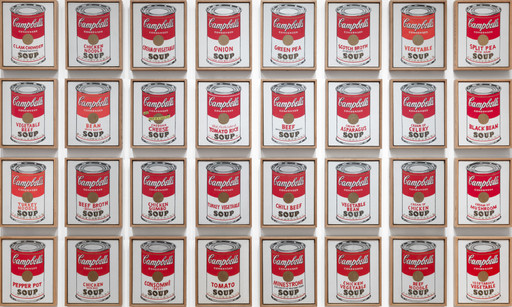
Andy Warhol, Campbell’s Soup Cans, 1961-62
From pittsburgh
Comes from advertising background
Known for reproducing consumer products
Pushing line of what is fine art and what is design
Questioning value - why is reproduction of a soup can worth 20 million dollars when you can go to the store and buy one with actual soup in it
How do we assign value? Issue of authenticity
Works with print production and useless silk screen - producing in multiples and show that there isn’t one of a kind
However every print is different due to shifting or smearing
Comment on mass production
Creates sculpture of boxes of how food is stored in store
Would be stacked in gallery and shows how art is like grocery store showing consumerism
Brillo box original packaging designed by james harvey in 1961 and he takes it a year later and puts it in galleries
Studio known as the factory that used to be used for hat making - playing off idea of mass production of goods
Works with a team showing assembly line production
Actors and actresses are also products

Andy Warhol, Gold Marilyn Monroe, 1962
Most famous
Revived Portraiture in modern american art
The celebration of one's self and identity of what you’re putting on display not who you actually are
She is Known for hair eyes and lips
Fixed her to canvas painting in gold
Take on icon painting - byzantine icon painting like mary or chist on cross
Religious figures replaced by celebrities because thats who americans worship

Roy Lichtenstein, Blam, 1962
Controversial because he is working with cartoons and it’s associated with kitsch
Popular art found in a lot of places
Creates his own version of pop art
Early on he paints and sees something that preexists (Disney) and edits down the image and includes a little word bubble
Includes familiar imagery
Rendered in red blue yellow and white which achieves a comic book illustration over an story illustration
Then continues working in comic industry
Only a clip taken out of the narrative
How abstract does the image become when taken out of context
Red yellow blue white black colors
Appropriate the printing process associated using “Benday dots”
Benjamin Day developed process in 1879 using yellow cyan magenta and black
Appropriates color palette and shapes and forms
Uses stencils playing off idea of mechanical mark making
Then does the same thing by abstract expressionism but rendered them as mechanical mark making
Poking the bear
Neodada and pop element
Original paintings but look like mass reproductions
Overall awareness of what is art

Robert Indiana, The Demuth American Dream, 1963
Known for his love sculpture
Grew up in the midwest
Connection to midwest and americana
Route 66 - interstate is being built at this time period and connect our nation
Embracing automobile culture on the highway and seeing billboards and signage
Saw this as true american expression
Drawn to bold colors and crisp design of logos and the repetition of it
Creates paintings that use text - stencil text and repetition
Combining fragments or ideas
Leaves it abstract in terms of meaning and open
Recycles the same imagery and stacks them to create a new composition
In dialogue with American art history
Uses demuth , the figures in gold - american painter in first half of twentieth century
Worked in a style called precisionism - clean sharp edges inspired by machines
Inspired by a poem by William Carlos Williams another connection to the past
Fragments of words in original text too
Reduces his name just to C.D.
Takes old history and transforms it to using popular imagery

Claus Oldenburg, The Store, 1960’s
Swedish artist but based in new york city
One of his most famous pieces
Insulation piece- multiple objects placed in a storefront play on gallery but the objects are just everyday objects
Grouping of sculptures using plaster and plays with the absurdity of scale
Messy and imperfect
120 objects NOT using traditional sculpture material or welding
Opposite side of wesselman (absolute precision of what’s real and what's created by artist) while he is messy and imperfect
Displayed in arrangements and you become part of the experiments because you enter the space
Like a grocery store like price
Everything is supposed to perfect but he purposely makes it imperfect
People come in and contemplate the meaning of it
Expressionistic and the presence of the artist is brought back to the object
Sculptures eventually become soft flaccid and floppy - deliberate humor sense of fun and play
Eventually creates monumental sculptures for the public using everyday objects- like a clothespin

Oldenburg, Lipstick Ascending on Caterpillar Tracks, 1969
Installed at yale university
Placed in center of university
On a tank tread
Originally it was inflated but now its redone
Would continuously erect the lipstick
“I am for the art that is political-erotical-mystical that does something other than sit on its ass in a museum
Riff on Dada - everyday absurd elements and combining them what new purpose do they serve
Political statement commentary on war - make love not war
Play on masculine and feminine and consumer culture

James Rosenquist, F-111, 196
Lost his entire studio when it caught fire
Comes from a sign background his profession before artist was painting billboards
Understood bold seen from distance and understand what you’re looking at really quickly
Goes big and calling importance to how important those everyday objects are
Painters tool placed in front of the paintingwith a funnel with paint attached to it
Taking fragments of ads and products to create a collage that invites interpretation
86 feet long painted onto aluminum panels
Literally going the scale of billboards and has to wrap around gallery walls
shiny industrial surface
A military fighter jet is the theme of this piece
Read from left to right
Back of jet reference to exhaust so the plane is moving through space
Then fire stone tire and directly below is it an angel food cake also reminiscent of a missile silo
Them eggs that look like light bulbs
Where the pilot should be is a young girl doing her hair but it looks like a missile and then type saying the us air force
Mushroom cloud and umbrella referencing island in south pacific where they were testing out bomb
Again spaghetti and red sauce referencing death and intensities
And gasping for air
Plane is a reference to the planning stages in Vietnam
Very political american machinery to american economy
How does war put in place efforts to improve the economy
Why are we going to war and who is engaging in war etc
Op Art:
Play on pop art
Emerges in 1960’s short lived movement exploring the movement of the eye
Optical art - artist exploring perspective illusion and chromatic tension
Engages with the average person with easy to experience
Bridget Riley was queen of pop art
Exploit the fallibility of the eye by creating optical illusions
Intended to make you uncomfortable - make you dizzy give you headaches
Trompe L’oeil: trick the eye which goes back in time
Goes back to illusion of stairs etc
Joseph Albers play with advance and recede of color
Rejecting chaos and embracing order
“The responsive eye” exhibition held at MOMA in 1965
Time magazine coins the term “op art”
“Op art” coined by time magazine in 1964
Fun easy and doesn’t engage in uncomfortable subject matter (political)
Wide appeal
Avoids JFK assasination luther king etc.
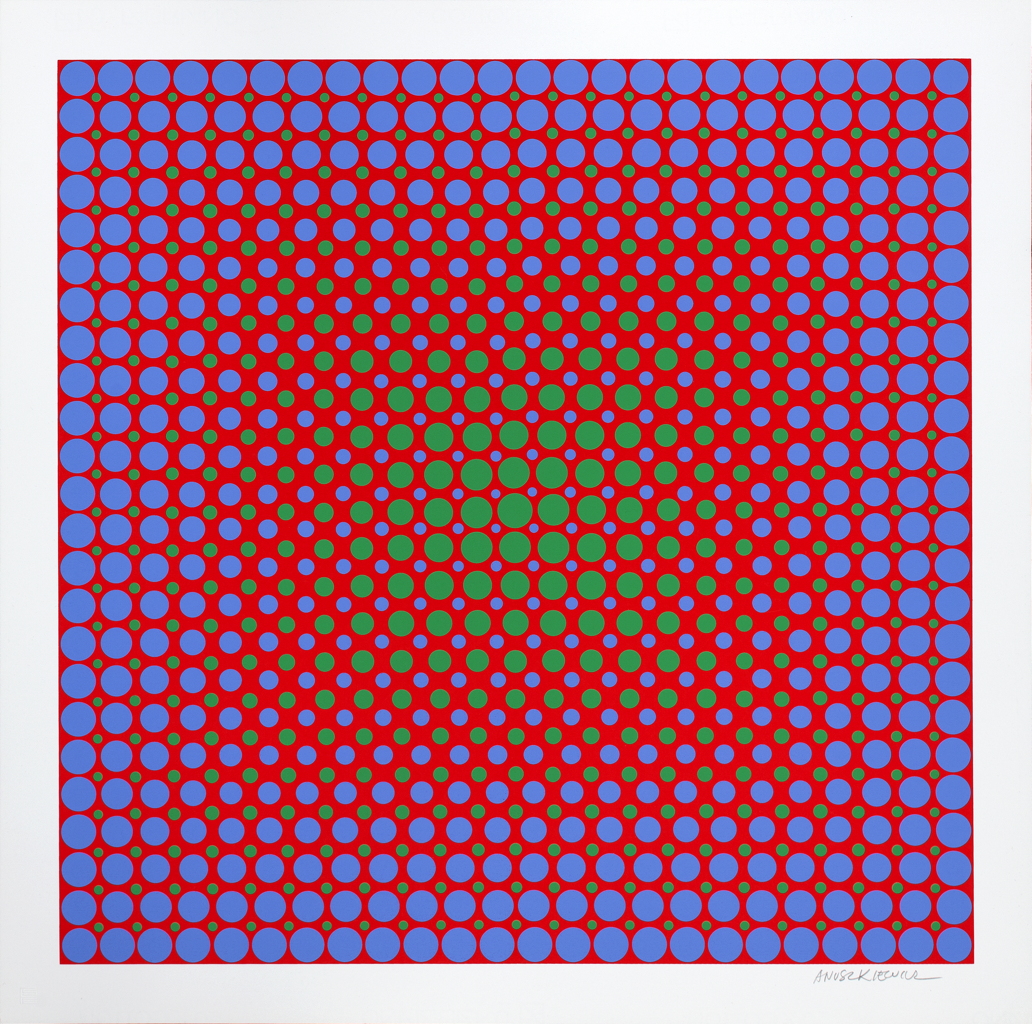
Richard Anuskiewicz, Triangular Prism, 1962
Student of albers
Fascinated by color properties and theories on chromatics
Mixing colors dulls intensity
Goal to preserve intensity/vibrancy of color
Also anchored back to Chevreul/Rood: rely on viewers eye to mix color
Stencil template
Red ground with blue and green dots
Exploring complimentary colors and their interaction
Geometric progression of the changing scale of those colors
Smaller in the center and get bigger and reversed with green
Visual expanding and contracting
How do you make blending more subtle? Use lines vs dots
No deep political message or symbolism just artist working through color relationships
Translates to clothing and homegoods that have mass appeal

Anuskiewicz, Unit, 1966
16x16 masonite
Taping out creating a grid
Creating a warped looking canvas
Plays off of minimalism idea of working with a module
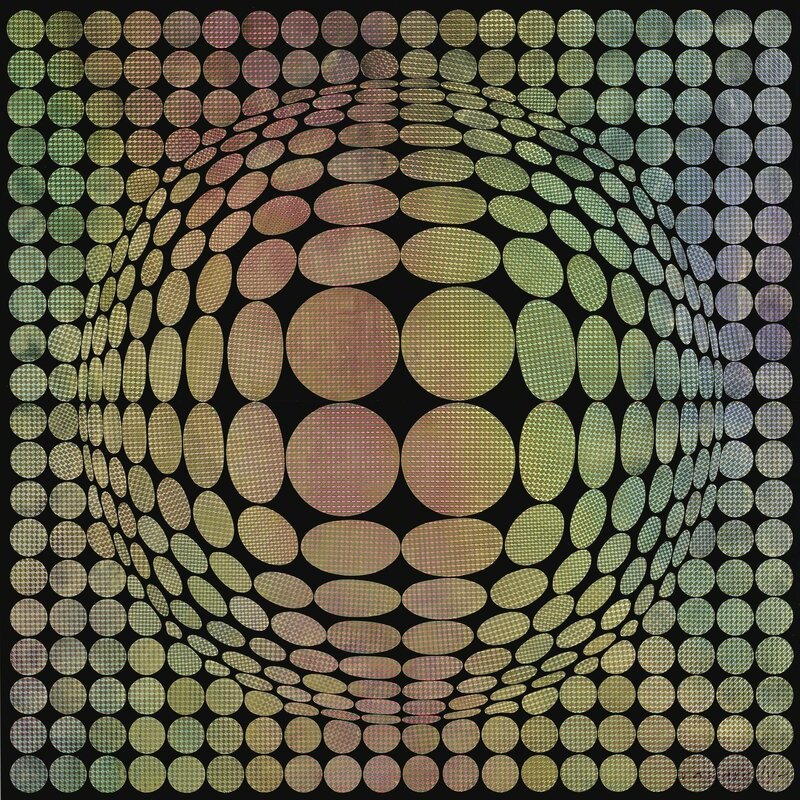
Victor Vasarely, Vega Series, c. 1970s
Bauhaus student worked as a graphic designer
Had a passion for science
“The end of a personal art for a sophisticated elite is near” - referring to greenberg
Kinematic painting: create illusion of surface so it looks like its visually vibrating
Picked up in the 90’s by fashion designers for clothing
Square canvas and show a bulge popping outward
Created through a plastic alphabet
3 basic polygons: square, triangle, hexagon
Then adds circle, parallelogram, and ellipse
Each form: 14 shades of 6 colors: red, blue, yellow, green, mauve, grey
Arrange polygons into grid creating infinite combination
Planetary folklore: universal language or data to be put in a machine to generate art
Universal and democratic art
Utopian: uplifting to humankind
Accessible because it can be created by a machine and isn’t hard to understand
L.A “Cool School”:
1960’s
San fransico to LA
Early LA art scene was conservative and only wanted to show mideval or renaissance art
Can be referred to as California Funk/Cool School
Barney’s Beanery - bar this movement was not academic
Real rivalry between west vs east coast
Ferus gallery- originally created by walter Hopps and Keinholz and later Irving Blum would lead
Sadie Moss was the money
Art Forum was the most critic
Becomes well known for the “Common Objects” exhibition - with the soup can

Wallace Berman, Cross, 1956-7
Exhibited in June 1957
Censorship; arrested for pornography in the box
In the box is a photgraph of a penis and a vagina in penetration
Created it with a verifax collage
Hebrew and kabbalah text on other side
Factum fidei= fact of faith/true fact
Idea of taking found materials and using collage

Bruce Conner, The Child, 1959
Associated with LA Cool School
Wooden chair
Created a sculpture of a figure and took women’s nilon and stretched it over it suggests layer of skin or cobwebs suggest age and time
Created using wax and plaster
Look like a person that has rotted or decayed
Well known for including little bundles of like a spider and how they wrap their victims up
Hard to find buyers for this
The title and high chair adds to the difficulty of appreciating the aesthetics because art was supposed to be beautiful
Inspired by carl chessman known as the red light bandit
Executed in San Quinten in 1960
12 year fight to save his life
Kidnap and assault; but in California kidnapping carried mandatory sentence of exectuion
Child is used as a symbol of freedom until government imposed
Creating art with direct references to politics

Kienholz, The Wait, 1964
Ed and Nancy husband and wife duo
Creates Tableaux - multiple objects situated into a room that the viewer enters into
Not put on a pedestal
A reference to immediacy - time and age and there's a light that's on or a live animal in the space
Creates difficult pieces
Larger piece looks like the interior of a living room
Going back to the early 20’s with heavy furniture - contrast to 60’s fun furniture
Created a women from bones and mannequin parts
Around neck are jars that are timecapslues of memories she holds
Frames of people from her life
Lamp to the side is plugged in and stays on
Cat on lap
Brid cage there was a parakeet so you can hear the twitter and movement
Contrast of past death waiting, and immediacy
Incredible contrast between here and now and the passage of time

George Segal, The Subway, 1968
Figurative tableaux with life size plaster sculpture of figures
Placing them into real life settings
Uses plaster to create realistic imperfect to recreate a white marble sculpture
Going back to classical nude academic
Uses real people so they aren’t perfect ideals and cuts it out to use

Robert Arneson, John with Art, 1964
Pop art approach to ceramics and clay
Works with figures often himself
Influenced by voulkos
Had a brain tumar and used his art to make light of his health struggles
Absurdity of dailt objects (visual puns and sarcastic observations)
Ceramic tile and porcelain toilet is something that is an everyday object
Painterly abstract expressionist that was thrown and hand built
Application of glaze
Crafted poop in words of art placed in the bowl
Life size
Video Art and Happenings:
Does not rely on the conventions of films
Video art is not film
Expolorin the medium of video
Challenging for viewers
Demand time to sit and watch film creates a disconnect
Museums requires tech/space and willing institutes
Technology…digital tech replaced film
Sound is overwhelming, too familiar
1953: 60% of american household had tv by 1960 90% had tv
Broadcast control/commercial advertisers
Canadian McLuhan: Canadian Media Theorist
Risks and benefits of new Mediums of communication
Publishes gutenberg galaxy
“We shape our tools and then our tools shape us”
Whoever controls the broadcast station is controlling the message
How can I use the tv as my own tool for communication
Return to the body and thinking of the their place in art

Nam June Paik, Magnet TV, 1965
Korean born artist living in US
Associate with FLUXUS- international group
Not interested in creating a video but he’s using the tv box and all the stuff on the inside to create
Purpose was to use magnets on top of tv which distorts the pictures that were supposed to be recognizable
Creates a spinning array of patterns - abstract light images on the tv
Sees it as gorilla art attacking the system and transforming it
Would go into public store fronts and change all the knobs and transforms into light abstraction
Rebellion against commercialization
Sony Portapak- first portable recording device
Not cheap not accessible
Cable TV: 1968 FCC and public access channels
Gave opportunity to get editing equipment
Tevevision as “Art”: artist produced video for broadcast

Gerry Schum, TV as a fireplace, 1969
Created a video recording a campfire with just the sound of the crackling, put on a loop and he’d broadcast it
December 25th and Jan 1st
2.75 mins right at the end at midnight
Purpose-fire place is where families gather and now it’s around the tv - shared experience around everyone withone in city limits
Bringing you back to the beginning
Schum, Land Art, 1969
Don’t even have to leave the living room to experience art
Filmed by different artists - was a television gallery
Not selling the product - public accessible, and you can control narrative
Engage issues of environmentalism

Allan Kaprow, 18 Happenings in 6 Parts, 1959
Happenings blur the line between theater and art
His store installation plays into this too
Connection with life and art
“Happening” - 1951-1962
No object, form, product
photo/film document
Flash-mob revived concept
1. Theatrical: stage and audience; loose or non-scripted (improvisational theater)
2. Conceptual: no performance, but an “idea/concept” shared from artist to individuals
3. Participatory: roughly planned event; audience is the performer
More constrained
Screens and a timed bell moving into each event
Idea of thinking about what did I just experience
Performance video and concept are closely overlapped
Examples
Yard 1961- full of depree tired
Invite was sent out and people would show up and you would walk through the tires
No actual instructions
Household 1964- held at local dump (participatory)
College students
Old car covered in strawberry jam and licking it off
Participants lick jam off car
Divided themselves man vs female
Went on for hours and by the end the car was flipped and everything was sent on fire - becomes chaotic dramatic end to event

Vito Acconci, Following Piece, 1969
Italian artist working out of nyc
One of the best known conceptual artists (idea is primary)
Working with video art and happenings
Works are often more controversial
Tapping into idea of art and life
Maps out his idea which is to follow individuals who are working through the streets of new york
Complete strangers
Sometimes photo documentation of him following
Documents where they are going and what they are doing (mapping their movements throughout the city) - individual unaware they are being studied
Turns it into a documented art experience
Stops as soon as they step into a building

Vito Acconci, Seedbed, 1972
White cube gallery space
Wooden floor with nothing on the walls
In walkway there is a written explanation of what's happening
In corner is speaker
Floor is constructed into a ramps
Under the floor is a crawl space and a microphone
There is a video of him doing that to myself
Creates a terrible joint experience between viewer and artist and him using his own “seed”
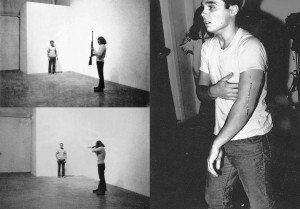
Chris Burden, Shoot, 1971
Uses his body as the medium
Was a university professor who lost his job because of these types of performances
In a gallery with an olympic sharp shooter and the guy shoots him through the arm
The aftermath of the bullet - flesh wound
Playing off the idea of fear of gun culture
Thinking about expeirrence of being confronted by a gun and how that makes you feel
The sound and bloodshed
Using his own body as the medium
Mental health issues
He crucifies himself onto a car
He starts to create his own commercials and payment of artists
He was not making any money

Shigeko Kubota, Vagina Painting, 1965
Member of FLUXUS too
Like gutai with people trying to break away from tradition
Performance piece
Taken a paintbrush taped to her undergarments and waddles and dips in red bucket
And paints
Going back to menstruation and like jackson pollock back to ejaculations on a page
Process Art:
Art that is about the process of becoming
Transitional forms
There is often a literal or implied action such as spilling, pouring, moving, etc.
Transitioning and active in that response

Robert Morris, Box with Sound of its own Making, 1961
Just looking at the form it looks like minimalist art
Referencing familiar geometrical cube
Made out of wood - created out of walnut
Not industrial feel more organic
Small in scale and suggestive of being a module
Inside box is a recording that plays on a 3 hour loop of the actual creation of the box
How is this responding to minimalism? - minimalism removes the artist presence from art
This makes you think about how the box got created and bringing the craftsman and process back
How to complicate a simplistic form how to keep the persons attention
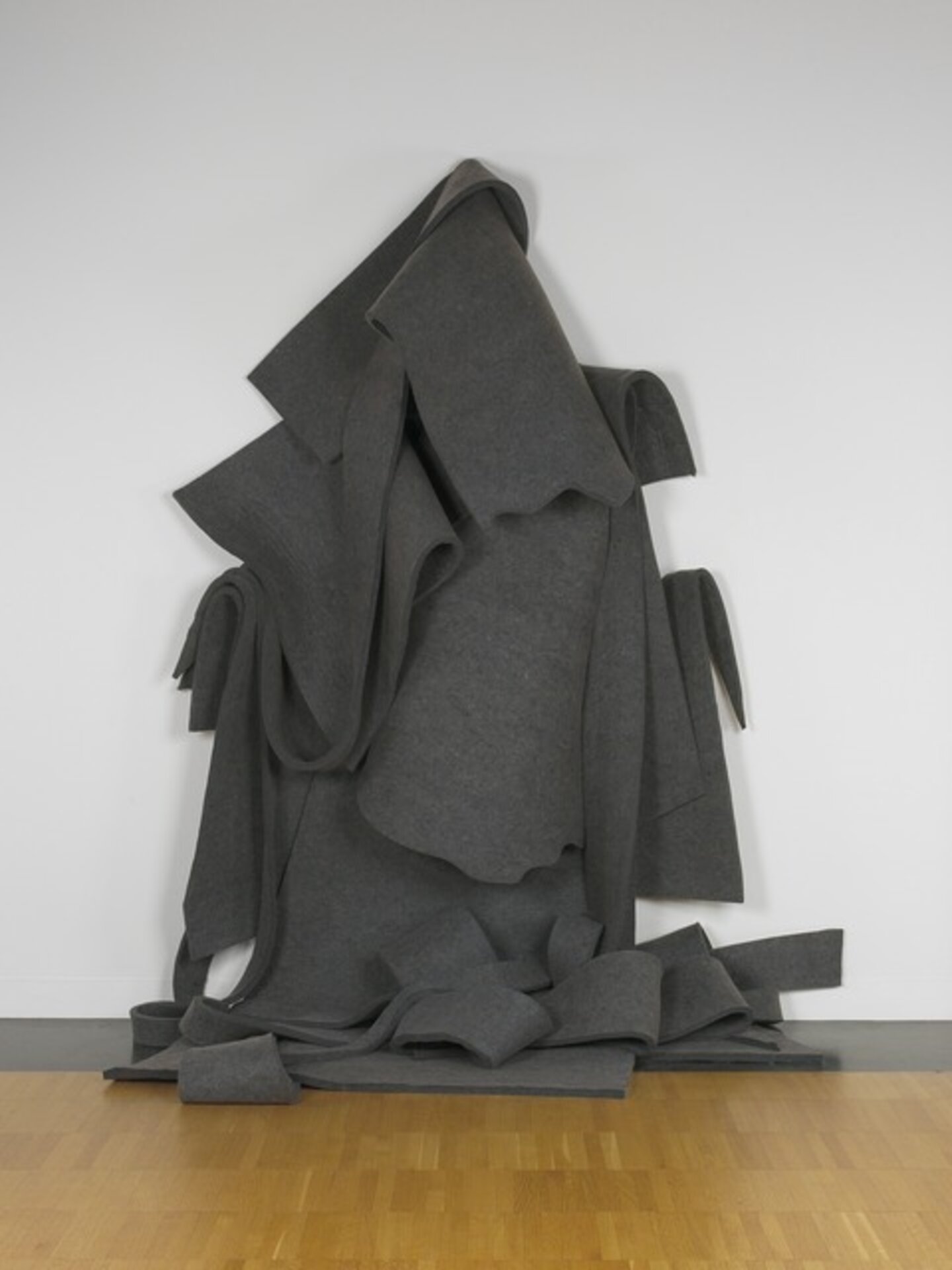
Morris, Untitled, 1968
Plays with materials
Less about thinking about the form and minimalism and reflection of light
Concept is the difference
Plays with industrial felt - heavy dense form
Attaches it to gallery wall and these are the off cuts which become its own forms
There’s no way to exactly replicate it - subtle of it evolving
Engages minimalism but challenging it in a new way \
No symbolism of color
Challenges the idea of what sculpture is
Collects thread waste from textile factories- manufactured waste product
Then delivered to a gallery in a cube
It’s the chaos of it falling apart and becomes something new
Introduced mirrors that stand upright
Piece settles over time

Richard Serra, Throwing Lead, 1969
Creator of forms and experiences
Throwing handfuls of lead in his studio and settles into the corners
Lead is associated with death/toxic and is very heaving and maluable and accesible
Performance of the actual throwing and then there is castings which are the product of that performance
Its a cast of a space and the hurling of it a it cool marks intervals of time
Captures spontaneity of a painter
Every time he recreates this process he casts it which can never be exactly replicated again
Puts the artist back into the work unlike minimalist

Richard Serra, Prop, 1969
Playing with ideas associated with minimalism
Process frocusing on the idea of becoming something
Quarten steel
Literally propped together NOT welded
Sculptures about balance
Tension pressure holding the piece together and having that element of danger falling apart
People get hurt if the piece falls on them
It's relying on elements we normally wouldnt think about
You had to sign a waiver to go into this gallery
His art eventually got monumnetal in scale
Forces confrontation and stops people
Creates spaces that people can walk through and creates tension and pressure
Conceptual Art:
Term coined by Sol Lewitt in 1967
Art that engages the eye, but more importantly the mind
Concept is primary, form is secondary
Overlaps with process art, happenings, and minimalism
Rooted in duchamp and the “idea” as art
Is a more intellectual art movement that is a response to pop art
Comparison like giving you the recipe but not the product

Joseph Kosuth, One and Three Chairs, 1965
Words may be printed or cut and you as the viewer are yes reading but the idea is what is the concept that you are experimenting as you are reading that text
Frequently works with literal objects, a photograph, and the definition
Semiotics is the main idea- theory on language and reflecting the meta sign comprised of sign signifier and signified
Structuralism and the study of signs
Relates back to pop art and la cool school
Sign is representation (pic) signifier (literal chair) and signified (definition)
When we think about art is the reproduction of an idea
Plays with how words can have different meanings

Sol Lewitt, Modular Structure, 1966
Many of his early pieces called this
First glance you see cubes reminiscent of what can you make with the concept of the black
Started being made my wood
How to put the boxes was up to the museum - there was no wrong answer
Also did mural designs - if you bought one you owned the concept or idea not the actual mural
Does not lose its value if object is destroyed and recreated doesn’t matter when it was created as long as it follows the same recipe

Joseph Beauys, Fat Chair, 1964
German bown artist
Conceptual and performance artist
Associated with international group FLUXUS
One of the founders of the green party and was deeply involved in politics
Primary role as a teacher and saw art as the ability to heal society and wanted to restore the spiritual and the mythical
Thought art had moved away to a form and object without having a message or teachable moment with it
To make people free is the aim of art therefore art for me is the science of freedom
Served in ww2 and was a pilot in the german army
Shot down in the areas of russia and was rescued by the nomadic people called the tartars
Treated his burn with fat/ wrapped him in felt and saved his life
Became two prominent materials in his work
Materials are important for him but its to create an important concept or idea
Uses fat as the sculptural medium associates with restoring health
Fascinated because it can become fluid liquid or solid
Simple wooden chair and on chair he built a solid mass of fat
Has to be held in a emperature controlled space
Chair is symbol of civilization of order and control
Fat was solid is under control but what liquid it’s chaotic
Metaphor for the human condition of being held in control by society and culture but were just a few incidents from chaos

Beauys, How to Explain Pictures to a Dead hare, 1965
Role of a shamen
3 hours Performance piece
Known for a uniform fishing vest, fedora white hat
Covered his face with honey and applied gold leaf to it
Natural material associated with its healing properties
Gold is the transformation from himself to a shaman
Holds a dead rabbit in his arms and is situation in a galley and tied to the bottom of his feet are one steel and one felt
Steel the rationalization of civilization and felt showing the soft side
Showing duality of man
Art on the wall
For three hours he explains the art to the dead rabbit
Kind of pointless to explain because he has no soul
How do you teach art to people who will not experience art and connect it back to the deeper plane of your soul and your spirit
Trying to understand art on another level

Beauys, I like America and America Likes me, 1974
3 day Performance piece
1st work of art he does in the united states
Comes after the vietnam war
Begins arriving in new york city at jfk and as he gets off the plane he gets put on hospital gurney and put onto an ambulance
Then transported to New York to the Rene Block Gallery in Soho
Brought up to gallery
For those three days 8 hours at a time he lives there with a wild coyote they captured
Straw bedding in background to make him more comfortable
Being photographed and observed
Had no weapons and only had felt and wrapped himself as a barrier and had a shepherds staff
Wanted coyote to be as agitated as possible so they put a large turbine jet to agitate the animal- supposed to be the sound of civilization
During the three days the coyote stops attacking and they coexist in the space
He as a human has to become submissive to animal instead of how it normally is the other way around
Coyote represents the united states and the pressures of civilization and yet the animal is still willing to peacefully coexist with someone else
The idea of dominance over other cultures and species - that there is a better way to coexist
After the 3 days he leaves in gurney and goes back to ambulance, goes back to airport and leaves the states
Theme of emergency health healing - point of ambulance
Realism and the Body:
Figure and Academic tradition
Seen in De kooning and Bacon
American Scene: Hopper, Wyeth, Wood, etc
Always present but not viewed as exciting or avant garde
Referred to orphan of modernism - few exhibitions
Body is present in performance and happenings

Lucian Freud, Naked Girl, 1968
One of the leading names associated with figurative art
British
Associates back to neoclassical like Ingres (elongated back something slightly off classical)
Also inspired from walter Sickert who was associated with the camden town painters
Represented in a more relatisitic fashion with uneven proportion
Would use prostitutes and immagrants
Drawn to representations of the figure
Painterly broad brush work, not smoothed out finish
Allows body to be modeled not perfect
Examining body as an object
Tilted upwards so you can see a frontal frame
Red hands and skeletal chest
He knew his models and not interested in painted strangers
Contemporary figure models are seen as object but he wanted to know the models and they were his friends
How does this change things? - interested in that psychological experience of painting a nude model because he is sigmund freuds grandson
Playing with the idea of vulnerablitiy since they have no clothes on
Leigh Bowery- performance artist known for his outrageous costumes and scale
6ft 3” 300 pounds
Freud was interested in seeing who someone is when they strip away the clothing
He painted queen Elizabeth on a very small canvas and paints her realistically instead of huge and idealistic like monarchs normally are

Philip Pearlstein, 2 Nudes in Studio, 1965
Figurative artist
During ww2 was stationed at camp landing and did a bunch of paintings there
How do you do anything new if you are representing the figure so what do u bring to figurative painting to no tmake it academic - figure becomes a prop instead of being part of a story
Creates an objective visual of figure - more cold and like props in still lifes that he creates
Playing around with figure and arrangement to capture figure patterns
Figures never engaged with one another taking away sexual suggestion and creating detachment
Plays with perspective of the room
Creates almost like a human still life with no emphasis on face
Still seen as pornographic and scandelous because its hyper realistically painted
Choice of objects are quilts puppets weather vain - kind of folk art

Chuck Close, Self Portrait, 1968
Hyper realistic painter but hated being called on
Paint or charcoal
Done in a large scale which is out of norm
You can’t detect brush work because of how smooth and perfect it is
Uses a grid to create perspective to get most accurate representative
Suffered from face blindness, and recognition with faces and the identity within them
Gets lost in the face when blown up in size showing everything
He isn’t idealizing
Limited muscle use in his hands
Airbrush method and layering
Challenges you to think are you looking at a photograph and a painting
Suffered from an aneurysm and was wheel chair bound so he went to playing with the concept of dot painting more abstract
Used ink pads and thumbs to build up a portrait
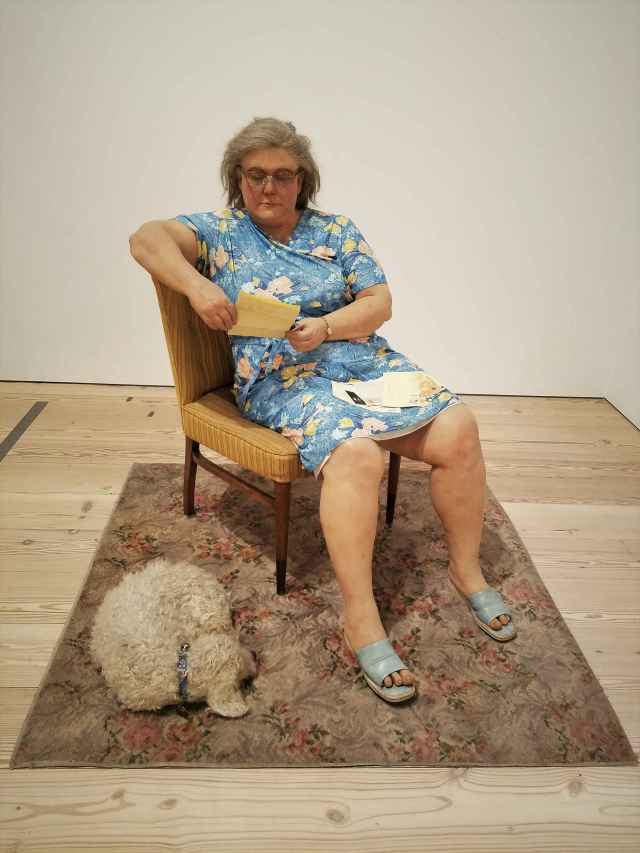
Duane Hanson, Woman with Dog, 1977
Hyperrealist sculpture
Died at 70 from lymphoma - direct result of his use of polyester resin and fiberglass
Osha restrictions were not well in place at this time which created whose illnesses
Representations of everyday people - people no one every looks at that are walked past and not regarded as aesthetically beautiful
Placed in airports a lot
Wanted people to make u think they’re real people not like paintings
Subjects are based on actual people
Collects photograph clothing and details
Not put on pedestals normally put on a corner
Shocking element of seeing what you’re not supposed to see and what you would avert your eyes from is now flipped to almost studying them
Would use real glasses and hair and shoes - the skin is what’s cast

Audrey Flack, Vanitas, 1977
Photo realism is a reaction against abstract expressionism because they are removing the brushwork and goes kind of with pop art
Working with still life tradition going back to 17th century
Working directly from photographs gridding it out and and worked big
Taking genre tradition of still life and elevating it to historical painting
Subject matter focuses mainly on female object
Vanitas = vanity
Uses objects associated with femininity (mirror, makeup)
Clock and fruit, roses are normally in still lifes
Playing off of film star marilyn
Played with reflection and references of chance because that’s what it's about
Sometimes are biographical (referring to instances in her life) or are more generic
Vietnam:
Artist direct reaction to the handling of the war
Minimalism avoided
Pop art response and engaged with social concerns
Artists did respond directly to the war
Should art stay separate from real world events
Artists didn’t want to go to war because it’s hard to find an audience for them and there was questioning if it was patriotic or critiquing it
Embedded artists to paint a patriotic version of America in the war
Public outrage against why america is in vietnam
1969 moratorium protest marches- united the youth culture
Artist’s and writer’s protest group “end your silence” 1965
President johnson attempted to use artist to create artwork that was a spin on what actually happened

Nancy Spero, War Series, 1967
Specifically targeting the representation of helicopters
The sound of the blades and the war is being broadcasted never been seen before
Helicopter is a symbol of a war machine
Uses abstract brush work (spontaneous and loose) to capture the movement
Shows the aftermath of that helicopter (bloody remains)
Creates hard art - Very clear political side which can alienate half the audience
How do you find a market?
Representation of figures and red shows bloodshed and death
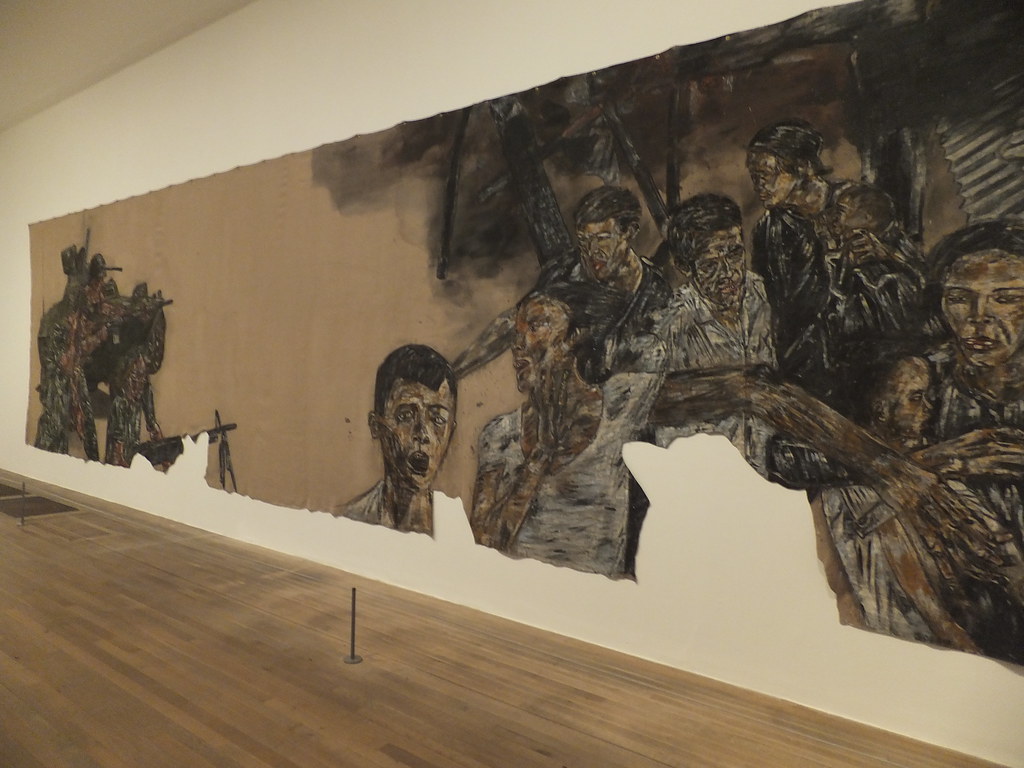
Leon Golub, Vietnam Series, 1973
Nancy Spero’s husband
Also does vietnam stuff
Was original a cartographer
1972 McGovern vs Nixon
Works on unstratched canvas (raw wired canvas) that was pinned down and places that were even cut or removed
Creates representations (inspo from existing war photography) assembled together to create a collage
Vietnamese are shown as victims and Americans are aggressors
Poeple aren’t set into a landscape
Worked huge in scale
Drawing from art history looking art classical renaissance and academic past
Representation of a figure being frozen (pose)
Focuses on conflict of man against man with background being nondescript and dark
Figures don’t have uniforms just man to man and looks almost like they were rendered without their skin on
Did scraping and redoing like de kooning
Wants to capture the rawness and timeless representation of war
Napalm- chemical weapon that when it touches the skin it burns it
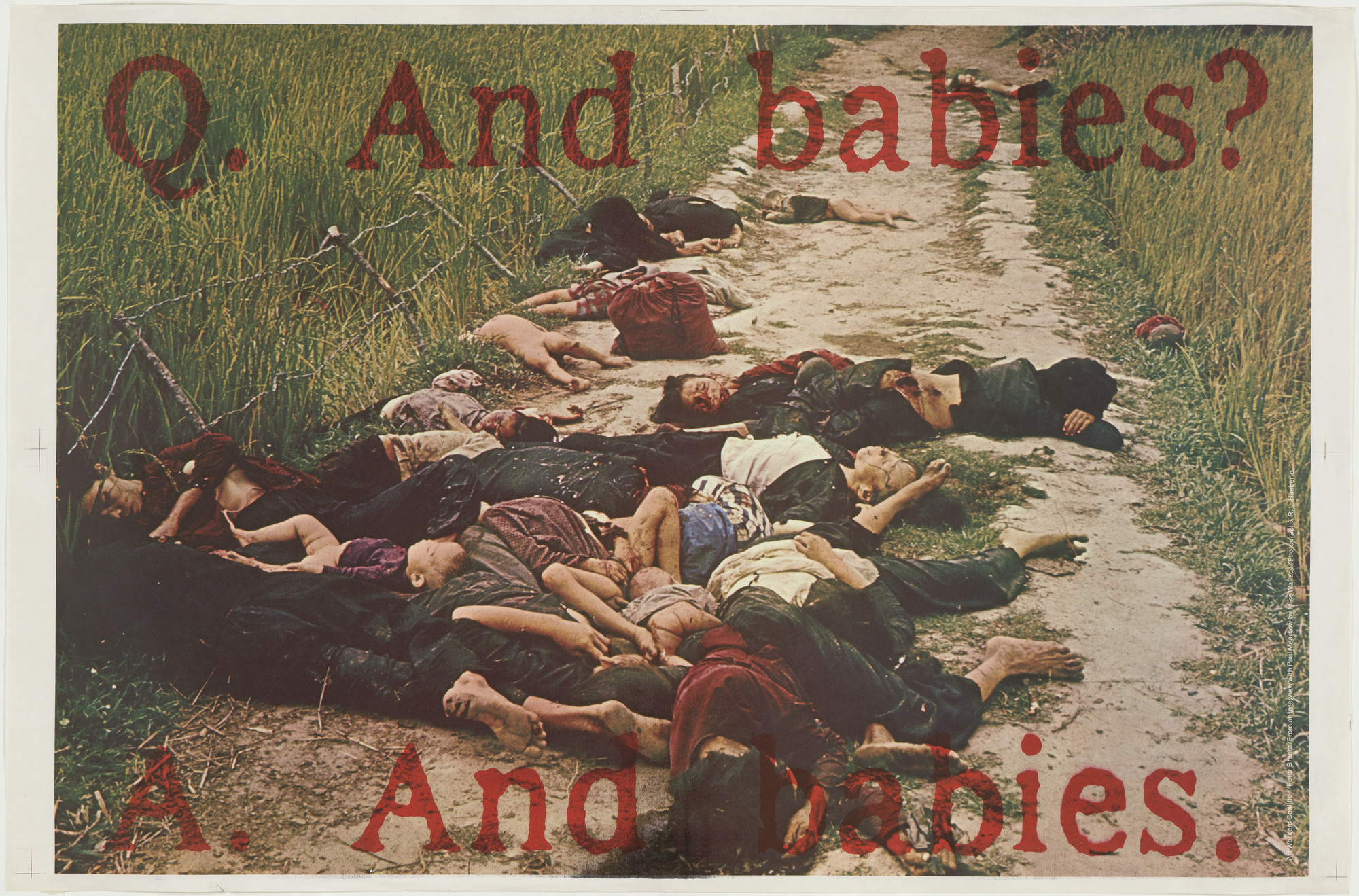
Art Workers Coalition, Q: and Babies?, 1970
A way for artists to unite around the cause of the vietnam war without it being a direct name - getting around blacklisting
Created in direct response to the MyLai Massacre (1968)- about 500 unarmed civilians massacred by US army
Women were raped and children were mutilated
Used direct photo from ronald haeberle in life magazine
Mike Wallace - important investigator- who asked that article and make the soldiers know that they’re people not just things you were supposed to kill
Tony sharazi put this against picasso work Guenica (1970 protest)
MOMA had their funding pulled because of this and the mural was also attacked as a protest gesture.
Site art and Environmentalism:
American artists always looked to the land since it was the first official movement of the US
Landscape was a way of documentation
Emerges in 1960’s and engages in ecology and environmental issues
Artists are not depicting landscape, but working in the environment (going out of the gallery)
Dialogue with nature and the specific site
Huge scale some are ephemeral (only exist for a brief time- could be taken down by artist or goes back into nature) and some permanent
Like a pilgrim going out to find the art not in the gallery - the journey to get to the object
1970’s clean air act and the environmental protection agency (EPA)
Documerica - paid for photographer to photograph of current enviornmental traditions (documenting reality of america)

Robert Smithson, Spiral Jetty, 1970
One of the best known environmental artists
Uses earth rock dirt as his material/medium
Ties to conceptual art
Created in great salt lake in Utah - still there today
Built only using natural materials found on site
Chosen because of environemental conditions - balck boulders, no trees, low horizon line, because of salt in lake creates a salt cast on top of everything (feels other worldly)
Had been past oil drilling so abandoned machinery but it was all rusted over
Nature reclaiming it and breaking it down
High concentration of a bacteria that turns the water pink
Selects an isolated and takes out a loan for the land
Find your inspiration in the land itself
Spiral is around 1500 linear feet
Produced by a truck dumping into the lake slowly (entire process was filmed by ACE gallery) which is part of the work of art too
Why spiral? Like an archetype idea of a crystal structure magnified and shows growth and it will develop a crust

Nancy Holt, Sun Tunnels, 1973-76
WIfe of Smithson
Picks the great desert basin, Utah
40 acres of land purchased in grant funding
9X18 ft concrete cylinders
Placed 50 feet apart
Each of the cylinders have holes so the light can come through and cast patterns on the insides
Holes corresponding to star constellations - aligned with cardinal directions and is set up so you can go into it
The act of going to the place is part of it
Drawing you to think about your place in a bigger system making you feel really small in the immencity of nature

Walter De Maria, Lightning Field, 1977
Takes to the sublime nature of experiencing lightning
Lightning rods inserted into the ground (giant nail bed)
400 stainless steel poles each 20 ft high covers 1 miles
Can only be experiencing during certain season
Nature is the one creating the art he is just giving you the opportunity to see it

Christo and Jeanne-Claude, Valley Curtain, 1972
Located in Rilf Gap Colorado
Creating within cities and is a place for the community
Wanted it to be a community effort
They wanted to incorporate fabric textiles
Wrapped and covered over with fabric and tied to transform it into a new form
Move beyond that and movies across a major highway
This is something people would see on their commute
850K of grant money given and only existed for 28 hours because wind ripped it and for safety purposes they had to take the entire thing down
Removal of piece is also apart of the work of art
Creation of product is just as important as the final product
Even the paperwork and permits and film of it is also part of the work of art
How do they make money from this: the sketches and drawing get sold through their gallery which helps fund the next work of art
They would cut up the fabric and sell it to people too
The process can sometimes take two years
Not leaving debris and restoring the space as it was
Feminist Art and Women’s Movement:
Reaction to the awakening of their role in art history and society
They were always the subject and not recognized
Challenged the assumption of women’s role as “housewife-mother” (Freidan’s book published in 1963)
Issue of fulfillment
1966: National Organization of Women
Yes art by women but subject must have feminist content (clearly political), adressing the historical condition of women, and have reference to women’s “work” like domestic chores
Until 1960’s female artist had sought to de-gender art in order to compete in a male dominated art world
Why deny gender to be accepted in the art world?
Questioning the art museums themselves
1972: protest against Whitney Museum for lack of female exhibitions
Calls for more exhibitions of works by women artists
Calls for more women on art advisory boards
Addressing how art history’s view of women are constructed
1971 Linda Nochlin “Why have ther been no great women artists?”
Men wrote woman out
Introduction to the phrase “anonymous was a women”

Marybeth Edelson Some Living American Woman Artists, 1971
Appropriate well known works of art (leonardo devinches Last Supper and The anatomy lesson)
Creates a collage and replaces all the mens faces with women and makes a border of well known women in society
Georgia okeif is the one that replaced christ
Helped establish first country’s conference for women
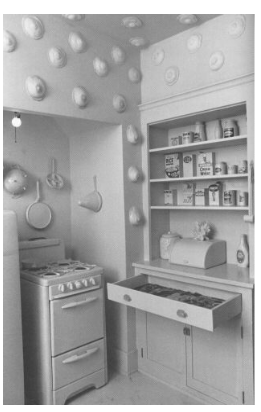
Shapiro and Chicago, Womanhouse, 1971
Working together in California
Shapiro embraced the idea of what is womens art and womens work
Fascinated with the artifact of femininity
Appropriates forms like doll house and because a sculptural exploration of a womens life
The doll is a male instead and nursery has scary creatures in it reflecting on the idea of motherhood being terrifying
Works in feminine crafts like crochet to create art forms with statements
Develops femmage (like collage) where she takes more domestic materials like fabric lace wallpaper and pasting it down - like abstract expressionism but dfferent materials
Becomes more composed later on
They both founded the Cal Arts Feminist Program and created an instalation called womanhouse (Jan 30 - Feb 28) they got a house that was gonna be torn down
21 artists and 18 rooms using it as a gallery to talk about female domesticity and the female body
Each room had a theme
Kitchen called nutrient kitchen where everything was all painted pink
Products on display to show brands being exposed
Latex breats on walls playing on female body being a food source for children and that she also makes all the food too
Bridal staircase because greatest ambition in life was to be married- white to show purity and needed to be a virgin
Bathroom mentions the unmentionalbe showing menstruation products and trashcan with products painted to look like it was actually used - showing how the females natural cycle is considered disgusting
Dining room and how it’s even set up
Still life by Pelae and they were seen as female art since they couldn’t go to school
Table has real and fake foods
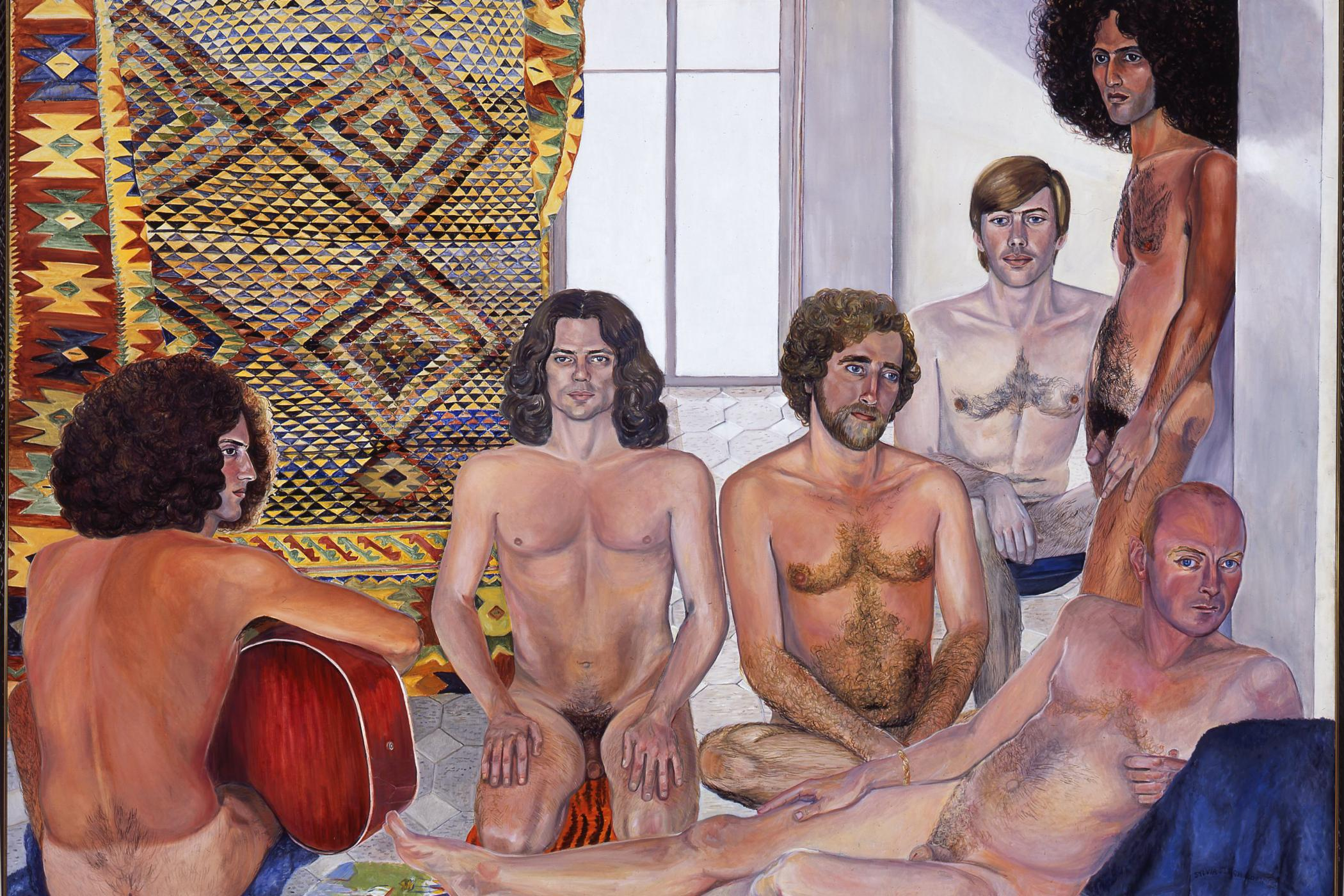
Sylvia Sleigh, The Turkish Bath, 1973
Exploring the tabo of contemporary male nudity since it's always the women
Uses historical examples of women and flips to the guise of men
Tan lines made it naked not nude and putting in exotic textiles and tie dye fabric and confrontational direct stare
The male body becomes objectified and put on display for a female viewer

Carolee Schneemann, Interior Scroll, 1975
Performance piece and uses her own body
No video
Comes out wrapped in a sheet and the sheet is going back to classical garb
Climbs onto table -structure associated with display of female body and work
Painted lines on the female body
She pulls a scroll out of her vagina and the reads the text on it
The scroll was preserved like a relic
The text is like the ejaculation

Judy Chicago, The Dinner Party, 1979
One of the most popular works from movement
Took an entire team of women to produce
Going back to the last supper
Instead of table being long it’s set up like a triangle so there is no head of the table and that shape is associated with female anatomy
Tapestry that were hand woven and ceramics (craft production) assisted in production
Each tapestry has the revelations of the goddess asking what wouldve happened if women were in charge
39 place setting
Floor covered in porcelain triangular tiles 999 tiles each with an important women except they leave the virgin mary out because she’s too connected to men
Each plate is inspired by Okief and how women serve their bodies on a plate
Each one individually crafted
Plates become increasingly hig in relief giving women a place at the table
5 years of work
When it went on display it was not well received and “weird women’s art” creating a backlash against feminism
Feminist art fell out of popularity and because of this piece’s complexity it went to storage and no one wanted to take it
Black Art and Civil Rights
Early 20th century
Artist that were focusing on themes of african american life or african american subjects
Black artists being consumed by white collectors
Harmon Foundation- founded the harlem renaissance it had to meet their expectations
1954 brown vs board of education, 1955 rosa parks and bus boycott, 1963 march on washington martin luther king’s speech, 1965 Watts Riots in L.A (6 days)
Black vs negro art
Negro art, used during Harlem Renassance seen as label of the past applied by white art world for african subject matter for white audiences/patrons
Black art, art works by black artists, for black audiences, featuring black subjects
Should have a socio-political theme vs abstraction
A self reliant black art world
First black art exhibition, “Afro-American Artists_ in 1970: Black art curated by black curator for black community
Artists working outside this movement were often critized for supporting racism built into art
Offshoot of movement is black pather movement
Civil rights movement vs the black power movemetn
Militant resistence
Self-reliant black nation
A challenge to the centuries of patience and peacefulness
No more asking for equality no more peaceful protest
Part of black power movement is AfriCOBRA
The african commune of bad relevant artists founded in 1968 by jeff donaldson, barbra jones hogu, wadsworth jarell and gerald williams
Black Feminist Art movement
Most disinfranchized and have the hardest path
Women weren’t embraced as much
Creates “Where we at” WWA
Representation of the revolutionary women with bullets around her
Angela Davis was face of the black power movement

Romare Bearden, The Dove, 1964
One of the leaders of the black art movement
Already had an established career in advertising and abstract expressionist
Abandons this because he wants to talk about politics in this era
Becomes on the founders of a group called spiral - black art organization of african american organizations
Spiral shows outward growth and movement
First exhibit “black and white”, 15 artists, first show originally to be called Mississippi 1964, but feared political backlash, all works of art had to be the colors black and white
Creates photo collages called “projection series” - collects imagery found in paper periodicals
Targeting magazines that target black audiences
Assembling to create a fragmented memories that we piece together (not always clear)
Not concerned about proportion and flattening out of the figure
Interesting in art that reflected on black culture as part of the whole fabric of American life
Rhythm to his work that you find in jazz music - represents harlem urban society
Creates a sense of community and various members of harlems sense of liveliness and chatter
Lady in white is the wise woman of the neighbor hood that likes taro
Uses stereotypical figures that white people expect to see
Dove is over the door and is a natural sign of piece in the time where black areas were seen as dangerous

Reginald Gammons, Freedom Now, 1965
Creates art from photograph
Also co-founder of the spiral
Audible protest
Have a sense of crowded and tight
Fragments of text to understand context
Capturing sense of movement and marching
Sense of urgency because the children are coming

Charles Alston, Black and White
Coming from harlem renassiance trying to find an in between
Social realist subject matter
Early works were being awarded foundation funding (white)
Shifts and create abstract expressionist paintings called black and white
Grappling with speaking to black community but how do I still sell works of art
Main reason african american arts didn’t last long because they were so expensive
Speaks to abstract expressionist buyers but he chooses the color to talk about the race war the riots and attakcs
More white on page to show dominance of white culture
Physical conflict going on between whites and blacks

Robert Colscott, George Washington CarverCrossing the Delaware: Page from American History Textbook, 1975
Plays with elements of appropriation
Examining these images as black instead and how do you see it differently when the color of skin changes
Taking even iconic imagery from American history
Originaly created by Leutze - german painter i think
Complete fabrication of original image and so its bringing out american folklore
George washington carver is an artist and replacing the other figures with the racist stereotypes of black people
Same approach as Betty Sar

Wadsworth Jarell, “Angela Davis”; Revolutionary, 1972
Angela Davis is one of the leaders of black power movement
afriCOBRA movement
Language is on the clothing radiating out from her
The bullets are callaged onto the piece - 3D element
Very bold and vibrant colors speaks to the idea of resistance and beauty
Psychedelic feeling instead of black and white
Plays also to advertising by including text in there

Faith Ringgold, The Flag is Bleeding, 1967
Feminist artist too
Leader of black feminist movement - Painter, quilter maker, writer, and teacher
Stylized figures biomorphic components
Using the flag and embedded is the representation of a white man white woman and black man
Black man holds the weapon and has the wound to the heart
Appropriating the flag
Takes guts to make this during the times period
The mentality of what the flag symbolizes is segregation it’s woven into it
As a feminist artist and fiber arts piece by using the flag and quilt story telling
Quilt goes back to feminist art since women sew (domestic)
On quilts paints dreams of childhood

Betye Saar, The Liberation, 1972
Another black feminist artist
Grew up in California Los Angeles
Similar to LA Cool school of collecting the debris of throw away culture - she practices the same
Borrows from the tradition of Joseph Cornell - known for creating wooden boxes and reassemble junk into art
Takes the box structure and does a liberation of aunt jemima
In spirit of pop art repeats aunt jemimna over and over again in the background
On the sides is a mirror shows continuous
In box is representation of aunt jemima figurine
Appropriate figure and paints it brightly and very black skin and red lips
In front of character is a frame image of a black woman holding a white child, commenting on role of women being domestic care takers and shows a first of black power overlapping
Cotton on bottom referring to traditions of slavery
Image of resistant because figure has a broom but also a rifle, and a gloc
Symbol of liberation
Taking that racist imagery and using it to challenge the stereotypes
Since we see these images over and over again desensitizes people

David Hammons, Injustice Case, 1971
Founding leaders of AfriCOBRA movement
Works in a wide range of media create mixed media sculptures and plays with symbols
The flag becomes a use of political gesture and creates a flag of a black nation - to get the white out
Red is the blood
Creates body prints and uses his own body and the natural oils in his hair and skin
Then he blows black dust over the surface to create and x ray look
Artists going back into the work of art
This is his most popular piece
The flag is the border and he is tied to a chair
Used oil and charcoal
Inspired by political events of the Democrat national convention in chicago Vietnam Protest
Chicago 7 trial
Bobby Seale was on of the people on trial and was not given the same rights as the other white people on the same trial
Found him content of court because Seale was outraged and had a series of outburst in court room objecting
In response the judge has him tied to a chair and gagged
Found him contempt of court and put him in jail for 4 years

Pat Ward Williams, Accused/Blowtorch/Padlock, 1982
Professor at FSU
Works on tar paper associated with roofing usually
Went through old photograph books of life magazine and in 1937 one of the best photographs is really crazy photograph which looks like lynching
Creates a frame out of wood so it looks kind of like a film clip
Blown up portions of the photo so you can see and think about what you’re looking at
Scream of Outrage that someone stopped and took a photograph of this
Tar paper was used in the tar and feathering which used to happen before
Chalk board look because she is a teacher and wants change
Neo-Expressionism
Revival of expressionist painting - NOT abstract
Raw, expressive, emotion
Rejects restraint of minimalism
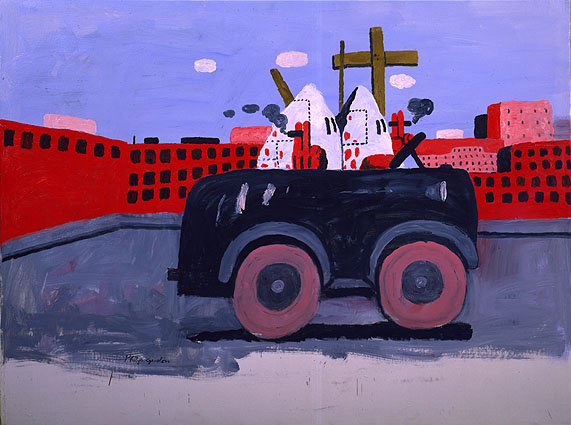
Philip Guston, Central Avenue, 1969
Starts off as an abstract expressionist
Shifts into cartoon themes
There was huge backlash against him - he’s painting himself
Painting style is rough and irregular with a cartoony quality to it
Plays with the absurd elements
Pint toned color palette
Wearing a hood, remencent of the KKK and is painting it too
In 1930’s Guston painted Klan figures and themes of lynchings as well as other social realist themes
2 Klan figures driving in town smoking and have a couple crosses with them
Visually uncomfortable to lookat but draw you in and are disturbing
Showing everyday nature of evil and how it all in society

George Baselitz, The Great Friends, 1965
German neo-expressionist
Confront realities of late 20th century Germany in post war era
Recall Joseeph Beuys
Reflects on Disorder and chaotic world
Disrupt conventions
One of his best known pieces
Large scale
Figures become representation of Germany itself and becoming a symbol of society struggling with the division of east and west Germany
Belin wall construction start in 1961 and so does german neo-epressionism

Anselm Kiefer, Occupation Series, 1969
One of the most celebrated artists today
Deeply political - german
Series of photographs he took himself dressed in a nazi soldier uniform in different locations doing the Nazi salute
Claiming idea of territory and expanding
Exploring the aesthetics of fascism
Its fine when black people doing it and take that symbolism and use it to make art but it is ok for white people and the KKK or nazi art
His paintings are some of the most powerful ones in this time period - would paint on top of photograph

Anselm Kiefer, Quaternity, 1973
Interior painting tying back to time period of WW2
Dramatic perspective painted boards
The interior of an attic since they carry the weight of the secrets we hide (like people hiding there too)
Serpent coming into scene and fire connecting back to trinity of evil
Archetypal symbols and imagery

Anselm Kiefer, March Heath, 1974
Painting
Devastation of the landscape after the war
The connection Germans have with the land itself
He’ll also put hay into the paint so it has art brute tactile quality plus connects to hair
Underneath the painting there’s usually chunks of paint will fall off and is in constant decomposition
Connection and identity back to the land
Dramatic perspective - like tank treads going through nature
Ask rheece about dutch things
Thick impasto paint
Post Modern: Appropriation and new media:
A range of practices that gained prominence in the later twentieth century
Challenged influential modernist ideas about originality, the autonomy of art, and the separation of fine art from popular culture
Artist often used processes called appropriation, quotation, irony, and familiar media forms to examine how images acquire meaning, authority and value
Responding to capitalist culture in the big 80’s
Appropriation: to “borrow” - the process of creating a new work by taking a preexisting image from another context
Equivalent of a “found object”

Cindy Sherman, Untitled film still #3, 1977
Photographer
Borrows from film recreating clique scenes
She dresses up in costumes and reperforms them but we don’t get the story before or after just a small part
The viewer gets to create the story
Plays off of stereotypes we have
Also relies on people who watch film so they can try and find out what movie it connects to
Even borrows from art history like carvaggio and often uses prosthetics and makeup to recreate the scenes

Sherri Levine, After Walker Evans, 1979
Her own photograph of Walker Evans photograph (she took the photo of his photo)
Original photograph was extremely famous
Image by a white male photographer vs a female photographer
Does who is taking the photo change how people perceive it
How does authorship change how we see that image
She was vilified for doing this but she isn’t alone

Jenny Holzer, Truisms, 1977-79
Combines conceptual art with new media
Truisms - where she takes products or signage and makes commentary about it
Unexpected art experience since it’s moved out of the gallery and put into our immediate space
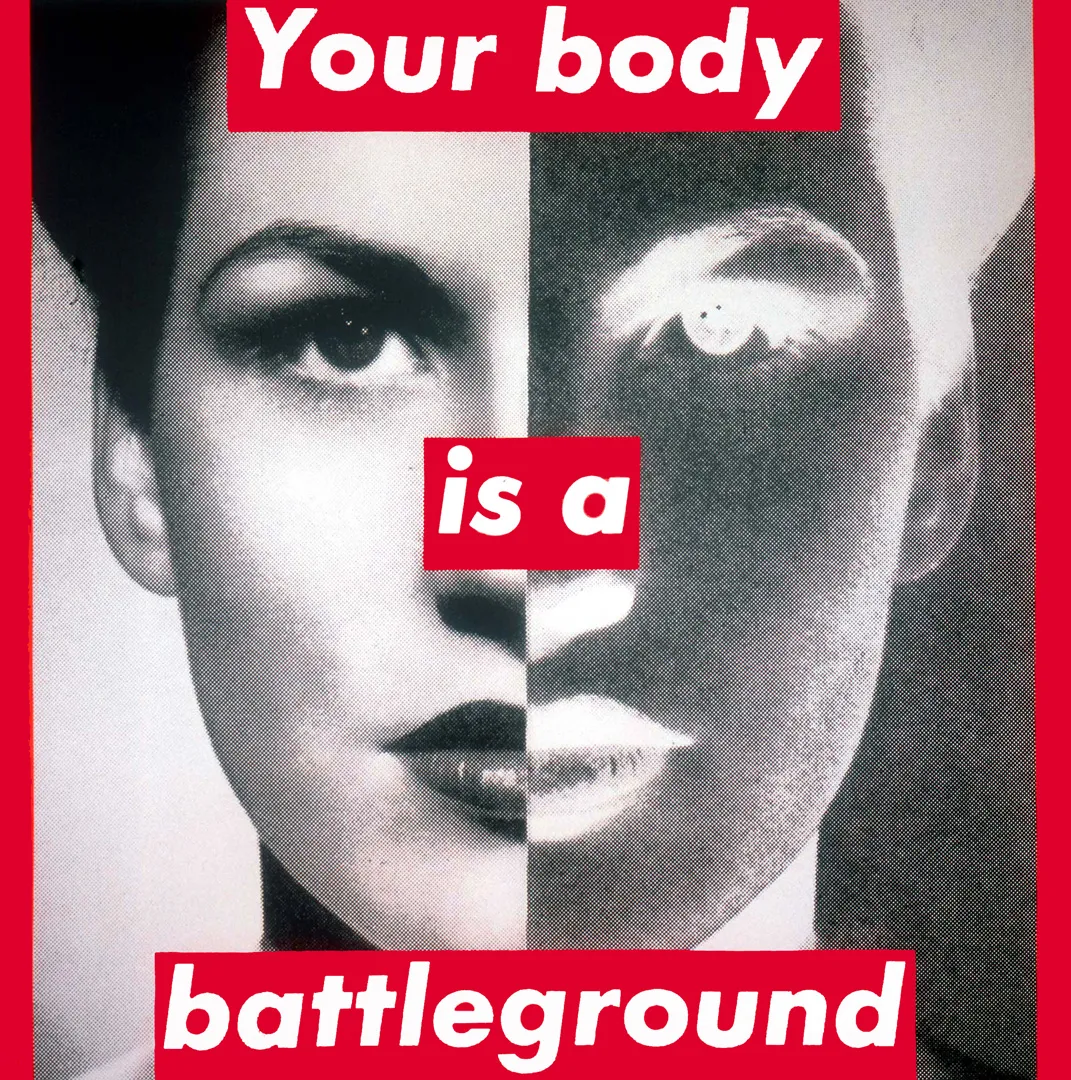
Barbara Kruger, Your Body is a Battlefield Basquiat, Charles the First, 1983
Takes imagery that already exists and combines it with text
Talks about consumer and roles of women in society
Always incorporates “your” - you vs we, my, I to make you feel called out

Koons, Michael Jackson and Bubbles (1988) from Banality Series
She hates this artist
Was a wall street broker - obsessed with capitalism and art as a commodity
Thinks he’s creating art for the everyone - kitsch purposefully
Does not actually make any of the objects himself
Sees himself as the idea man and has them created by sculpture
Large scale kitsch objects made that he thinks will resonate with the public
Embraces “tacky”
Porcelain and then painted with gold
Making kitsch fine art
Very aware marketing and promotion of himself with pieces - he purposely creates works of art to annoy another audience
Married a sex worker for a period of time and casts parts of their porn together
His idea of italian baroque sculpture