childhood 3
 Call Kai
 Learn
 Practice Test
 Spaced Repetition
 Match
 Flashcards
 Knowt Play
1/13

There's no tags or description
Looks like no tags are added yet.
14 Terms
common feedign challenges in childhood
decreased appetite
changing preferences
food jags
food neophobia
picky eaters
if child doesnt want to eat anything during lunch time
recomend to
eat w/ child
more food choices
eliminate distractions
food jag
only want to eat one or a few fav foods for a period of time
neophobia vs picky eating
neophobia: unwillingness to try new foods
picky eating: unwilling to try familiar foods
what age is peak of pickiness
2 years of age
tips for overcoming picky eating
continue to offer foods
food modelling
involve in food prep
incorporating into other foods they like
Division of Responsibility in childhood: ellyn satter method
parent is responsible for
what to eat
when
where
child responsible for
whether to eat
how much
food chaining
change one thing at a time when u introduce foods
picky eating vs feeding issues

WHO guidelines for sugar intakes for adults and children
WHO recs a reduced intake of free sugars throguhout lifecourse
reducing to less than 10% of total energy intake
how sugar affects dental caries
sugars feed bacteria which makes acid, damages tooth surfaces and overtime can cause a hole
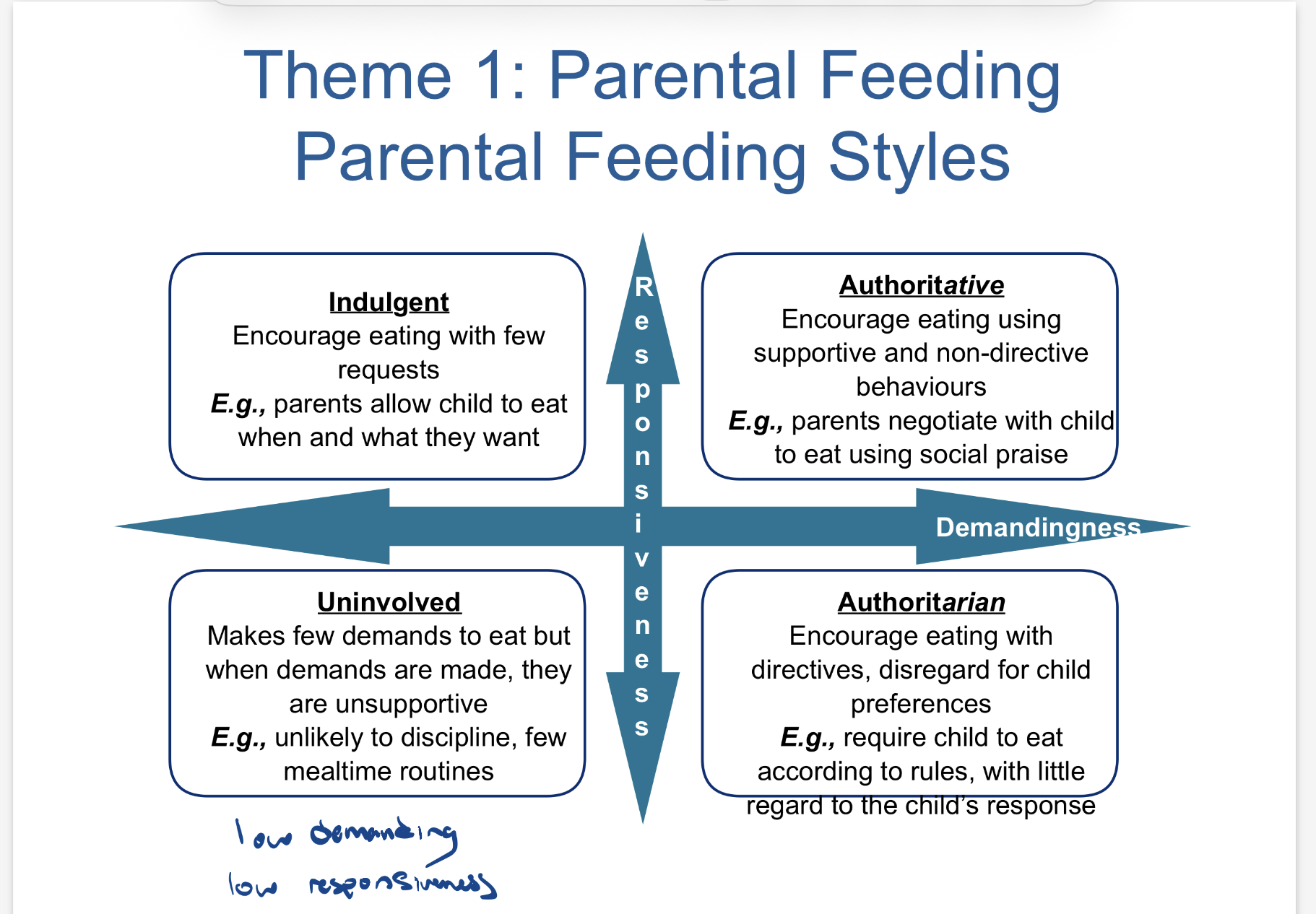
4 types of parental feedign styles
indulgent
uninvolved
authoritative (most healthy eating habit)
authoritarian
parental feeding practices - coercive control, structure, autonomy support
coercive control=eg. restriction, pressire to eat (less health promoting feeding practice)
structure= eg. rules and limits
autonomy support= nutrition education, child invovlement
eating tgt associated with
more consumption of healthful foods in childhood and adultoodo