art history
 Call Kai
 Learn
Learn Practice Test
 Spaced Repetition
 Match
Match Flashcards
 Knowt Play
1/29

There's no tags or description
Looks like no tags are added yet.
Name | Mastery | Learn | Test | Matching | Spaced | Call with Kai | Chat |
|---|
No analytics yet
Send a link to your students to track their progress
30 Terms
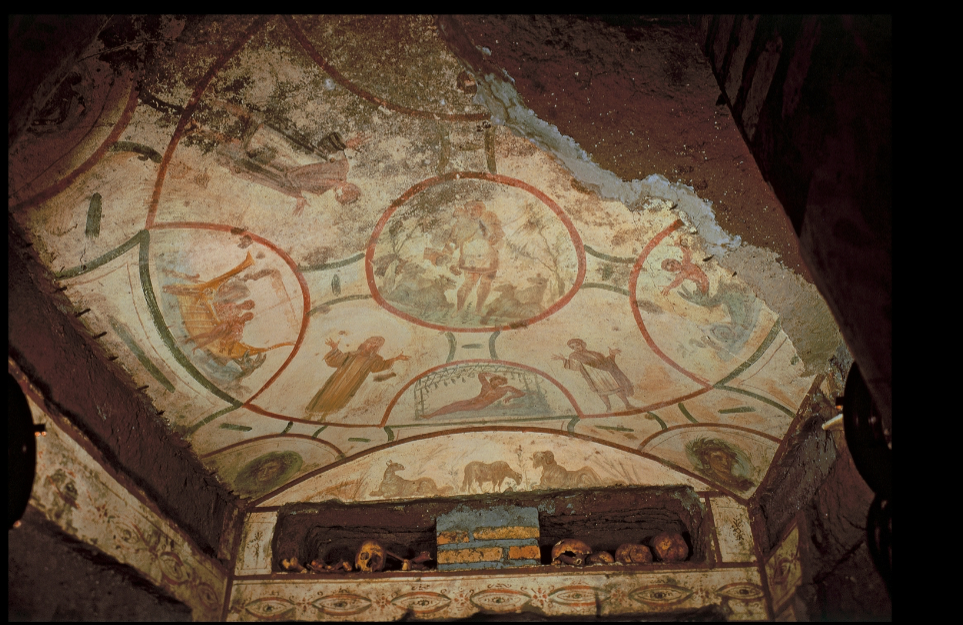
The Good Shepherd,Orants, and the Story of Jonah
Location: Painted ceiling of the Catacomb of Ss.peter and marcelline rome
Culture: Early Christian
Patron: Unknown
Artist: Unknown
Date Range: Fourth and Fifth Century (300-400 CE)

The Good Shepherd,Orants, and the Story of Jonah
Painted ceiling of the Catacomb of Ss.peter and marcelline rome
Early Christian
Unknown
Unknown
Fourth and Fifth Century (300-400 CE)

Colossus of Constantine
Rome (312-315 CE)
Early Christian
Constantine
Fourth and Fifth Century
(c. 300-400 CE)

Arch of Constantine, Rome (312-315 CE)
Early Christian
Patron: Constantine/Roman Senate
Artist: Unknown
Fourth and Fifth Century (c. 300-400 CE)

Constantine’s Distribution of Largesse
Arch of Constantine, (c. 315)
Early Christian
Patron: Constantine
Fourth and Fifth Century (c. 300-400 CE)

Old Saint-Peter’s Basilica,
Rome
Plan and Reconstruction
with isometric view
Early Christian
Fourth and Fifth Century
(c. 300-400 CE)
1. Nave
2. Aisles
3. Apse
4. Transept
5. Narthex
6. Atrium
7. Axial design
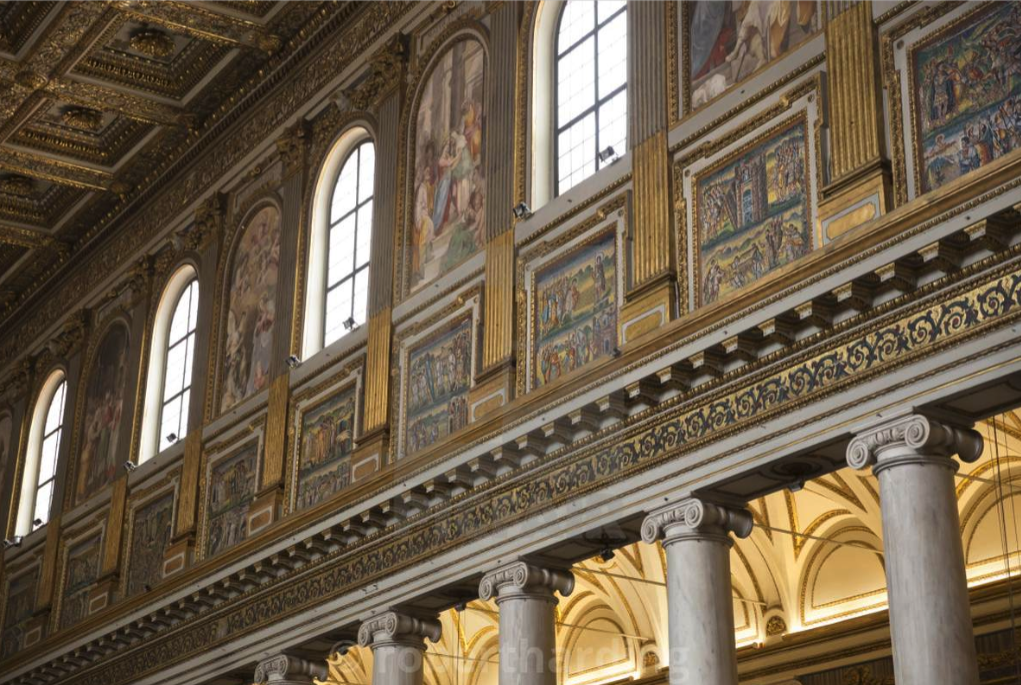
Santa Maria Maggiore, Rome,
Old Testament mosaics
(c. 422-432)
Early Christian
Patron: Pope Sixtus III
Fourth and Fifth Century
(c. 300-400 CE)

Santa Maria Maggiore,
Rome
Triumphal Arch:
Nativity and Infancy of Christ
(c. 422-432)
Early Christian
Fourth and Fifth Century
(c. 300-400 CE)
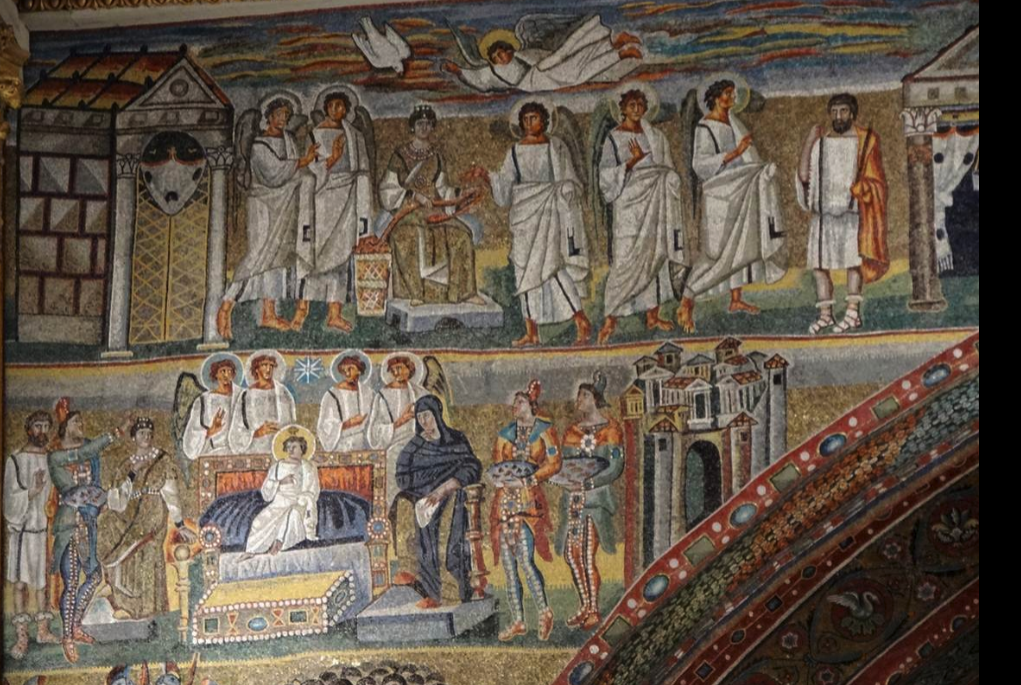
Santa Maria Maggiore,
Triumphal Arch: Nativity and Infancy of Christ
(c. 422-432).
Early Christian
Patron: Pope Sixtus III
Fourth and Fifth Century
(c. 300-400 CE)

Santa Maria Maggiore, Rome,
Patrons of Rome, Four Beasts/Evangelists* and Etimasia: Throne for the Second
Coming of Christ
Early Christian
Fourth and Fifth Century
(c. 300-400 CE)
Four Beasts of the Apocalypse: Ox (Luke), Person (Matthew), Lion (Mark), Eagle (John)

Santa Maria Maggiore, Rome (c. 422-432)
Early Christian
Fourth and Fifth Century
(c. 300-400 CE)

Apse Conch of Santa Costanza
Rome
Early Christian
Fourth and Fifth Century
(c. 300-400 CE)

Hagia Sophia, Constantinople
Byzantine
Sixth to Mid–Seventh Century (500-650 CE)
Patron: Justinian
Architects: Anthemius of Tralles and Isidore of Milet

Architects: Anthemius of Tralles and Isidore of Miletus
HAGIA SOPHIA, Constantinople/Istanbul
Byzantine
Sixth to Mid–Seventh Century (500-650 CE)

Icon of
Christ Pantocrator
Monastery of St.
Catherine, Mount Sinai
Byzantine
Sixth to Mid–Seventh
Century (500-650 CE)
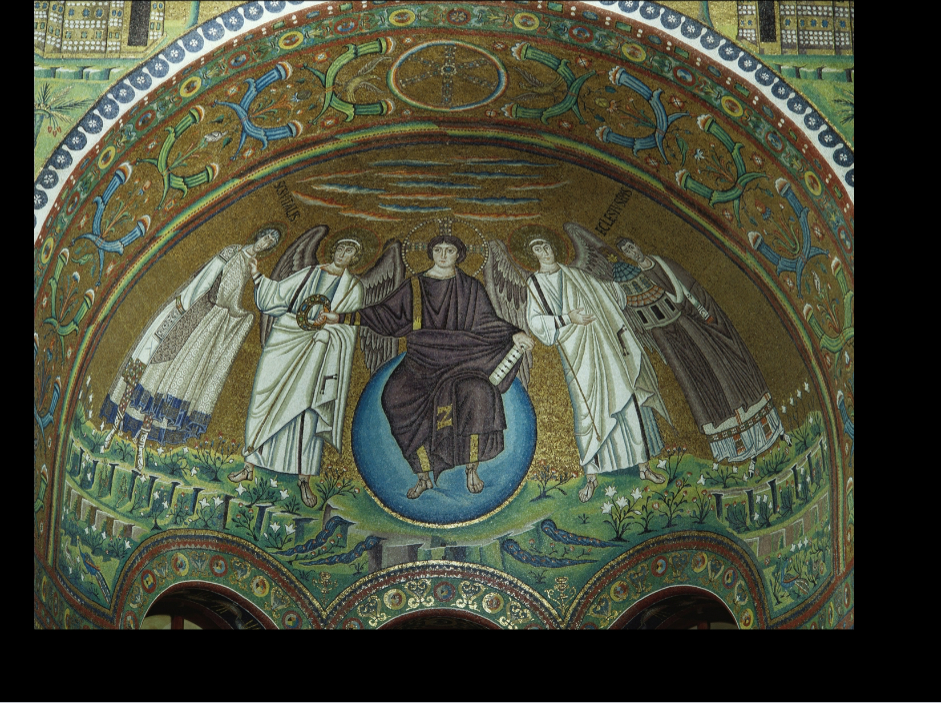
CHRIST ENTHRONED, FLANKED BY ANGELS, ST. VITALIS, AND BISHOP
ECCLESIUS
Church of San Vitale, Ravenna. c. 547. Mosaic.
Byzantine
Sixth to Mid–Seventh Century (500-650 CE)
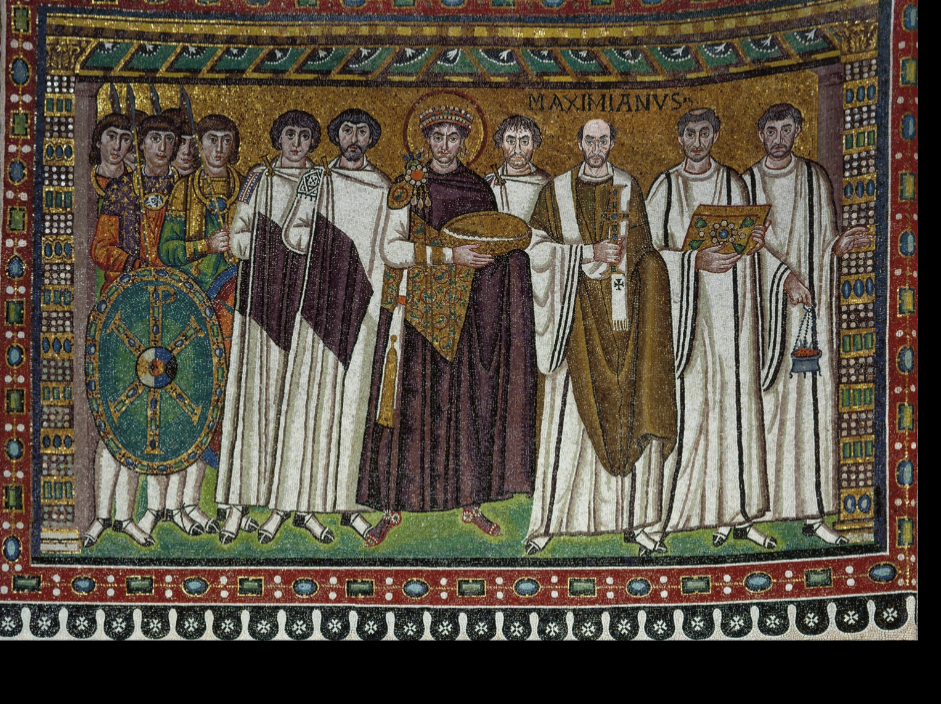
Justinian and his Retinue
Church of San Vitale, Ravenna. c. 547.
Mosaic.
Byzantine
Sixth to Mid–Seventh Century (500-650 CE)

Empress Theodora and her attendants
Church of San Vitale, Ravenna. Consecrated 547.
Byzantine
Sixth to Mid–Seventh Century (500-650 CE)

Sant’ Apollinare Nuovo, Ravenna, founded 505
Theoderic
Ostrogothic
Sixth to Mid–Seventh Century (500-650 CE)

Miracle of the Loaves and Fishes and the Betrayal of Christ
Sant’ Apollinare Nuovo, Ravenna, founded 505
Ostrogoth ic
Sixth to Mid–Seventh Century (500-650 CE)
upper level

Procession of the Martyrs and Palace of Theoderic
Sant’ Apollinare Nuovo, Ravenna, founded 505, Theoderic the Ostrogoth
Sixth to Mid–Seventh Century (500-650 CE).

Saint-Denis, Paris
Merovingian necropolis,
Dagobert’s church
Merovingian
Sixth to Mid–Seventh
Century (500-650 CE)

Tomb of Queen Arnegonde, Saint-Denis,
Paris
Patron: Merovingian Royal Family
Culture: Merovingian
Sixth to Mid–Seventh Century (500-650 CE)

Fibula of Rosmeer,
Sixth to Mid–Seventh Century (500-650 CE)
Merovingian

San Pedro de la Nave, Zamora, Spain
Visigothic
Sixth to Mid–Seventh Century (500-650 CE)

San Pedro de la Nave, Zamora, Spain
Visigothic
Sixth to Mid–Seventh Century (500-650 CE)
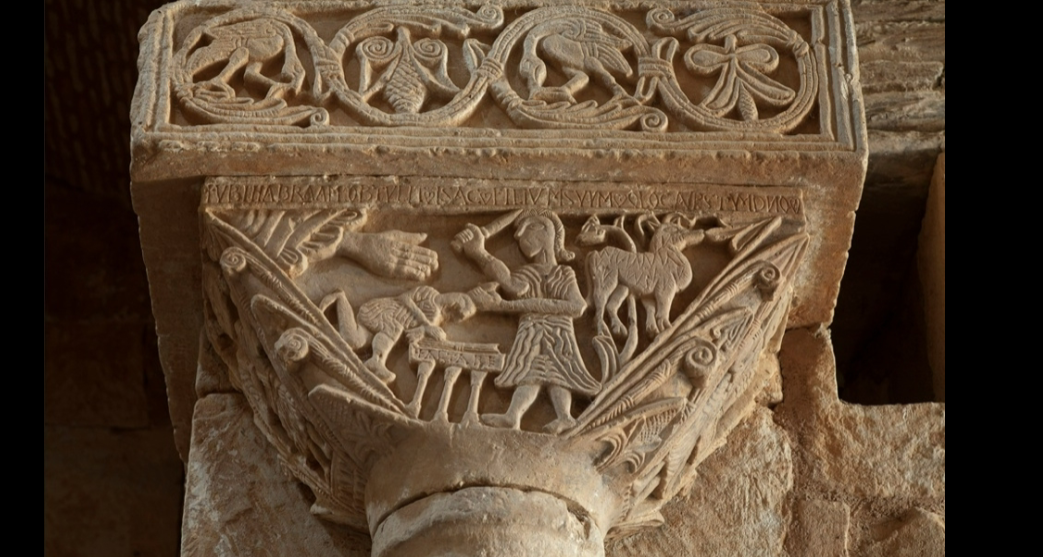
Abraham’s Sacrifice of Isaac, San Pedro de la Nave, Zamora, Spain
Visigothic
Sixth to Mid–Seventh Century (500-650 CE)

Crown of Recceswinth
Visigothic
Treasure of Guarrazar
Sixth to Mid–Seventh Century
(500-650 CE)
