Molecules & Medicine Exam 3
 Call Kai
 Learn
 Practice Test
 Spaced Repetition
 Match
 Flashcards
 Knowt Play
1/59

There's no tags or description
Looks like no tags are added yet.
60 Terms
pharmacophore
molecular framework that carries the essential features responsible for a drug’s biological activity
structural (2D) pharmacophore
defines minimum skeleton connecting important binding groups
para-amino-benzoic acid PABA
intermediate in the bacterial synthesis of folate (vitamin Bx)
most bacteria require it

prontosil
red dye/prodrug
antibacterial

ACE inhibitors
2D pharmacophore example - captopril (anti-hypertensive)

3D pharmacophore
defines relative positions in space of important binding groups
morphine
3D pharmacophore example

generalized bonding type pharmacophore
defines relative positions in space of the important binding interactions which are required for activity
HBA/HBD
Van der Waals interactions
ionic interactions
active conformation
conformation adopted by a drug when it binds to its target and produces the desired effect
identification of this is required to identify 3D pharmacophore
classical isosterism
response to the observation that different atoms with the same valence electron structure had similar biological effects
isosteres
replace a functional group with a group of the same valency (OH replaced by SH, NH2, CH3)
leads to more controlled changes in steric/electronic properties
may affect binding and/or stability
isosterism example
NH2 to OH

classic isosteres examples

biosteres
replace a functional group with another group which reatains the same biological activity
not necessarily the same valency
biosteres example
antipsychotics
improved selectivity for D3 receptor over D2
pyrrole ring substituted for amid group
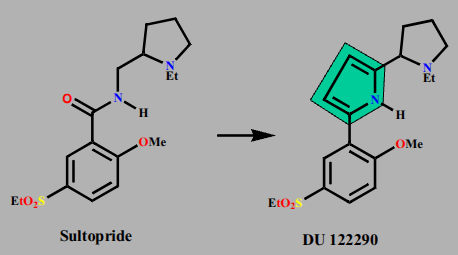
biostere purpose
drug design
exchanging one for the other may enhance the desired biological or physical properties of a compound without making significant changes in chemical structure
reduces toxicity, change bioavailability, or modify the lead compound
carbonyl
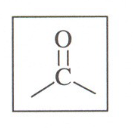
carboxylic acid

amide

ester

hydroxyl

catechol

pyridine

benzene

optimizing binding interactions
aims:
to increase activity and reduce dose levels
increase selectivity and reduce side effects
varyl alkyl substituents
the alkyl group in a lead compound may interact with hydrophobic region in the binding site
vary in length and bulk of group to optimize interaction
varyl alkyl substituent examples
selectivity of adrenergic agents for beta-adrenoceptors over alpha-adrenoceptors

extension - extra functional groups
aim:
to explore target binding sites for further binding regions to achieve additional binding interactions
ACE inhibitors
Enalapril
ACE converts peptide hormone angiotensin I → angiotensin II which vasoconstricts blood vessels
on the World Health Organization’s list of essential medicines
extra functional groups examples
nerve agents and medicines
addition of quaternary nitrogen
extra ionic bonding interaction capacity
increased selectivity for cholinergic receptor
mimics quaternary nitrogen of acetylcholine

chain extension/contraction
rationale:
useful if a chain is present connecting two binding groups
vary length of chain to optimize interactions
Chain extension/contraction example
N-Phenethylmorphine: optimum chain length = 2
the compound is ~ 8-14x more potent than morphine as a result of modification

ring expansion/contraction
rationale: to improve overlap of binding groups with their binding regions

ring expansion/contraction example

ring variations
rationale:
replace aromatic/heterocyclic rings with other ring systems
often done because of patent reasons
sometimes result in improved properties
ring variations example
nevirapine (antiviral)

simplification
rationale:
lead compounds from natural sources are often complex and difficult to synthesize
may help structure to fit in binding site easier and increase activity
may be more selective and less toxic if things are removed
simplications
things are removed
functional groups that may be unnecessary but help to retain the pharmacophore
simplifcation disadvantages
too much may result in decreased activity
may have more conformations
more likely to interact with more than one target binding site
may result in increased side effects
rigidification
endogenous lead compounds are often simple and flexible
fit several targets due to different active conformations
results in side effects
rigidification strategy
limits conformations (restraint)
increases activity (more chance of desired active conformation being present)
increases selectivity (less chance of undesired active conformation
atropisomerism
stereoisomers that arise because of hindered rotation about a single bond, where energy differences due to steric strain or other contributors create a barrier to roation that is high enough to allow isolation of individual conformers
prodrugs
inactive compounds which are converted to active compounds in the body
prodrug uses
improves membrane permeability
prolongs activity
masks toxicity and side effects
varying water solubility
drug targeting
improves chemical stability
prodrugs for membrane permeability
esters: used to mask polar and ionisable carboxylic acids, used when a carboxylic acid is required for target binding
trojan horse strategy
prodrug designed to mimic biosynthetic building block, transported across cell membranes by carrier proteins
ex: levodopa for dopamine
masking polar groups to prolong activity
reduces rate of excretion
ex: azathioprine for 6-mercaptopurine

adding hydrophobic groups to prolong activity
drug concentrated in fat tissue
slow removal of hydrophobic group
slow release into blood
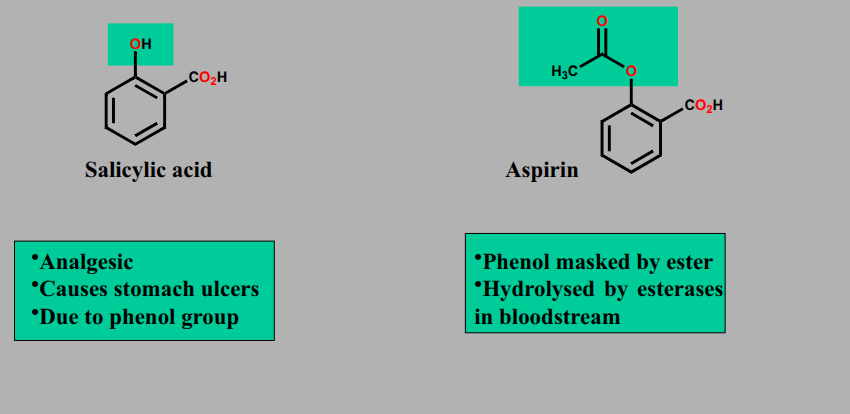
to mask toxicity and side effects
the groups responsible are covered
used when those groups are important for drug activity
ex: salicylic acid for aspirin
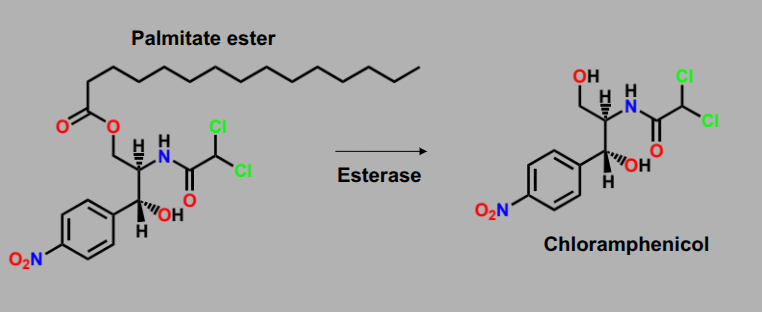
to lower water solubility
used for foul tasting orally active drugs
they don’t break down as fast on the tongue
ex: palmitate ester of chloramphenicol (antibiotic)
to increase water solubility
prevents dissolvation in fat globules in gut (better interaction with gut wall overall)
ex: lysine ester of estrone (better absorbed orally than estrone)

for drug targeting
used to deliver/activate the therapeutic agent at a specific disease site (like a tumor)
can use the distinct acidic microenvironment created by tumors/sites of infection to activate
ex: hexamine to treat urinary infections

to increase chemical stability
protects the active pharaceutical agents from premature degradation, hydrolysis, oxidation, etc.
ex: hetacillin for ampicillin (alpha-NH2 group attacks beta-lactam ring on ampicillin where the nitrogen in heteracillin is locked)

synergism
drugs which have a beneficial effect on the activity or pharmacokinetic properties of another drug
sentry drug
a drug that is added to ‘protect’ another drug
ex: carbidopa which inhibits the decarboxylase enzyme in the peripheral blood supply, protecting L-Dopa
peptides as drugs
act as neurotransmitters, hormones, and enzyme substrates
imporant lead compounds
disadvantages: susceptible to digestive/metabolic enzymes, pharmacokinetic properties often unsatisfactory, difficulty crossing cell membranes
peptidomimetics
modify peptide-like drugs to make them less peptide-like
increase resistance to digestive and metabolic enzymes
increase water solubilty
increase oral absorption/bioavailability
replacing a susceptible peptide bond
replace with stable functional group (should mimic important features of the target bond)
planar
H-bonding with target binding site
disguising a peptide bond
N-methylation
planar peptide bond retained
beneficial if forms important interaction to digestive/metabolic enzymes
detrimental if forms important interaction to target binding site
altering stereochemistry
inverting an asymmetric center
replace L-amino acid with D-amino acid