APES unit 3
 Call Kai
 Learn
 Practice Test
 Spaced Repetition
 Match
 Flashcards
 Knowt Play
1/63

There's no tags or description
Looks like no tags are added yet.
64 Terms
Demographics
the study of human populations (ic)
11
how many years to add another 1 billion humans modern
2%
Exponential growth of humans per year (modern)
doubling time
estimation of how long for a population to double in size
exponential, logistical growth
different types of growth
developing countries
poor, young, or rapidly growing countries (china, india, boliva, congo)
Developed countires
wealthy, old, and mostly shrinking population (US, japan, france)
fertility rate
number of births per 1000 women per year; developing countries ~10, developed countries ~5
replacement level
when you have 2.1 children per couple (replacing parents)
migration
the movement of individuals between areas
life expectancy
average age a newborn can expect to attain in any given society
mostly affect by infant mortality rates
strongly correlated with income up to about 4,000 US per person
pronatalist forces
factors that increase desire for children
source of pleasure, pride, comfort
support for elderly parents
social status
antinatalists forces
Against having children; women less likely to have children when
higher education and freedom
salary opportunites
preindustrial
food shortages, malnutrition, lack of sanitation/medicion
Birth rates tend to match death rates
transitional
hygiene, nutrition, and education improve
death rates drop, birth rates remain high (INITIALLY)
population increases quickly
industrial
birth rates begin to fall
population may have increased 2x or 4x by this time
Post industrial
transition is complete
birth and death rates low
population is at equailibrium
higher birth rate
more younger people
Type I survivorship
shows high survival rates during early and middle life, followed by a steep drop-off in death rates as organisms reach old age. (usually k strategists)
type II survivorship
intermediate survivorship curve; population experiences a roughly constant mortality rate or survival probability throughout its entire lifespan
type III survivorship
high mortality early in life, followed by a much lower death rate for the small percentage of individuals that survive to adulthood (usually r strategists)
population
all of the individuals of a species that live together in one place at a time
demography
the statistical study of populations. Used to predict how the size of a population will change
population size, population density, dispersion
key features of populations
population size
number of individuals in population, has important effect on the ability of the population to survive; a small pop. is more likely to become extinct
inbreeding
genetic diversity decreases —> leading to recessive traits
population density
number of organisms in a given area
disease, competition, predators, parasites, food, crowding
density dependent factors
natural disasters, abiotic factors
density independent factors
dispersion
the way in which the individuals are arranged

logistic model (s curve)
accounts for the declining resources available to populations as they grow.

exponential (j curve)
no limit to population size
r strategists
an organism that prioritizes high growth rates, rapid reproduction, and large numbers of offspring over individual survival and parental care. Can live in unpredictable and rapidly changing enviornments
k strategist
an organism that lives in a stable environment and maintains a population size close to the maximum limit that the local habitat can support. Reproduce late and life and few offspring
generalist species
Species with a broad ecological niche that can survive in many different environments and use a variety of resources.
specialist species
Species with a narrow ecological niche that depend on specific habitats or food sources.
type I
what type is the blue line
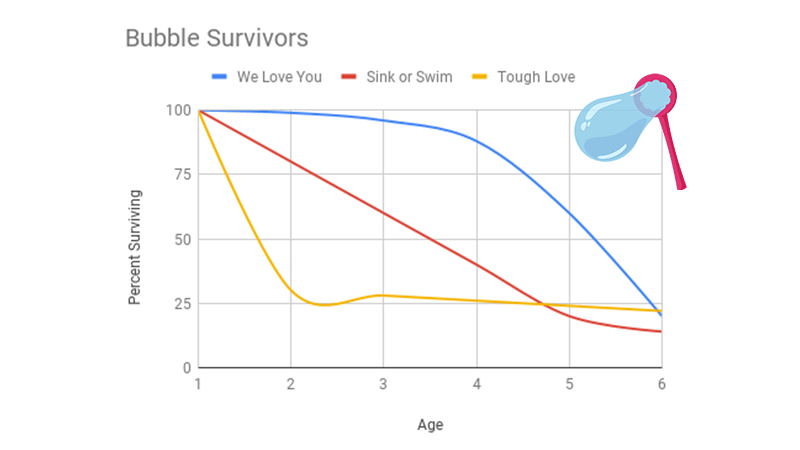
type II
what type is the red line

type III
what type is the yellow line

carrying capacity
The maximum population size an environment can sustainably support with its available resources, such as food, water, and space.
biotic potential
The maximum rate at which a population can reproduce under ideal environmental conditions with unlimited resources and no limiting factors.
population overshoot
When a population exceeds the carrying capacity of its environment; can lead to resource depletion, competition, loss of resources, increased mortality/disease, and population dieback
predator
is red predator or prey

prey
is blue predator or prey

resource limiting factors
Essential resources that limit the growth, size, or distribution of a population.
food, water, space, nutrients
resource limiting factors examples
density dependent factors
Factors whose effects on a population increase as population density increases.
density independent factors
TYPE of Factors that affect a population regardless of its density, often due to environmental events.
crude birth rate
Number of live births per 1,000 people per year.
crude death rate
Number of deaths per 1,000 people per year.
life expectancy
Average number of years a newborn is expected to live under current mortality conditions.
total fertility rate
The average number of children a woman would have if current age-specific fertility rates continued throughout her reproductive years.
replacement level fertility
Average number of children per woman needed to replace the parents' generation.
infant mortality rate
Number of deaths of children under age 1 per 1,000 live births per year.
intrinsic rate of increase
the maximum per capita growth rate of a population under ideal, unlimited conditions (no food, space, or resource limits, and no predators or disease). similar to biotic potential
Actual growth rate
The real-world per capita growth rate observed in nature.
It is constrained by density-dependent and density-independent factors (like limited food, competition, disease, and weather)
stage 1
Preindustrial: High birth rate + high death rate → little population growth.
stage 2
Transitional: Death rate decreases, birth rate remains high → rapid population growth.
stage 3
Industrial: Birth rate decreases, death rate remains low → population growth slows.
stage 4
Postindustrial: Low birth rate + low death rate → stable population.
native species
species that are indigenous to a particular ecosystem
non native species
living outside its native distributional range, which has arrived there by human activity, either deliberate or accidental; not necessarily invasive.
high reproductive rates, long-lived, few natural predators, generalists
common characteristics of invasive species
displace/kill native species, reduce ecosystem health
impact of invasive species