day 3 summary
 Note
Note Call Kai
 Learn
Learn Practice Test
 Spaced Repetition
 Match
Match Flashcards
 Knowt Play
1/17

There's no tags or description
Looks like no tags are added yet.
Name | Mastery | Learn | Test | Matching | Spaced | Call with Kai | Chat |
|---|
No analytics yet
Send a link to your students to track their progress
18 Terms
Conventional Approach
Linear Progression
Birth of Literacy
Renaissance, Protestant Reformation, Voyages of Discovery
Gradual secularism
Depiction of European domination — Great Divide
The Great Divide/Divergence and its Fundamental Core
Rise of Europe in old Asian civilizations
Birth of Capitalism
Individualism
Profit Motive
What was the main reason that Europe won the Great Divide?
Old Asian was tied to religion and couldn’t adopt individualism and profit motive.
Modern Era
Between French Revolution and WW2
British wins French Rev. and Napoleonic wars → becomes 1st global superpower
Start of Industrial Revolution
19th Century
US, Germany, and France = largest challengers of British
Start of Modern Capitalism, Individualism, and Profit motive in W. Europe
++Tech
Eurocentric Conception of the non-European World (2 points)
Ancient cities are ‘civilized’ but economically stagnant and politically retrogressive
Africa and most islands are illiterate, don’t have organized religions, lack political markers. Are viewed as ‘uncivilized’ and primitive
Pastoralism
A form of subsistence agriculture where communities raise livestock nomadically, dependent on seasonal rainfall.
Why Pastoralism is Seen as Retrogressive by Europeans
They’re not settled — through a conventional viewpoint, frontiers and protecting national entity is very important (eg. Berlin Conference)
Berlin Conference of 1884
A meeting where European powers divided African territories by drawing arbitrary borders, disregarding local populations.
Transhumane
A type of pastoralism involving regular migrations between seasonal pastures.
Agropastoralism
A mixed agricultural practice that combines raising livestock with crop cultivation.
Hunter Gatherers
Societies that rely on hunting, fishing, and gathering for subsistence, often viewed as primitive by Europeans.
Practiced infanticide since children and elders were sometimes burdens while living nomadically.
Cannibalism
Gave rise to Europeans’ ‘violent’ perspective of Africa
La Mission Civilisatrice and Abolishment of Slave Trade
The European mission to 'civilize' indigenous populations through Western values and practices.
In the beginning of the 19th century, British abolished slave trade and Europeans became appalled of the continuation of slavery in the IOW. — feel justified for the Great Divide
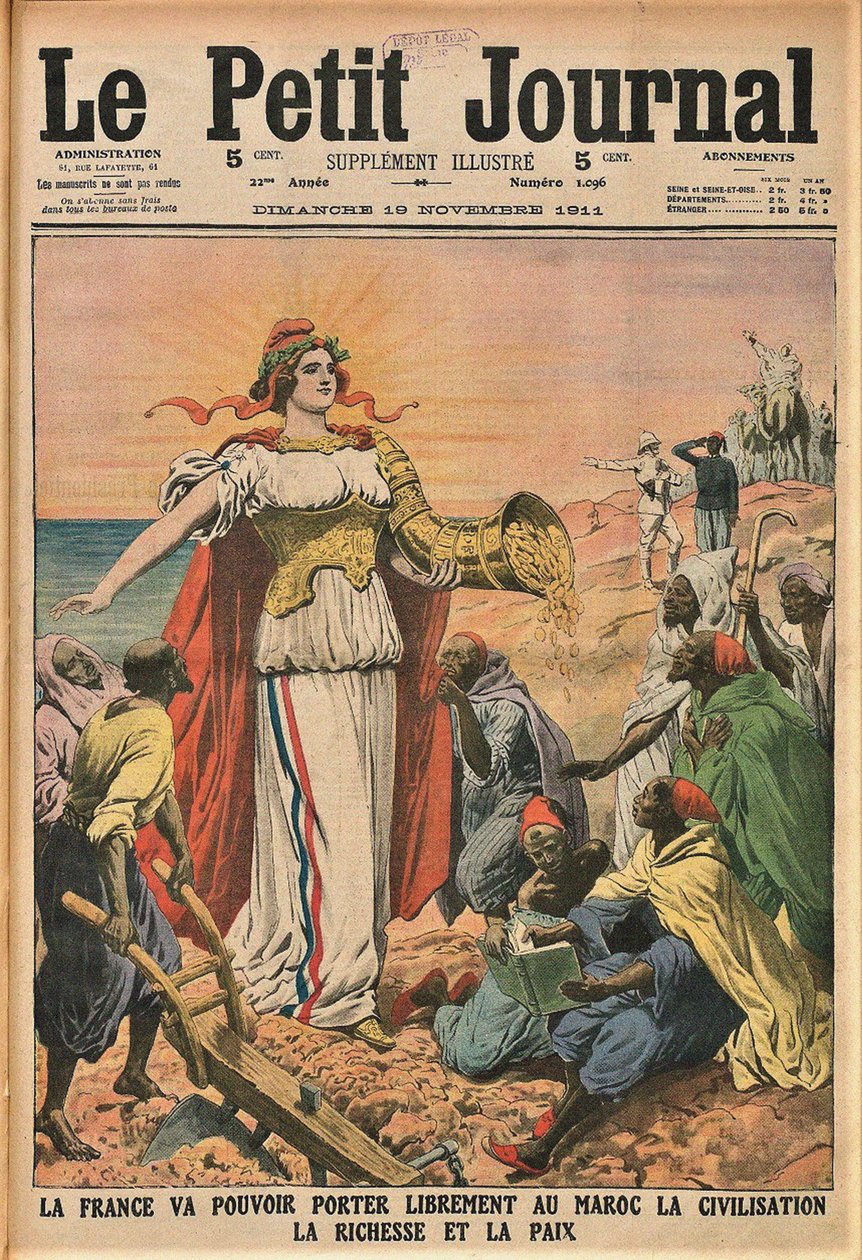
DIY Guide to Colonialism!! ONLY 4 INGREDIENTS NO BORAX NO GLUE
Christianity
Educated
‘Civilized’ values (eg. imposing colonial language on colonized countries)
Modern health system
4 Major Points of European Impact
Great Divide/Divergence
Europe switches from traditional → individualist, profit-motive economic development
By C19, W. Europe and N. America dominate world economically and politically
Africa viewed as barbaric — seen as no way to develop without European intervention
Indirect Rule
A colonial governance strategy that involves influencing local elites rather than direct control, often seen as more cost-effective.
Direct Rule
A colonial governance approach where colonial powers directly control and administer territories, often collaborating with local elites.
Step-by-Step Guide to a Western-style Government
Indirect Rule
or Direct Rule
Enforce colonial political frontiers
Promote development via taxation and white settlements
Force to work for salary → establish stable workforce