Clinical biochemistry and blood sampling... key points from pp
 Call Kai
 Learn
Learn Practice Test
 Spaced Repetition
 Match
Match Flashcards
 Knowt Play
1/52

Earn XP
Description and Tags
Define the terms sensitivity, specificity, positive predictive value, and negative predictive value as they relate to diagnostic test results. Explain why the prevalence of the disease plays a role in these values Understand the limitations of measuring blood hormone levels to diagnose endocrine disordersDescribe the common detection methods that are used in tests that measure analytes in the blood Understand the differences between immunoassay methods used to measure hormones in reference labs and in clinics Recognise the importance of assay validation Explain the term clinical biochemistry Give examples of analytes we can measure in the blood Recognise the common blood sample tube types Understand the anti-coagulant mechanisms used in whole blood and plasma sample tubes and analytical consequences Understand the importance of selecting an appropriate sample tube
Name | Mastery | Learn | Test | Matching | Spaced | Call with Kai | Chat |
|---|
No analytics yet
Send a link to your students to track their progress
53 Terms
What is clinical biochemistry?
The analysis of chemicals to asssess organ systems and metabolic processes oftern from different clinical pathologies..
Things we can analyse from blood - do not learn

What are 3 electrolyes and 3 minerals that be measured
Na Cl K
Ca po4 Mg
What 2 proteins can be easily mesuresd
albumins and globulins
What are 3 good indicators of energy metabolism
Glucose
triglycerides
cholestrol
What 2 enzymes wil denote pancreatic activity
Amylase and lipase
What substances determine kidney activity
Urea + creatinine
What 2 things denote muscle activity…
Creatinine Kinace
Aspartate Aminotransferase
What 6 things can determine the liver functionality
ALT
AST
GLDH
ALP
GGT
Bilirubin
In what insidences will a vet measure hormone changes…
changes in routine biochemistry analytes
raises suspicion of endocrine changes AND therefore triggers an organ test
Cat referenace range biochem reprot - note and remeber these are REFEREANCE ranges…

What are the 3 different types of blood sample
Serum — coagulation has occoured, then centrifugation, or can have tubes which contain clot activators…
whole blood — cell count/ cellular chemistry. Must contain ANTICOAGULANT so that the blood remains whole…
plasma — contains an anticoagulant and stops the blood clotting.. centifuged and supernatent is removed…
What do all plasma samples contain…
Plasma will have a buffy coat… The blood has NOT clotted and therefore will have a buffy coat between RBC and plasma…
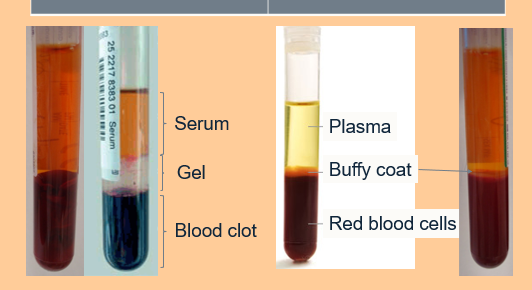
Coagulation refresher

What are the 2 main methods of how anticoagulants work….
1) Calcium binding therefore prevents exocytosis of clotting factors + can cause calcium chelation and citrate forms ionic complexes and this prevents coagulation from proceding..
2) Heparin thrombin inhibitor, therefore cannot be converted from factor xa - factor ix athis inhibits trauma..

What are 2 other ‘calcium grabber which can be in the tube’
What are the 3 ways calcium can be in the blood
ionised
bound to albumin
in a complex
Why does caclium inhibition slow down/ stop the clotting cascade
BECAUSE…. It is required for the advancement of each clotting factor and too move down the coagulation cascade…
What are the 4 different forms of calcium binding…
1) EDTA… (ligand binding to stop ca2+ moving..)
2) Citrate - forms Ca ionic complexes, liquid in tube so automatically at correct dilutionfactor.. Anticoagulant of choice for transfusion..
3) NaF - weak anticoagulant + glycolysis inhibitor
4) potassium oxalate - formas complexes and imobilises calcium
In what case would herapin be a good anticoagulant to use
IS in the form of lithium heparin ( so we can measure na and K)
this is used for clinical chemistry
good for bird and reptile haematology
- usedfor clinical chemistry in gernal..

Herapin in terms of the clotting cascade
Thrombin inhibitor..
inactivates factor xa and blocks factor 2a activity
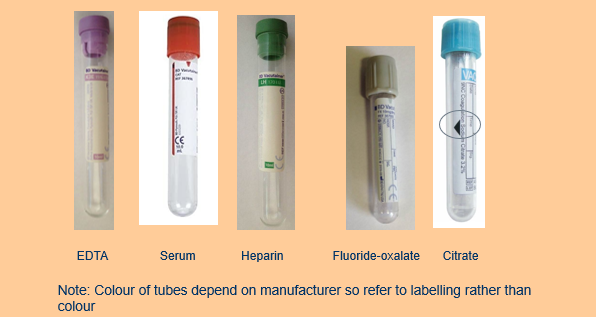
Colour tubes to remember/ referance
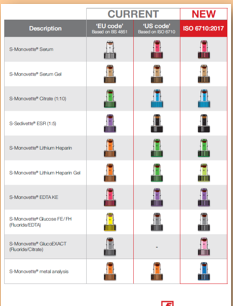
What are the most common tubes (do not recall just for referance)

common large animal tubes (referance)
What are 3 insitances when the tube fill is really important…
1) EDTA due to osmosis
2) CItrate —need to know how much calcium in order to overcome clotting
3) Liquid anticoagulants - require a SPECIFIC volume…
What is the required fill order (referance)
need to prevent EDTA contamination
remove the needle from the syringe each time, do not touchh the inside edfes of tube with syringe!
§Doughnuts and beads help with mixing or even distribution of additives (clot activator, anticoagulant)
§
§Tubes may have had their inside spray coated with additives – dried before packaging
§
§Liquid anticoagulants – don’t spill any out, fill tube correctly for dilution calculations

How should you mix a haemotoly sample
tip back and forwards GENTLY so the cells do not lyse
clotts usually occour from delayed transfer… IF clotted cannot be counted and clotted citrate cannot be analysed
Summary slide (referance)
§Check with the lab what sample types you need
§Serum and LiHep plasma good for most clinical chemistry
§EDTA whole blood (LiHep some species) for haematology
§OxF for glucose by mail or delayed analysis
§Citrate for coagulation
§
§If the anticoagulant binds calcium can’t use that plasma for Ca analysis or enzymes that use metallic cofactors (e.g. alkaline phosphatase)
§If the salt of the anticoagulant is Na or K can’t use plasma for electrolyte measurement
§Fill order is important - EDTA contamination of serum/LiHep will give false high K, false low Ca and false low metallo-enzymes
§Tube fill and adequate mixing are important
In what scenarioes will you need different blood types:
Will be told by the lab..
Clinical exam = serum + haemotology
Cardiac stretch - EDTA
Ruminants and AVain profiles = seperate..
What are the 4 detection methods to determine the differences between samples..
clourmetric
trubidometric
fluorometric
radiometric

What is the assay principle for simple molecules…
The measurable factor MUST be limiting.. This is because it will be used up first and we also must be able to measure it..

How are absorbance and rate converted to concentration? S

What is an immunoassay
antigen-antibody binding and detection to produce something measureable, essentially an ELISA
What are the components of an immunoassay
Antibodies
TRacer
Detection system

Immunoassay formats
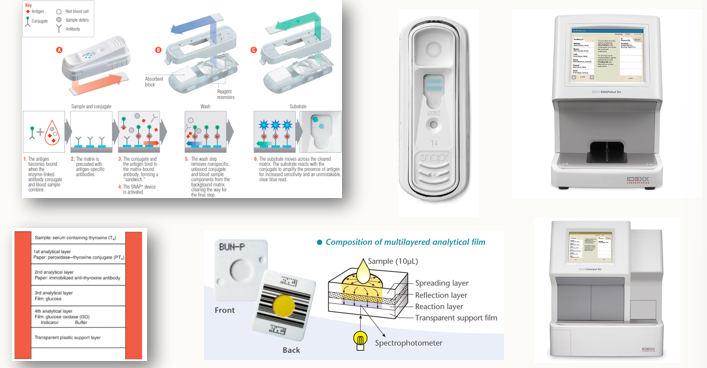
What are the 3 forms of Immunoassay detection systems
RIA radiation
ELISA principle colour
Chemiluminescence (enzyme induced light emission)
What are the 2 ways we can validatre results…
1)PRECISION — How closely will the results match if we repeat the test
2) ACCURACY — how far away from the
What is Imprecision…
The CV = Coeficient of variation.. % standard deviation..
3010% immunoassay..

What is the Imprecision camparison

What is the difference between the reference and in clinic lab

How do we test lab diagnosis
Referance intervals
Interpretative thrresholds
positive/ negative tests..

How do we seperate reference ranges and cut off values and what is this principle…
Not all tests will reach the threshold for a positive/ negative test…
What is sensitivity vs specificitiy..
§Sensitivity The proportion of animals with the disease that yield a positive test result
§It indicates the ability of the test to identify individuals with a disease.
§A test with high sensitivity will minimise false negatives and therefore make a good screening test.
§Specificity The proportion of animals that don’t have the disease that yield a negative test result.
§It indicates the ability of the test to identify individuals without a disease.
§A test with high specificity will minimize false positives and therefore make a good confirmatory test.
What is a screening test
Large population + asymptomatic…
Do ot want to miss any cases… Therefore can catch a few false postices but want no false negatives, therefore HIGH sensitiviety so all those that test postive ARE positive..
What is confirmatory tests…
Diagnostic tests ensure we do not give treatment to animals which do not need it… Do not want to give diagnosis to an animal that doesn’t have the disease.. May be some falce negatives.. Imprtant is there is a HIGH specificity..
What happens if the test is not perfect..

What are the predictive values…
How are sensitivity and specificity related to Predictive values?
Specificity and sensitivity are generated when you know the diagnosis and get the result (test developers and researchers)
In the real world you have a result and need to make a diagnosis (test users, veterinary practitioners)
What is the prevalence…
Proportion of animals in the tested population that have the constions… pre test probabliltu to whether it is positive..
What is the positive and negative predicted values..

Result confidence

Adrenal and thyroiud example

How can we mitigate teh endocrinology problem..
