C Leukeamia lymphoma and myeloma ;) 3.3
 Call Kai
 Learn
 Practice Test
 Spaced Repetition
 Match
 Flashcards
 Knowt Play
1/51

There's no tags or description
Looks like no tags are added yet.
52 Terms
What is leukaemia and what are the 4 types?
Uncontrolled cell division of WBCs in the bone marrow.This causes overcrowding in the bone marrow (bone marrow failure)

What is lymphoma and what are the 2 types?
Cancer of the lymphoid tissue:
Hodgkin’s lymphoma
Non-hodgkins lymphoma

What is Myeloma ?
Cancer of clonal PLASMA CELLS in the bone marrow (B cells).

What are haematological malignancies ?
Cancer of blood cells
Leukaemias
Lymphomas
Myelomas
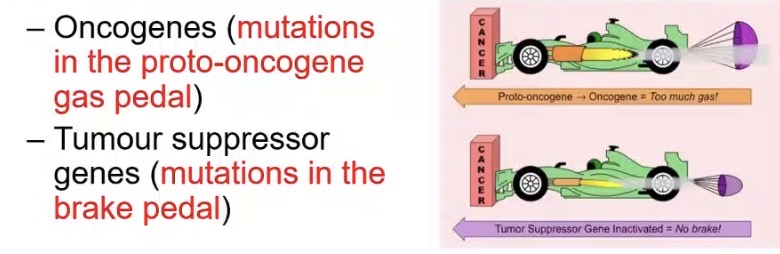
Caused by the mutation of a gene in one single cell.

What are haematological malignancies ?
Cancer of blood cells
Leukaemias
Lymphomas
Myelomas
Caused by the mutation of a gene in one single cell.
What’s the difference between incidence vs prevalence ?
Incidence : rate of NEW CASES in a given time OR the % of the population that will develop the condition.
Prevalence: no. Of people with the condition

LEUKAEMIA
LEUKAEMIA
Name some stats of leukaemia in 2019 in the Uk.
>9900 people diagnosed per year
Incidence 16.2 per 100,000 people (16.2: 100,000)
Mortality 7.6 per 100,000 people (7.6: 100,000)
Most common childhood cancer
Effects three times as many adults then children
What are the three key concepts of leukaemia ?
Uncontrolled divisions of WBCs
In the bone marrow
Overcrowding of the bone marrow
What three conditions can be caused by the overcrowding of the bone marrow ?
Anaemia - not enough RBCs
Thrombocytopenia - not enough platelets
Leukopenia (low WBC count) / Leukocytosis (high WBC count - ones gone rouge)
This is all bc the WBCs are taking up the space where the other blood cells are produced

What is the cause of Leukaemia ?
Majority of cases the cause is unknown.
Some know causes are:
-Previous chemotherapy
-Radiation exposure
-Benzene or formaldehyde exposure
-genetic conditions such as Down syndrome
-myelodysplasia
What are the 4 main types of leukaemia?

What is the definition of an acute leukaemia ?
More than 20% blast cells in the blood/ bone marrow (little to no maturation). RAPID ONSET
What is the definition of chronic leukaemia ?
More than 20% blast cells in the blood/bone marrow (many maturing/ mature WBCs), SLOWER PROGRESSION

What is AML (Acute myeloid leukaemia)?
uncontrolled proliferation of myeloid stem cells.
Leads to large number of immature white blood cells.
In partial granulocytes and monocytes
Median age in 60 peak age 85+
Categorised M0-M7
What are the signs and symptoms of AML?
Acute/ often critically ill
Malaise, fever, sweats → cell division generates heat
Anaemia
Neutropenia → more at risk of bacterial infections
Thrombocytopenia → bleeding not enough platelets
You don’t get weight loss as its fast onset cancer
RED FLAGS
night sweats
unexplained fevers
How does AML get diagnosed ?
Blood tests / bone marrow biopsy:
more than 20% blast cells in blood film.
High (leukocytosis), low (leukopenia) or normal WBC count.
Often neutropenia →low neutrophil count, these cells fight against bacterial infections.
Anaemia (Normocytic, normochromic)
Thrombocytopenia
Blasts in peripheral blood film
WBCs are MPO (myloperxidase) positive → identifies that they should become a granulocyte/ not lymphoid
How do you treat AML?
Chemo (cytotoxic drugs) Via PICC line or port.
2 stages
→ Induction: combination of drug to attain remission
→Consolidation: post-remission chemo to reduce relapse
Stem cells transplant
→ donation via aphersis
→ Strong chemo to kill every cell in the bone marrow.
→ Patient receives donor SC’s
What is the prognosis of AML?
complete remission; less than 5% blast cells in bone marrow
Complete remission:
young patients 80-90%
Cure; does not die due to the leukaemia
young patients 45%
Older patients rarely achieveable
What is ALL?
Acute lymphoblastic leukaemia
uncontrolled proliferation of lymphoid stem cells. Large numbers of abnormal lymphoblastic in the bone marrow.
→ Peak rate 0-4 years old
→80% of childhood leukemias
→ 85% effect B-cells, 15% effect T-cells
→ Categorised L1-L3
Signs and symptoms of ALL?
Acute/ starts abruptly
Bone pain and joint pain → overcrowding of done marrow causes pain.
Symptoms of bone marrow failure (anaemia, infection, haemorrhage)
Generalised lymphadenopathy (enlarged lymph nodes) → the abnormal lymphocytes work in the lymph and therefore goes through the lymph nodes.
Hepatosplenomegaly (enlarged spleen) → extramedullary haematopoiesis bc the bone marrow can no other produce enough blood cells.
Headaches in children - CNS manifestations
Diagnosis of ALL?
Blood test/ bone marrow biopsy
Over production of lymphoid blast cells so overcrowded bone marrow.
→ 20% of WBCs are blasts in blood film
→ high, low or normal WBC count
→ anaemia (Normocytic, normochromic)
→ Neutropenia (low neutrophil count)
→ Thrombocytopenia (low platelets)
WBCs are MPO (myloperoxidase) negative
Treatment of ALL?
STERIODS - as suppresses the immune system (production of WBCs)
CHEMO
→ Induction
→ Consolidation - reduce spread to sanctuary sites (hard to reach places for chemo such as brain and testes)
→ Maintenance - 2 years of further chem to reduce relapse
IMMUNOTHERAPY - retracing t-cells to kill the cancer cells (CAR-T) still being developed.
STEM CELL TRANSPLANT - not often needed do pretty well on chemo
What is the prognosis of ALL?
curable in 90% of children
New trials for immunotherapy
Cure in adults is less frequent
What is CML?
Chronic Myeloid Leukaemia
Uncontrolled division of myeloid stem cells. Lots of leukocytes circulating in particular neutrophils.
→ Peak onset 65-85 years
→ effects males more than females
What causes CML?
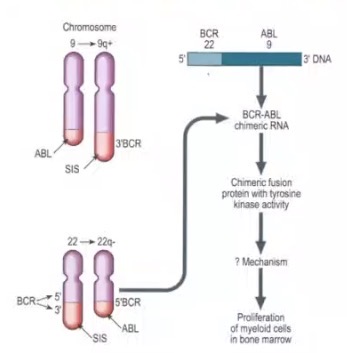
PHILADELPHIA CHROMOSOME
ABL component from one chromosome is fused with the BCR gene.
BCR-ABL produced > encodes for a protein with high tyrosine kinase activity which increases growth.
Symptoms of CML?
3 phases
Chronic phase → asymptomatic for 4 - 5 years. Most cases at this phase are diagnosed by accident through blood tests.
Accelerated phase → onset of symptoms, inc. in blasts cells
-Fatigue, weight loss, night sweats
-Spenomegaly (which you may get sensation of fullness)
-Hempatomegaly
-Bruising
-Leukostasis (clumping of leukocytes)
Blast/ acute phase → inc in blast cells now the leukaemia transforms from CML to AML.
How do you diagnose CML?
Blood tests / bone marrow biopsy
Over production of myeloid cell - overcrowding in the bone marrow causes:
-High WBC count (leukocytosis). Mainly neutrocytosis (high neutrophil count)
-Inc in complete spectrum of myeloid cells seen in the peripheral blood (bone marrow is working over time and releasing the immature cells). Levels of neutrophils and myelocytes exceed those of blast cells and promyelocytes.
-Inc in basophils
-Anaemia (Normocytic, normochromic)
Platelets cont can be inc. dec. or normal.
Neutrophil alkaline phosphate score is low (measures alkaline phosphatase in mature cells high score = severe infection low score = CML)
FISH - Fluorescence In Situ Hybridisation, highlights the Philadelphia chromosome in red and green
Treatment of CML?
TARGET CANCER DRUGS
→ Drug inhibits tyrosine kinase (growth signal)
→ Targets cells with the BCR-ABL chromosome (stops it from proliferating by stopping it from being phosphorylised)
Stem cells - used if needed.

Prognosis of CML
5year survival - 90%
10 year survival - 84%
Stem cells transplant is the only known cure but is associated with high mortality so is not used often.
CML is fatal when it moves from the chronic phase to the acute phase (CML → AML)
What are Myeloproliferative disorders/ neoplasms (more modern word)?
All the types of overproduction of myeloid cell:
Essential thrombocytosis (excess platelets)
Polycythaemia era ( excess RBCs)
Chronic myeloid Leukaemia (excess granulocytes)
Primary myelofibrosis (bone marrow replaced with scar tissue)

What is CLL?
Chronic lymphoid leukaemia
Uncontrolled proliferation of B - lymphocytes
ELDERLY PATIENTS-most commonly diagnosed typically 50+
Affects males more than females
Signs and symptom of CLL?
Slow progressing - often asymptomatic (Diagnosis from incidental blood test).
Symmetrical and painless enlargement of lymph nodes - most commonly sign.
May has symptom of anaemia
Weight loss
Bacterial infections - immunosupression
Diagnosis of CLL
Blood test / Bone marrow biopsy
Over production of lymphocytes - overcrowding of the bone marrow causing;
→ Lymphocytosis (high lymphocyte count)
→ WBCs are small and round
→ Smear cells - Lymphocyte that burst during smearing process .
→ Immunotyping of lymphocytes show most of them to be B-cells (looking for CD19+ marker)
→ Anaemia (Normocytic, normochromic )
→ Thrombocytopenia

Treatment of CLL
Usually diagnosed in elderly patents o
Watcha and wait - patient usually dies o something else before it become a problem.
Steriods - given to lower WBCs
Targeted cancer drugs - Bruton tyrosine kinase inhibitors
Chemo - rarely used (too much for elderly patients)
Stem cell transplant - rarely (too much for elderly patient)
Prognosis of CLL
70 % 5 year survival
Mosy patients elderly and die of smth else
What is Lymphoma ?
Cancer of the lymphoid tissue
Lymphoid tissues → lymph nodes, tonsils, adenoids, thymus
Swollen lymphoid tissue filled with T or B cells
40% Hodgkin’s → giant B-cells called REED-STENBERG cells.
60% Non-Hodgkin’s →Malignant T or B cell, no reed-stenburg cells
What is Hodgkin’s Lymphoma ?
B cells accumulate in lymph nodes
Giant malignant B - cell → REED-STERNBERG cells form minority of the tumour.
Majority of tumour is inflammatory cells
Peak age 15-35 years and over 50 years
Effect males more than females

Signs and symptoms of Hodgkin’s lymphoma.
ASYMMETRICAL and PAINLESS lymphadenopathy (swollen lymphoid tissue filled nodes), usually. In the cervical region.
Splenomegaly
Fever, night sweats,weight loss, pruritus (itching) in some
4 stages

Diagnosis of Hodgkin’s lymphoma
FBC to exclude leukaemia -FBC remains relatively normal
Anaemia (normochromic, Normocytic)
Eosinophilia, Netrophilia
Lymphopenia, thrombocytopenia
LYMPH NODE BIOPSY - look for reed-sternburg cells (CD15 marker).
PET-CT scan - used for staging
Treatment of Hodgkins
Steroids → Dec. WBCs
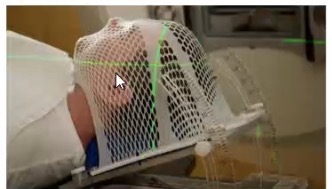
Chemo radiotherapy
-2-6 cycles of chemo
-course of radiotherapy
Immunotherapy → monoclonal Ab targets CD20+ B-cells
Targeted cancer drugs
Stem cell transplant
Prognosis of Hodgkins
Good prognosis (80-90% 10 yr survival rate)
Depends on the stage of the disease.
Chemo = high cure rates
Rick of secondary malignancy (due to chemo/ radiation)
What is non-Hodgkin’s lymphoma ?
Large group of lymphoid tumours (b-cell most common)
Typically 40+ but peak age 70-85 yrs
Signs and symptoms of non-Hodgkins
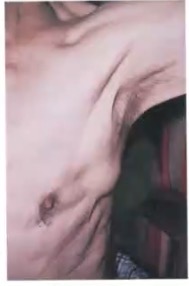
ASYMMETRICAL PAINLESS LYMPHADENOPATHY
Less fevers, less nigh sweats, less weight loss in comparison to Hodgkins
Sore throat (find lymph tissue in the tonsils etc)
Abdominal symptoms (due to spleen and liver enlargement)
explained itching
Symptoms of anaemia, thrombocytopenia, neutropenia with infections
Diagnosis of non-Hodgkin’s lymphoma
Lymph node biopsy → no reed-sternberg cells
Cytogenetic chromosome mapping
PET-CT to identify what stage (1-4).
Treatment of non-Hodgkin’s lymphoma (varies with type)
Steroids → dec. WBCs
Chemo
Immunotherapy (monoclonal Ab target CD20+ B-cells)
Radiotherapy
Targeted cancer drugs
Stem cell transplant
Prognosis of non-Hodgkin’s lymphoma
55% 10 year survival rate
Depends on what type of NHL
-Indocent (slow) - responds well to chemo.
-Aggressive NHL - may be cured wth chemo + rituximab (monoclonal Abs targeting B - cells with CD20+ marker)
What is Multiple Myeloma ?
Cancer of clonal PLASMA cells in the bone marrow (B-cells)
Ab secreting B-cells secrete loads of one type of antibody we call this PARAPROTEIN.
This paraprotein can leak into urine.
Test to find this in a urine sample
Peak 70-89 years
Males > females
African Americans > Caucasians

Symptom of multiple myeloma ?
bone pain - fractures more common (tumours in the bone)
Symptoms of anaemia, thrombocytopenia, leukopenia
Symptoms of hypercalcaemia, the bone is being broken down (calcium in the blood inc), thirsty, being sick, weeing more all signs of this.
Renal failure due to calcium inc - kidney damage

Diagnosis of multiple myeloma
Blood test/ bone marrow
→ Inc plasma cells in bone marrow
→ Presence of paraproteins
→Anaemia (normochromic, Normocytic or macrocytic)
→Pancytopenia (reduction in all blood components)
TEST URINE - for paraproteins
Treatment of multiple myeloma
watch and wait - old patients
Steroids → dec. WBCs
Targeted cancer therapy e.g thalidomide
Chemotherapy
Stem cell transplant
pain control → Analgesics
Reduce bone damage → bisphosphates
Prognosis of multiple myeloma
Prognosis
29% 10 year survival