MRI Material
 Call Kai
 Learn
 Practice Test
 Spaced Repetition
 Match
 Flashcards
 Knowt Play
1/66

There's no tags or description
Looks like no tags are added yet.
67 Terms
Why was the word "nuclear" removed from Nuclear Magnetic Resonance (NMR) imaging?
It was removed because patients feared the procedure involved radiation, even though no radiation is produced in an MRI machine.
In what year was the first MRI scan performed?
The first MRI scan was performed in 1980.
What experiment on rats served as the scientific basis for Damania's MRI research?
He infected rats with cancer and used nuclear magnetic resonance to prove that cancerous tissue produced a different signal than normal tissue.
What happens to the protons in a patient's body when placed inside the main magnetic field of an MRI machine?
The protons align with the magnetic field (most align parallel, while some align antiparallel).
What immediate effect does sending an RF pulse have on protons aligned with the main magnetic field?
The RF pulse tips the protons down by 90∘ relative to the main magnetic field.
What occurs to the protons when the RF pulse is turned off?
The protons return back into alignment with the main magnetic field and resonate a frequency.
What is the relationship between the RF pulse frequency used to flip protons and the frequency resonated back?
The resonated frequency returned by the protons is the exact same frequency that was used to flip them.
What is the resonant frequency of a proton in a 1Tesla magnet?
42.5MHz, which corresponds to 42,500,000revolutions per second.
What is the precession frequency of a proton in a 1.5Tesla magnet?
67.8MHz.
What is the precession frequency of a proton in a 3Tesla magnet?
127.5MHz, which corresponds to 127,500,000revolutions per second.
Why are hydrogen atoms specifically chosen for MRI imaging?
Approximately 66% of the human body is water, and hydrogen contains only one proton, enabling the creation of a magnetic moment.
What are the four primary advantages (pros) of a high-field MRI magnet?
Better signal-to-noise ratio, better contrast-to-noise ratio, better spatial resolution, and better temporal resolution.
What is the primary advantage of an open or low-field MRI system?
It is open on both sides and significantly better tolerated by claustrophobic patients.

Along which spatial axis is the main magnetic field aligned in a closed MRI scanner?
Along the z-axis.

What is the primary function of the gradient coils in an MRI scanner?
To create additional mini magnetic fields within the main field, altering precession frequencies to isolate and spatially localize specific slices.
According to the transcript, what equation determines the specific frequency needed to affect the proton?
The Wattmann equation.

What term describes the state when protons are flipped 90∘ away from the main longitudinal axis?
Transverse magnetization.
What device picks up the resonated frequency signal emitted by the patient?
A coil (such as specialized coils for the head, breast, knee, spine/back, or body).
How is T1 relaxation defined?
The time it takes for longitudinal magnetization to recover back to its original value.
How is T2 relaxation defined?
The time it takes for transverse magnetization to recover to its original value.
What does the MRI parameter acronym STIR stand for?
Short tau inversion recovery.
How long did a single T2 protocol scan take on older MRI systems?
It used to take 23minutes.

Which gradient coil is primarily used to acquire an axial slice?
The z gradient.
Which gradient coil is primarily concentrated on for a sagittal slice?
The x gradient (while using y and z).
What two spatial encoding dimensions are created using RF frequencies to reconstruct an MRI image?
Frequency encoding and phase encoding.
Between a superconducting magnet and a permanent magnet, which one weighs more?
The permanent magnet.
Which type of magnet achieves the highest magnetic field strength in MRI?
The superconducting magnet.

How does cerebrospinal fluid (CSF) appear on a T2-weighted MRI brain image?
It appears very bright (hyperintense).
Which special MRI scanning parameter is used to detect an acute stroke or ischemic attack?
Diffusion weighted imaging (DWI).
Which scan parameters would a technologist typically run to evaluate a patient for a stress fracture?
A STIR (short tau inversion recovery) sequence or a proton density sequence.
In the slice-selection diagram described in lecture, what was the frequency range applied across the head slices?
From 64.009MHz at the top slice incrementally down to 64MHz.
What severe hazard is described regarding bringing a ferrous metal oxygen tank into an MRI room?
The strong magnetic field pulls the heavy metal tank like a missile into the bore, where it can strike the patient.
What two cervical cord abnormalities were pointed out on the cervical spine MRI demonstration?
A benign tumor (seen as an abnormal gray area inside the cord) and a cyst (seen as a small black area within bright white signal).
What brain structure resembles cauliflower on an MRI and is responsible for controlling motor skills?
The cerebellum
Prior to MRI, what bony structure was evaluated on X-rays and CT scans to detect expanding pituitary tumors?
The sella turcica

What is the primary difference between a macroadenoma and a microadenoma?
A macroadenoma is big, and a microadenoma is small.

What specific neurological structure directly superior to the spinal cord was identified as a bonus feature on the brain MRI?
The pons

Why is the first cervical vertebra structured like the end of a finger?
To allow the head to rotate
What does the abbreviation CSF stand for regarding the white fluid seen surrounding the brain's gyri?
Cerebrospinal fluid
Regardless of whether a head, foot, or knee is being imaged, where inside the MRI magnet must the target body part be positioned?
At the very middle of the magnet
Who is credited with inventing the first MRI?
Raymond Damadian
What was the name of the first open MRI scanner built using patented iron core technology, and when was it introduced?
The Beta series, introduced in 1980.
In what year was the world's first commercial MRI scanner introduced?
In 1980
Why was Raymond Damadian unable to generate an MRI signal when testing the scanner on himself?
He was too fat for the coil (referred to as a "pork stuffer") and could not produce enough signal.
Who was the first person to successfully enter the scanner and generate an MRI signal inside the magnet?
Larry Minkoff

What specific shape or configuration did Hitachi use for its early open MRI magnets?
A hamburger type, or C-shape / horseshoe configuration
What is the primary advantage of increasing the magnetic field strength of an MRI scanner?
More signal is generated from the patient.
What nickname did the instructor use for the small MRI scanners marketed to orthopedic surgeons for imaging extremities?
Toy MRI machines
Why was it difficult to obtain a high-quality MRI scan of the freeze-dried Iceman found in the Andes Mountains?
He had no water left in his tissues.
What precursor research technology to MRI exploits the magnetic properties of atomic nuclei to determine physical and chemical properties of molecules?
Nuclear magnetic resonance spectroscopy (NMRS)
Which specific atomic nucleus is targeted in clinical MRI to generate imaging signals?
The hydrogen atom
Approximately what percentage range of the human body is composed of water according to the lecture?
About 60% (ranging from 45% to 75%)
Why is entering an MRI environment dangerous for patients with traditional cardiac pacemakers?
Pacemakers are calibrated with magnets, so the strong magnetic field can alter the calibration and cause the pacemaker to fire improperly.
What are the five sequential steps of MRI imaging outlined in the lecture?
Patient is placed in a magnetic field; 2. A radiofrequency pulse is sent in; 3. The radiofrequency pulse is turned off; 4. The patient emits a signal (resonance); 5. The signal is received and used for image reconstruction.
What subatomic particle constitutes the nucleus of a hydrogen atom and carries a positive charge?
One single proton
What major drawback led to the discontinuation of resistive magnets in clinical MRI?
They generated excessive heat, requiring the system to be shut down and cooled after brief scanning periods.
In superconducting magnets, what substance are the electrical wires bathed in to keep the magnet cooled?
Liquid helium
To what specific temperature is a superconducting MRI magnet cooled to facilitate the free flow of electrons?
Absolute zero, which is −459∘F
What unit of magnetic measurement is named after the German mathematician who first measured the Earth's geomagnetic field?
Gauss
How many gauss are equal to 1Tesla?
10,000gauss
What is the magnetic field strength of the Earth as cited in the lecture?
0.3gauss
What is the magnetic field strength of a standard refrigerator door magnet according to the lecture?
100gauss
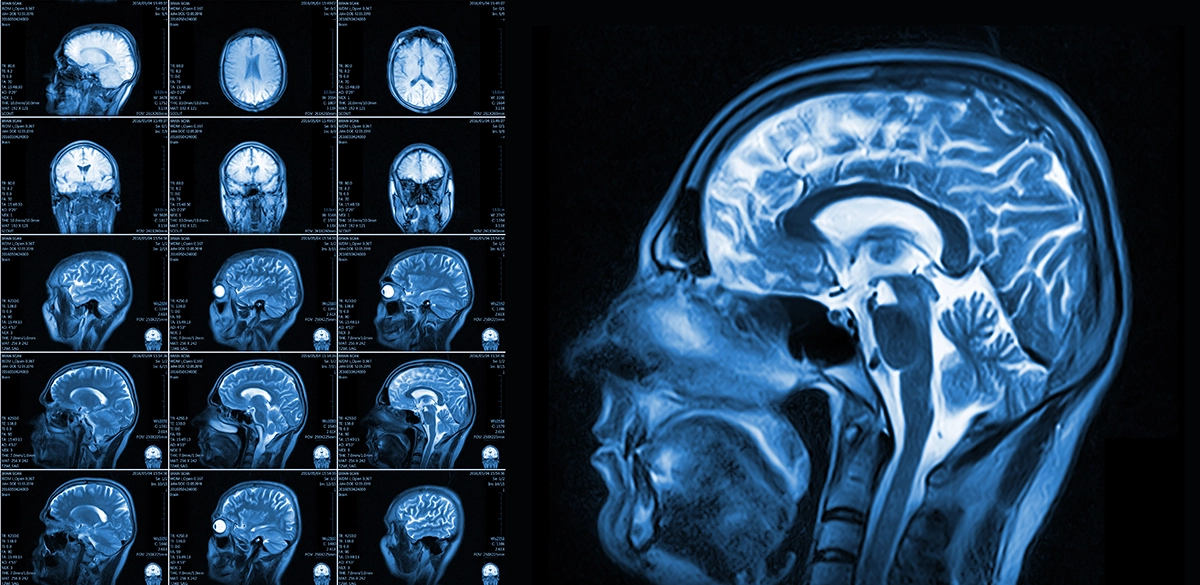
Inventor of 1st MRI?
Dr. Raymond Damadian
NMRI
Nuclear Magnetic Resonance Imaging
NMRS
Nuclear Magnetic Resonance Spectroscopy, a technique used to analyze molecular structure and dynamics.

Precession
A phenomenon observed in magnetic resonance where magnetic moments rotate around the direction of the magnetic field, causing signals detectable by MRI and NMR.