Comprehensive Guide to Modern Concrete, Wall, Skylight, and Cladding Systems
 Call Kai
 Learn
Learn Practice Test
 Spaced Repetition
 Match
Match Flashcards
 Knowt Play
1/198

There's no tags or description
Looks like no tags are added yet.
Name | Mastery | Learn | Test | Matching | Spaced | Call with Kai | Chat |
|---|
No analytics yet
Send a link to your students to track their progress
199 Terms
What are alternative concrete construction systems?
Modern methods, materials, technologies, and practices used to improve building design and construction.
Why do construction systems matter?
They affect structural performance, construction speed, cost and labor, span and flexibility, and architectural expression.
What is structural performance in construction?
It determines how well a building supports loads and withstands forces, improving strength and stability.
How does construction speed impact projects?
Faster construction can help meet deadlines and reduce delays, often aided by standardized and prefabricated components.
What factors influence cost and labor in construction systems?
Material costs, labor requirements, and the complexity of the construction process.
What is the significance of span and flexibility in construction?
It determines the possible spans, openings, and sizes of spaces, allowing for greater planning flexibility.
How do construction systems influence architectural expression?
They affect a building's form, appearance, and design possibilities, reflecting culture and identity.
What is cast-in-place concrete?
A construction method where fresh concrete is poured directly at the construction site using removable formwork.

What are common uses of cast-in-place concrete?
Slabs, beams, columns, footings, walls, and stairs.
What is the first step in the cast-in-place concrete process?
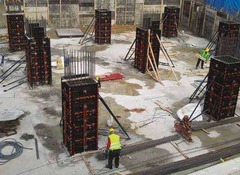
Formwork preparation to define the shape and size of the concrete element.
What is involved in the concrete pouring process?
Concrete is poured into the prepared formwork, often delivered by ready-mix producers.

What is the purpose of concrete curing?
To keep the concrete moist and protected while it hardens, developing its required strength.

What are the methods of transporting concrete?
Ready Mixed, Shrink Mixed, Transit Mixed, and Gunite (shotcrete).
What are the advantages of cast-in-place concrete?
Strength, cost-effectiveness, insulation, and versatility in design.
What is a disadvantage of cast-in-place concrete?
It can be time-intensive due to curing times and labor-intensive due to the need for skilled workers.
How do weather conditions affect cast-in-place concrete?
Extreme weather can impact the quality and curing process, leading to potential defects.
What are key considerations for using cast-in-place concrete?
Weather conditions and project schedules, as they can influence construction time and quality.
What is precast concrete?
Concrete components that are cast and cured in a controlled environment before being transported to the construction site.

What is prestressed concrete?
Concrete that is pre-tensioned or post-tensioned to improve its performance under load.

What is the role of reinforcement in cast-in-place concrete?
To strengthen the concrete, resist tensile forces, and help prevent cracking.
What is the typical strength development time for cast-in-place concrete?
Strength is typically reached at around 28 days.
What is the impact of standardization in construction systems?
It can help reduce material and labor expenses, improving efficiency.
What is the importance of teamwork in implementing new construction methods?
Successful implementation requires collaboration among designers, contractors, and workers.
What challenges are associated with adopting new construction methods?
The industry often relies on traditional methods, making change difficult.
How does cast-in-place concrete provide thermal insulation?
The walls help protect buildings from harsh weather and reduce noise.
What is the significance of formwork in cast-in-place concrete?
It defines the shape and size of the concrete element during the curing process.
What are the potential site disruptions caused by cast-in-place construction?
Increased activity and disruption due to raw material storage and heavy equipment operation.
What is the role of quality control in construction systems?
To ensure that the construction meets required standards and specifications.
What are the advantages of using cast-in-place concrete?
Cast-in-place concrete is more suitable for complex, curved, or irregular designs.
What are the primary elements of precast concrete systems?
Common elements include hollow-core slabs, double tees, solid slabs, beams, columns, and spandrels.
What is the first step in the precast concrete manufacturing process?
Drawing the laying plan and engineering the product using 3D computer-aided design.
What is the purpose of curing in precast concrete production?
Curing ensures the concrete reaches the required strength by maintaining the correct temperature and humidity.
What is a common structural application of precast concrete?
Precast concrete is used for floor and roof framing, wall and façade systems, and civil infrastructure.
What are bolted connections in precast concrete?
Bolted connections involve metal bearing plates and embedded anchor bolts to join elements, providing fast alignment and safety.
What are grouted connections used for in precast concrete?
Grouted connections use high-strength mortar to create seamless strength that acts like a single poured structure.
What is the purpose of dowels in precast concrete connections?
Dowels resist side-to-side sliding forces (shear) between adjacent members.
What are the characteristics of solid precast walls?
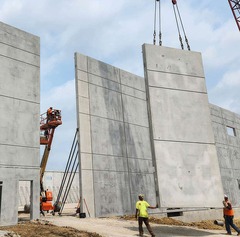
Solid precast walls are primarily made of solid concrete, can be load-bearing or non-load-bearing, and are durable.
What distinguishes insulated sandwich walls from typical panels?
Insulated sandwich walls have rigid insulation sandwiched between two layers of concrete, improving thermal resistance.
What is a thin-shell precast wall?
A thin-shell precast wall consists of a thin outer layer connected to a separate backup structural system, often used for architectural facades.
What is a double-tee in precast concrete?
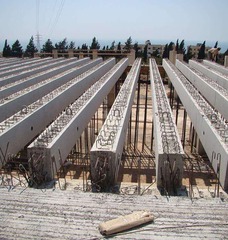
A double-tee is a large precast concrete member with a wide, thin flange supported by two deep ribs, allowing for long spans and high load capacity.
What is the benefit of using precast concrete in construction?
Precast concrete reduces site formwork, speeds up erection, and provides consistent quality.
What is the role of the reinforcement cage in precast concrete?
The reinforcement cage is assembled from cut and bent steel bars to meet design requirements and is stored in a drying room.
What is the significance of a pre-pour inspection in precast concrete?
A pre-pour inspection ensures there are no defects in the formwork before concrete is poured.
What are the three basic categories of precast walls?
The three categories are solid walls, sandwich walls, and thin-shell walls.
What is the advantage of using precast concrete for civil infrastructure?
Precast concrete offers long-term durability against heavy traffic and weather conditions.
What is the primary framing system in precast concrete?
Primary framing systems include beams, columns, and spandrels that handle high load capacity and reduce site formwork.
How does precast concrete contribute to project timelines?
Precast concrete allows for faster schedules and reduced on-site labor due to off-site manufacturing.
What is a portal frame in precast concrete?
A portal frame consists of two vertical columns connected by a horizontal beam, creating a large, long-span structure.
What is the purpose of release agents in precast concrete?
Release agents are applied to molds to prevent the hardened concrete from sticking.
What is the benefit of using a skeletal frame in precast concrete?
A skeletal frame provides a structural skeleton that supports load-bearing elements manufactured off-site.
What is the significance of using 3D CAD in precast concrete design?
3D CAD allows for precise engineering and monitoring of production before manufacturing.
What is the role of elastomeric pads in precast connections?
Elastomeric pads cushion contact, preventing cracking as the structure flexes under load.
What are typical applications of double tees?
Parking garages, warehouses, industrial buildings, sports facilities, convention centers, institutional buildings, and large commercial buildings.
What is a major advantage of precast concrete?
Faster construction due to off-site manufacturing and quick installation.
What is a disadvantage of precast concrete?
Transportation challenges can make it expensive and complex, especially for remote locations.
What is the basic principle of prestressed concrete?
Steel tendons are stretched before pouring concrete, inducing compressive stresses in the concrete once the tendons are released.
What are the two types of prestressing?
Pretensioning and post-tensioning.
How does pretensioning work?
Steel tendons are tensioned before casting concrete; after hardening, the tendons are released to transfer stress to the concrete.
What is a key feature of pretensioning?
The bond mechanism relies on the bond between concrete and steel tendons.
What are common structural applications of pretensioning?
Precast beams, bridge girders, railway sleepers, hollow-core slabs, and concrete piles.
How does post-tensioning differ from pretensioning?
In post-tensioning, steel tendons are tensioned after the concrete has been cast and cured.
What are the two types of construction in post-tensioning?
Bonded construction and unbonded construction.
What is the process of post-tensioning?
Concrete is poured, tendons are tensioned after curing, and ducts can be filled with grout for added durability.
What are the advantages of pretensioning?
Higher material efficiency, longer spans, enhanced strength, and reduced dead load.
What are the disadvantages of pretensioning?
Higher material and labor costs, complex formwork, and reduced ductility.
What is hybrid concrete construction (HCC)?
A method that integrates precast concrete and cast in-situ concrete to leverage their different qualities.
What are the benefits of hybrid concrete construction?
Combines the accuracy and speed of precast with the economy and flexibility of in-situ concrete.
What is independent action in HCC?
Precast cladding is used in in-situ framed buildings, allowing for simple repetitive structures.
What is combined action in HCC?
Precast units replace in-situ elements, serving as permanent formwork and bringing factory-engineered advantages to the site.
What is composite action in HCC?
In-situ concrete toppings are added to precast floors for additional strength and stiffness.
What is the importance of joints and connections in precast structures?
The quality of joints affects water leakage, structural weaknesses, and long-term durability.
What is the impact of high-strength steel in prestressed concrete?
It enhances material efficiency and supports longer spans.
What is the role of curing in post-tensioning?
Concrete must be cured until it reaches specified strength before stressing operations.
What is the purpose of grouting in post-tensioning?
To protect high-strength steel tendons from corrosion and bond them to the surrounding concrete.
What are the common structural frame combinations in HCC?
Precast frame with in-situ slabs and in-situ frame with precast slabs.
What is the significance of aesthetic structures in prestressed concrete?
They enable sleek and slender designs while maintaining structural integrity.
What is the effect of dense concrete in prestressed structures?
It increases longevity and crack resistance.
What is the economic advantage of hybrid concrete construction?
It combines prestressed units with cast-in-place units for cost-effective solutions.
What is the primary advantage of using precast components in construction?
Faster project delivery due to simultaneous off-site manufacturing and on-site activities.
What are the challenges associated with coordinating precast and in-situ elements?
Ensuring a seamless connection requires careful design and precise execution.
How does precast manufacturing affect quality and precision?
Precast elements are made in controlled factory environments, ensuring high quality and consistency.
What is a significant challenge in transporting precast components?
Large precast elements require special handling and transportation, which can be costly.
How does hybrid construction reduce labor costs?
It reduces the need for formwork, scaffolding, and skilled labor for on-site casting.
What design complexity is associated with hybrid concrete construction?
It requires detailed planning and coordination for compatibility between different materials and techniques.
What safety benefit does precast construction provide?
Less on-site activity reduces risk, as many components are prefabricated off-site.
What are the cost considerations when using hybrid concrete construction?
While it can reduce construction time, the upfront costs of manufacturing precast components may be higher.
How does hybrid concrete construction enhance sustainability?
It can reduce material waste, optimize resource use, and improve energy efficiency.
In what types of buildings is hybrid concrete construction commonly used?
Commercial, industrial, residential, and public/institutional buildings.
What is the role of structural engineers in hybrid concrete construction?
They determine the best locations for precast and in-situ elements based on load requirements and design.
What is the process for manufacturing precast elements?
Precast components are manufactured off-site in a factory with maintained quality control.
What happens during site preparation in hybrid concrete construction?
While precast elements are being made, the site is prepared, and in-situ concrete work is done.
How are precast components assembled on-site?
They are transported to the site and assembled using cranes, then connected to in-situ concrete.
What is the purpose of final in-situ concrete placement?
To complete joints, connections, or other structural elements.
What are the key components in connections between precast slab panels?
Rebars, in-situ concrete topping, and connection methods like grout.
What is a common connection type for internal precast walls?
Connection between precast walls and in-situ flat plates.
What are the benefits of using prestressed concrete?
Factory-controlled quality, faster installation, and reduced deflection and cracking.
What is a key takeaway regarding alternative concrete construction systems?
Different systems provide various approaches to structural performance, efficiency, and design objectives.
What should be considered when choosing a concrete construction system?
The system's response to form, function, structural requirements, construction conditions, and resources.
What is the impact of using precast in repetitive geometry situations?
Standardized elements can be mass-produced and assembled quickly.
What is a challenge of using precast for local residential projects?
Availability of specialized precast systems may be limited.