Animal Diversity Lab exam
 Call Kai
 Learn
 Practice Test
 Spaced Repetition
 Match
 Flashcards
 Knowt Play
1/39

There's no tags or description
Looks like no tags are added yet.
40 Terms
What are the simplest multicellular animals?
phylum poriferans
Are Poriferans sessile or mobile?
Sessile, not free-swimming
What kind of symmetry do Poriferans have?
Asymmetry means they lack a defined shape or symmetry. Some are radially symmetric
Pore into which water enters?
pores/ostia, small opening on sponge surface
Cells surrounding ostia that control water flow?
Porocytes are specialized cells that regulate water flow through the sponge.
Internal cavity of the sponge?
The spongocoel is the large central cavity where water is collected in the sponge.
Flagellated cells lining the interior of the spongocoel?
Choanocytes are specialized cells that generate water currents and facilitate filter-feeding in sponges.
Organic fibers which compose the skeleton of the sponge?
Spicules are structural elements made of silica or calcium carbonate.
Platyhelminthes
Have bilateral symmetry, organ systems, coelomate, triploblastic, protostomes - lophtrochzoa, no segmentation; are flatworms, which include free-living and parasitic species.
Echinoderma
Have pentaradial symmetry, organ systems, coelomate, triploblastic, deuterostome, no segmentation; include sea stars, sea urchins, and sand dollars.
Chordate
Bilateral symmetry, organ systems, coelomate, triploblastic, deuterostome, segmented animals with a notochord, dorsal hollow nerve cord, pharyngeal slits, and a post-anal tail at some stage of development.
Ctenophora
Bilateral symmetry, tissue systems - gastrovascular cavity, Diploblastic - incomplete gastrulation, no segmentation; include comb jellies and are predominantly marine animals.
Cnidaria
Radial symmetry, tissue systems, no body cavity (gastrovascular cavity), diploblastic, incomplete gastrulation, no segmentation; includes jellyfish, corals, and sea anemones.
Porifera
No symmetry, cell tissues, no body cavity - sponges stop development at the blastula stage; includes sponges, which are simple aquatic organisms that filter feed.
Nemertea
Bilateral symmetry, organ systems, coelomate, rhynchocoel, triploblastic, protostome that includes ribbon worms and features a complete digestive tract.
Ancathocephala
Bilateral symmetry, organ systems, pseudocoelomate triploblastic, protostome - includes parasitic worms known as thorny-headed worms, which attach to the intestinal walls of their hosts.
Anelida
Bilateral symmetry, segmented bodies, pseudocoelomate, triploblastic, protostome - ecdysozoa includes earthworms and leeches, characterized by a well-developed nervous system and closed circulatory system.
Mollusca
Bilateral symmetry, organ systems, coelomate, triploblastic, protostomes - includes soft-bodied animals such as snails, clams, and octopuses, often possessing a shell and a muscular foot.
Arthoropoda
Bilateral symmetry, segmented bodies, organ systems, coelomate, triploblastic, protostomes - includes invertebrates like insects, arachnids, and crustaceans, characterized by an exoskeleton and jointed appendages.

Insects (Phylum Arthopoda)
Subphylum Hexapoda has three body segments: head, thorax, and abdomen. They are characterized by six legs and typically have wings.

Segmented worms
(Phylum Annelida) are characterized by their body divided into segments, organ systems, coelomate structure, bilateral symmetry, and triploblastic nature. This group includes earthworms and leeches.

Sea stars, starfish (Phylum Echinodermata)
The class Asteroidea includes marine animals with a central disc and typically five arms. They have a water vascular system and can regenerate.

Snails and slugs (Phylum Mollusca)
The class Gastropoda includes soft-bodied animals often characterized by a single, spirally coiled shell or no shell at all. They exhibit bilateral symmetry and undergo a process called torsion during development.

Flatworms
Phyla Platyhelminthes are unsegmented, bilateral animals that can be free-living or parasitic. They have a flat body and lack a coelom; examples include planarians and tapeworms.

Comb Jellies
Phyla Ctenophora are marine invertebrates characterized by their gelatinous bodies, eight rows of comb-like cilia for movement, and, in some species, long tentacles that capture prey.
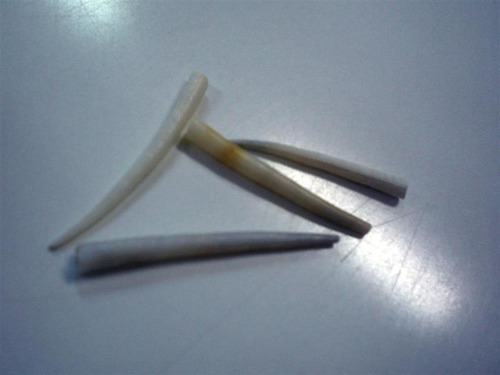
Tusk shells (Phylum Mollusca)
The class Scaphopoda comprises tubular shells that are open at both ends, allowing these marine mollusks to burrow into the substrate. They are usually found in sandy or muddy environments and exhibit a unique feeding mechanism using tentacles called captacula.

Thorny-headed worms belong to which phylum?
Phylum Acanthocephala is a group of parasitic worms characterized by a spiny head that anchors to the host's intestinal wall. They have a complex life cycle that often involves an intermediate host, such as an insect.

Ribbon worms
Phyla Nemertea are elongated, often colourful marine invertebrates that possess a unique proboscis used to capture prey. They exhibit a variety of body forms and are known for their regenerative ability and coelomic cavities, which house the gut and circulatory systems.

Roundworms
Phyla Nematoda are unsegmented, cylindrical worms that are found in various environments, including soil, freshwater, and marine habitats. They play significant roles in ecosystem processes and can also be parasitic.

Chitons (Phylum Mollusca)
The class Polyplacophora is a group of marine animals characterized by their distinctive shell composed of eight overlapping plates. They are known for their ability to cling tightly to rocks and can graze on algae.
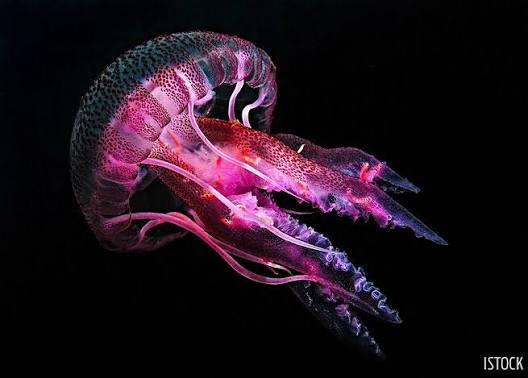
A jellyfish belongs to which phylum?
Phyla Cnidaria are soft-bodied, marine organisms known for their stinging cells called cnidocytes. They have a simple body plan, typically featuring a bell-shaped medusa or a sessile polyp form.

Octopus, squid (Phylum Mollusca), what’s their class?
The class Cephalopoda includes highly intelligent marine animals such as octopuses and squids, characterized by bilateral symmetry, a distinct head, and specialized tentacles.

Clams, mussels, scallops, and oysters (Phylum Mollusca), which class are they?
The class Bivalvia comprises marine and freshwater mollusks with two-part shells hinged at one end. They are typically filter feeders and include species like clams, mussels, scallops, and oysters.
Tusk shells (Phylum Mollusca) belong to which class?
are classified under the class Scaphopoda, which consists of elongated, tubular shells open at both ends. They inhabit marine environments and primarily feed on microorganisms in sediment.
Insects belong to which phyla?
Phylum Arthropoda is characterized by segmented bodies, chitinous exoskeletons, and jointed appendages. This diverse group includes species ranging from butterflies to beetles.
Centipedes and millipedes (Phylum Arthropoda) belong to which subphylum?
They belong to the subphylum Myriapoda, which is characterized by elongated bodies with numerous segments and many legs.
Spiders, horseshoe crabs, ticks, scorpions, mites (Phylum Arthropoda)
Belong to the subphylum Chelicerata, which is defined by the presence of chelicerae (mouthparts) and a body divided into two main segments: the cephalothorax and abdomen. This group lacks antennae and includes arachnids and similar species.
Crustaceans-crabs, lobster, shrimp, crayfish and barnacles (Phylum Arthropoda) belong to which subphylum?
They belong to the subphylum Crustacea, defined by a hard exoskeleton, two pairs of antennae, and a body typically divided into a cephalothorax and an abdomen. This group includes aquatic animals with gills.
Insects (Phylum Arthropoda) belong to which subphylum?
They belong to the subphylum Hexapoda, characterized by six legs, a body divided into three regions (head, thorax, abdomen), and, in many cases, wings.