HAPS: Brain Structure
 Call Kai
 Learn
 Practice Test
 Spaced Repetition
 Match
 Flashcards
 Knowt Play
1/39

There's no tags or description
Looks like no tags are added yet.
40 Terms
Cerebellum
The "little brain" at the rear of the brainstem; functions include processing sensory input and coordinating movement output and balance

Central Sulcus
Divides frontal and parietal lobes

Lateral Sulcus
Separates temporal lobe from parietal and frontal lobes

Longitudinal Fissure
Separates left and right hemispheres

Broca's Area
Controls language expression - an area of the frontal lobe, usually in the left hemisphere, that directs the muscle movements involved in speech.

Wernicke's Area
Controls language reception - a brain area involved in language comprehension and expression; usually in the left temporal lobe

Primary Auditory Cortex
A region located in the temporal lobe (within Heschl's gyrus) that processes basic sound features like pitch, volume, rhythm, and duration

Primary Visual Cortex
A region located in the occipital lobe at the back of the brain that processes basic visual signals like light, color, shape, and movement.

Prefrontal Cortex
A region located at the front of the frontal lobe that governs high-level functions like decision-making, focus, self-control, and planning.

Medulla Oblangata
A region located in the brainstem that controls essential, automatic life-support functions like breathing, heart rate, and blood pressure.

Pons
A region located in the brainstem directly above the medulla that acts as a message bridge between different brain areas and regulates sleep, facial movements, and breathing rhythms.

Lateral Ventricle
Two fluid-filled cavities located deep within each cerebral hemisphere that produce and circulate cerebrospinal fluid to cushion, protect, and nourish the brain.

3rd Ventricle
A narrow, fluid-filled cavity located in the diencephalon (between the left and right thalami) that circulates cerebrospinal fluid and helps protect and nourish surrounding deep brain structures.

4th Ventricle
A fluid-filled cavity located in the brainstem (between the pons, medulla, and cerebellum) that circulates cerebrospinal fluid before channeling it into the central canal of the spinal cord and around the outer brain.

Nucleus Accumbens
A structure located deep in the basal forebrain (part of the ventral striatum) that plays a central role in the brain's reward circuit, processing pleasure, motivation, and reinforcement learning.

Hypothalamus
A structure located below the thalamus at the base of the brain that maintains homeostasis by regulating vital functions like body temperature, hunger, thirst, sleep, and hormone release.

Thalamus
A central structure located deep in the forebrain (above the brainstem) that acts as the brain's main relay station, routing sensory and motor signals to the cerebral cortex and regulating consciousness, sleep, and alertness.

Pituitary Gland
A pea-sized master gland located at the base of the brain (just below the hypothalamus) that releases hormones controlling growth, metabolism, reproduction, and other endocrine glands.

Corpus Callosum
A thick band of nerve fibers located deep in the center of the brain that connects the left and right cerebral hemispheres, enabling communication and data transfer between them.

Amygdala
An almond-shaped structure located deep within the temporal lobe (part of the limbic system) that processes emotions, particularly fear, anxiety, and threat detection.

Hippocampus
A seahorse-shaped structure located deep within the temporal lobe (part of the limbic system) that is essential for forming new long-term memories and spatial navigation.

Sulci
The shallow grooves or furrows on the surface of the cerebral cortex that separate adjacent gyri (ridges), increasing the brain's surface area to pack in more neurons.

Gyri
The raised ridges or folds on the surface of the cerebral cortex that sit between sulci, maximizing the brain's surface area to fit more processing neurons.

Frontal Lobe
The largest brain region, located at the front of the cerebral cortex, that controls voluntary movement, high-level executive functions, language production, and personality.

Temporal Lobe
A major region located on the lower sides of the cerebral cortex (behind the ears) that processes auditory information, language comprehension, emotion, and long-term memory.

Parietal Lobe
A major region located in the upper back portion of the cerebral cortex (behind the frontal lobe) that processes sensory information like touch, temperature, spatial awareness, and body position.

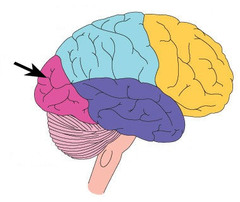
Occipital Lobe
The major region located at the very back of the cerebral cortex that processes visual information, including color, shape, motion, and visual recognition
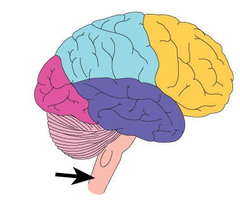
Brain Stem
The stalk-like structure located at the base of the brain (connecting the cerebrum and cerebellum to the spinal cord) that controls critical automatic functions like breathing, heart rate, blood pressure, and sleep cycles.
Gray Matter
The darker tissue found on the outer surface of the cerebral cortex (and deep brain nuclei) that contains neuronal cell bodies, dendrites, and synapses responsible for processing information and sensory input.
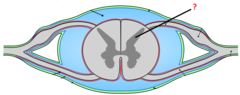
White Matter
The lighter tissue located in the deeper parts of the brain (beneath the gray matter) that consists of myelinated axons that relay signals and connect different brain regions to one another.

Neuron
A specialized nerve cell located throughout the nervous system that transmits electrical and chemical signals.

Dendrites
Bdranch-like structures located at the receiving end of a neuron that receive incoming signals from other cells.

Soma (Cell Body)
The central hub located at the core of a neuron that maintains cell health and integrates incoming signals.

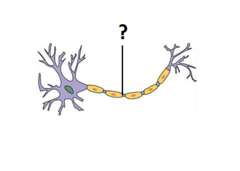
Axon
A long projection extending from the neuron cell body that conducts electrical impulses away toward other cells.
Meninges
Three protective membranes located between the skull and the brain that enclose and cushion the central nervous system.

Dura Mater
The tough, outermost layer of the meninges that protects the brain and spinal cord from physical injury.

Arachnoid Mater
The web-like middle layer of the meninges that encloses the subarachnoid space and holds cerebrospinal fluid.

Pia Mater
The delicate inner layer of the meninges located directly on the brain's surface that carries blood vessels to nourish brain tissue.

Cerebrospinal Fluid
A clear fluid circulating in the ventricles and subarachnoid space that acts as a shock absorber and delivers nutrients to the brain.

Neuroplasticity
The brain's ongoing dynamic process occurring across neural networks that reorganizes pathways to learn new skills or adapt to injury.
