Learn: Comprehensive History of Early Civilizations, Medieval Europe, and Renaissance to Enlightenment
 Call Kai
 Learn
Learn Practice Test
 Spaced Repetition
 Match
Match Flashcards
 Knowt Play
1/76

There's no tags or description
Looks like no tags are added yet.
Name | Mastery | Learn | Test | Matching | Spaced | Call with Kai | Chat |
|---|
No analytics yet
Send a link to your students to track their progress
77 Terms

Mesopotamia
c. 3500-500 BCE
Tigris-Euphrates States, Cuneiform, Code of Hammurabi; first civilizations, origins of writing and written law

Monotheism
c. 2000-1000 BCE
Belief in one god, covenant, shaped Western and Middle Eastern ethics

Aristotle
4th c. BCE
Greek, Plato's student, founded logic, stressed observation
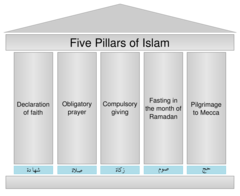
Five Pillars of Islam
7th c.
Faith, Prayer, Charity, Fasting, pilgrimage

Medieval Times
c. 500-1500
fuedalism, growth of towns and universities, bridges antiquity with modern world

Feudal Society
c. 9th-13th
lords, vassals, order without strong central government

Three-field system
Medieval on
winter crop, spring crop, fallow; heavy plow, more food, population growth, towns

Gothic
12-15th c.
pointed arches, flying buttresses, stained glass, expressed medieval faith and town wealth

Medieval Venice
9th-15th c
republic held by a maritime trade empire, gateway for Eastern good, financed the Renaissance

Black Death
1347-1351
bubonic plague, killed 1/3 of Europe, labor shortage; weakend fuedalism and the Church

Humanism
14th-16th c.
Revival of classical texts, focus on human potential, fueled the Rennaissance and Reformation

Jan Hus
early 15th c. (burned 1415)
Bohemian priest, attacked Church corruption and indulgences, forerunner of the Reformation

Council of Constance
1414-18
ended the Great Schism, elected Martin V, condemned Jan Hus, failed to reform the Church

Gutenberg's Printing Press
c. 1450s
movable metal type, Gutenberg Bible, cheap books; spread Renaissance and Reformation ideas, raised literacy

Henry the Navigator
15th c.
Portuguese prince, sponsored African coast voyages, improved ships; began the Age of Exploration

Leonardo da Vinci
late 15th-early 16th c.
Mona Lisa, Last supper, notebooks on anatomy and inventions

Niccolo Machiavelli
early 16th c.
Florentine, wrote The prince (1513), rulers should be pracitcal, better feared than loved; founder of political realism

Christopher Columbus
1492
Genoese sailor funded by spain, sought route to Asia, reached the Caribbean, began lasting Europeann colonization of the Americas

Vasco da Gama
1497-1499
Portuguese, sailed around Africa to India, direct sea route to Asia, bypassed Venice and Muslim middlemen

Aztecs and Inca
14th-early 16th c.
Aztecs (mexico), Inca (andes), conquered by Cortes and Pizzaro; Spain gained American empire and silver

Martin Luther and "justification by faith"
early 16th century
salvation by faith alone, Bible only authority, started the Protestant Reformation

John Calvin
16th c.
Geneva, Institutes of the Christian Religion, predestination; spread ot Huguenots, Puritans, Presbyterians

Ignatius Loyola
16th c.
Spanish noble, founded the Jesuits (1540), schools and missions strengthened Catholicism

Council of Trent
1545-63
reaffirmed Catholic doctrine, ended indulgence abuses, created seminaries, launched the Catholic Reformation

Peace of Augsburg
1555; each German prince picks Lutheran or Catholic (cuius regio, eius religio), excluded Calvinists; temporary peace

Phillip II of Spain
(1556-1598)
Hagsburg, Catholic champion, ruled Spain, Netherlands, American empire; Spain's peak and then decline

Elizabeth I of England
(1558-1603)
Protestant, middle-way religious settlement, defeated the Armada; stabilized England, began its naval rise

The Great Armada
1588
Spanish fleet failed to invade England, storms and faster English ships marked Spain's decline and England's rise

St. Bartholomew's Day Massacre
1572, France
Catholics killed thousands of Huguenots, Catherine de' Medici involved; intensified the Wars of Religion

Huguenots
16th-17th c.
French Calvinists, many nobles and arisans, persecuted; fled after 1685, hutrting France's economy

Edict of Nantes
1598;
Henry IV granted Huguenots toleration and fortified towns, revoked 1685

Witch Hunts
1450-1750 (peak 1580-1650)
mostly women accused, driven by religious conflict and stress, Salem 1692; tens of thousands executed
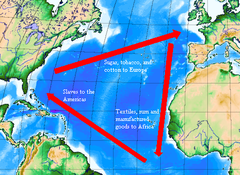
Triangle Trade
16th-19th c.
Goods to Africa, enslaved people to the Americas, sugar and tobacco to Europe, enriched Europe, built plantation slavery
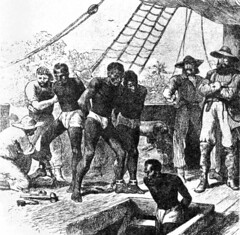
Slave Trade
16th-19th c.
about 12 million Africans shipped across the Atlantic, Middle Passage; devasted Africa, led to abolition (british ban 1807)

James I of England (James VI of Scotland)
(1603-1625)
first Stuart, divine right, King James Bible, clashed with Parliament; set stage of civil war

Puritans
16th-17th c.
English Calvinists who wanted to purify the Church of England, Strong in Parliament, settled Massachusetts

English Civil War
1642-1651
Cavaliers vs. Roundheads, king v. Parliament, Charles I executed 1649; strengthened Parliament

Oliver Cromwell
mid 17th c.
Puritan general, New Model Army, Lord Protector; England briefly a republic, monarchy restored 1660

Thomas Hobbes, Leviathan
1651
life without government is "nasty, brutish and short", social contract, strong soveriegn; justified absolutism

Glourious Revolution
1688-89
bloodless, James II replaced by William and Mary, English Bill of Rights; parliamentary supremacy

Defenestration of Prague
1618
Protestant nobles threw Habsburg officials from a window; sparked the Thirty Years' War

Thirty Years' War
1618-1648
began as religious war, became Habsburgs vs. France, huge devastation in Germany; last major religious war

Peace of Westphalia
1648
ended the Thirty Years' War, recognized Calvinism, weakened Habsburgs, start of modern soveriegn states

Absolutism
17th-18th c.
monarch holds total power, divine right, standing army and bureaucracy, strengthened central states

Louis XIV
1643-1715
"Sun King", built Versailles, revoked Edict of Nantes, model absolute monarch, cosltly wars and debt

Versailles
1660-80s
Louis XIV's palace, Hall of Mirrors, nobles forced to live there; symvol of absolutism and royal excess

Mercantilism
16th-18th c.
wealth = gold and silver, favorable trade balance, colonies supply raw materials, drove colonial rivalry

Peter the Great of Russia
1682-1725
Westernized army and navy, built st. Petersurg, beat Sweden, made Russia a European power

Dutch East India Company
founded 1602
first major joint-stock company, monopoly on Asian trade; made Amsterdam a financial center

Agricultural Revolution
17th-18th c.
crop rotation, enclosure, selective breeding, seed drill; more food, population growth, freed labor for industry

Nicholas Copernicus
1543
"On the Revolutions of the Heavenly Spheres", put the sun at the center; launched the Scientific Revolution

Heliocentric Theory
16th-17th c.
Sun at center, Earth orbits it, replaced Ptolemy, challenged the Church and ancient authority

Johannes Kepler
late 16th-early 17th c.
used Brahe's data, three laws of planetary motion, ellipitcal orbits; mathematical proof for heliocentrism

Galileo Galilei
early 17th c.
telescope showed Jupiter's moons, Dialogue (1632), tried by Inquisition, science vs. Church

Francis Bacon and Empirical Method
early 17th c. observation, experiment, inductive reasoning; helped create the scientific method

William Harvey
1628
showed blood circulates and the heart is a pump, used experiment, advanced modern medicine

Rene Descartes
17th c.
Discourse on Method
"I think, therefore I am", doubt and deductive reason; founded rationalism

Isaac Newton, laws of motion
1687 (principia)
three laws of motion, universal gravitation, calculus, showed the universe follows natural laws

John Locke
late 17th c.
natural rights (life, liberty, property), government by consent, right to revolt; inspired American and French revolutions
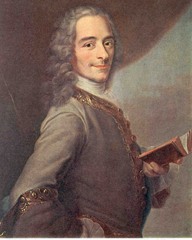
Enlightened philosophes
18th c.
France, used reason to criticize Church and absolutism, promoted progress and tolerance, inspired refrom and revolution

Salons
18th c. Paris
gatherings hosted by wealthy women where thinkers debated; spread Enlightment ideas

Voltaire
18th c.
Candide, relgious toleration, free speech, attacked Church abuses; champion of civil liberties

Montesquieu
1748 (Spirit of the Laws); seperation of powers, checks and balances; influenced the U.S. Constitution

Adam Smith
1776 (Wealth of Nations)
laissez-faire, invisible han, diviosion of labor; attacked mercantilism, founded modern economics
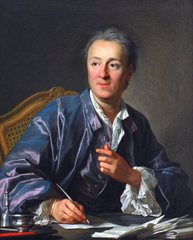
Denis Diderot
1751-1572
edited the Encyclopedie, collected knowledge of science and arts, was censored; spread Enlightment ideas

Jean-Jacques Rousseau
1762 (social contract)
"man is born free, yet everywhere in chains", general will, popular sovereignty; inspired radicals and Jacobins

Enlightened despots
later 18th c.
absolute rulers who adopted reforms (Frederick II, Joseph II, Catherine II), toleration and legal reform; strengthened states, kept power

Catherine the Great of Russia
1762-1796
corresponded with Voltaire, expanded Russia, strengthened serfdom after Pugachev's rebellion; Russia a great power, limited reform

Louis XVI
1774-1793
weak king, debt crisis, called the Estates General 1789, executed 1793; his fall ended the monarchy

Tennis Court Oath
June 1789, Third Estate swore not to disband until France had a constitution; first revolutionary act

Declaration of the Rights of Man and Citizen
Aug 1789
liberty, equality before the law, property, popular sovereignty; foundation of modern human rights

Sans-culottes
1789-95
radical Parisian workers and artisans, demanded price controls and a republic; pushed the Revolution toward radicalism

Olympe de Gouges
1791
wrote the Declaration of Rights of Woman, demanded equal rights, guillotined 1793; early feminist voice
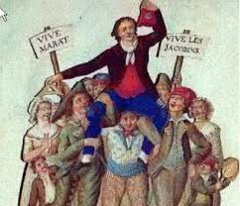
Jacobins
1789-1794
radical club led by Robespierre, established republic, Reign of Terror; defended the Revolution with extreme means
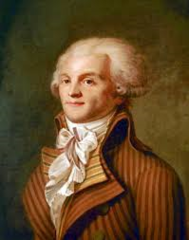
Maximilien Robespierre
1793-1794
Jacobin leader, Committe of Public Safety, Reign of Terror; executed July 1794

Napoleon Bonaparte
1799-1815
seized power 1799, emperor 1804, failed in Russia 1812, defeated at Waterloo; spread revolutionar reforms and nationalism
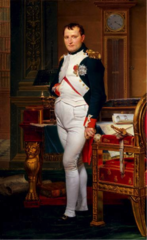
Napoleon's Civil Code
1804
Equality before the law, ended feudal privilges, protected property, limited women's rights; model for legal systems worldwide