Fetal development
 Call Kai
 Learn
 Practice Test
 Spaced Repetition
 Match
 Flashcards
 Knowt Play
1/43

There's no tags or description
Looks like no tags are added yet.
44 Terms
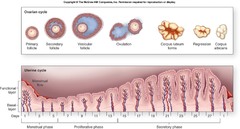
uterine (mentrual) cycle
menstrual phase, proliferative phase, (ovulation), secretory phase

ovarian cycle
follicular phase, ovulation, luteal phase
Capacitation
when sperm reach the ovum and prepare for fertilization --> change in shape to allow them to release enzymes to break down the ovum membrane
gamete
sex cell
ovum
mature female gamete
sperm
mature male gamete
gametogenesis
the process in which cells undergo meiosis to form gametes
cleavage
rapid cell division
morula
a solid ball of cells resulting from division of a fertilized ovum
blastocyst
a hollow ball of cells --> implants in uterus

embryoblast
The inner cell mass of the blastocyst, which is the developing human

trophoblast
The outer cell mass of the blastocyst, which is the placenta

how is the zygote propelled
cilia + peristalsis --> reaches uterine cavity in 3-4 days
When does implantation occur?
6-10 days after fertilization --> bleeding/spotting

chorionic villus
fingerlike projections of the chorion that extend into the uterine lining

intervillous space
The space in the placenta in which maternal blood bathes chorionic villi, allowing the exchange of materials between the fetal and maternal circulations.

functions of the placenta
nutrients, oxygen, hormones, waste transfer
human chorionic gonadotropin (hCG)
hormone produced by an embryo following implantation--> stimulates corpus luteum to produce progesterone until placenta takes over
human placental lactogen hPL
Hormone produced by the placenta that stimulates the mammary glands to produce milk
progesterone
hormone produced in ovaries --> maintains pregnancy
estrogen
hormone produced in ovaries --> uterine growth and myometrial contractility
yolk sac
8-9 days after conception --> provides nutrition and gas exchange before placenta forms --> embryonic blood cell production

umbilical cord
tube that contains two arteries and one vein --> connects placenta to embryo
When does the fetal heart begin to beat?
end of 3 weeks gestation
amnion
innermost layer of the fetal membrane -->contains amniotic fluid

chorion
Outermost layer of the two membranes surrounding the embryo --> forms the fetal part of the placenta

purpose of amniotic fluid
cushions fetus, maintains body temp, allows freedom of movement, vital to lung development

what is amniotic fluid made of
fetal urine

characteristics of amniotic fluid
800 mL
Slightly opaque
Slightly alkaline pH (>7)

trimester timelines
1st -- first day of LMP-week 13
2nd -- week 14 - week 27
3rd -- week 28 - week 40
pre embryonic phase
first 2 weeks after fertilization --> rapid mitosis and cell differentiation
embryonic period
weeks 3-8 --> placenta forms, organs and body systems form
fetal period
week 9-birth --> rapid body growth
when do vernix and lanugo appear
weeks 17-20
When is surfactant produced?
24 weeks --> from now on there is a chance of survival
TORCH infections
T - toxoplasmosis
O - other (syphilis)
R - rubella
C - cytomegalovirus
H - herpes
Toxoplasmosis
a parasite that is most commonly transmitted from pets to humans by contact with contaminated animal feces, or through uncooked meat
--> classic triad
Classic triad of toxoplasmosis
1. Chorioretinitis
2. Hydrocephalus
3. Intracranial calcifications

Other (syphilis)
sexually transmitted bacterial infection --> perforated hard palate, saddle nose, snuffles, chorioretinitis

Other (hepatitis B)
transmitted through delivery --> may develop SGA, jaundice, hepatomegaly, ascites, hyperbilirubinemia
How to prevent hebB
HBV vaccine, 3 doses
Rubella
aka german measles, viral infection transmitted through placenta/respiratory secretions --> blubbery muffin rash, cataracts/glaucoma/retinopathy, pneumonia
Cytomegalovirus
herpes-type virus transmitted through placenta --> developmental delay, microcephaly, chorioretinitis, jaundice, lethargy, poor suck reflex,
herpes
viral infection --> sores on eyes/skin/mouth
