Excretory System and Homeostasis (chpt 29)
 Call Kai
 Learn
 Practice Test
 Spaced Repetition
 Match
 Flashcards
 Knowt Play
1/12

There's no tags or description
Looks like no tags are added yet.
13 Terms
Excretion
The removal of waste products of metabolism from the body
Homeostasis
The tendency to keep conditions in the body steady within certain levels (ie keep in equilibrium)
Organs of Excretion
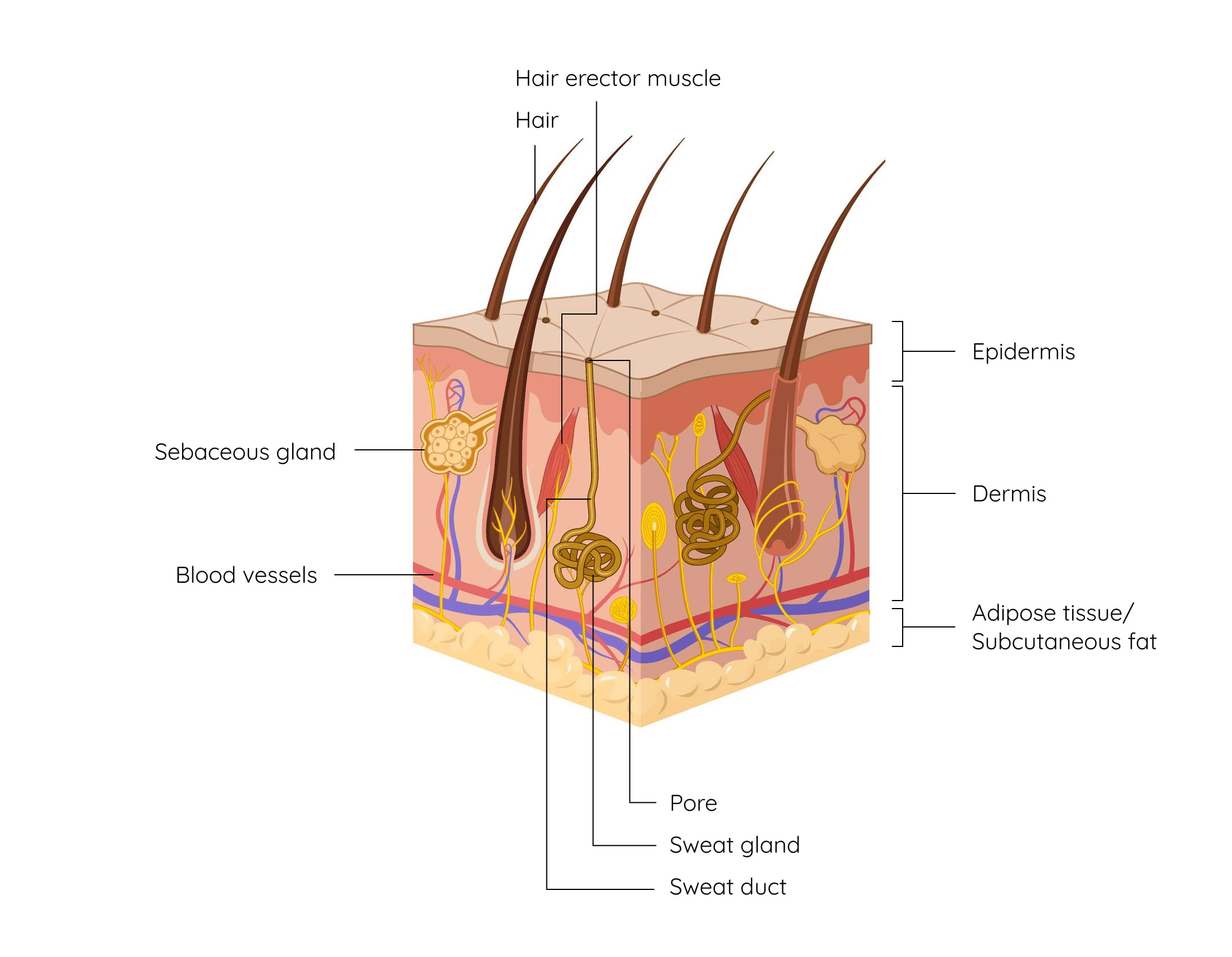
Skin: Excretes water, salt, and small amounts of urea in sweat from sweat glands. Controls temperature
Lungs: Excretes water and carbon dioxide
Urinary System: Excretes water and urea. Main organ of excretion and homeostasis for solution concentrations
Kidney Structure and Location
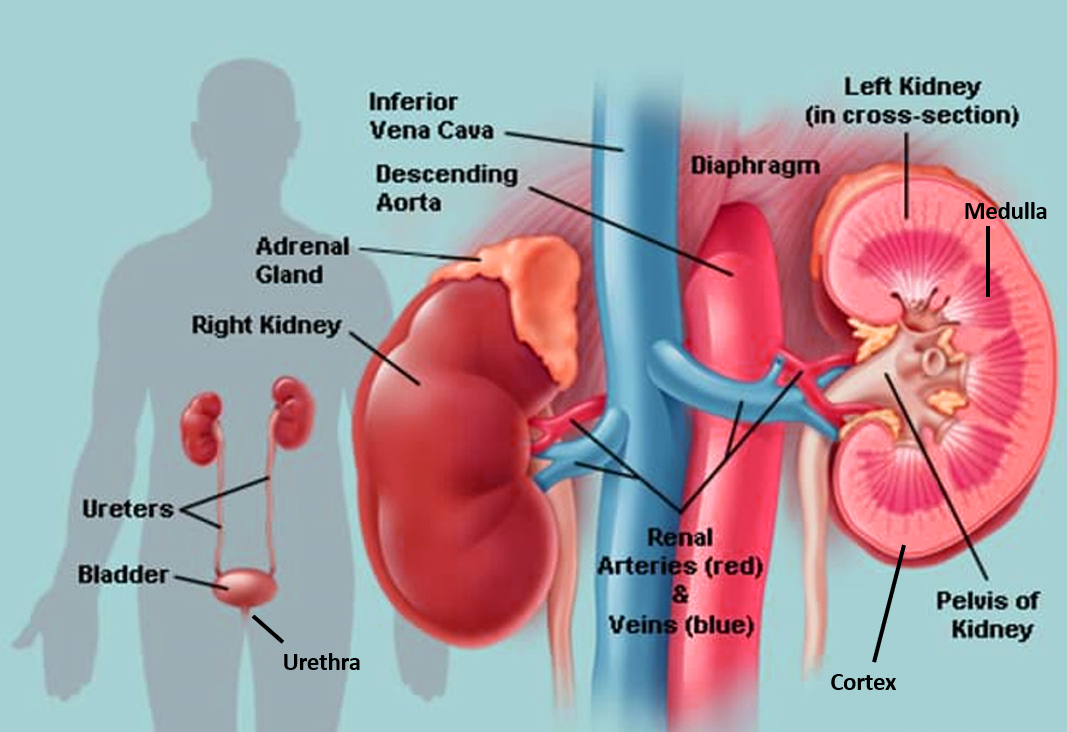
Located on either side of spine at rear of upper abdominal cavity, below diaphragm. Left kidney slightly higher than right
3 layers, outer cortex, middle medulla, innermost pelvis
Pelvis narrows and becomes ureter, connects to bladder, muscular bag stores urine, empties through urethra
Kidney receives blood through renal artery, filtered, then leaves through renal vein into inferior vena cava
Kidney bodily fluids concentration control
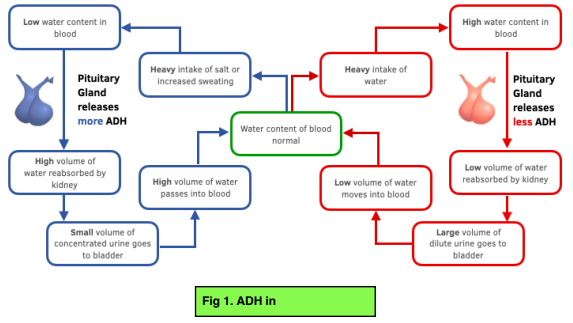
If lots of water drank, dilutes fluids in body, causing chemical reactions to slow. Body responds by producing large amounts of weak urine. Production of a lot of weak urine: diuresis
If not a lot of water drank, fluids in body become too concentrated. Production of concentrated urine. Will also feel thirsty, body tries to bring body fluids concentration back to normal
Nephron Structure & Urine Formation
Urine formed by nephrons
Blood containing impurities enters kidneys (filters about 20% of blood that leaves heart)
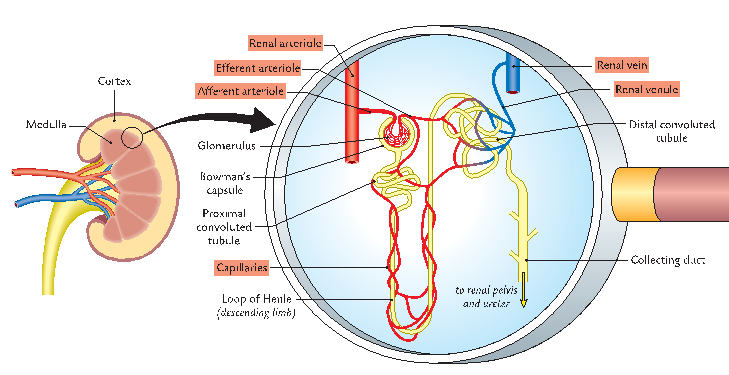
Pressure of afferent arteriole and glomerulus increases greatly due to narrowing of blood vessels, especially in efferent arterioles. Forces fluid out through gaps between epithelial cells of capillaries in glomerulus in process of ultrafiltration, which happens in Bowman’s capsule
Resulting flomular filtrate passes through proximal convoluted tubule, all useful substances are reabsorbed (all except urea) by osmosis, diffusion, and/or active transport (depending on relative concentrations. Active transport: pumping substances against concentration gradient)
Cells of PCT have many miochondria to produce energy for active transport to pump substances back into blood against concentration gradient
More water reabsorbed in loop of Henle and distal convoluted tubule (DCT)
Final water balance → collecting duct, under influence of anti-diuretic hormone (ADH) aka vasopressin produced in pituitary
Urine psasses into pelvis through ureter into bladder. Sphincter muscle between bladder and urethra
What passes into Bowman’s capsule or not
White blood cells, red blood cells, platelets, and most proteins → too big to pass through pore, so remain in blood. 20% of plasma passes into Bowman’s capsule, making blood thicker
Ultrafication happens in Bowman’s capsule, liquid passed through capsule: glomerular filtrate. Contains glucose, amino acids, vitamins, salt, water, and urea. Collects there before going to proximal convoluted tubule (PCT). Urea is breakdown of excess amino acids in liver
Anti-diuretic hormone (ADH) action
ADH makes collecting duct more permeable, so more water reabsorbed from urine into blood
Production of large quantities of watery urine: diuresis. Antidiuretic hormone because presence stops diuresis
Ectotherms
Animals that have a body temperature that varies with the environmental temperature. Aka poikilothermic eg. all invertebrates, reptiles, amphibians, and fish. In mornings, may have to move to create heat
Endotherms
Animal whose body temperature is independent of environmental temperature, aka homoeothermic
Must monitor temperature of body, get rid of heat if temperature too high and produce and retain heat if temperature too low to keep temperature constant
Temperature monitored and controlled by hypothalamus
When body too warm
Sweat produced by sweat glands in skin through sweat ducts
On skin surface, water evaporates, and since has high latent heat of vaporisation, cools skin. If breeze, cooling effect is enhanced
Blood diverts towards skin’s surface when arterioles dilate, allowing more blood flow through capillary beds near surface of skin. Widening of arterioles called vasoldilaton. Allows more heat to escape by radiation. Makes skin red
Hair lies flat on skin, erector muscle relaxed and thus no layer of insulating air is trapped, allows heat to escape
When body too cold
No sweat produced, so no heat is lost
Blood flow kept away from skin surface as arterioles supplying capillary beds constrict, narrowing of arterioles: vasoconstriction. Appear pale. If blood flow below a layer of subcutaneous fat, insulated
Hairs stand erect when erector muscle contracts, thus trap a layer of insulatin gair, standing of erect hair: piloerection. Causes goosebumps
Under normal conditions, liver, brain and muscles produce enough heat, however when cold, brain causes rapid contraction and relaxation of muscles, especially jaw: shivering. Produces heat
Skin structure and role
Skin protects body. Kept supple by production of sebum from subaceous glands in hair follicles
Without sebum, skin cracks, creating easy point of entry for pathogens. Sebum also makes skin waterproof and has antibacterial properties
Layers of dead cells fall off taking pathogens with them. Skin also has own microflora of symbiotic microorganisms which outcompete pathogens
Within skin, wandering phagocytic white blood cells to engulf antigens they may encounter
Skin protects from ultraviolet radiation when melanocytes darken skin: tan