childhood 2
 Call Kai
 Learn
 Practice Test
 Spaced Repetition
 Match
 Flashcards
 Knowt Play
1/18

There's no tags or description
Looks like no tags are added yet.
19 Terms
EER equations for males and females aged
6 months- 2.99 years
3-13.99 years
physical activity levels (PAL)
inactive, low active, active, very active
PAL for children is a guesstimate
Canadian 24hr movement guidelines for children and youth 5-17yrs
a healthy 24 hrs includes:
sweat (at least 60min/d pf moderate to vigorous physical activity), step (several hours of high physical activity), sleep. sedentary behaviour
protein reqs for children
RDA for protein/kg is inc, but AMDR (%energy) decreases cuz consuming more energy relative to protein
AMDR goes from
1-3 years: 5-20%
4-18 years: 10-30%
most canadian children have adequate protein and iron intakes
children fat amdr
1-3 = 30-40%
4-18= 25-35%
adult= 20-35%
iron reqs in childhood
determined by
RDAs
determined by factorial method, considering amounts needed to replace daily iron losses, new tissue growth including RBCs, storage, additional iron for menstrual losses once commences
RDAs after age 9, are 8mg/d, stores are assumed to be full
on avg, 1000kcal of an avg mixed diet provides __of iron
6-7mg
calcium RDAs based on
intakes associated with max accretion of bone during growth
higher peal bone mass accretion =
lower risk of osteoporosis and fracture risk in later life
DRI for children
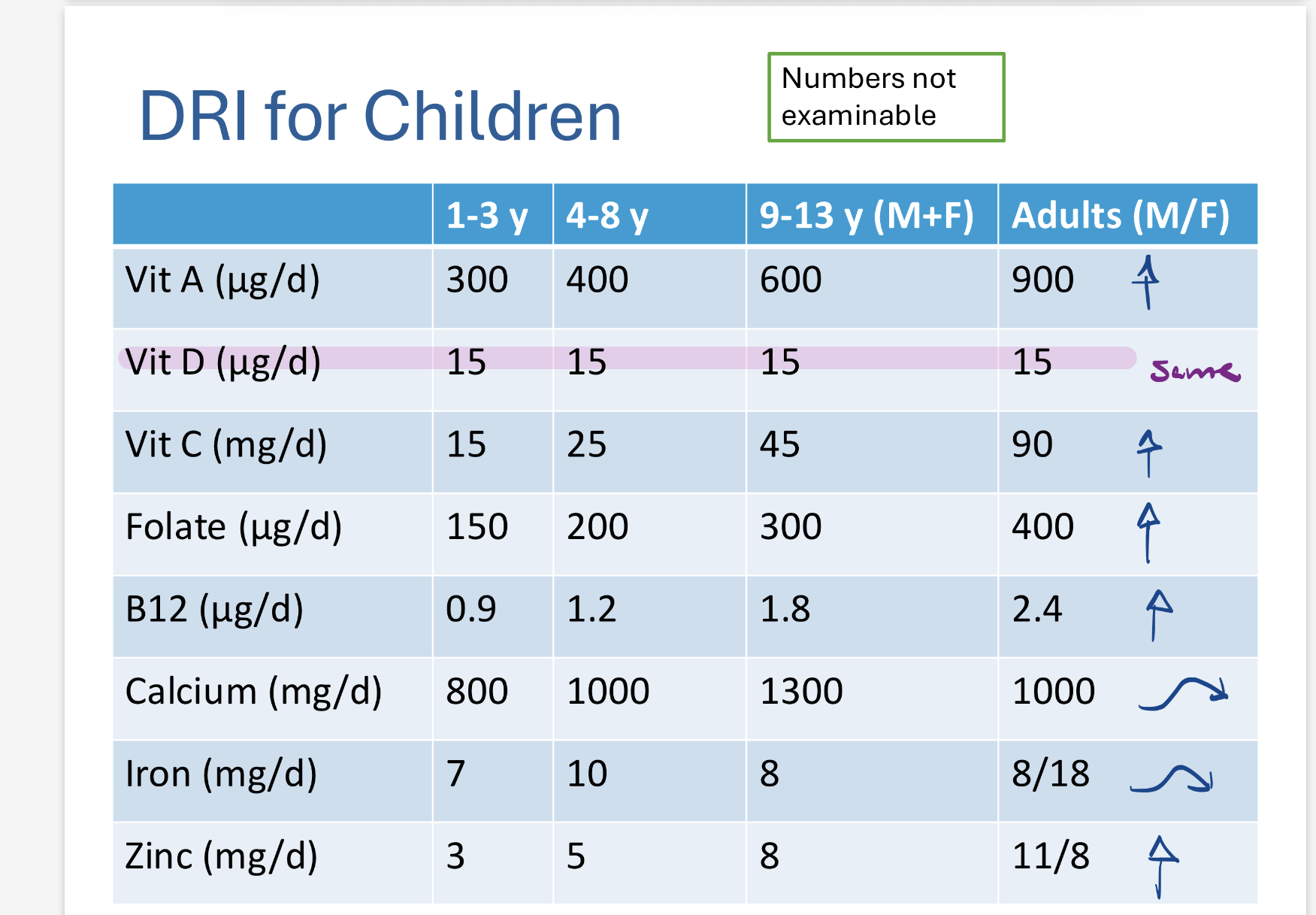
children do not need supplements exept when
need vit d in winter
vegan diet or no variety in foods
health conditions
finding of quality of food choices of canadian children
suboptimal intake of fruits and veg
about a quarter of calories from “other foods” (hgih fat/sugar)
high calorie drink intake double in older children
ultra processed foods and sedentary lifestyles lead to
inc risk of chronic disease later in life
for assessing growth in childhood which WHO growth charts do we use
BMI for age
adiposity rebound
after the first year, BMI declines and reaches a min at age 5
point of minimum BMI= adiposity rebound
early adiposity rebound is a risk for
adolescent/adult obesity
pediatric 5As to guide conversations
Ask - permission to discuss weight
Assess- health comprehensively
advise- on management strategies
agree-on goals
assist- with drivers and behaviours
what changed in new obesity guidelines compared to 2006
weight no longer focis
more focus on stigma of obesity and patient centred care
added pharmacological interventions for 12+
added surgical inventions for 13+