Cofactors
 Call Kai
 Learn
 Practice Test
 Spaced Repetition
 Match
 Flashcards
 Knowt Play
1/13

There's no tags or description
Looks like no tags are added yet.
14 Terms
Mg2+ role
Binds to ATP and reduces charge on phosphates so ATP can bind to enzyme
Facilitates nucleophilic attack of phosphate groups

Zinc fingers
Uses Zn2+ to hold DNA and RNA together
Ca2+ function
Controls neurotransmitter Ca2+ channels by changing conformation of CaM protein
Coenzymes to remember
ATP
NAD+ and NADP+
FMN and FAD
S-Adenosylmethionine
CoA
PLP
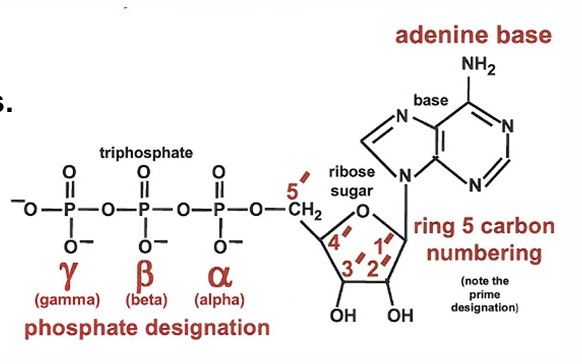
ATP function (know structure)
Cosubstrate
Transfer of phosphoryl and nuceotidyl groups
NAD+ and NADP+ (know structure)
Cosubstrate
Oxidation-reduction reactions involving 2 electron transfer

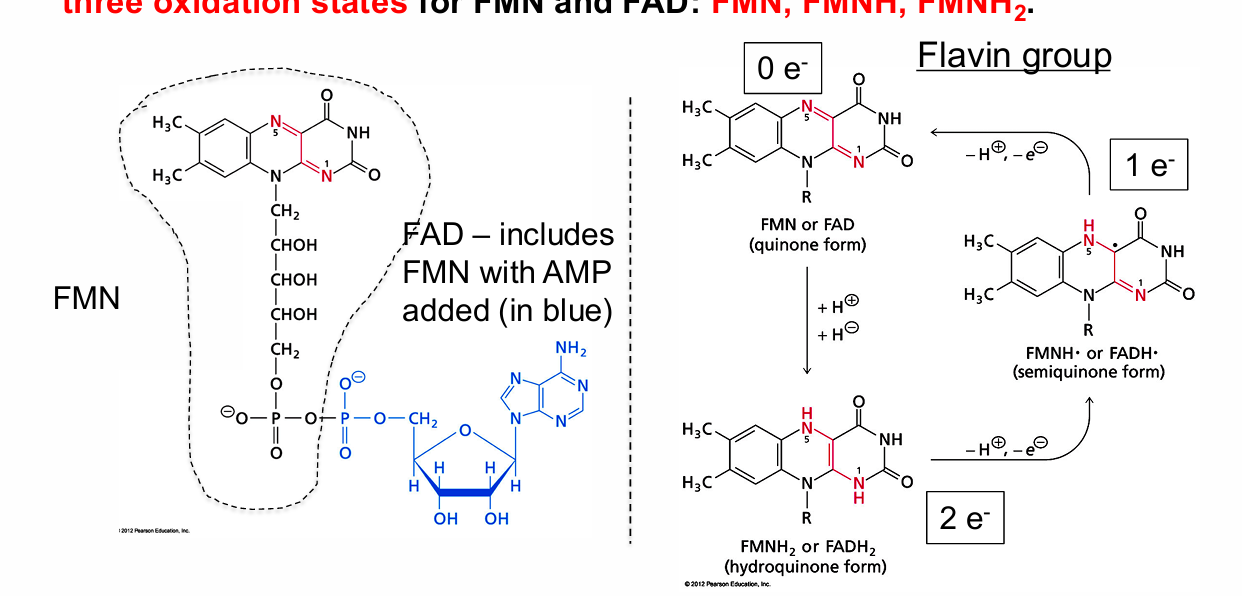
Flavin mononucleotide (FMN) and flavin adenine dinucleotide (FAD) (recognize structure)
Oxidation-reduction reactions involving 1 and 2 electron transfers
Prosthetic group
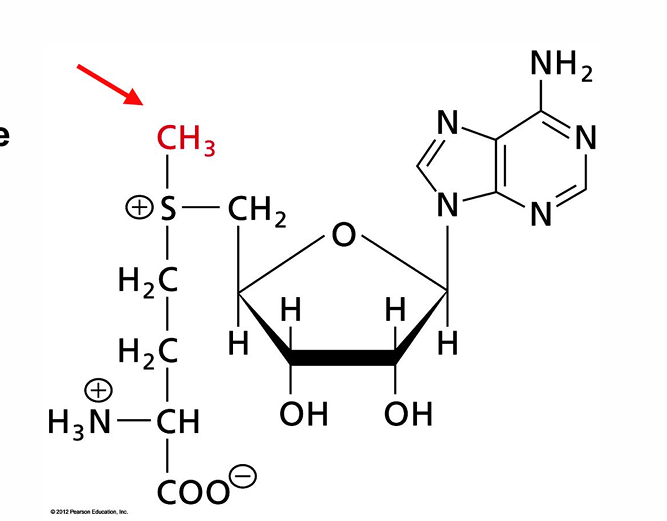
S-Adenosylmethionine (recognize structure)
Cosubstrate
Transfer of methyl groups
Coenzyme A (CoA) (recognize structure)
Cosubstrate
Transfer of acyl groups

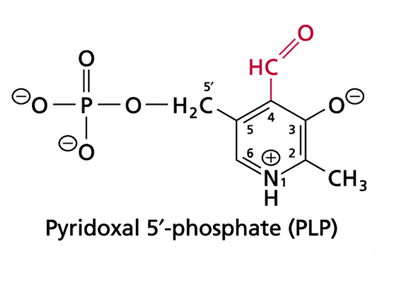
Pyridoxal phosphate (PLP) (recognize structure)
Prosthetic group
Transfer of groups to and from amino acids
Cosubstrates function
weak and reversible binding to enzyme
necessary substrates in reactions
Prosthetic groups function
Tight binding and no dissociation
regenerated while still bound to enzyme
which enzymes are cosubstrates?
ATP, S-adenylmethionine, NAD, CoA
which enzymes are prosthetic groups?
FMN/FAD
PLP
Heme