smad 201 midterm concept quiz
 Call Kai
 Learn
 Practice Test
 Spaced Repetition
 Match
 Flashcards
 Knowt Play
1/59

There's no tags or description
Looks like no tags are added yet.
60 Terms
what is all design related through?
form follows function
form
usefulness of design
design must be practical
aesthetic
branch of philosophy, deals with expression & perception of beauty
what is the specific function of graphic design?
communicates messages visually
graphic design
plan for organizing visual objects in space
capturing audience’s attention from among everything else competing
“plan” & “organize” for purpose of “communication”
what are the four things of good graphic design?
captures attention
controls eye movement across screen/page
conveys information
evokes emotion
what are the three building blocks of graphic design?
visuals
typography
space (balance)
what are standard questions when researching?
what’s the objective?
who’s the audience
does design need to coordinate with other design work?
who are the competitors & what does their visual communication say?
how will final product be delivered/distributed?
what’s the budget
what about timing & turnaround
who’s providing content?
are there any other design/production considerations/constraints?
what’s the brainstorming process like?
dump
percolate (split focus)
morph (sketch/change)
what’s the best technique for sketches?
thumbnail sketch
can draw & reject quickly
flat plans
single sheet showing all pages in project
illustrate page order & arrangement of facing pages
storyboards
working sketches showing change over time
several depicting key points
site maps
show which pages site will include, link structure, & overall flow. look like family trees
focus on screen order, organization, & function
lack ability to demonstrate website interactivity & responsiveness
wireframes
used to work out ideas for listing site content & planning how site visitors will access & use content
comps
fully detailed final draft suitable for showing boss/client
prototypes
comps for websites & other onscreen layouts
shows layout’s overall color palette, font, & image choices
proceed to building staging site when approved (working version of website)
tone
determined by what you/lead wants to project & what will resonate with audience
what are some photo characteristics?
asymmetrical balance & rule of thirds
tight cropping
natural lines to create movement
interesting light
what are the most common file formats?
JPG
PNG
GIF
JPG
best for photos
use photo-editing program to optimize & save at 72dpi
lossy format (poorer print resolution)
PNG
choice for illustrations & logos
renders gradients well & supports higher degree of transparency (drop shadows)
300 dpi for high end printing, 200dpi for lower end printing
GIF
best format for web icons & animations.
supports transparency
TIF
best for printing
supports layers
larger in file size & don’t lose data
EPS
used for specific kinds of images like vector graphics
can be resized without loss of solution
for printing with vector graphics
typically used for logos & supports transparency
what does lossy format mean for JPG?
each time you open/manipulate a JPG, it loses data
why is the relationship between image resolution (dpi/ppi) file size & physical image size complex?
may decrease file size (scale down) without losing image quality, but you CANNOT increase file size (scale up) without losing image quality.
what’s recommended for news picture photos?
limit editing to cropping, overall value adjustments & dodging & burning
looser when photo sets tone/delivers a message in advertising, public relations, & marketing materials
what does journalism, advertising and public relations all define diversity?
part of craft excellence
have ethical responsibility to deploy images free of stereotypes
symbolic annihilation
images that injure via symbolic messages about individuals/groups of people
where can you get photos
digital stock
comp images
royalty-free & rights-managed images
working with photographers
what are other alternatives to photos?
illustrations
video & multimedia components
type as image
pull quotes
pulls quote from copy for purpose of higlighting it
SVG
vector graphics format for web
excellent for basic shapes, charts & graphs
works well in responsive websites
what are the elements of design?
point, line, plane
shape/form
figure/ground
color
texture
value
what are the principles of design?
focal point
contrast
balance
scale/proportion
movement/rhythm
pattern
unity
line
series of points extending in two directions
key element in creating perspective
plane
line in motion, flat surface extending in both height & width & can appear flat & two-dimensional/skewed
creates volume (3d forms)
what are the two kinds of shapes?
inorganic (geometric)
organic (natural)
figue/ground
ability to distinguish subjects from background
background is negative space
color
draws attention, organizes and evokes emotion.
value
tones of light & dark
grayscale
focal point
most important thing visually on any layout, eye’s point of entry into the layout
rules of focal point
have one, without one viewer doesn’t know where to look
limit one per screen/etc, without one eye wanders around layout
if you have two = you don’t really have one
contrast
important principle for designing interesting layouts
offers flexibility
balance
visual weight
three kinds of balance
radial
symmetrical
asymmetrical
movement
in order to achieve eye flow through a layout, the design must create this with sightlines that guide the eye from one thing to the next.
pattern
derived from points, lines, & shapes repeating in lines/grids
gives visual impression of texture
unity
refers to oneness that result is one cohesive design/visual message
primary colors
red, blue, yellow
secondary & complementary colors
mixing two primary colors, green, purple, orange
teritary colors
mixing primary colors with secondary color on wheel
value
adding white to any hue produces a tint of that hue, adding black produces shade of that hue
additive color
RGB
ADDED TOGETHER = WHITE
for screens
subtractive color
CMYK (cyan, magenta, yellow, key)
ADDED TOGETHER = BLACK
for printing
gamut
range of color, monitors v. printers
key to accessibility of color
employing sufficient color contrast (4.5:1 or higher) & using non-color cues (text labels/patterns) to convey information that would otherwise rely on color alone
triadic colors
uses power of three colors situated at 120 degrees form each other (equilateral triangle) on color wheel

split complementary colors
Y shape, goes across & to either side of the circle
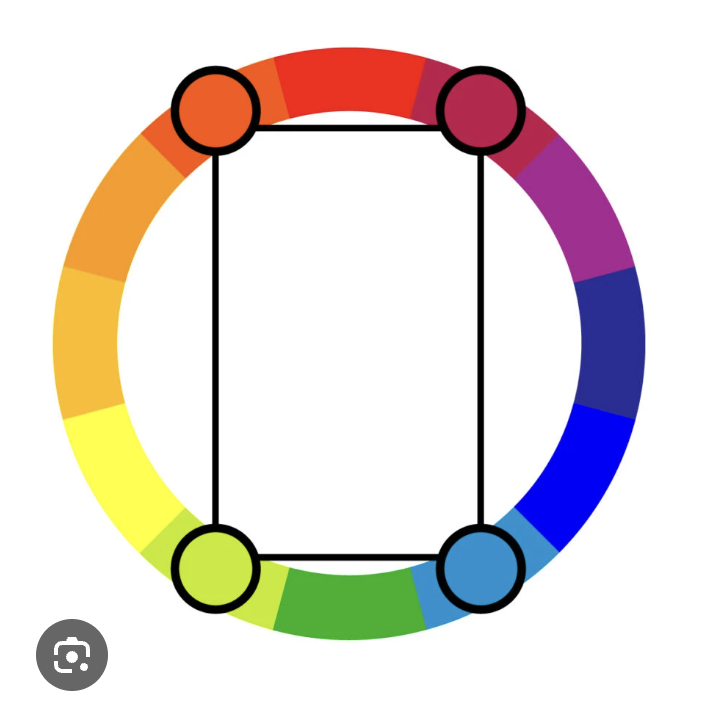
tetradic colors
double complementary, uses long rectangle to put colors together