Tissue Types- Identification
 Call Kai
 Learn
Learn Practice Test
 Spaced Repetition
 Match
Match Flashcards
1/21

There's no tags or description
Looks like no tags are added yet.
Name | Mastery | Learn | Test | Matching | Spaced | Call with Kai | Chat |
|---|
No analytics yet
Send a link to your students to track their progress
22 Terms

most common type of CT in the body; loose CT that serves as packing material; has all 3 types of fibers


loose CT that forms a soft skeleton which supports others cells; has only reticular fibers


loose CT that is made of tightly packed fat cells; serves as energy reserves, insulation, and cushioning


dense CT that has closely packed, parallel collagen fibers; strong when pulled in one direction
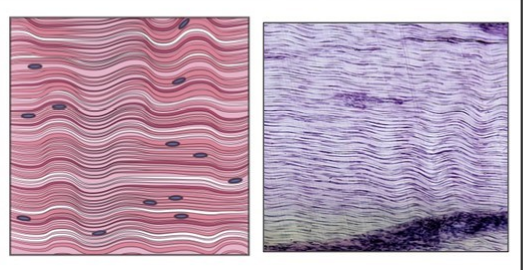

dense CT that has randomly arranged collagen fibers; strong when pulled in many directions


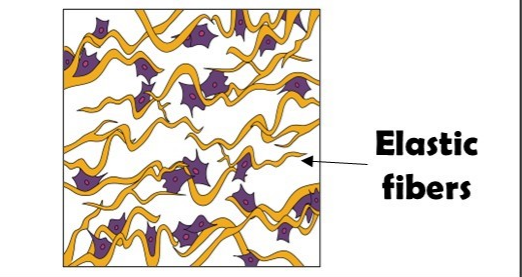
dense CT that has a high number of elastic fibers; allows tissue to bounce back after stretching

cartilage that is the most common type in the body; has many collagen fibers (firm!) in the matrix and appears glossy
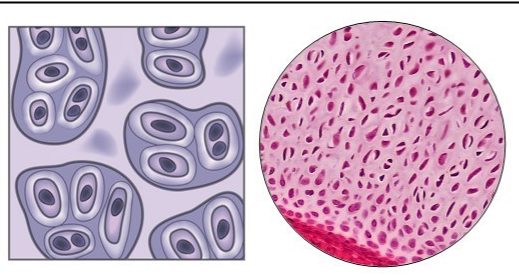

cartilage that contains many elastic fibers and is very flexible


cartilage that contains rows of thick collagen fiber, allowing it to resist compression and tension


also known as osseous tissue; rigid matrix due to abundant collagen fibers and calcium salts


only liquid body tissue, has a matrix known as plasma with no fibers within it


thin for diffusion


secretion and absorption
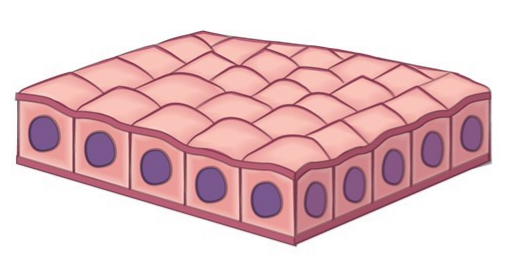

absorption and secretion of mucus
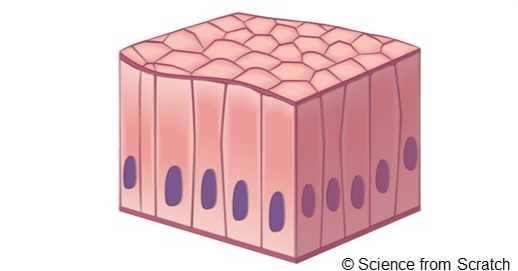


protection from abrasion (rubbing/friction)


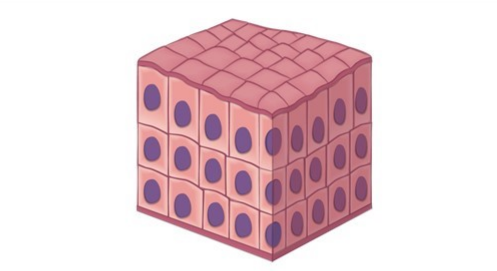

Propels particles forward through cilia or flagella, often found in respiratory passages.
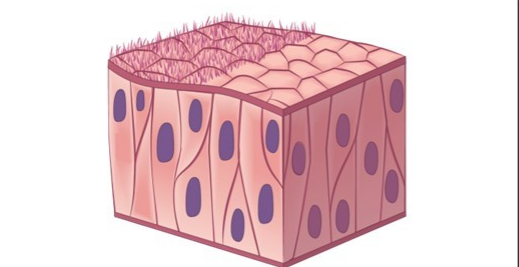
Cardiac Muscle

Skeletal Muscle

Smooth Muscle

Nervous Tissue (Neuron)
