Chapter 10.5: Proteins Are Sometimes Modified after Translation
 Call Kai
 Learn
 Practice Test
 Spaced Repetition
 Match
 Flashcards
 Knowt Play
1/3

4 Terms

Signal sequences
A sequence of amino acids that indicates the required location of the polypeptide after translation
For use in the endomembrane system, binding this to a recognizer halts translation until bound to the rough endoplasmic reticulum (RER) for protein storage while this is cleaved
For use in other organelles, another protein binds to this for direction
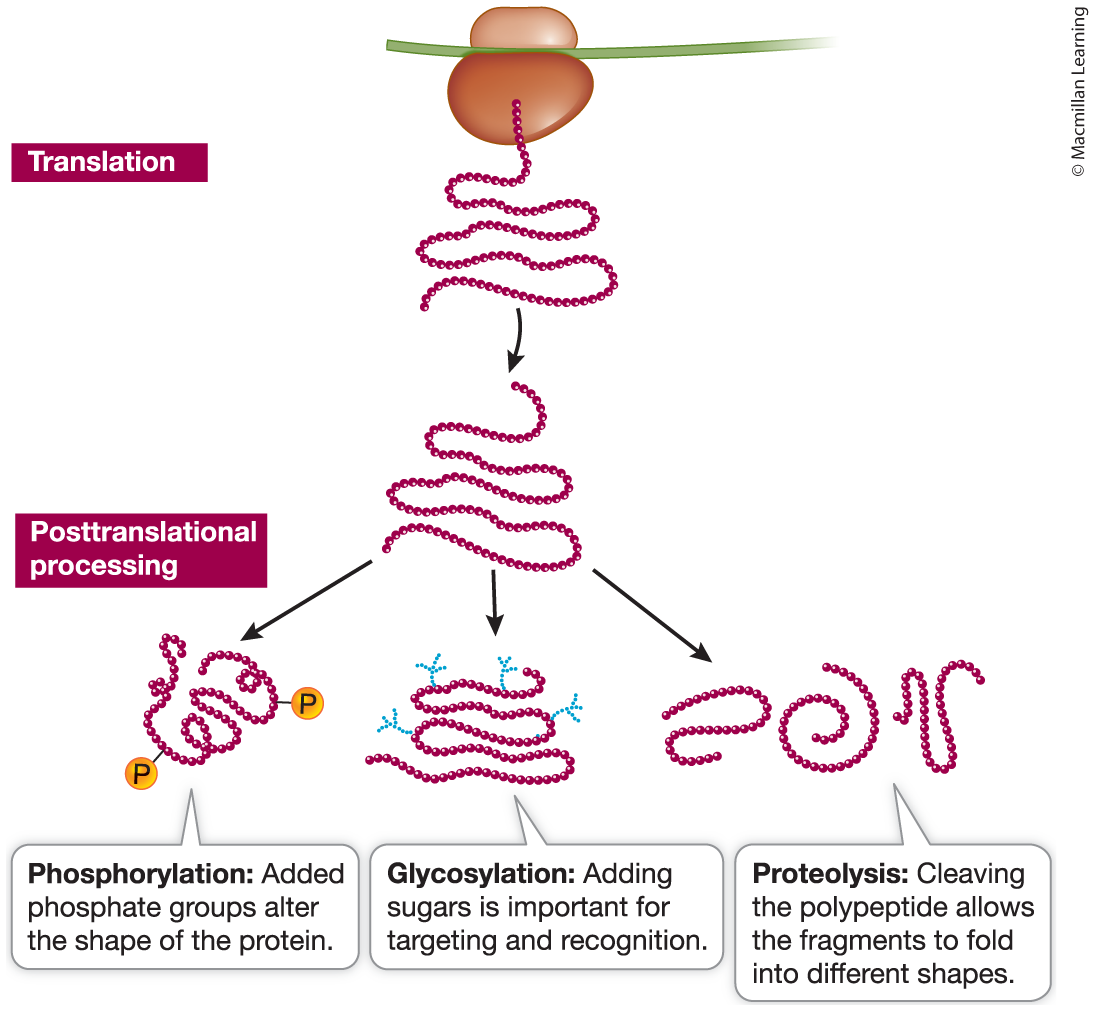
Proteolysis
A post-translational modification of a protein involving the cutting of a polypeptide chain by enzymes called proteases
Some proteins can be produced in this way before folding
Also seen with the removal of signal sequences or the initiator methionine
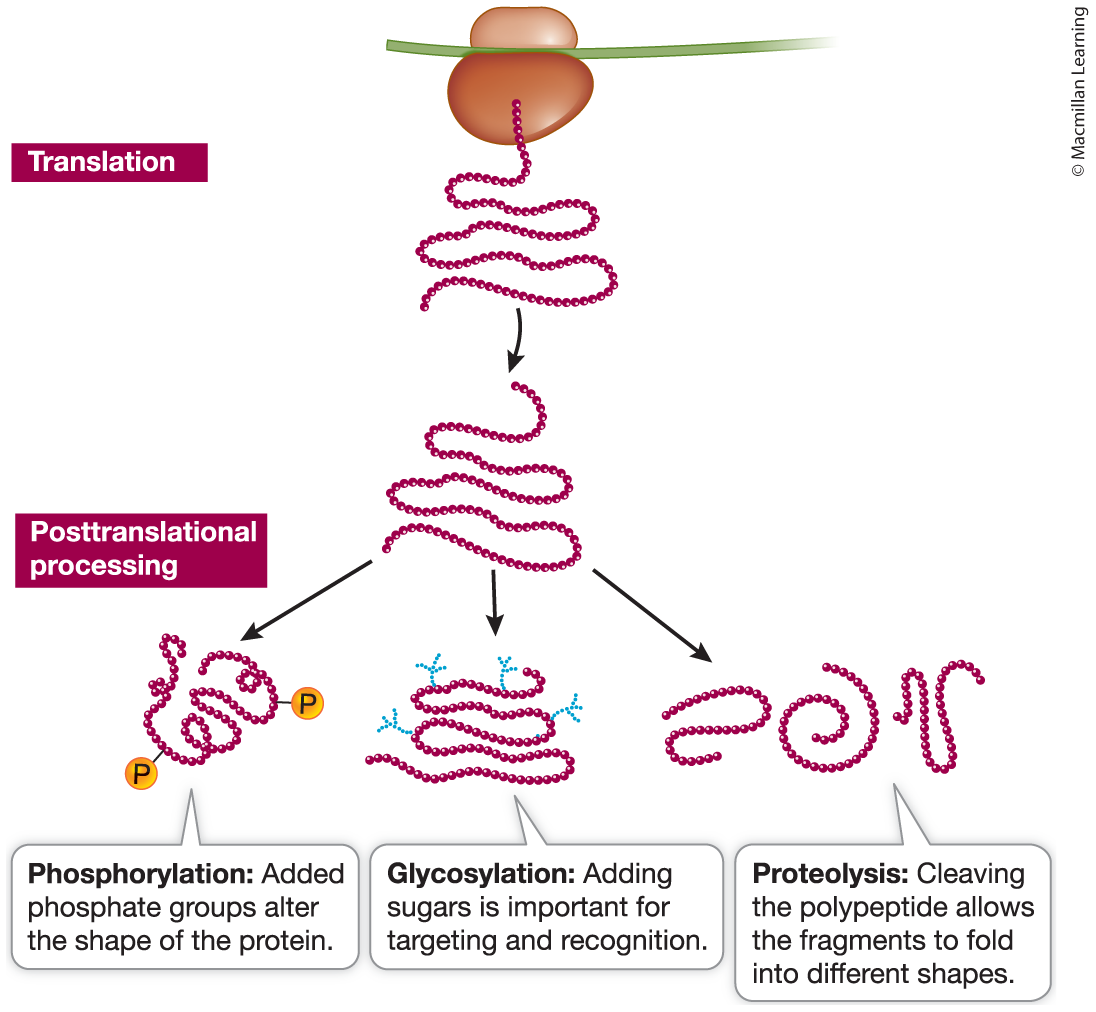
Glycosylation
A post-translational modification of a protein involving the addition of carbohydrates to form stabilized glycoproteins
These can aid in organelle and cell signalling, like on the surface of red blood cells

Photophosphorylation
A post-translational modification of a protein involving the addition of phosphate groups, catalyzed by protein kinases
These can change the conformation of the protein, exposing an enzyme’s active site or binding site for another protein
Is often reversible for protein regulation