Colonization
 Call Kai
 Learn
 Practice Test
 Spaced Repetition
 Match
 Flashcards
 Knowt Play
1/64

There's no tags or description
Looks like no tags are added yet.
65 Terms
What was Roanoke? (Present day location, important people, etc.)
England’s first attempt at a permanent settlement in North America BUT FAILED
Sir Walter Raleigh sponsored this attempt to establish a colony in North America
Present day North Carolina, however, the area was first named Virginia to honor Queen Elizabeth (the Virgin Queen)
settlement established on Roanoke Island by colonists in 1587
What is Roanoke known for?
Mystery
When Governor John White returned to England for supplies, he was unable to return to Roanoke Island for several years because of a war between England and Spain
he finally returned to Roanoke in 1590 but the settlement was abandoned. the only major clue was the word “CROATOAN” carved into a tree
Historians list several possibilities:
they joined or assimilated with nearby Indigienous ppl.
moved to another location
died from starvation, disease, or difficult conditions
conflict or attacks from within or from indigenous
a combination of listed or other factors
Nobody knows what really happened
What was Jamestown? (Present day location, important people, reason for settling, years, etc.)
the first SUCCESSFUL permanent settlement from the English
colonists came in search of gold
inspired by Spain whose saying was “gold, glory, and God”
supported by a joint stock company which allowed several investors to pool their wealth into a colony in homes that it would profit (but if it didn’t, all investors shared the risk)
if successful, stockholders would receive 4/5 of all the gold/silver found
king would receive remaining 1/5
1606 — King James granted a charter to the Virginia Company to explore where English settlers made a settlement before
settlers finally reached it in 1607 and named it Jamestown, VA after King James
John Smith was put in charge
What was the Jamestown settlement like? Explain conditions and the chronological order of events up to its success
extremely difficult
disease from contaminated rivers (waste)
Hunger b/c not enough food (lack of time b/c too busy looking for gold AND gentlemen meaning they were not used to working)
Most men were gentlemen —- lacked working/living in harsh environment experience
By the winter of 1607, only 38 colonists remained
John Smith forced people to work (if they didn’t work, they didn’t eat)
also persuaded (trade, intimidate, etc.) natives to provide food
eventually John Smith left Jamestown (some say he was injured, others say he was kicked out)
by 1609 — 600 new people came to Jamestown
Powhatan responded to these increased numbers (and likely increased dependence) by killing livestock and destroying farms
MORE starvation since they no longer have help —- some even resort to cannibalism
Only 60/600 survived
The remaining 60 decide to leave Jamestown, but on the way they meet up with a ship full of new colonists who convince them to return to Jamestown and try again
There is strict new leadership that helps Jamestown focus
people were beaten or hanged for not working
John Rolfe introduces Tobacco to Jamestown
How did tobacco become such a huge industry in Jamestown, and what was it like for people? Who discovered it? Etc.
Introduced to Jamestown by John Rolfe
he mixed Brazilian tobacco with Native American tobacco which England went crazy for —> made tobacco into a HUGE cash crop for Jamestown
new growing industry = massive demand for laborers/workers
led to the indendured servants system/headright system
Anyone who paid for their OWN passage or someone else’s passage to VA would get 50 acres of land (they really needed workers and had plenty of land since before it was only 60 people living in Jamestown). Immigration boomed
Since wealthy ppl. could afford to bring ppl, over, they really profited from the headright system. They got many “plantations” from bringing people to VA
Indentured servants — the ppl. from England who came to work on the plantations for a set amount of time in exchange for their paid passage to the colonies
had to work to pay off these debts
usually lower class ppl. as they couldn’t afford their passage
How did the growing economy in VA encourage the use of slaves?
Tobacco became used as a currency in VA
1,000 pounds for indentured servant
3-4x that for a slave
Since ppl. became so wealthy from the tobacco industry, it led to a decline in indentured servants and an increase in slave populations
Slaves had less rights and worked more
How did Jamestown fail?
Jamestown desired more land and fought with Native Americans
Natives didn’t understand the English concept of landownership/buying land— they didn’t have a word for it. They thought the English were paying to live alongside them rather than as private property
English law forbade intermarriage (unlike the Spanish & French) which only made them even more separate and fostered bad relations
unlike the Spanish & French who likely benefited from the close relationships marriage gave
The English used the excuse of Powhatan hostility to excuse their actions of fighting the Natives
Settlers kidnapped children and burned Native American villages in retaliation
Chief Opechancanough of the Powhatan tribe planned an attack that killed 340 colonists and led to troops being sent in
the VA company went nearly bankrupt after sending in troops and supplies to retaliate
King James was angered and revoked the charter given to the VA company and made VA a royal colony (aka under direct control of the King)
he sent in an English army & more colonists
By 1644 there were 10,000+ English and Powhatan numbers declined
What were the causes to Bacon’s Rebellion?
many of the then current free white men in VA were former indentured servants who worked for their freedom
this meant they were often too poor to buy their own land and thus had no say in laws/politics as only free, landowning men (and thus rich men) could have a say in laws/politics or even have rights
they were excluded from society physically as well— forced to live on the cheaper outskirts which was very rural and on the frontiers meaning they had LOTS of fights with the Natives over land
Sir William Berkley was made Royal Governor of VA and he levied (imposed) high taxes — looked out for the rich and alienated the poor
Financial War — a war between the settlers and Native Americans broke out in which settlers pleaded for help but got none
Berkley didn’t want to take away funds from plantations for war — the rich refused to finance the poor colonists war b/c it didn’t affect them
this was the last straw for the poor
What was the House of Burgesses?
the first democratically elected legislative body (in the west)
located in Jamestown, Virginia
Each county generally sent 2 representatives
they met with Virginia’s governor and appointed a council to govern the colony
colonists gained experience with representative government & self-government long before the American Revolution
Chronological Order of Events leading to the creation of the U.S.
House of Burgesses —> Colonial Self-Government (aka salutary neglect/hands off approach by the English) —> American Revolution
Explain Bacon’s Rebellion
Nathaniel Bacon — hated the native Americans and the wars, former friends with Berkley
he gathered a group of settlers to fight the Native Americans on the frontier land aka the land which was close to the Natives
But Berkley declared the “army” illegal
Bacon’s army was angry and marched on Jamestown to complain about the lack of representation in the House of Burgesses (VA’s colonial legislature) as the poor settlers had no representation but paid heavy taxes
No taxation without representation
Bacon’s army burned the town and created chaos
Bacon died a month later and Berkley returned to Jamestown and took down the now leaderless rebels
Explain the impact of Bacon’s Rebellion
It attracted King Charles’ attention and he criticized Berkley and recalled him to England where he was set to meet with King in person, but he died before he could
it exposed the growing power of former indentured servants (which will eventually lead to the slave trade which replaced the indentured servants jobs)
losses for Natives — the Natives are increasingly getting attacked/fought with
tighter royal control (as the King tries avoiding chaos he puts a stronger “leash” on the colonists which in turn means less autonomy for the House of Burgesses — their local government)
Stark contrast to New England colonies
What were the New England Colonies?
Massachusetts
New Hampshire
Rhode Island
Connecticut
What were the Pilgrims?
Pilgrim — a person who journeys to a sacred place for religious reasons
they wanted to find a place to practice their own religion without persecution (hostility/ill-treatment especially b/c of race, political or religious beliefs)
Context for colonialism/U.S.:
after the Protestant reformation, King Henry VII broke from the Roman Catholic Church to make the Church of England/Anglican Church (b/c he wanted to divorce his first wife and the Pope said no)
Church of England was very similar to the Catholic Church
at this time it wasn’t protestant but many ppl. in England wanted a Protestant church (growing religion)
However there was no freedom of religion back then in these European countries
so Protestants/those with different beliefs were heavily persecuted in these European countries and sought refuge elsewhere
What were Separatists?
Pilgrims because they had broken from the Anglican Church
Pilgrims were the most radical of the Puritans (meaning that Pilgrims were a type of Puritan, but not all Puritans were Pilgrims)
they went to the Netherlands where different religions were more tolerated
What was a Puritan?
Protestants who wanted to “purify” the Anglican Church of all Catholic traditions/rituals and basically make it more/fully Protestant
What was Plymouth Colony? (Story, known for, etc.)
the land where the Pilgrims reached
Pilgrims’ original goal was to reach Virginia and settle in Jamestown, but their ship landed in Massachusetts around Cape Cod, and they decided to stay instead of traveling more
they signed the Mayflower Compact to avoid causing chaos as their original charter was no longer valid
Mayflower Compact — the first governing document in the colonies
“just and equal laws… for the general good of the colony”
pledged total loyalty to the King but agreed to self-govern as they saw fit in their new land
Like Jamestown, the colony was able to survive with the help from the Native Americans
there was a peace treaty signed between them
Natives taught them to grow crops and had a celebration at the end of fall — Thanksgiving
What was the Great Migration?
While some Pilgrims left/starting new settlements, this is what was happening in England:
Some Puritans became Pilgrims and wanted to settle colonies, while other Puritans stays in England hoping that the church could still reform
However the English monarchy feared reform as they thought it would lead to political reform (and the rich/safe guaranteed monarchy want to stay in power)
Puritans were facing economic issues as well as their religious issues
So eventually in 1630 over 40,000 Puritans left England for the Americas —- THIS is called the Great Migration
Most Puritans ended up settling in Massachusetts or the West Indies (Caribbean/South America)
1642 — England: a Civil War broke out between the Puritans vs. Royalists (supporters of the crown) and the Puritans won
What was Massachusetts Bay Colony? (how it came to be and way of life + its name)
a group of wealthy Puritans received a charter to set up a colony in Massachusetts
they didn’t want to cut ties with the Anglican Church but intsead wanted to inspire others
they believed they had a contract/duty from God to build a society of Christian faith
they were not allowed to violated English law, but they could govern how they saw fit
New England Way (strict rules in Massachusetts Bay to keep order):
Relationship/working together between the Church and state
Religion was VERY important
Education prioritized and eventually led to college for ministry
What was New England Life like?
20,000 colonists were living in Massachusetts Bay Colony by 1647
full FAMILIES with women & children came over — different from Jamestown which was made from only men at first
this was because Puritans heavily believed that families were essential to a stable society
Very traditional beliefs: Men = providers/farmers, Women = household + caretakes (cooking, making soap, candles, clothes, etc.)
Large families — 6 or more children
Plentiful food
No diseases b/c the cold was too strong and bacteria couldn’t survive
People lived long lives
Education was very important (especially religious education)
Church and state intertwined
Many towns and cities formed that exist today
Commercial economy — meaning heavily dependent on industry as the environment/climate was much too cold/bad for farming
Who was John Winthrop?
the first governor of Massachusetts Bay Colony
wanted to create a model new society
he used the metaphor “City upon a Hill” from the Bible in a sermon delivered on the Arbella — the ship in which the Puritans left on — as it refers to a beautiful ideal society as explained in the Bible
What was the gov of Massachusetts Bay Colony like?
gave right to vote to not just stockholders but to all adult white males belonging to the Church which included 40% of the colony’s men (pretty large standard compared to who could vote in Europe
General Court — New England’s first legislature was created here
What was Industry like in the New England colonies?
farming NOT important b/c it was too difficult (rocky soil, too cold)
instead, they only farmed enough to feed themselves but no more
Fishing, trading, Ship building, Lumber — MAJOR industries
Fish, grain, and lumber sold to France, Spain, and England
excellent harbors and access to the Atlantic Ocean
led to development of important port cities, especially Boston
Its commercial economy/industry led to it become very urban (more than the South which was very rural)
Why was education important in New England?
so people could read the Bible
Who was Anne Hutchinson?
a woman who was arrested b/c she was so outspoken about the Church/Puritans
she believed people should read the Bible for themselves and that NO ONE not even the Church could/should need to interpret it for them
Went to Rhode Island to escape MA Bay Colony as she refused to follow the Puritan way of life but was killed
Worked as a nurse, very devoted to Bible studies and teaching/talking about sermons from the Church
She was supported/had a following of women and merchants who were also not happy with life in MA Bay Colony
How was Rhode Island formed? What is it known for?
1636 — Roger Williams was a MA Bay Colony civilian who didn’t like how it was being run
He spoke out against taking Native land without paying them for it
Also believed the business had no right to punish settlers for their religious beliefs — he believed everyone should worship however they saw fit
He fled from MA Bay Colony after he questioned Puritan ways and was ordered to be arrested/sent back to England
“Radical”/Anti-Puritan beliefs:
Believed in separation of church and state
Believed in buying land from Native Americans
Religious freedom
So he formed Rhode Island which gave its people these rights:
separation of Church and state
the land was bought from Natives/its ppl. had to buy land rather than just taking it
guaranteed religious freedom/no persecution for beliefs/ways of worshipping
THE FIRST COLONY TO RECEIVE RELIGIOUS FREEDOM
How was Connecticut formed? What is it known for?
formed by Thomas Hooker (previous member of MA) who didn’t like how it was being run
he and his followers left to settle in parts of Connecticut for more farmland
Wrote the Fundamental Orders of Connecticut
Fundamental Orders of Connecticut
first WRITTEN constitution in the colonies — 1639
had “Consent of the governed” — meaning people have a say in government
emphasized individual liberties
What is Salutary Neglect/How and why was it enforced by GB?
Salutary — beneficial
Neglect — ignoring/leaving something alone
Basically GB’s unofficial hands-off approach regarding the American colonies
GB left the colonies alone
even when they passed strict laws like the Navigation acts meant to enforce mercantilism and control trade, they looked the other way when colonists smuggled goods or traded with other countries
no direct taxes
Britain let the colonists self-rule/regulate with their own elected assemblies (Virginia - House of Burgesses, Massachusetts - General Court, etc.)
Why?:
too difficult because GB was so far away
profitable — as long as they were $$$, Parliament figured "if it ain’t broke, don’t fix it”
eventually changed***
What conflicts with the Natives did the New England Colonies face?
Natives saw their way of life ending due to the arrival of settlers/new people
Natives didn’t understand the concept of buying land and thought the Europeans were paying to use the land for a limited time but the Europeans saw them as treaties for owning the land permanently
Natives were way more dependent on the land than colonists b/c they didn’t really settle
For every acre a colonial farmer needed, a native needed 20 for hunting, fishing, and agriculture
difficulty communicating b/c of different languages
How did conflicts with the Natives in the New England Colonies escalate?
Pequot War of 1637
Pequots (natives) decided to take a stand against the settlers
the settlers formed an alliance with the Narragansett (enemies of the Pequot)
by the end of the war, the Pequot Nation was destroyed
all but a few out of 500-600 natives died
King Philips War of 1675
Natives were forced to work for the English and were getting fed up
they also had to obey Puritan laws
Natives used hit and run tactics/guerilla warfare to attack and burn the settlers’ villages
war lasted a little over a year — ending with food shortages, disease, and heavy casualties
Metacom (leader of the Natives) died during the war and the Puritans showed his head for 20 years in Plymouth
What was the cause/context of the French and Indian War? Why did colonists support GB?
France and GB were each other’s biggest rivals
BOTH wanted control of the Ohio River Valley
Colonists still wanted to be on the British’s side because:
they thought of themselves as British
wanted to expand west away from the now crowded seaboard

What was France known for when settling in parts of Canada/US or why?
known for fur trading and converting natives to Christianity rather than bringing families over or creating towns
got along better with the natives and relied on them to help them trap and trade fur
Compare France vs British colonies in 1754
New France — around 70,000 people
British colonies — over 1 million people
What were the first triggers/events of the French and Indian War?
French built Fort Duquesne (fort) at the point where the 2 rivers met to make the Ohio River valley
But British promised 20,000 acres of land in Ohio to wealth planters
the VA governor sent a militia (group of citizens who performed military duties) to evict the French
led by George Washington who was 22 at the time and Edward Braddock
THEY met a British fort (Fort Necessity) 40 miles from the French fort
they attacked the French and the French countered
openings of the French and Indian War
What was shocking about the French and Indian War that happened in loss for GB in 1755?
British Defeat at Fort Duquesne:
George Washington was serving as an aide to General Edward Braddock at the time who led nearly 1500 British soldiers to drive the French out of the Ohio Valley. BUT French soldiers and their Native American allies ambushed the British, forcing them to retreat
British Army’s Weakness Exposed — Washington/British army was seen as very competent and powerful so the defeat shocked colonists who had viewed the British army as nearly invincible. Then this singular loss was followed by more British defeats in 1755 and 1756. Clearly the colonists/everyone watching concluded that the British didn’t know how to not fight in straight lines

How did the King react to the British Losses at Fort Duquesne/the following series of English battles?
Humiliated/thought British pride was at stake
put William Pitt as a new leader in charge of the warfare strategy in government
British started winning more battles and received help from the Iroquois (Native American tribe) to join forces and take down the French and Natives
How did the British start winning and what happened as a turning point?
King George appointed a new military leader in government —> winning more battles + receive help from Iroquois (Native American tribe)
British Victory at Quebec (1759) — General James Wolfe led British troops up the cliffs outside Quebec under the cover of night, surprising French forces in an ambush
Turning Point in the War: British won a decisive victory on the Plains of Abraham (outside Quebec), weakening French control in North America — meaning they literally have no control left — and marking a major turning point in the French and Indian War
How did the French and Indian War end/what were the final land divisions?
1763 Treaty of Paris
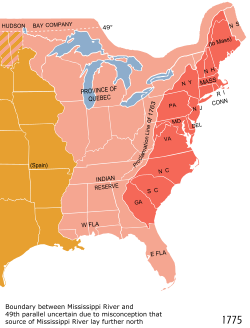
GB had land claims of all of North America that was east of the Mississippi River
Spain took Florida and French lands west of the Mississippi
Natives also lost as they sided with France in the war and found it much harder to get along with the British

How did colonists feel during/about the French and Indian wars (during/after what did they endure)?
After the war, England wanted to remove any British troops from the colonies
Now the colonists felt unprotected from (angry) Natives
Both parties disagreed on taxes levied to cover the wartime costs
Colonists had to pay for the large debt through the Stamp Acts which they despised
Before 1763, Britain practiced "Salutary Neglect"/hands off approach —leaving the colonies alone to tax themselves through their local assemblies (like Virginia's House of Burgesses).
Britain’s Perspective: It is fair to pass direct taxes on the colonies to pay off the war debt and pay for the British troops stationed in America.
Colonists’ Perspective: They had no elected representatives in the British Parliament in London. Passing direct taxes on them without their consent violated their traditional English rights.
What were the Stamp Acts specifically the Sugar Act? Causes?
Cause: After the French and Indian War, British faced nearly double its previous national debt and kept 10,000 troops in North America
To raise revenue, Parliament passed the Sugar Act (1764) which taxed certain imports and strengthened enforcement against smuggling
What caused Pontiac’s Rebellion (1763)?
Ohio River Valley had natives living there
these Natives feared that if the British settlers crossed the Appalachian Mountains their food supply would dwindle
What was Pontiac’s Rebellion of 1763?
Ottawa tribe leader, Pontiac, organized Native American resistance against British control after the French lost.
Natives captured 8 British forts and besieged/overwhelmed 2 others.
Disease + fighting began to weaken the Natives and affect their fighting capabilities —> most groups negotiated treaties by 1765
British also deliberately and intentionally distributed smallpox-infected blankets to Delaware leaders during peace negotiations
What was the Proclamation of 1763? What was the reaction?
proclamation by Britain to prevent further conflict with Natives
banned colonists from settling west of the Appalachian Mountains by establishing the Proclamation line
Colonists resented this restriction (after all they are the ones paying heavy taxes and is the land they JUST fought for - Ohio River Valley) and continued moving west onto Native American lines
clearly Britain was losing control/having a difficult time enforcing its policies
What was the Wrist of Assistance (1761)?
A court order used to enforce a judgment regarding the possession or transfer of real property
basically a permanent search warrant without probable cause that allowed British officials to search ships, buildings, and homes for smuggled goods
they wanted to prevent colonists from trading with enemies
Why were the colonies and Britain disagreeing/growing apart?
Proclamation of 1763 + Writs of Assistance
could not move west/expand acc. to GB even though the are paying heavy Stamp Act taxes to pay back the debt from the war AND are not even allowed to go on that gained land
now the British are invading the colonists’ personal lives/space by having the right to check their property without their consent — they don’t trust us
What were the Indigenous people like before colonization?
extremely diverse and adapted to their local environments
some were farmers, some migrated place to place, etc.
What was the Columbian Exchange?
the massive transfer of plants, animals, culture, people, and disease between the “Old World” (Europe, Africa, Asia, etc.) and the “New World” (the Americas) after Columbus “founded” it
Europe + Asia to North/South America: coffee, peach, pear, citrus fruits, olives, bananas, honeybees, sugar cane, onion, turnip, grapes, grains, livestock, disease
North/South America to Europe + Asia: pumpkin, turkey, squash, pineapple, cacao, peanut, potato, corn, beans, vanilla, peppers, cassava, avocado, etc.

What is Mercantilism?
the belief that a country’s power comes from it’s wealth
a “mother country” needs to export more than it imports in order to profit
ex: GB was a mother country that profited from the colonies which had industries and provided cheap raw materials and had to buy expensive manufactured goods ONLY from Britain — why Britain wanted to discourage trading between the colonies/other countries through the Writs of Assistance
What were the Navigation Acts?
series of laws passed by Parliament enforcing mercantilism
No country could trade with the colonies unless goods were shipped in colonial or English ships
all vessels must be operated by crews that were at least ¾ English or colonial
colonies could export certain products ONLY to England
almost all goods between colonies and Europe first had to pass through an English port
existed before but because of salutary neglect was not strictly enforced
following the French and Indian War and the Wrists of Assistance, they were finally enforced heavily
How did King Charles punish Massachusetts for not obeying the Navigation Acts (smuggling)?
Massachusetts seen as worst offenders (most radical/home to all radical ideas)
believed corporate charter meant they didn’t have to obey Parliament
King Charles revoked charter to make it a royal colony
What was the Dominion of New England?
Charles’ brother James took the Crown, he put the Northern colonies under a single ruler in Boston
Land from Maine to New Jersey was now called the Dominion of New England
Sir Edmund Andros appointed as ruler of DNE
“You have no more privileges left you, than not to be sold for slaves.”

Why were the colonists so angry following the Treaty of 1763/end of the war? (use: salutary neglect, mercantilism, navigation acts)
At first, before the wars, GB practiced salutary neglect with the colonies — meaning as long as the colonies were producing a profit, they turned the other way when the violated laws like smuggling or trading with other countries even though laws like the Navigation acts/belief of mercantilism prohibited it.
Mercantilism was what led to the formation of the colonies as great powers like GB wanted to export more than they imported, which they were able to do as the colonies gave them cheap raw material and exports, and also since technically these colonies were only supposed to buy/trade with Britain.
Navigation acts — series of laws passed by Parliament (British gov) to enforce mercantilism aka force colonists to trade only with Britain and on British ships (so they could control)
REALITY: most colonists IGNORED THIS as GB looked the other way when they smuggled/illegally traded with other countries. At first, GB didn’t really care since there were no major problems and since they were earning so much $$$
After the French and Indian War and Pontiac Rebellion, GB really cracked down on the colonists. They became way more hands-on with the colonists and let go of their previous salutary neglect strategy.
Proclamation of 1763 — prohibits colonists from settling west on the land GB gained from the French & Indian War (that they fought for!)
Stamp Acts — forcing colonists to pay heavy taxes to pay back the debt from the war
Wrist of Assistance — court order allowing British soldiers stationed at the colonies to search homes, ships, buildings, etc. for smuggled goods — basically a CRACK DOWN on previous laws that they used to look the other way with
Basically the colonists are furious at the fact that GB is focusing more on them/actually enforcing rules. They got used to the sense of freedom they had with salutary neglect and are already beginning to think of themselves/run themselves as an independent country/nation
What were the key differences between the 3 major regions of the colonies?
New England colonies — Industry
shipbuilding, fishing, timber, commerce, etc.
“urban”
Religious focused — all formed due to religious persecution and wanting some new religious focused society
Middle Colonies — Breadbasket colonies
grew massive amounts of wheat and grain and exported it
think: basically a mix of New England colonies and southern colonies
“suburban”
most diverse groups (Dutch, Germans, English, etc.) and religiously tolerant
Southern Colonies — farming
cash-crops and plantations
“rural"
plantations and very spread out — no need for shops/towns when every plantation basically produces everything it needs. Also plantations set near rivers so they have their own ports and can export anything they need to.
heavily reliant on indentured servants and later slaves from Africa
What were the specific colonies of the 3 major regions?
New England colonies:
Massachusetts
New Hampshire
Rhode Island
Connecticut
Middle colonies:
New York
Pennsylvania
New Jersey
Delaware
Southern Colonies:
Maryland
Virginia
North Carolina
South Carolina
Georgia
Explain New York’s history
Henry Hudson (English explorer sailing for the Dutch) found New York Bay and Hudson River is named after him
The Dutch West India Company founded New Netherland (which was a Dutch colony that is part of New York) to profit from the fur trade
Peter Minuit traded with the Native Americans for Manhattan which was named new Amsterdam
Dutch had no interest in democracy b/c the colony only existed for $$$ for stockholders
Governor Peter Stuyvesant
Slavery = common, Dutch West India Company was a leading slave trader
Common languages: Dutch, French, Flemish, Swedish, Danish, Finnish, and African tongues
Land was given from Charles II to his brother the Duke of York
New Jersey originally from this land but split off later
What were the Quaker Colonies?
Pennsylvania, New Jersey, and Delaware
What was a Quaker?
from Society of Friends
dissenters from the Church of England who experienced persecution
Pacifists — no violence ever
believed in total equality
experienced persecution as they refused to bow to nobles, tip their hats to the king, take oaths, pay taxes that would fund war, etc.
Explain Pennsylvania, New Jersey, and Delaware’s history
Meeting House was central to Quaker Life — where church/political matters were discussed
Women could fully participate in the meetings
Pennsylvania:
Charles II owed William Penn’s father a huge debt so Penn received a huge land grant in 1681. He wanted to use it for religious refuge an profit $$$
“Penn’s Woods”
Philadelphia = capital
Liberal government — religious freedom, no tax-supported church, good relations w/ native Americans, own representative assembly
advertised across Europe to attract many skilled artisans and farmers
“Keystone colony”
New Jersey:
split from New York by the king and owned by Quakers even before Penn
religious freedom and representatives
some consider it the first colony with trial by jury
Delaware:
came from remnants of New Sweden and fell under Quaker influence
part of Pennsylvania and did not become a separate colony until 1701 partly b/c Pennsylvania was landlocked (no bodies of water as borders) without it
What were the Middle Colonies like?
Pennsylvania, New York, New Jersey, and Delaware
Very diverse groups — English, Swedes, Dutch, Germans, Scots-Irish, French, Natives, enslaved Africans, etc.
Religions: Quakers, Mennonites, Lutherans, Dutch Calvinists, etc. — again very diverse
Colonies were known for diversity and tolerance — a “melting pot” - a middle mix of New England and the South
soil = fertile, easier to obtain land than in the New England or Southern colonies
“Breadbasket” — known for growing wheat, corn, and rye which fed colonists and were exported for a profit
Skilled trades but not major
Hudson and Delaware Rivers helped make Philadelphia and New York major ports
Thinkers like Benjamin Franklin — colonies = “crossroads of ideas”
Explain Maryland’s history
Cecilius Calvert (Lord Baltimore) received land between the Potomac River and Chesapeake Bay in 1632 as a refuge for persecuted Catholics, and he also hoped for $$$
He named it Maryland for Queen Henrietta Maria
most settlers came for economic opportunities as individuals rather than as families
mostly Protestant workers so Catholics became a minority
the assembly of Maryland feared Protestant restrictions so they passed the Act of Toleration (1649)
it granted religious freedom to all Christians
within a decade the Protestants swept Catholics out of legislature and religious strife followed
this act led to the First Amendment
Headright system — Virginia and Maryland gave planters 50 acres for every laborer they imported
Indenture contract — these workers who had their fares paid for by their master had to provide service for around 5 years
only about 40% of servants lived to finish their contracts
women faced harassment + pregnancy added years to their service
by 1660 the best land was claimed so any freed servants had to settle on western land which was worse and with the constant threat from Natives
Indentured servants made up a large population and most died from disease (life expectancy about 10 years shorter than in New England)
less schools than in new England
no real towns b/c everyone lived on self-sufficient plantations
(Chesapeake society was Virginian/Maryland society during this time period, very southern w/ rural, tobacco, plantations and slaves)
Explain the Carolina’s and Georgia’s history
Charles I was beheaded in 1649 and Cromwell ruled until 1660. Then Charles II came to power and the colonies founded under him were called the Restoration colonies
South Carolina
at first it supported the British West Indies and brought in the slave economy of the sugar islands
Rice was a major industry that brought in many planters and tens of thousands of slaves
Charlestown = port
Enslaved Africans made up a significant part of the population and the colony even tried enslaving Native Americans
North Carolina
earliest settlers were displaced former indentured servants from Chesapake who ran small tobacco farms
slavery existed but less than South Carolina
settlers felt looked down upon by Virginia and Charlestown elites
North and South split peacefully in 1712
Georgia
the last of the 13 colonies to be founded during the Enlightenment
James Oglthorpe and investors wanted a utopia for debtors to ease overcrowded prisons and give people a fresh start. Then King George agreed b/c Georiga could buffer the South Carolinian rice plantations from Spanish Florida
Oglethorpe’s plan:
no elected assembly
land divided (50 acres per debot which was NOT sellable)
banned slsavery
alcohol prohibitied
silkworms imported for mulberry trees
IT FAILED b/c:
land quality was unequal and settlers felt trapped as they couldn’t sell land
mulberry trees were the wrong type
alcohol ban was ignored openly
settlers demanded slavery
many fled to the Carolinas
charter revoked in 1752 and became a royal colony
What was like in the Plantation south like?
economy dependent on farming which was worked by slaves and indentured servants
cash crops: tobacco, rice, indigo, sugarcane
settlers came b/c $$$ profit was unavailable in England
estates passed to eldest son
Very strict and apparent class divisions
most were yeomen: farmers, servants, or slaves
very few were wealthy tidewater aristocrats w/ huge manors
Isolated plantations
no public schooling law like in New England
wealthy could hire private tutors (boys = fall + winter, girls = summer)
few cities, small merchant class, few lawyers
artisans often worked on plantations as slaves or servants
Malaria and yellow fever lowered life expectancy
fewer families migrated together than in the North
men outnumbered women 7:1 so women were highly sought after
marriages ended in death within 7 years which led to frequent remarriage and complex half-families
women had to run property but excluded from politics
female slaves and servants were often abused by aggressive masters
Explain Slavery: Origins, the Slave Trade, and Resistance
first enslaved person arrived in Chesapeake in 1619
“need” - planters wanted to shift from indentured servants to slaves b/c servants eventually earned their freedom and enslaved coudl not
Long-life servitude came when 3 runaway servants were caught and the 2 white servants had their terms lengthened while the African was sentenced for life
Slave trade: the growth of slavery in North America increased wit hthe slave trade in Africa in which captives were inspected, branded, and held in prisons until a ship could be filled
Middle Passage was the central leg to the transatlantic triangular slave trade where ships were extremely cramped, many died from disease, suffocation, or violence, some drowned themselves
Olaudah Equiano
Ibo from present-day Nigeria who first thought his captors were going to eat him
was flogged (beaten/sold) when he refused to eat.
later bought his freedom, settled in England, and became an abolitionist
Slave codes:
some colonies barred enslaved ppl. from meeting in large groups, leaving the plantation w/o permission, learning to read or write, or owning weapons. A slaveholder who killed a slave could not be tried for murder
Resistance:
some enslaved ppl. ran away or revolted
1739 in South Carolina, enslaved people killed 30 white colonists before the uprising was put down
Quakers and abolitionists opposed slavery but it existed in all the colonies, not just the South