Prenatal Genetic Screening
 Call Kai
 Learn
 Practice Test
 Spaced Repetition
 Match
 Flashcards
 Knowt Play
1/43

There's no tags or description
Looks like no tags are added yet.
44 Terms
congenital malformations
anatomical/structural abnormalities present at birth, cause 20% of perinatal deaths
causes of congenital malformations
genetic factors, environmental factors, multifactorial inheritance
teratogens
substance capable of causing abnormal structure in an embryo
sensitive period concept
certain structures are more sensitive to teratogens at certain times, a noxious event cannot influence development if development is completed
categories of teratogens
physical agents, chemical agents, maternal factors
physical teratogen examples
radiation, high heat (hyperthermia) over 38.9 Cme
mechanical teratogen examples
uterine abnormalities, oligohydramnios, amniotic bands
how often are congenital malformations caused by drugs/chemicals?
not often
chemical teratogen examples
alcohol, antithyroid drugs, coumadin, daunorubicin, DES
some effects of fetal alcohol syndrome
growth restriction, mental development issues, congenital heart defects, joint anomalies
what are some maternal factors that can negatively affect the fetus?
DM, sickle cell anemia, advanced age, hx of children w/ chromosomal disorders, exposure to teratogens
what congenital malformations can antithyroid drugs cause?
polydactyly & goiter
chromosomal abnormalities
genetic defects that can be diagnosed and identified microscopically
what are the typical effects of chromosomal abnormalities?
mental development issues, high mortality rates, multiple anatomic abnormalities
what are the different genetic anomalies that can result in genetic disease?
-abnormal # of chromosomes
-abnormal structure of chromosomes
-defects on 1 gene
karyotype
the complete chromosomes of a cell
photomicrograph
photo of the isolated karyotype
euploid
normal set of 23 pairs of chromosomes
aneuploid
too many or too few chromosomes
trisomy
an extra chromosome
triploidy
an extra set of chromosomes
genotype
genetic makeup of an individual
phenotype
physical expression of a genetic makeup
autosomal dominant
one parent is affected by the trait, its evident in every generation, probability of passing it is 50%
autosomal recessive
both parents are unaffected by the trait, trait may not be evident every generation, recurrence risk for offspring after presentation of the trait is 25%
genetic screening
performed between 11.5-13.5 wks, 2 parts: nuchal translucency & maternal blood test, detects 85% of chromosomal disorders
what is the advantage of including nasal bone measurements in genetic screens?
it increases detection of trisomy 18 or 21
what is the next step if abnormal results are found during a genetic screen?
chorionic villus sampling is offered

nuchal translucency screening
measures the fluid at the back of the fetal neck, taken between 11.5-13.5 wks, calculates risk of trisomy 18 or 21, measurement is taken inner to innera
abnormal nuchal translucency findings
NT > 3mm, if abnormal measurement is found w/ a normal karyotype its assoc w/ heart defects

normal or abnormal?
abnormal
PAPP-A & beta hCG screening
produced by trophoblastic tissue, low levels indicate abnormal implantation, placental placement, or risk of trisomy 21
non-invasive prenatal testing NIPT
serum screening test that indicates if theres an increased risk of trisomy 18, 21 or 13, performed after 10 wks, offered to pts w/ 1 fetus and risk factors for aneuploidy
chorionic villus sampling CVS
performed between 9-12 wks transcervically or transab, trophoblastic cells are taken for culture and karyotyped, diagnosis can be made earlier than amniocentesis
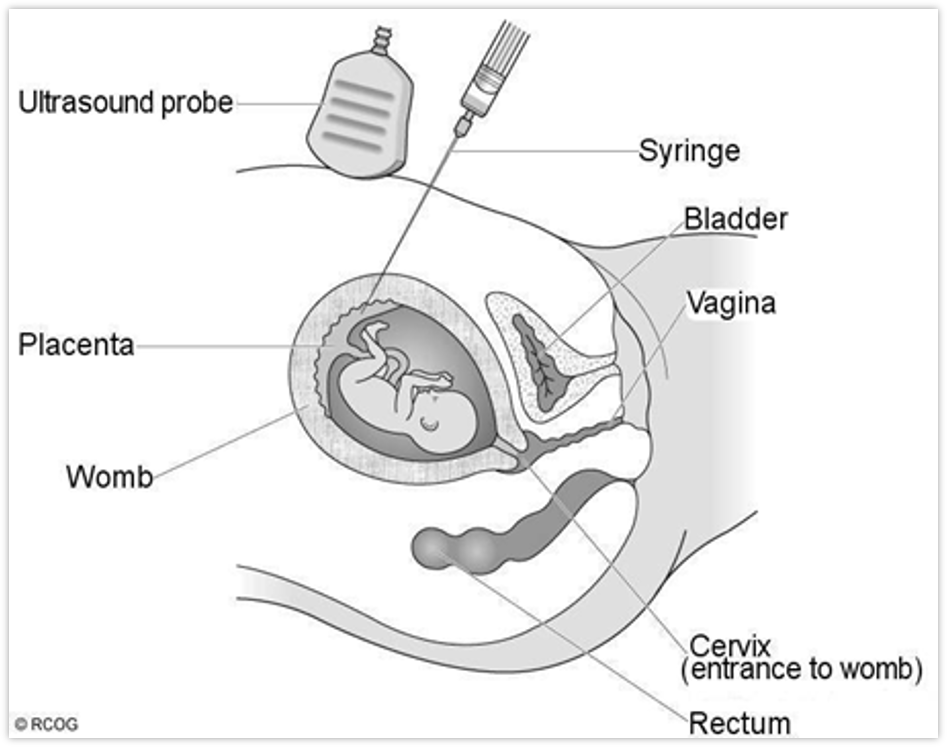
why was this CVS performed transabdominally?
because of the position of the placenta. transabdominally allowed the best access with least interference to the fetus
quad/triple screen
aka multiple-marker screening, screening for biochemical markers for fetal abnormalities, includes: MSAFP, hCG, unconjugated estriol uE3, inhibin-A
what conditions can the quad screen diagnose?
open neural tube defects, trisomy 21 & 18
alpha fetoprotein AFP
glycoprotein produced in the fetal liver that crosses the placental into the maternal serum
what are elevated levels of AFP associated with?
incorrect dates, multiple gestations, open neural tube defects, abdominal wall defects, hemorrhaging, placental chorioangioma, maternal HCC
what are decreased levels of AFP associated with?
incorrect dates, chromosome abnormalities, fetal demise
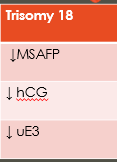
in trisomy 18 what will the lab values look like?
decreased MSAFP, hCG, uE3
in trisomy 21 what will the lab values look like?
decreased MSAFP & uE3, elevated hCG & inhibin-A

amniocentesis
evaluates the amniotic fluid level of AFP & acetylcholinesterase levels for chromosomal karyotyping, usually performed at 16 wks
what genetic screenings can be performed during the 1st trimester?
nuchal translucency, NIPT/cell-free DNA testing, beta hCG, PAPP-A, CVS