enzymes
 Call Kai
 Learn
Learn Practice Test
 Spaced Repetition
 Match
Match Flashcards
 Knowt Play
1/24

Earn XP
Description and Tags
Name | Mastery | Learn | Test | Matching | Spaced | Call with Kai | Chat |
|---|
No analytics yet
Send a link to your students to track their progress
25 Terms
Enzymes:
globular proteins with tertiary or quaternary structure
organic (carbon-based) catalysts.
role is to increase the rate of (catalyse) biochemical reactions.
Examples of Enzymes (ase)
uLipase
uAmylase
uMaltase
uRNA polymerase
how enzymes work?
work on specific molecules called substrates by binding to them. Each enzyme has a specific structure to match a specific substrate/s.
work by either building molecules or breaking down large molecules into smaller ones.
not changed in these reactions
example of an enzyme reaction
uLipase + Fat à Fatty acids + Glycerol
uLipase is the enzyme.
uFat is the substrate.
uFatty acids and glycerol are the products.
The Active Site
specific region on enzymes
where the substrate binds and where catalysis occurs
complex 3D shaped groove or pocket at the surface of the enzyme. Substrate modification occurs at the active site.
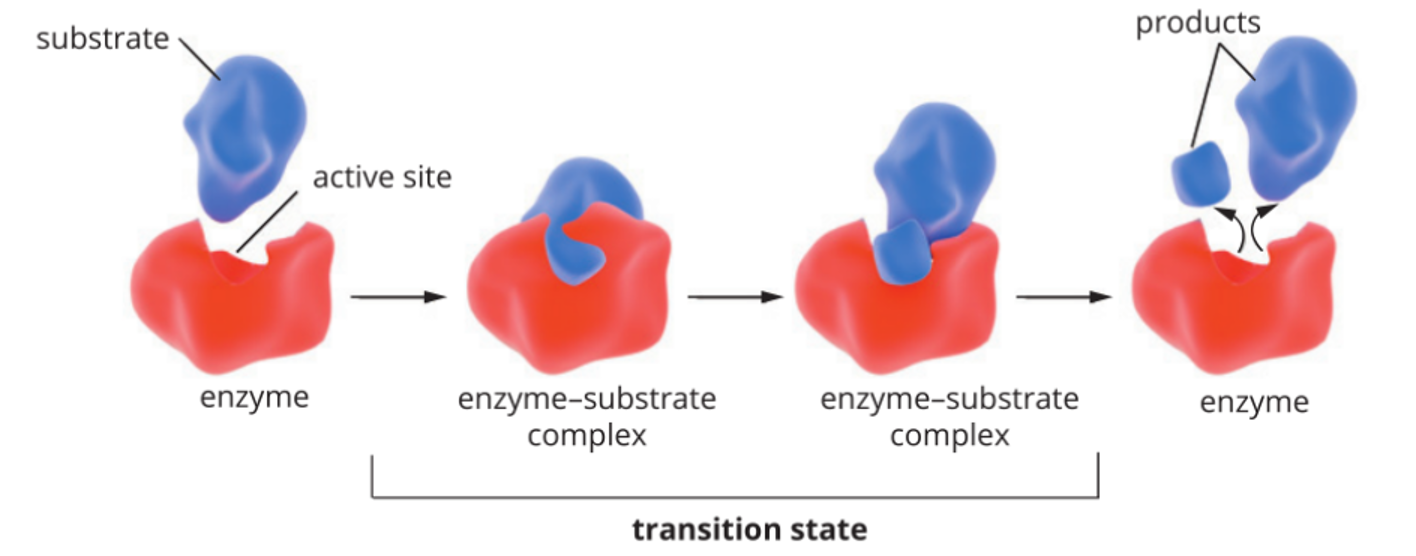
When a substrate binds to an enzyme’s active site, an enzyme-substrate complex is formed.
Models of Enzyme Activity
Lock and Key Model:
usubstrate is simply drawn into a closely matching cleft on the enzyme molecule.
uThe substrate shape must be compatible to fit and be reacted upon.
Induced Fit Model:
uMore accurate
uActive site is flexible and capable of changing its shape in order to conform to the shape of substrate and achieve a tighter fit.
uThis is called a conformational change.
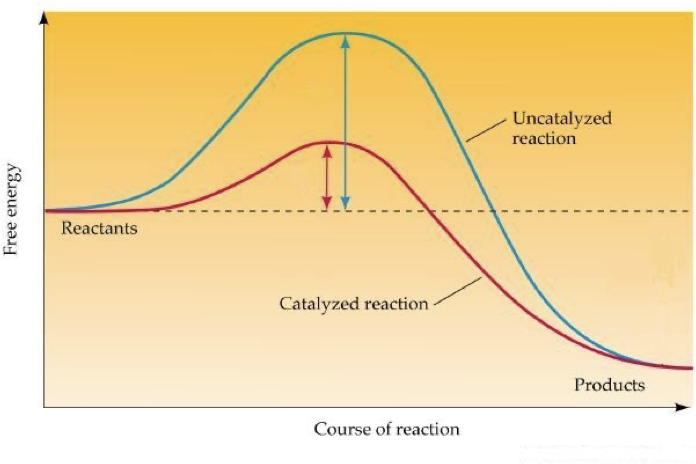
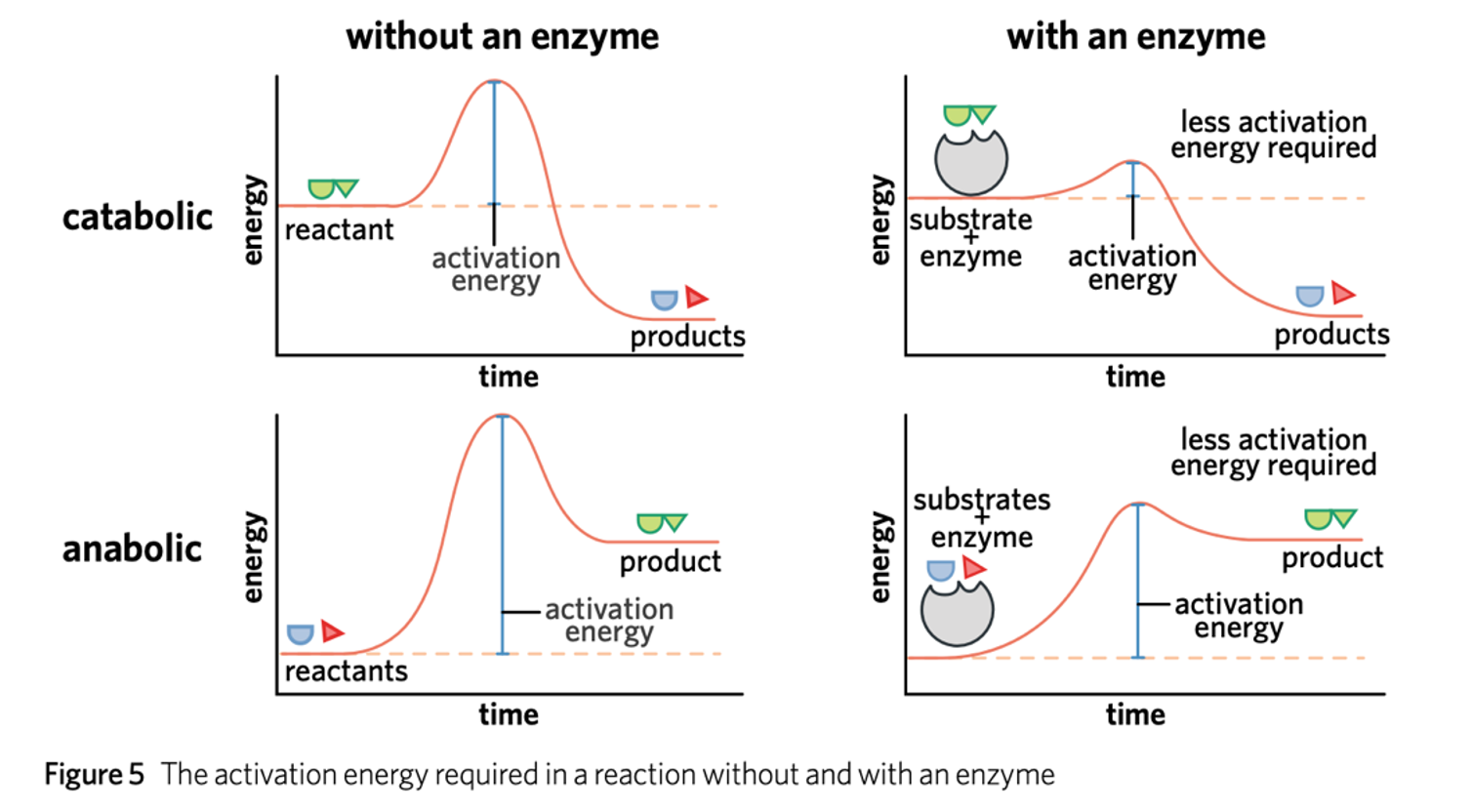
Activation energy:
energy required to get a reaction started.
Enzymes speed up reactions by influencing the stability of bonds in the reactants.
may also provide an alternative reaction pathway, thus lowering the activation energy needed for a reaction to take place.
Catabolic Reactions
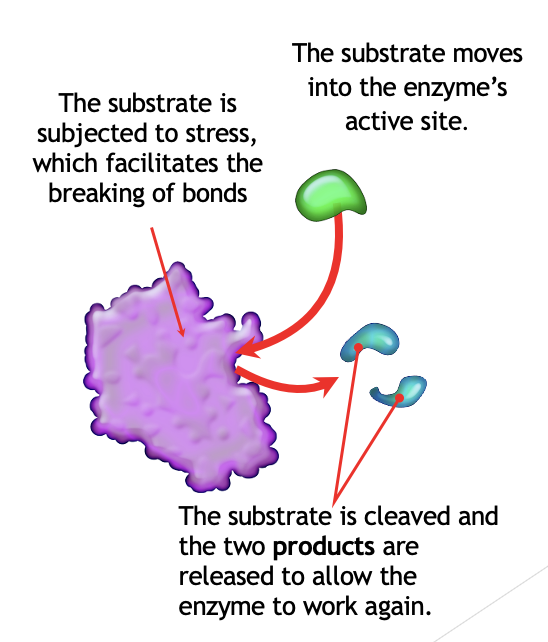
u breakdown of larger molecules into smaller components, with the release energy (called exergonic reactions).
u A single substrate molecule is drawn into the active site and its bonds are broken, causing the substrate molecule to break apart to become two separate molecules.
(digestion and cellular respiration)
Anabolic Reactions
uSmaller molecules are joined to form larger ones, an input of energy is required (called endergonic reactions).
uTwo substrate molecules are drawn into the active site and new chemical bonds are formed resulting in the formation of a single molecule.
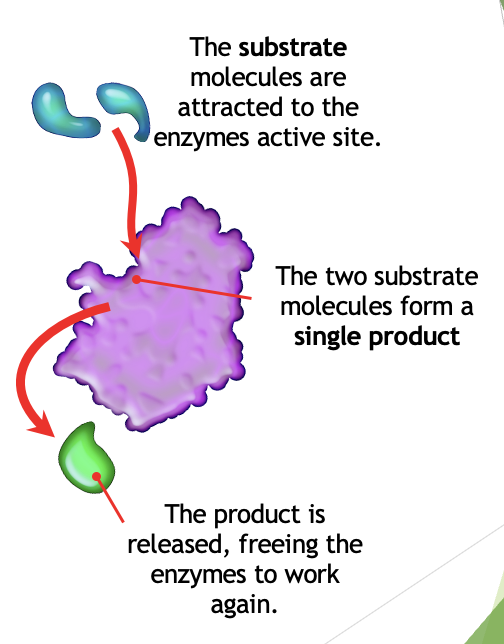
(protein synthesis and photosynthesis)
Catabolic and Anabolic Reactions
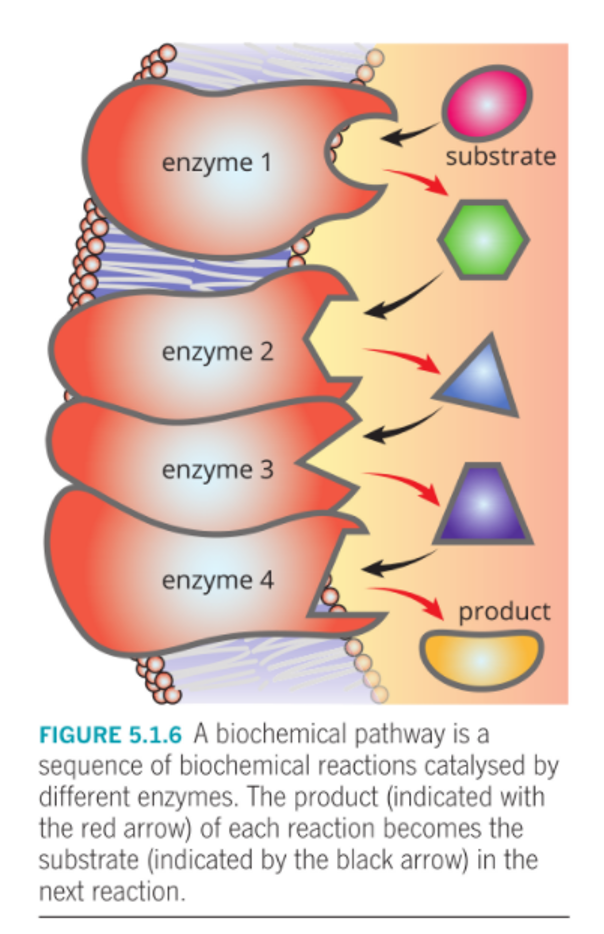
Enzymes Regulate Biochemical Pathways
-each reaction is catalysed by a specific enzyme and the product of one reaction becomes the substrate in the next reaction.
(Photosynthesis and cellular respiration)
What Affects Enzyme Activity?
uTemperature
upH
uEnzyme concentration
uSubstrate concentration
uCofactors
uInorganic ions
uOrganic molecules (coenzymes)
uInhibitors
uCompetitive
uNon-competitive
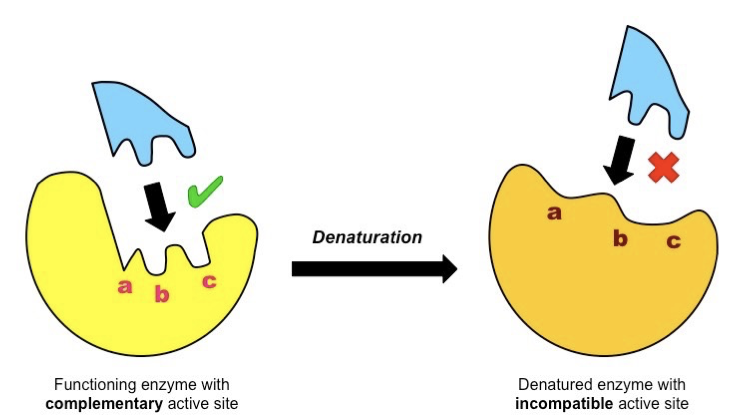
Denaturing Enzymes (irreversible
HEAT
EXTREME pH
CHEMICALS
u amino acid chains unravel, destroys the shape of the active site.
enzyme can no longer act as a catalyst.
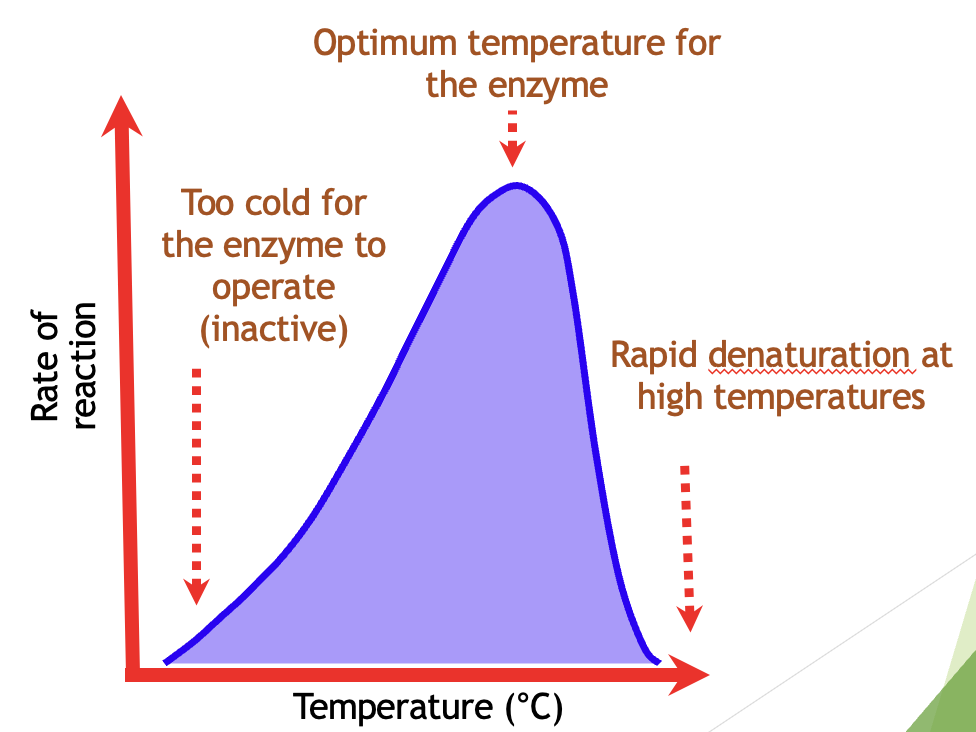
Effect of Temperature
uEnzymes often have a narrow range of conditions under which they operate properly.
little activity at low temperatures (low kinetic energy).
Enzyme activity increases with temperature, until the temperature is too high for the enzyme to function= enzymne denaturation occurs
Effect of pH
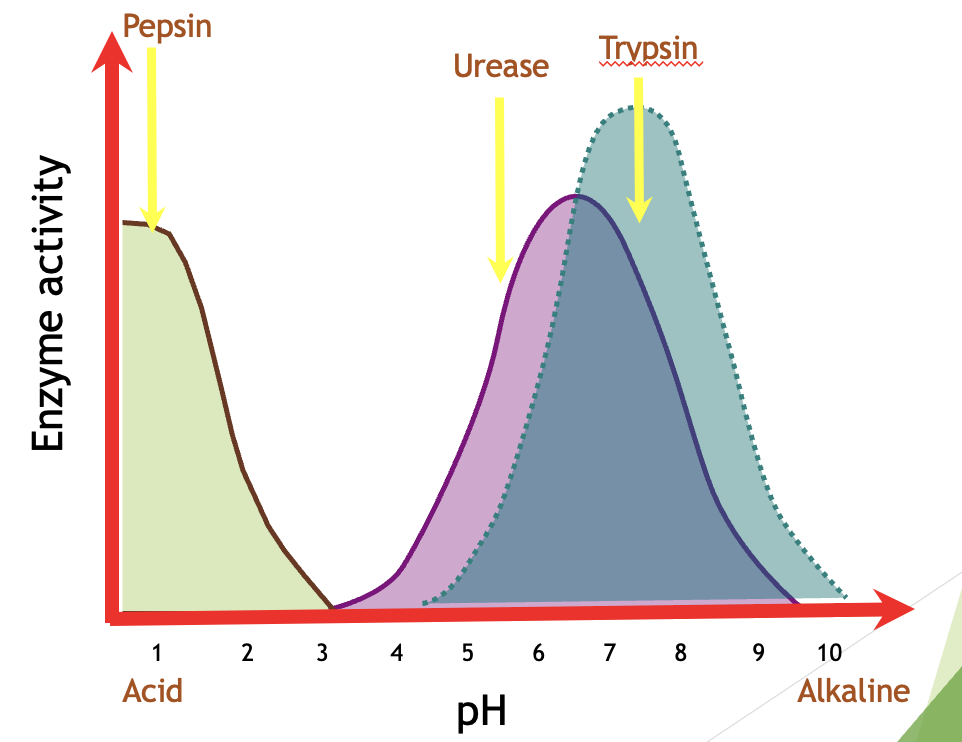
u Extremes of pH (very acid or alkaline) away from the enzyme optimum can result in enzyme denaturation.
suited to perform in these specialist environments.
Effect of Enzyme Concentration
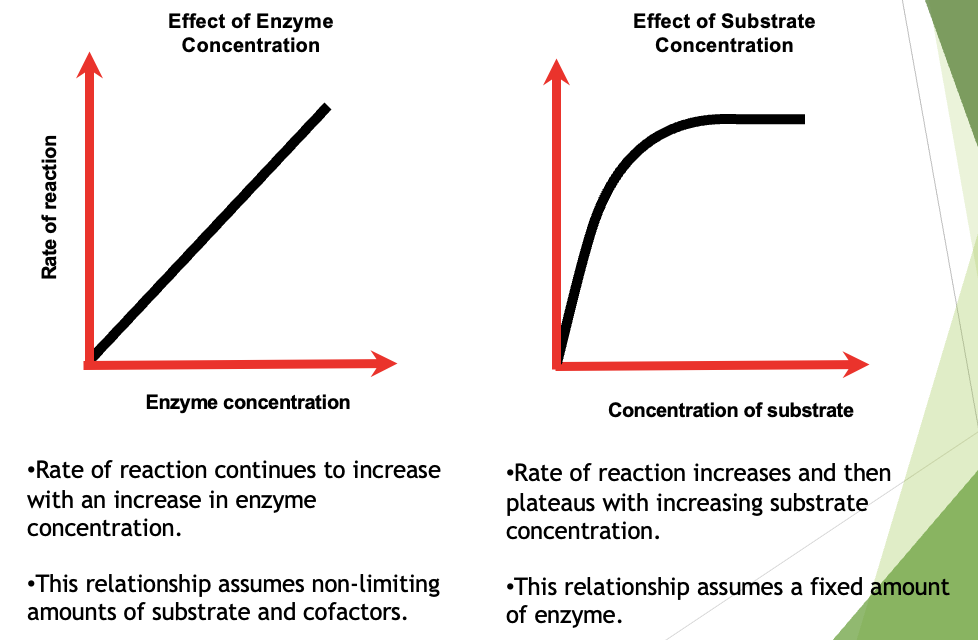
u rate of reaction depends on the rate of formation of enzyme-substrate complexes.
u As the enzyme concentration increases, the number of available active sites also increases.
u As long as there is an excess of substrate molecules, there will be increase in the rate of reaction.
u If there is not an excess of substrate molecules, then eventually the rate reaches a maximum speed.

Effect of Substrate Concentration
uAs the substrate concentration increases, the rate of reaction will increase.
uWhen the enzyme is saturated with substrate, the rate of reaction will no longer increase.
uAll of the enzymes have substrate in the active site, reaction can not go any faster.
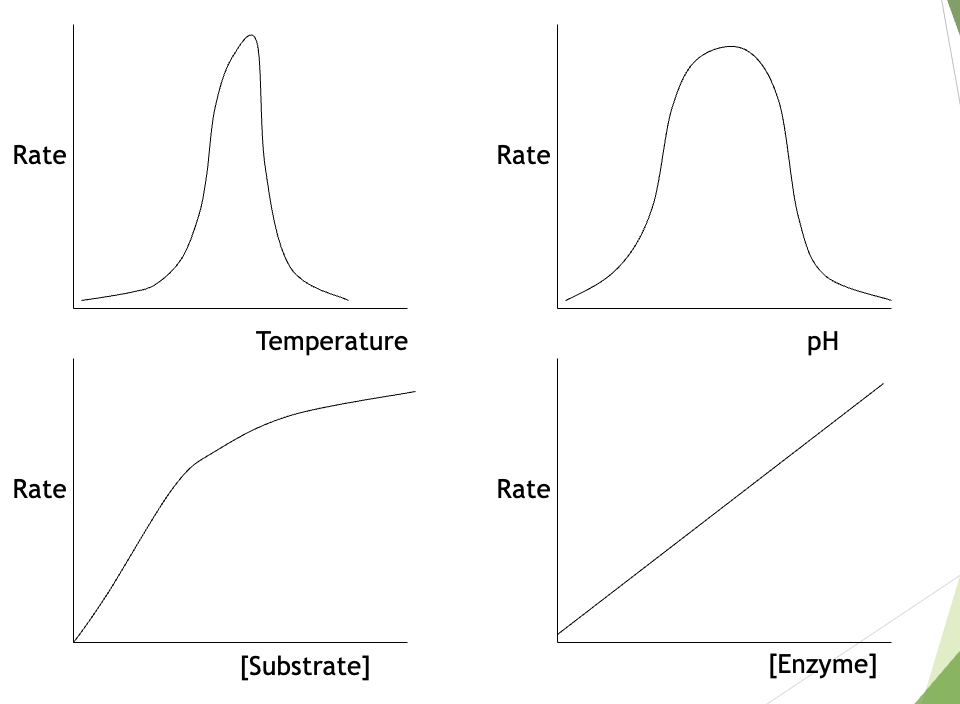
Factors Affecting Enzyme Reaction Rates
Enzyme Cofactors
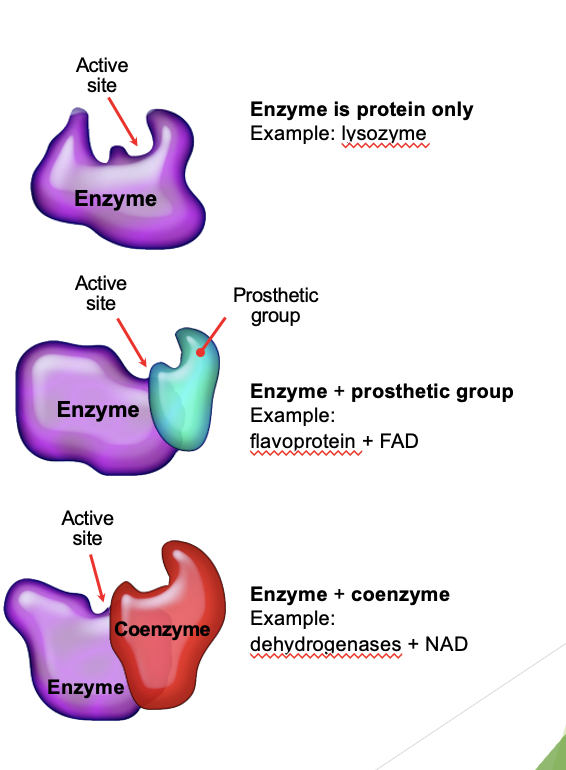
uA cofactor is a molecule that assists enzyme functioning.
uSome enzymes require cofactors to be active.
uCofactors can be: A non-protein component of an enzyme like inorganic ions (e.g. Ca2+, Zn2+, Mg2+). Organic molecules known as coenzymes.
Cofactors can be permanently attached in the active site, in which case they are called prosthetic groups.
Coenzymes
uCoenzymes are a subset of cofactors that are organic, non-protein molecules.
uIn coenzyme assisted reactions:
uthe enzyme remains unchanged, but the coenzyme is changed (structurally altered)
uthe coenzyme binds to the active site, donates energy or molecules and cannot be reused immediately
uonce the coenzyme leaves the active site, after the reaction, it is recycled by accepting more energy (it can then go on to assist more reactions)
Examples of coenzymes needed for photosynthesis: ATP and NADPH
Examples of coenzymes needed for cellular respiration: ATP, NADH, FADH2 and acetyl CoA
Enzyme Cofactors
Enzyme Inhibition
molecules that bind to an enzyme and affect its function.
uWhen an inhibitor is bound to an enzyme, the enzyme can either no longer catalyse its specific reaction, it is functioning is reduced.
uTypes of inhibitors include: Competitive, Non-competitive
uInhibition can be: Reversible (weak attractions), Irreversible (form covalent bonds, denature, binding of poisons)
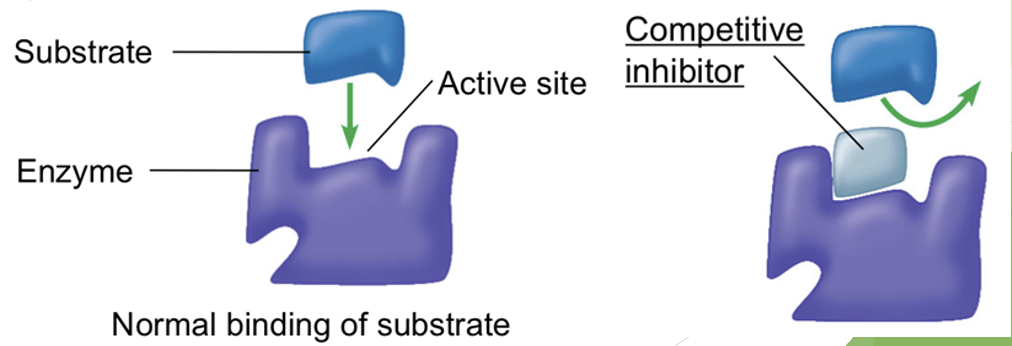
Competitive Inhibition (reversible)
u a molecule that competes with the substrate for binding to the enzyme’s active site.
uAs its shape is complementary to the active site, it binds temporarily to the active site, preventing an enzyme-substrate complex from forming.
Non-Competitive Inhibition (reversible)
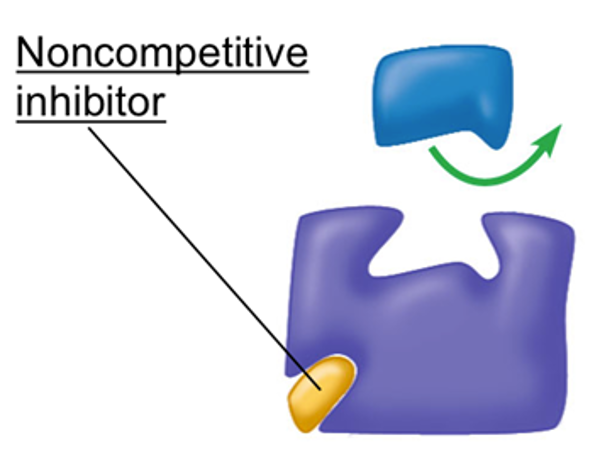
uThe inhibitor molecule binds with the enzyme in another part of the enzyme (allosteric site), not at the active site.
uThis binding alters the shape of the enzyme, and therefore it’s active site.
uThe enzyme cannot successfully form an enzyme-substrate complex.
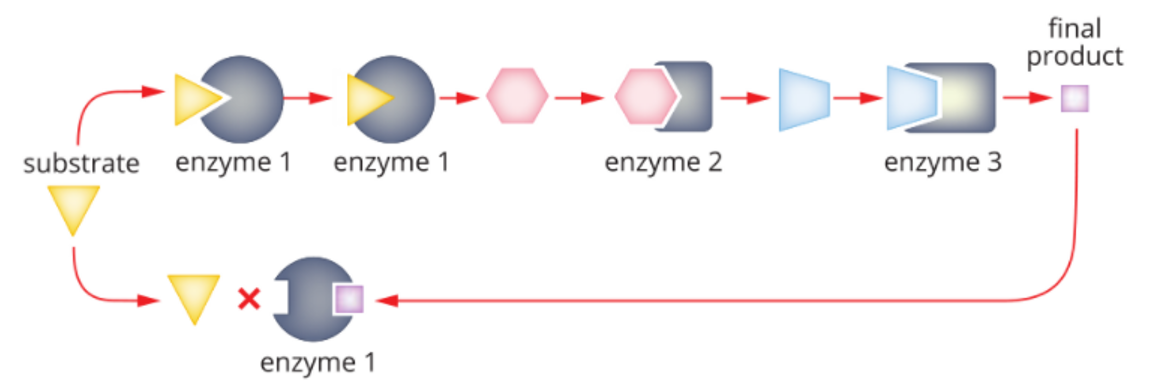
Feedback InhibitionFeedback Inhibition
uThe product produced in the late stages of a biochemical pathway acts as an inhibitor of an enzyme earlier in the pathway.
uAs the amount of products (inhibitors) increases, the number of functioning enzymes decreases.
uAs the product decreases, enzyme activity will increase.