Unit 2
 Call Kai
 Learn
 Practice Test
 Spaced Repetition
 Match
 Flashcards
 Knowt Play
1/29

There's no tags or description
Looks like no tags are added yet.
30 Terms
Attention
The restriction of cognitive processes so that they operate on a subset of the available information for the purpose of improving the speed of accuracy of the processes
Input/Exogenous Attention
Low-level, fast, and automatic cognitive processes that register raw sensory information from the environment and pull it into the nervous system (bottom-up)
Alertness
A type of input attention that describes an alert state in preparation to detect certain stimuli that is affected by internal and external states
Vigilance
A prolonged state of alertness
Orienting
A type of input attention that is the sudden, reflexive response to a significant or novel stimulus that causes an attention capture/shift
Kingstone et al. Implications
A study that shows how [social] cues can orient an individual’s attention by focusing on a specific location in space (spatial attention)
Visual Search
The process of actively scanning a visual environment to find a specific target item among a field of distractors that typically speeds up as the number of distractors decrease
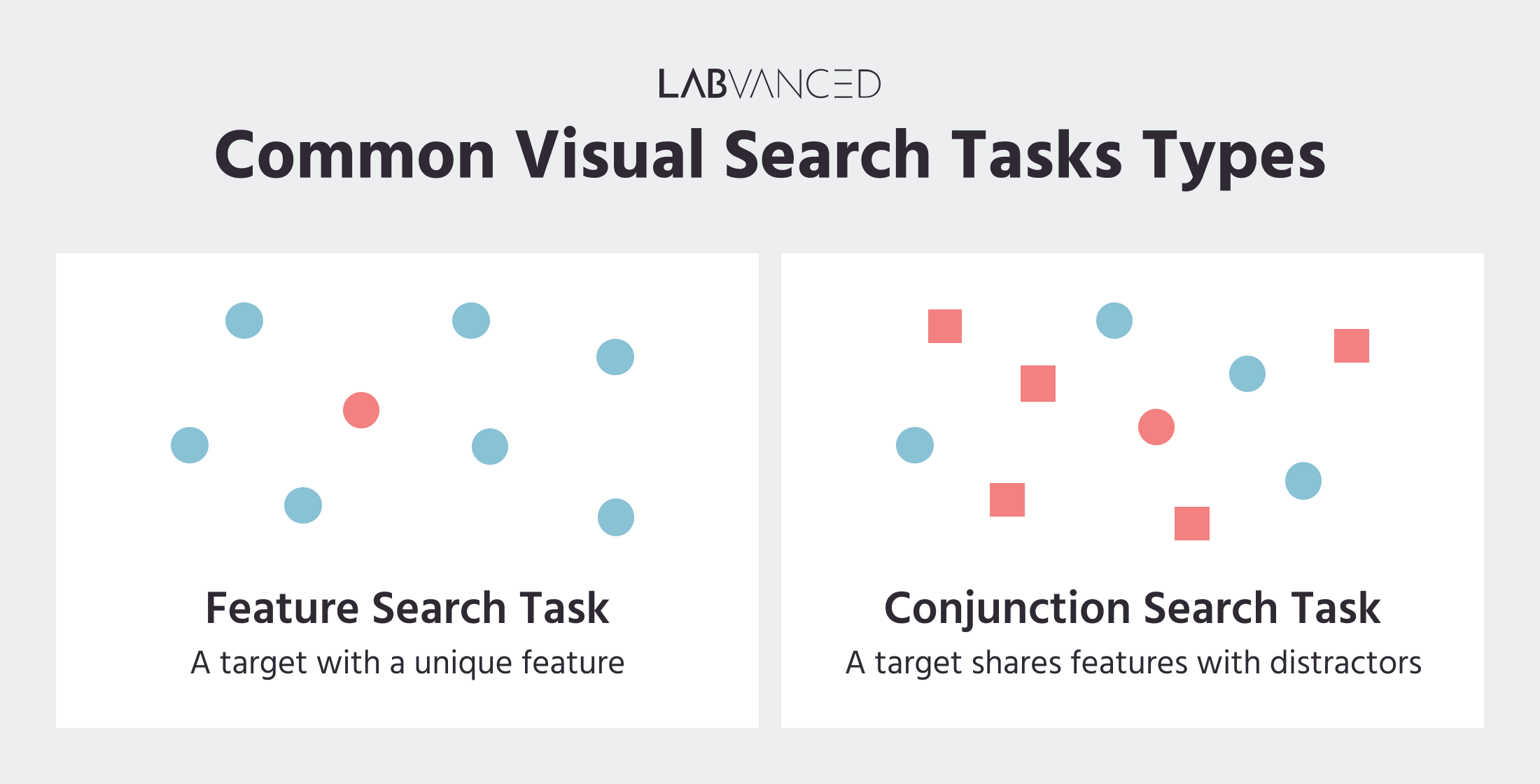
Feature Search
An exogenous component of visual search that describes the obvious presence of a stimulus that is discriminated from others by a single feature
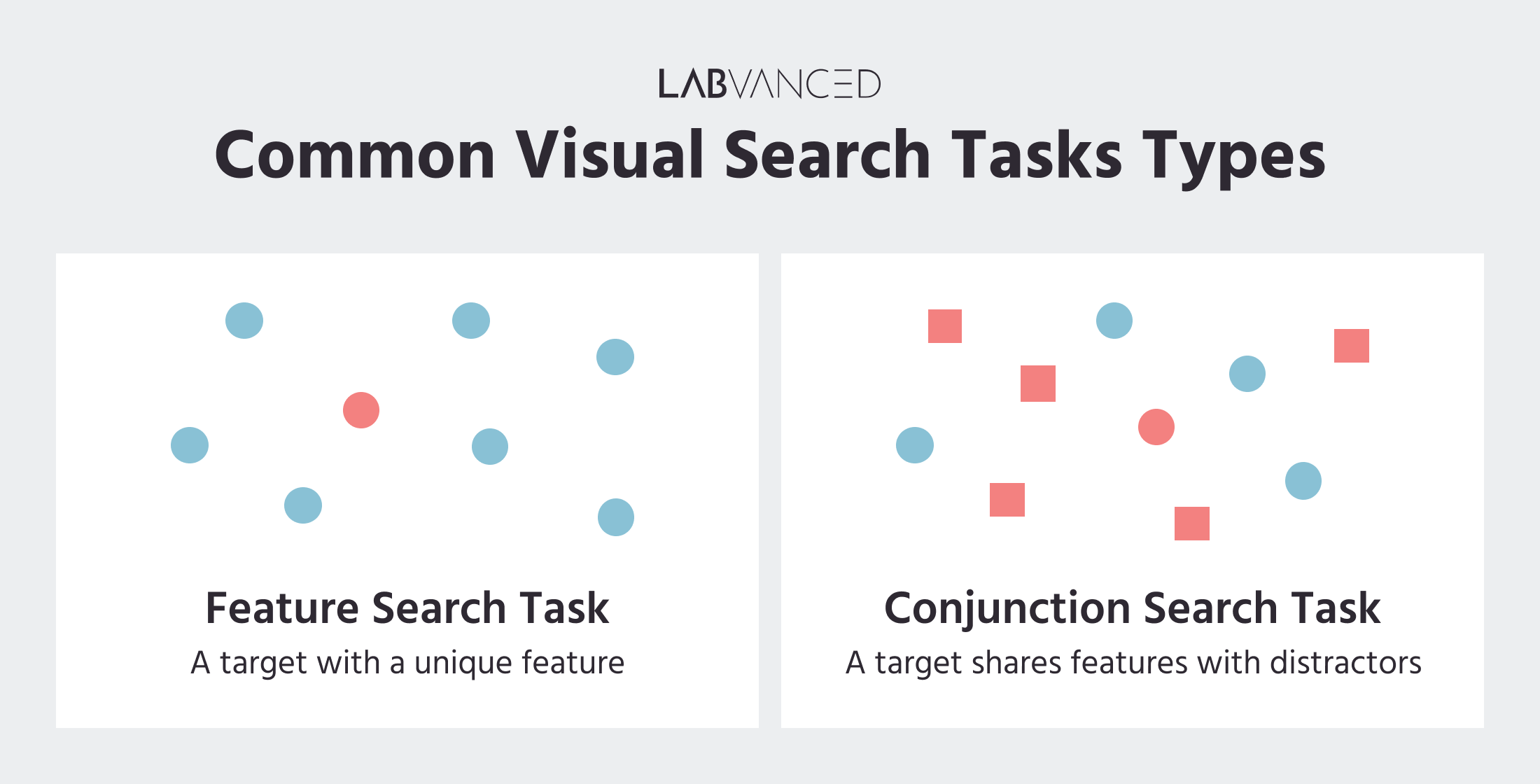
Conjunction Search
An endogenous component of visual search that describes the discrimination of a stimulus from other distractors by a combinations of features, which decreases reaction time
Feature Integration Theory
A theory that describes how visual search shifts from a preattentive (automatic) to attentive (controlled) stage as the need to integrate multiple features increases
Controlled/Endogenous Attention
The voluntary capacity to choose what you focus on while actively ignoring distractions, which prioritizes the goal of focusing attention
Controlled Processing
Processing that requires active, conscious, and deliberate focus
Automatic Processing
Processing that requires little to no conscious effort, awareness, or attention that occurs during tasks such as habits or frequently repeated procedures (e.g., driving), unless they require deliberate focus
Selective
A type of controlled attention which describes the conscious focus on one input or task while ignoring other stimuli
Cocktail Party Problem
A common problem of trying to pay attention to one of many streams of auditory information
Dichotic Listening
A testing tool that requires participants to listen to two different, simultaneously playing auditory streams and asks them to ignore an unattended channel while shadowing the attended channel
Filter Theory
An attentional theory posed by Broadbent that suggests that people erect a cognitive filter that blocks potential distractors, implying that stimuli are bottlenecked early in processing
Late-Selection Theory
An attentional theory that suggests all stimuli are fully analyzed for meaning before selection occurs, meaning the bottleneck happens later in processing, and are selected based on importance to the current task
Attenuation Theory
An intermediate attentional theory posed by Treisman that suggests unattended stimuli are attenuated, not blocked, based on differing threshold levels and hierarchal processing
Cocktail Party Effect
A phenomenon when a person can hear their name from an unattended stream of information, which challenges the notion that irrelevant stimuli are blocked from attention
Inattentional Blindness
The failure to perceive unexpected [visual] stimuli, which implies that attention processing requires a degree of cognitive control (failure to shift attention spotlight)
Priming Effect
The phenomenon when more-recently fired detectors will fire more readily, explaining the subconscious effect of unattended stimuli
Biased Competition Theory
A theory that suggests attention functions by shifting neurons’ priorities so that neurons are more responsive to inputs that have properties associated with the desired or relevant input or the perceiver’s expectations
Divided Attention
A type of controlled attention that is the skill of performing multiple tasks simultaneously, which depends on the specificity and generality of resources
Specificity of Resources
A factor of divided attention that suggests attention can be more easily divided when tasks demand different resources, and that tasks that are similar tend to interfere with each other
Generality of Resources
A factor of divided attention that suggests dissimilar tasks still interfere with each other when the tasks demand similar energy resources, or one tasks demands executive control
Cognitive Control Theory
The mental ability to regulate thoughts, emotions, and actions in line with internal goals rather than reacting purely to habits or immediate impulse
Prefrontal Cortex Frameworks
A theory of cognitive control posed by Cohen, which suggests that the anterior cingulate gyrus acts as a conflict monitor and sends signals to the prefrontal cortex to initiate executive control by boosting the activity of a weaker neural pathway
Dichotic Listening Implications
Listeners cannot detect semantic meaning from the unattended channel (e.g., language, content) —unless it is relevant to them in some way--but they can detect the physical characteristics of the unattended channel (e.g., human vs nonhuman sounds, gender, tone, volume)