Peptic Ulcers and GERD (O)
 Call Kai
 Learn
 Practice Test
 Spaced Repetition
 Match
 Flashcards
 Knowt Play
1/45

There's no tags or description
Looks like no tags are added yet.
46 Terms
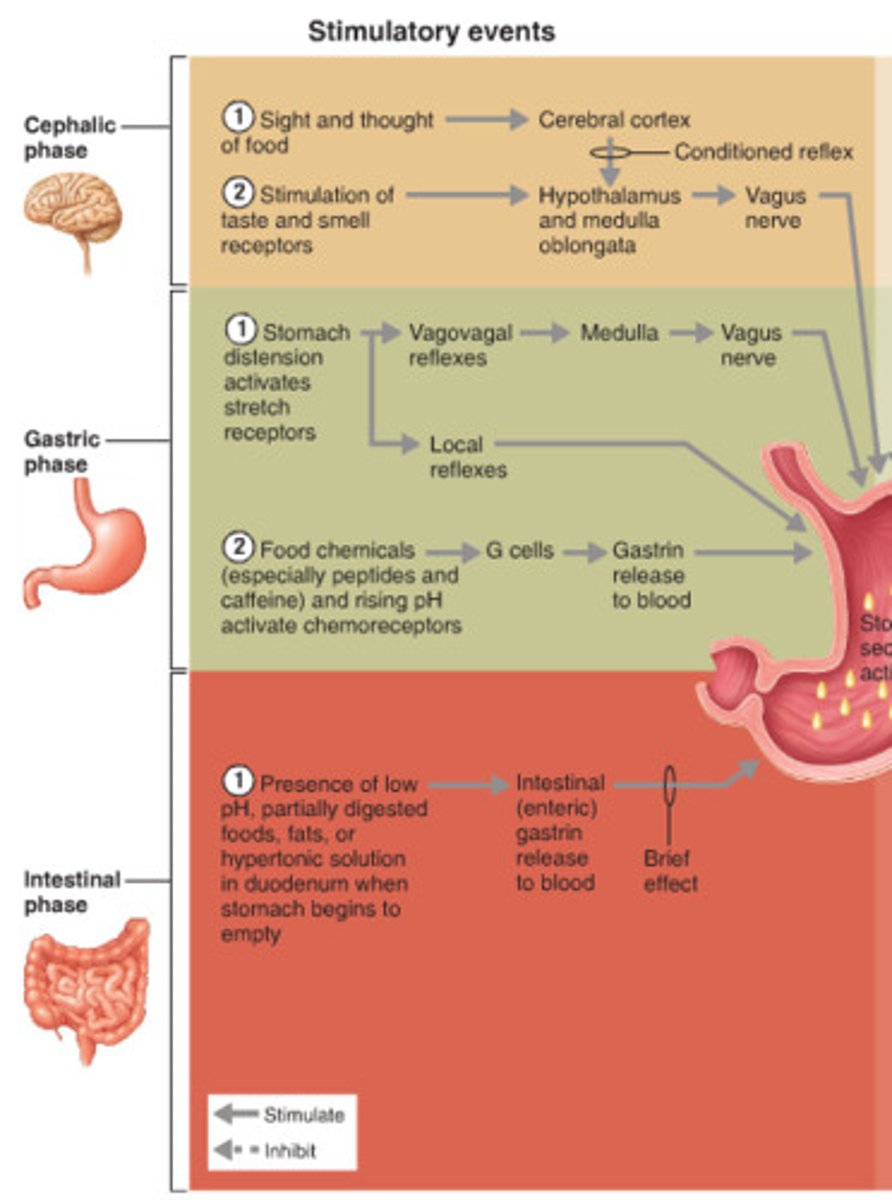
phases of digestion
- cephalic
> sight, smell, taste, or thought of food stimulate the release of gastric juices
- gastric
> stomach distends, more release of gastric juices
- intestinal
> fats and acids prevent the secretion of gastric juices
causes of peptic ulcer
- helicobacter pylori
- long-term use of NSAIDs
- hyperacidity
- hyperchlorhydria
peptic ulcer symptoms
- periodic pain, nausea, vomiting, and loss of appetite
- heartburn
what is the main symptom of gastrointestinal esophageal reflux disease (GERD)? why?
- heartburn
- occurs due to regurgitation of digestive juices into the esophagus
causes: inappropriate constriction of the lower esophageal sphincter
pharmacologic therapy of GERD
combination of:
- proton pump inhibitors
- mucosal defensive agents
- histamine 2 (H2) receptor antagonists and proton pump inhibitors are used to treat NSAID-induced and other ulcers not associated with H. pylori ulcers
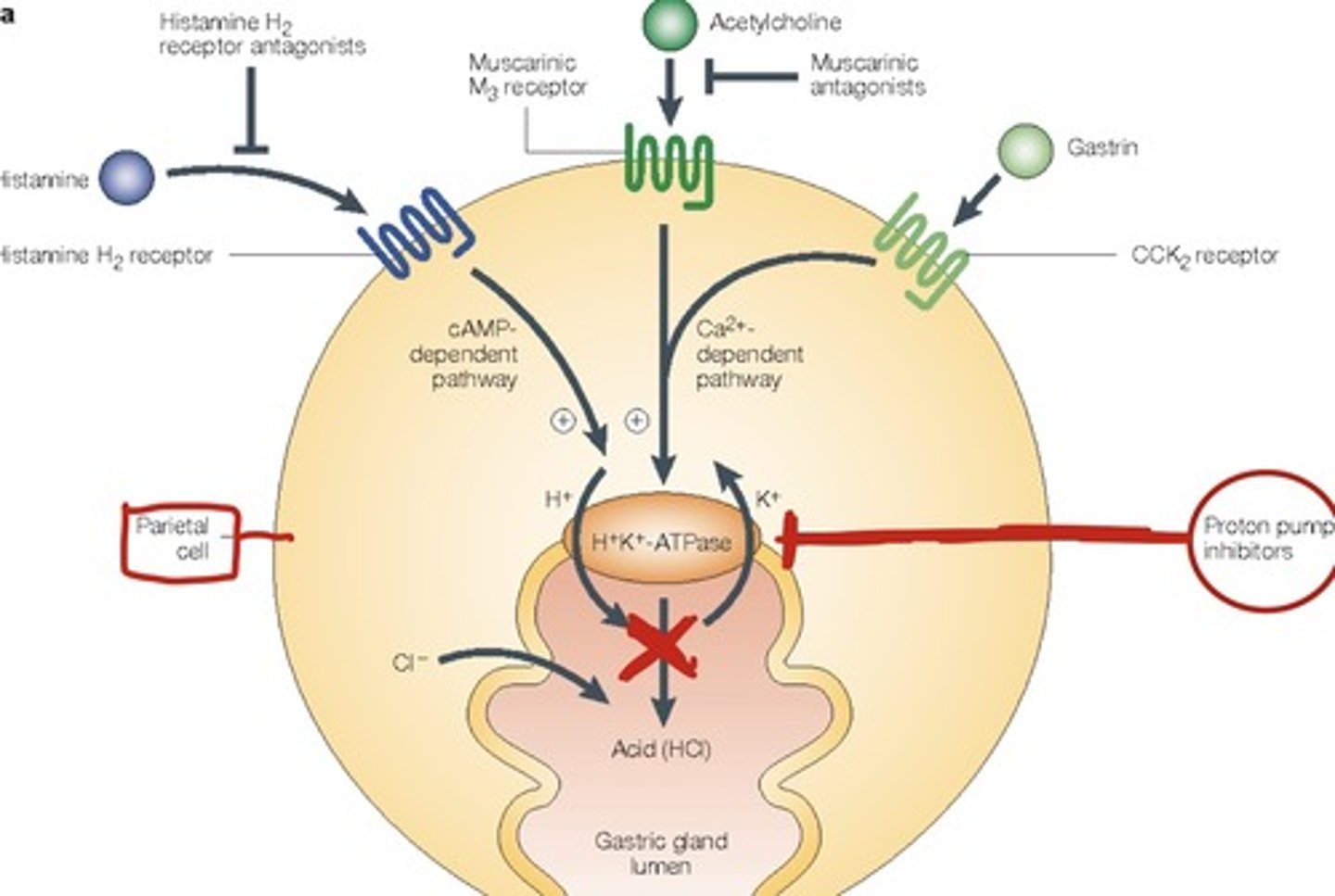
what is the proton pump?
the process that occurs when parietal cells release positive hydrogen ions (protons) during HCl production
H2 blockers and antihistamines ___ ___ stop the action of the proton pump
H2 blockers and antihistamines do not stop the action of the proton pump
proton pump inhibitors MOA
- irreversibly bind to H+/K+ ATPase enzyme
result: achlorhydria - ALL gastric acid secretion is blocked
proton pump inhibitors (PPI) drugs
- dexlansoprazole (dexilant, kapidex)
- esomeprazole (nexium)
- lansoprazole (prevacid)
- omeprazole (prilosec)*
- pantoprazole (protonix)
- rabeprazole (aciphex)
*first in this new class of drugs
PPI indications
- GERD maintenance therapy
- tx of erosive esophagitis
- short-term tx of active duodenal and benign gastric ulcers
- zollinger-ellison syndrome
- tx of H. pylori-induced ulcers
PPI side effects
safe for short-term therapy; incidence is low and uncommon
- increased incidence of osteoporosis-associated fractures
- diarrhea
- interstitial nephritis
- may cause B12 deficiency with daily long term use (3 yrs or longer)
dexlansoprazole MOA
- PPI
- suppresses gastric acid secretion by specific inhibition of the H+/K+ ATPase at the secretory surface of the gastric parietal cells
> H+/K+ ATPase is the acid (proton) pump inhibitor within the parietal cells. PPIs will block the final step of acid production
dexlansoprazole indications
- healing of erosive esophagitis
- maintenance of healed erosive esphagitis
- symptomatic non-erosive GERD
dexlansoprazole dosage and administration
healing of erosive esophagitis
60 mg QD for up to 8 week
maintenance of healed erosive esophagitis and relief of heartburn
30 mg QD
symptomatic non-erosive GERD (NERD)
30 mg QD X 4 week
dexlansoprazole interactions
- drugs with pH dependent absorption
- increased risk of hypomagnesamia with diuretics and digoxin
- may decrease plasma conc'n of erlotinib, dasatinib, and lopatinib. may decrease the bioavailability of itraconazole and ketoconazole
- may increase plasma conc'n of cilostazol and methotrexate
- reduced bioavailability with antacids and sucralfate
side effects of dexlansoprazole
diarrhea, abdominal pain, nausea, upper resp tract infection, vomiting, flatulence
H2 antagonists are all available ___ in lower dosage forms
H2 antagonists are all available OTC in lower dosage forms
what are the most popular drugs for tx of acid-related disorders?
H2 antagonists
H2 antagonist drugs
- cimetidine (tagamet)*
- nizatidine (axid AR)
- famotidine (pepcid)
*no longer recommended for tx active ulcers
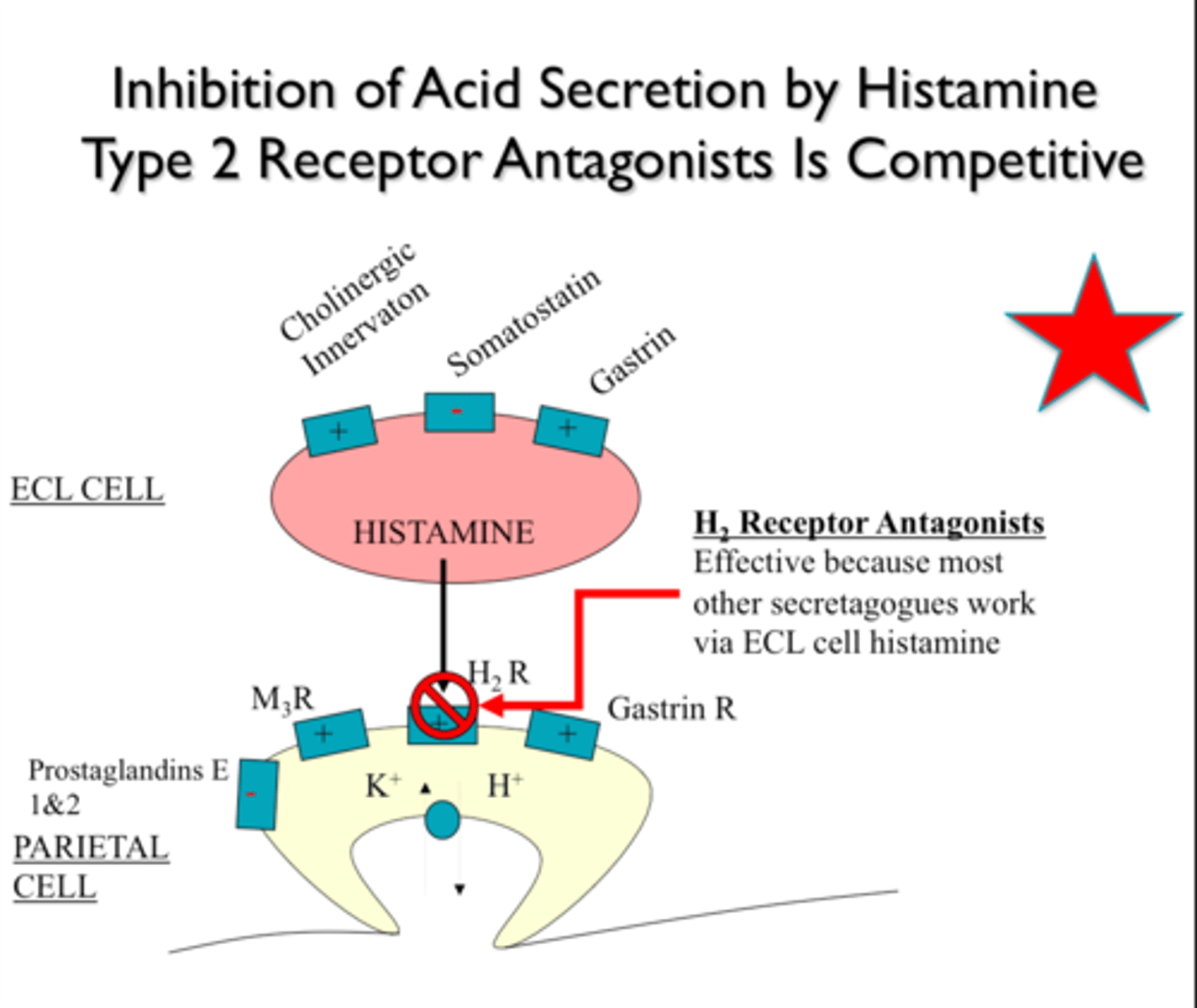
H2 antagonist MOA
- reduce acid secretion
- block histamine (H2) at the receptors of acid-producing parietal cells
- production of hydrogen ions is reduced, resulting in decreased production of HCl
H2 antagonist indications
- GERD
- PUD
- erosive esophagitis
- adjunct therapy in control of upper GI bleeding
- pathologic gastric hypersecretory conditions (Zollinger-Ellison syndrome)
H2 antagonist side effects
- overall, less than 3% incidence of s/e
- cimetidine may induce impotence and gynecomastia
may see:
- headaches, lethargy, confusion, diarrhea, urticaria, sweating, flushing, other effects
famotidine (pepcid) drug interactions
binds with P450 microsomal oxidase system in the liver, resulting in inhibited oxidation of many drugs and increased drug levels
ALL H2 antagonists may ___ the absorption of drugs that require and acidic GI environment for absorption
ALL H2 antagonists may inhibit the absorption of drugs that require and acidic GI environment for absorption
what has been shown to decrease the effectiveness of H2 blockers (increases gastric production)?
smoking
mucosal defensive agents drugs
- misoprostol (cytotec, misodel)
- sucralfate (carafate)
- antiacids
sucralfate (carafate) action
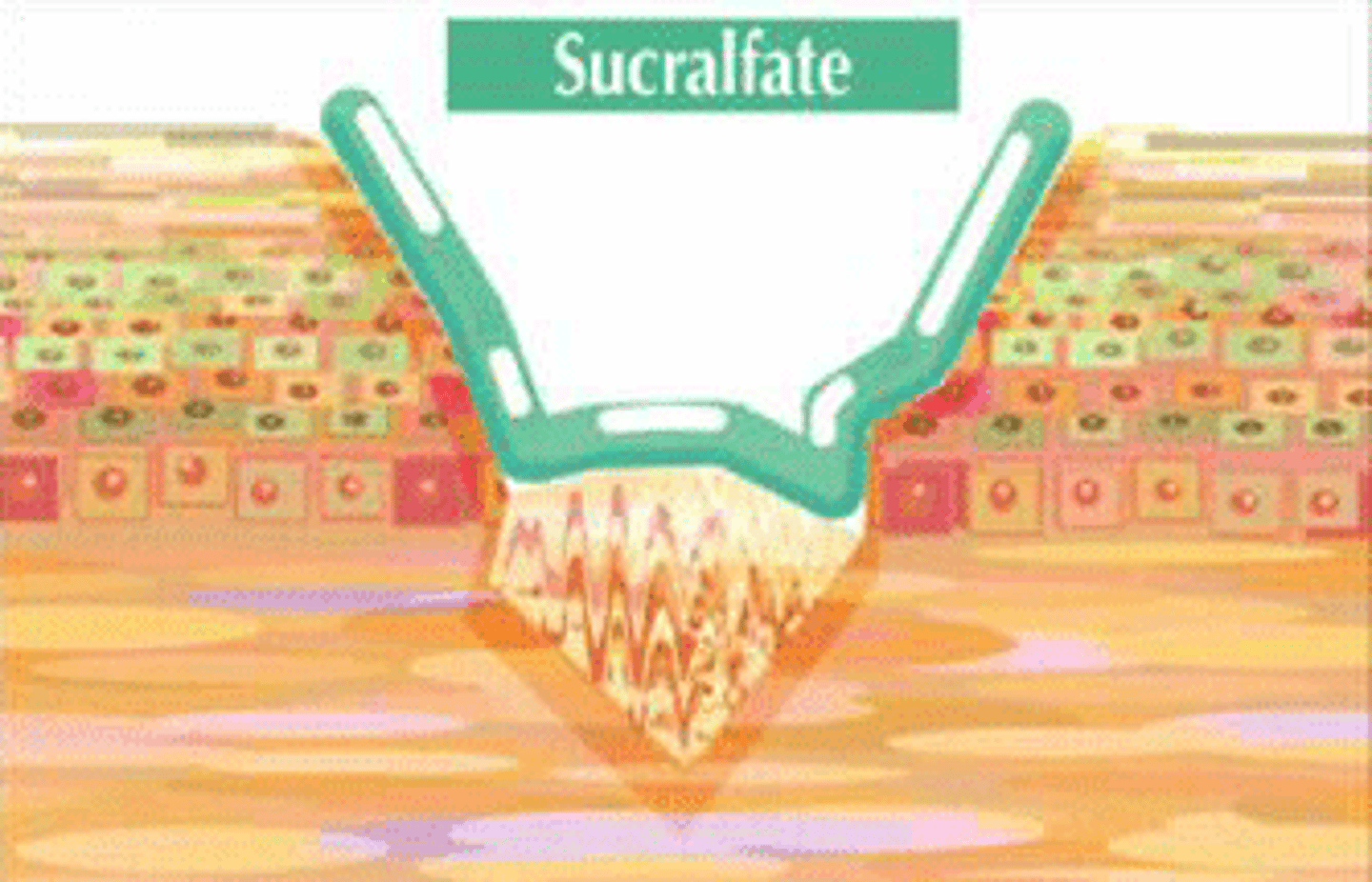
- cytoprotective agent
- attracted to and binds to the base of ulcers and erosions, forming a protective barrier over these arriers
- protects these areas from pepsin, which normally breaks down proteins (making ulcers worse)
sucralfate (carafate) uses
stress ulcers, erosions, PUD
sucralfate (carafate) pharmacokinetics
little absorption from the gut
sucralfate side effects
constipation, nausea, dry mouth
sucralfate drug interactions
- may impair absorption of other drugs, especially tetracycline
- binds with phosphate; may be used in chronic renal failure to reduce phosphate levels
**do not administer with other medications**
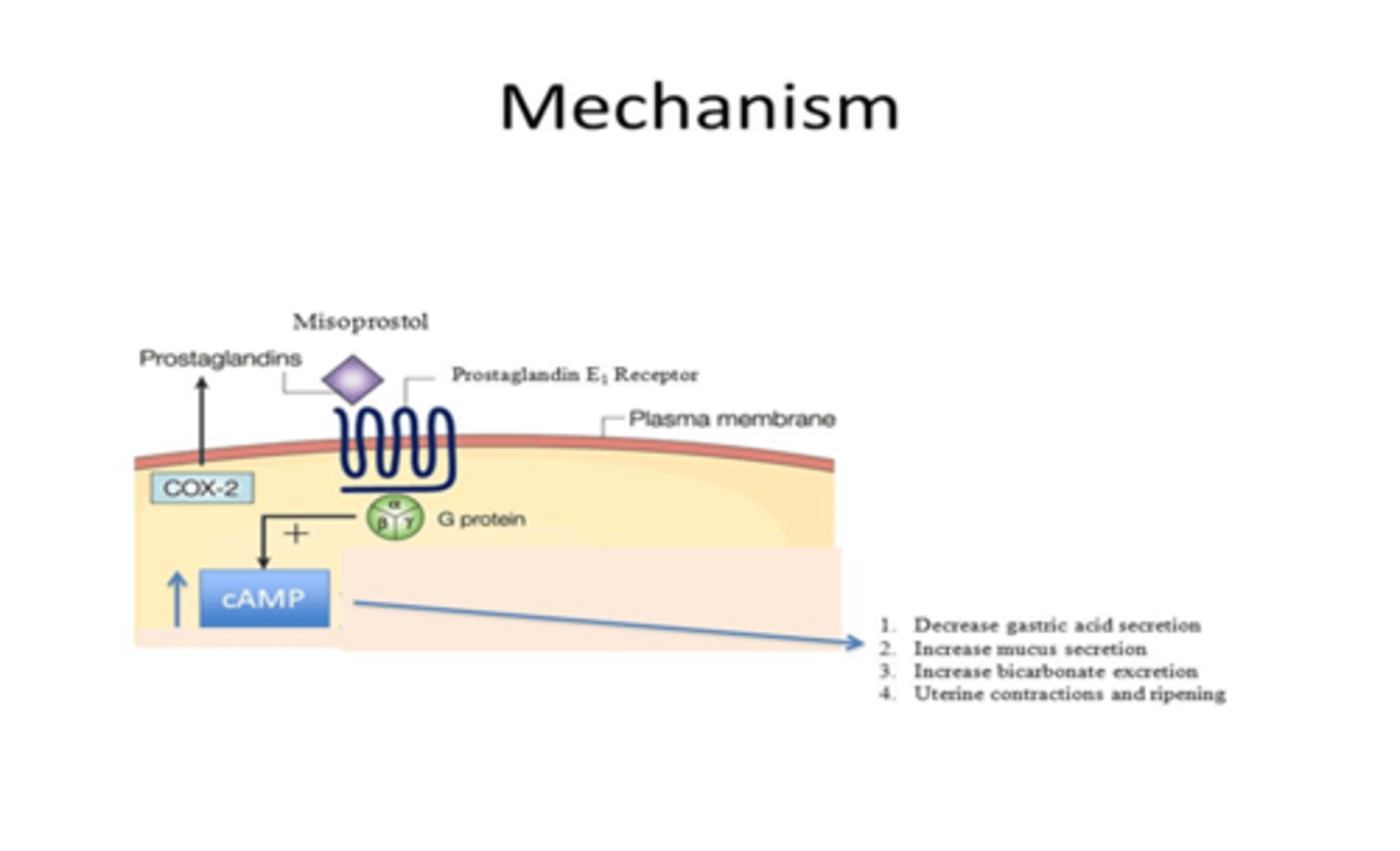
misoprostol (cytotec) is what type of analog?
synthetic prostaglandin analog
> prostaglandins have cytoprotective activity
-- protect gastric mucosa from injury by enhancing local production of mucus or bicarbonate
-- promote local cell regeneration
-- help to maintain mucosal blood flow
misoprostol (cytotec) uses
prevention of NSAID-induced gastric ulcers
doses of misoprostol (cytotec) that are therapeutic enough to treat duodenal ulcers often produce..? (s/e)
abdominal cramps, diarrhea
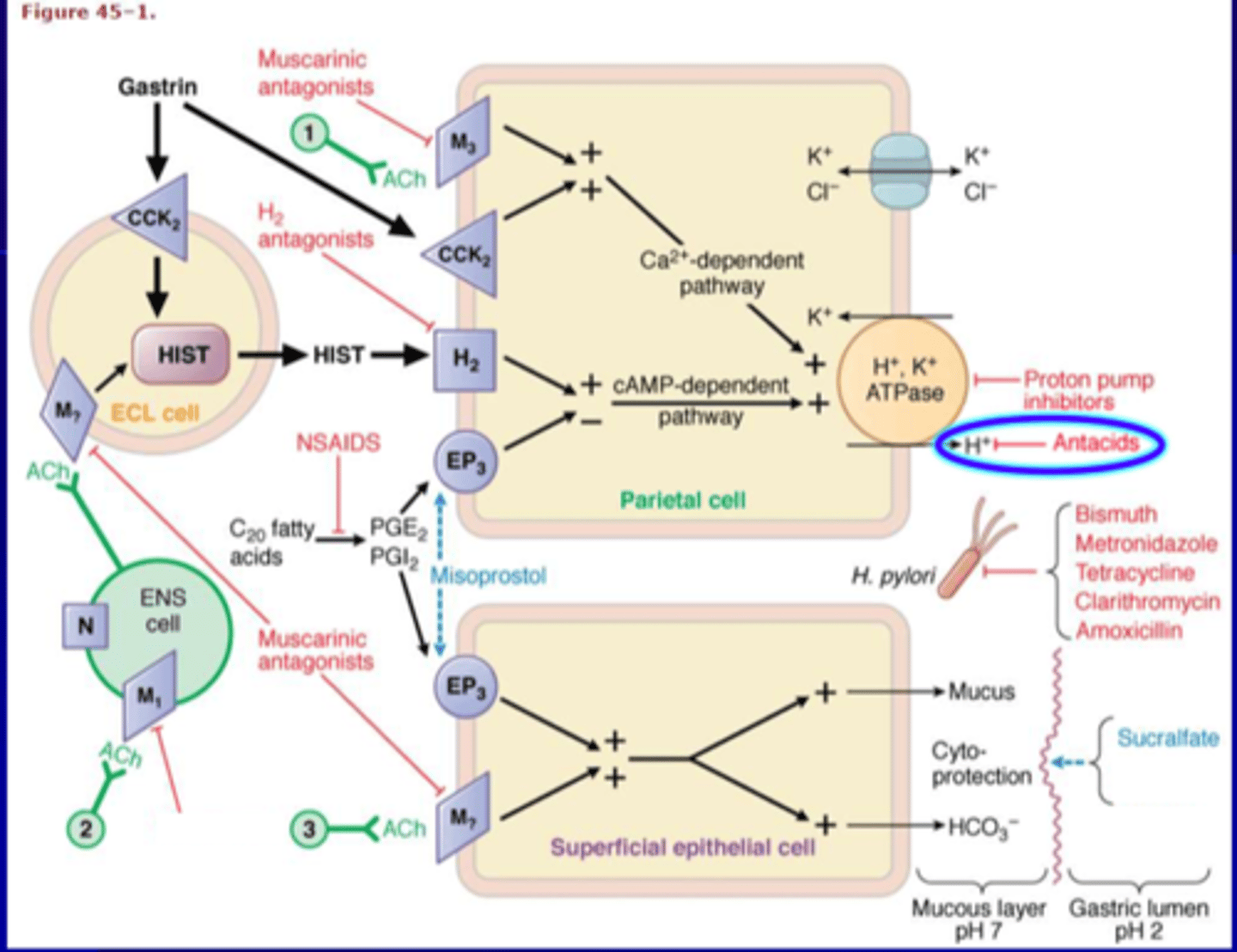
antacids MOA
promote gastric mucosal defensive mechanisms
secretion of:
- mucus: protective carrier against HCl
- bicarbonate: helps buffer acidic properties of HCl
- prostaglandins: prevent activation of proton pump which results in decreased HCl production
antacids DO NOT..?
antacids DO..?
DO NOT prevent over-production of acid
DO neutralize the acid once it's in the stomach
antacids drug effects
reduction of pain associated with acid-related disorders:
-raising gastric pH 1 point (1.3-2.3) neutralizes 90% of gastric acid
-reducing acidity reduces pain as a result of:
*base-mediated inhibition of the protein-digesting ability of pepsin
*increase in the resistance of the stomach lining to irritation
*increase in the tone of the cardiac sphincter
antacids drug interactions
- absorption of other drugs to antacids
> reduces the ability of the other drug to be absorbed into the body
- chelation
> chemical binding, or inactivation, of another drug
> produces insoluble complexes
> result: reduced drug absorption
(T/F) antacids can only be used alone
F; antacids can be used alone or in combination
antacids: aluminum salts
forms: carbonate, hydroxide
- have constipating effects
- often used with magnesium to counteract constipation
ex.
> aluminum carbonate: basaljel
> hydroxide salt: alternaGEL
> combo products (aluminum and magnesium): gaviscon, maalox, mylanta, di-gel
antacids: magnesium salts
forms: carbonate, hydroxide, oxide, trisilicate
- commonly cause diarrhea; usually used with other agents to counteract this effect
** dangerous when used with renal failure - the failing kidney cannot excrete magnesium, resulting in hypermagnesemia
ex.
> hydroxide salt: magnesium hydroxide (MOM)
> combo products (aluminum and magnesium): gaviscon [carbonate salt], maalox, mylanta, di-gel
antacids: calcium salts
forms: many, but carbonate is most common
- may cause constipation
- their use may result in kidney stones
- long duration of acid action may cause increased gastric acid secretion (hyperacidity rebound)
- often advertised as an extra source of daily calcium
ex.
tums (calcium carbonate)
calcium carbonate produces ___ and ___ as side effects, it is often combined with ___
calcium carbonate produces gas and belching as side effects, it is often combined with simethicone
antacids: sodium bicarbonate
- highly soluble
- buffers the acidic properties of HCl
- quick onset, but short duration
- may cause metabolic alkalosis
- sodium content may cause problems in patients with HF, HTN, or renal insufficiency (fluid retention)
antiflatulents
used to relieve the painful symptoms associated with gas
> several agents are used to bind or alter intestinal gas and are often added to antacid combination products
OTC antiflatulents
- activated charcoal
- simethicone
> alters elasticity of mucus-coated bubbles, causing them to break
> used often, but there are limited data to support effectiveness