Temperature
 Call Kai
 Learn
Learn Practice Test
 Spaced Repetition
 Match
Match Flashcards
 Knowt Play
1/103

There's no tags or description
Looks like no tags are added yet.
Name | Mastery | Learn | Test | Matching | Spaced | Call with Kai | Chat |
|---|
No analytics yet
Send a link to your students to track their progress
104 Terms
temperature as a stressor
it acts on physiology at every level of organization. creates an immediate effect biochemically, and animal must then preserve function even though the chemistry underlying that function is temp-sensitive

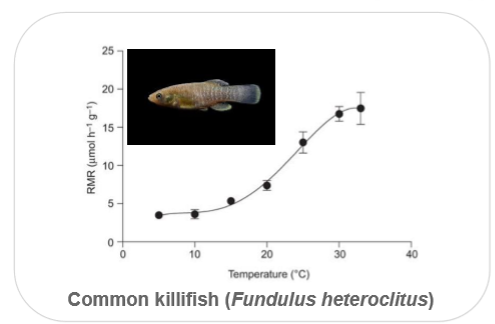
warming effect on metabolism
at whole-animal level, warming can strongly increase metabolic demand. this can be found though oxygen consumption
why does warming increase biochemical reaction rates
molecules have more thermal energy, so more of them can reach the Ea barrier, so reaction rate increases

enzymes and temperature
enzymes can accelerate reactions by lowering the Ea

issues with heat speeding up biochemical reactions
enzymes are temperature sensitive as they are proteins themselves, so they may denature

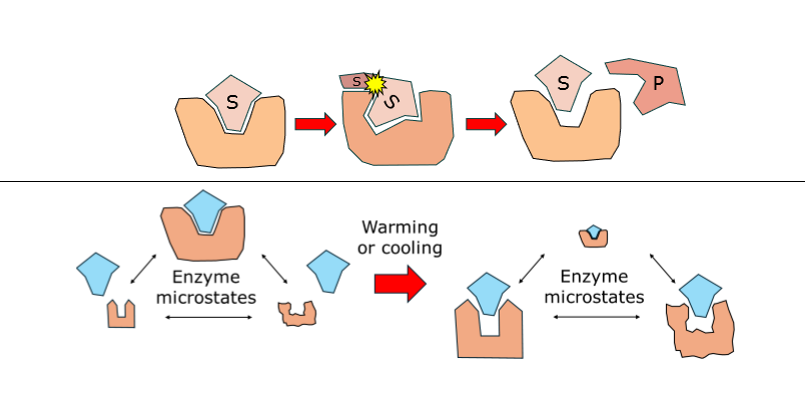
enzymes microstates
each shape carries a different function, so if a change of temperature changes the shape, the enzyme may lose its main function

enzyme flexibility and stability
proteins/enzymes must be flexible enough to move but stable enough to keep the right structure (balance). temperature can greatly affect this balance
effects of low temperature on enzymes/proteins
decreased molecular motion and conformational transitions. therefore slower catalysts
effects of high temperature on enzyme/proteins
increased molecular motion, weak interactions disrupted. therefore loss of functional geometry
goldilocks zone
when an enzyme/protein is at the right temperature,and therefore has enough flexibility to cycle between functional microstates and enough stability to stay folded
what determines protein structure and thermal sensitivity
amino acid sequence is the main thing that determines where chemical groups are that then changes to different types of structures
non-covalent interactions
major determinants of folding, stability, and conformational mobility. weak enough for mobility, and strong enough for stability

hydrophobic effect
non-polar side chains tend to become buried away from water. this is a solvent-mediated thermodynamic effect, not a “bond” in the same sense as an H-bond. individually weak, but all together very strong.

hydrogen bonding and ionic interactions
polar and charged groups can stabilize specific regions of the protein and help define its conformational landscape

evolution and ionic interactions
different weak interactions have different thermal sensitivities. evolution can exploit those differences to tine protein stability and flexibility. cold adapted proteins often favour flexibility; warm adapted proteins often favour stability (general trend, not absolute rule)
Limpets in the intertidal
an example of a type of aquatic snail species in which some live more north (BC) and some south (CA). changes in AA can help when temperatutre changes as they each live better in their environments
what is the biochemical difference between the limpet species
a single AA difference from glycine to serine may stabilize protein in hot water.
complex integration in temperature stress
physiological responses to temp reflect complex integration of underlying biochem - both basic kinetic effects and protein function
thermal performance curves
describe effect of temp on a given performance. key analytical tool in thermal physiology

2 strategies organisms use to deal with temperature change
avoidance and compensation. which strategies animals employ are determined by assessing acute and chronic responses to temperature change
avoidance
one of the thermal strategies. migration, behavioural thermoregulation, circulatory changes, body size, endothermy, etc. ectotherms and endotherms can use both A and C if A doesn’t work
compensation
change biochemistry to deal with temperature. comes in 3 flavours: quantitative, qualitative, and modulation. not to prevent temperature change inside, just to still function at new temperatures
quantitative
one of the compensation flavours. number of enzymes copies per cell/ change in amount of enzyme. if cold slows enzyme down, animal could make more of it to control flow via overcompensation, this is energy expensive
qualitative
one of the compensation flavours. alter the enzyme structure to alter its function (AA changes)/ changes what enzyme is actually like. changes AA so protein structure to change efficiency, stability, etc.
modulation
one of the compensation flavours. changes in regulation of metabolic pathways, changes in whole-body metabolisms, etc. directed for around, not enzyme itself. eg: cold makes rigid, so body can increase unsaturated fatty acids to make a membrane more flowy, and opposite. temperature decrease of 1deg increases pH 0.018 units
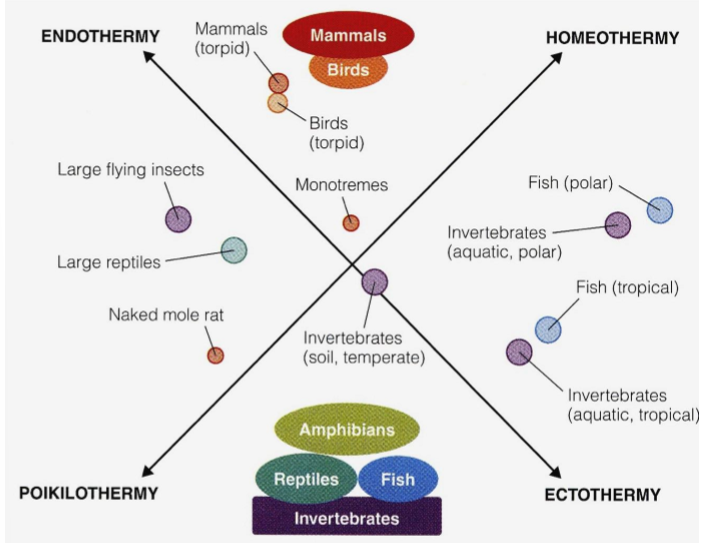
thermal strategies chart

poikilotherm
body temperature varies in response to environmental conditions. allows body temp to vary with temperature conditions like reptiles
homeotherm
body temperature remains relatively constant

endotherm
generates metabolic heat internally to maintain body temperature. make most metabolic costly, like mammals and birds, instead of making energy it releases that energy as heat

ectotherm
environmental temperature determines body temperature. goes to heat sources when heat is needed. spend metabolic energy to generate heat, generally maintain constant body temperature. avoid needing specific adaptations to cope with variable ambient temperature. has thermoneutral zone

heterotherm
body temperature varies either spatially across body (skin vs core temp for example), or temporarily (sometimes an homeothermic endotherm/ectotherm). varies where it changes. hibernating mammal is an example
endothermy of red swimming muscle
terms are general constructs, not all animals play by the rules. tuna have regional endothermy, so keep certain tissue like swimming muscle warmer than surrounding water. do this using specialized counter current system instead of losing heat to environment, warmer muscle then contracts faster, so tuna can maintain stronger performance when catching prey

temporal heterothermy in a mammal
temperature changes over time. animals allow body temp to fall close to environmental temperatures which reduces metabolic rate, but drop is regulated by physiological response. controlling body temperature at much lower level, this way hibernators dont stay cold all winter. quickly increase temp before entering it again into cold
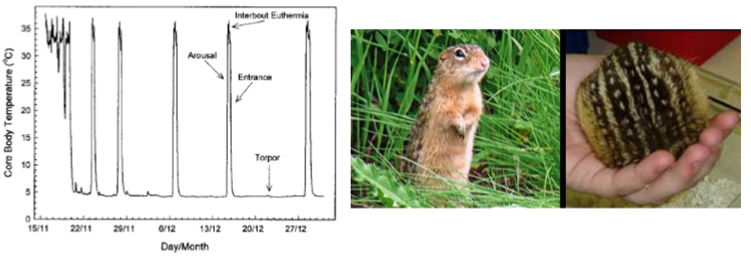
regional heterothermy in bees
different parts of the body are different temperatures, such as flight muscle

how is temperature compensation studied
environmental physiologists compare acute vs acclimation responses to investigate compensation and its basis. animal is acclimated to one temp, then introduced to a new one, then oxygen consumption is measured as the whole animal metabolic rate
warm vs cold acclimated frogs
frogs acclimated to one temperature (low vs high), change temp they are in, then measure oxygen consumption at new temp as the metabolic rate. the 5 deg frog, Q10 goes from 1.6 to 1.5, meaning difference bw 10 deg not large. the 25 deg frog, Q10 is 2.8 then 2.2, meaning difference bw 10 deg over double

Q10
a classic index of temperature sensitivity. simply compares the ratio of rates measured 10 deg apart. typical values between 2-3 for many biological processes; 1 for physical processes

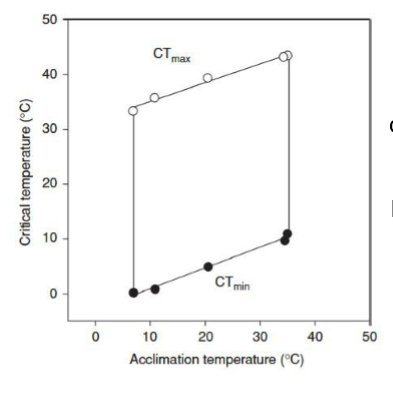
temperature polygons
key tool in conservation physiology. capture acute and acclimation effects on the “thermal performance envelope” for an animal. powerful tool for explaining an animal’s thermal niche. X axis is temp animal was acclimated to, and Y is critical thermal limits. critical max/min temp is where animal can no longer maintain normal temp. as acclimation increases, the CTmax/min shift upward so animal acclimated to warmer can tolerate somewhat higher temp, but may lose some cold tolerance, so area bw CT min and mac is thermal performance envelope