LAB #1 Anatomical Terms & Planes; Cell bio
 Call Kai
 Learn
 Practice Test
 Spaced Repetition
 Match
 Flashcards
 Knowt Play
1/86

There's no tags or description
Looks like no tags are added yet.
87 Terms
anatomical position
hands at side, palms forward
(anatomical landmark)

supine
lying down, face up
(anatomical landmark)

prone
lying down, face down
(anatomical landmark)
superficial anatomy
locating structures on or near the body surface
Frontal
forehead region
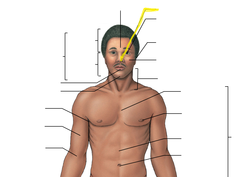
nasal
nose
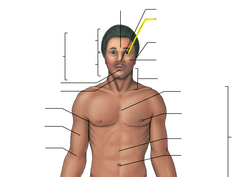
orbital
eye
otic
ear
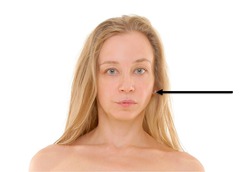
Buccal
cheek

cervical
neck region

thoracic
thorax, chest

mammary region
pectoral region also known as

abdominal
region?

Umbilical
navel

trunk

cranial
skull

facial
region

cephalic
head

oral
mouth

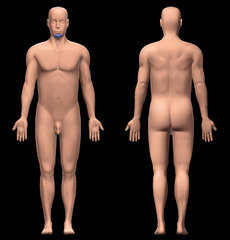
mental
pertaining to the chin
axillary
armpit

brachial
upper arm

antebrachial
lower arm

Antecubital
front of elbow

acromial
shoulder

dorsal
back

cubital
back of elbow
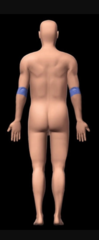
carpal
wrist

palmar
region between carpal and digital regions

Pollex
thumb

digital
pertaining to the fingers or toes
patellar
kneecap

crural
leg

tarsal
ankle
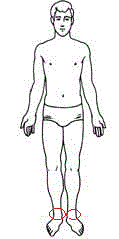
pelvic
pelvis region

manual
hand
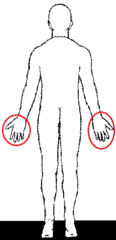
inguinal
groin

pubic
pubis
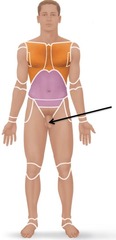
femoral
region

pedal
foot

lumbar
loin

upper limb
arm

gluteal
buttock

lower limb
leg

popliteal
back of knee
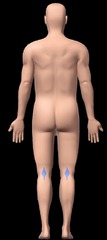
sural
calf

calcaneal
heal of foot

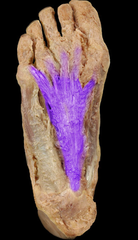
plantar
sole of foot
right hypochondriac region
AREA 1
right upper region below the cartilage of the ribs that extend over the abdomen
ORGANS: liver gallbladder
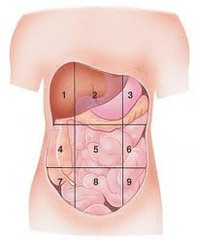
right lumbar region
AREA 4
right middle region near the waist
ORGANS: parts of large/small intestine

right inguinal region
AREA 7
right lower region of the lower row by the groin
ORGANS: appendix

epigastric region
AREA 2
upper middle portion
ORGANS: stomach, part of the liver

umbilical region
AREA 5
region of the navel
ORGANS: parts of the small intestine

hypogastric region
pubic, lower middle portion
ORGANS: urinary bladder

left hypochondriac region
AREA 3
left upper region below the rib cartilage
ORGANS: spleen, part of stomach

left lumbar region
left middle region near the waist
ORGANS: parts of large/small intestines

left inguinal region
left lower region of the lower row by the groin
ORGANS: parts of large/small intestines

right upper quadrant
What quadrant: liver, gallbladder, part of stomach, parts of small/large intestines
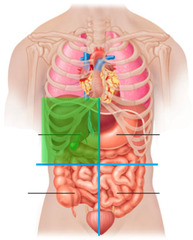
left upper quadrant
stomach, spleen, part of liver, parts of small/large intestines

right lower quadrant
appendix, parts of small/large intestines

left lower quadrant
parts of small/large intestines, urinary bladder

body cavities
what does the following:
-protect organs from accidental shocks
- permit changes in size and shape of internal organs
ventral body cavity
divided by the diaphragm
- thoracic cavity
-abdominopelvic cavity

Serous Membranes
line body cavities and cover organs, double layers are separated by cavity filled with serous fluid
consists of
-parietal layer: lines cavity
- visceral layer: covers organ

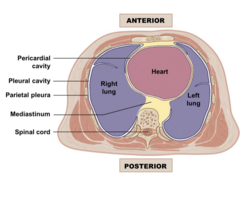
thoracic cavity
- Right and left pleural cavities, contain right and left lungs
- mediastinum: upper portion w blood vessels, trachea, esophagus and thymus
- lower portion: pericardial cavity, w heart
abdominopelvic cavity
- peritoneal cavity: chamber within abdominopelvic
- parietal peritoneum: lines the internal body wall
- visceral peritoneum: covers the organs
- retroperitoneal: area posterior to peritoneum and anterior to muscular body wall. contains, pancreas, kidneys, ureters, and parts of the digestive tract
-pelvic: inferior portion, contains reproductive organs, rectum and bladder
proximal
moving from bottom of appendage going up towards the head

distal
away from the attached base

medial
toward mid line

lateral
away from the midline
superficial
near the surface
deep
away from the surface
superior
above

posterior or dorsal
toward the back

anterior or ventral
front of the body

Caudal
inferior ,toward the tail (coccyx in humans)
midsagital cut
divides the body into equal left and right halves

coronal plane
divides the body into anterior and posterior sections

transverse plane
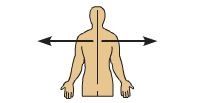
a horizontal plane that divides the body into a top half and a bottom half

organelles
Structures specialized to perform distinct processes within a cell.

nucleus
Control center of the cell

ribosome
Organelle that makes proteins
Endoplasmic Reticulum
A cell structure that forms a maze of passageways in which proteins and other materials are carried from one part of the cell to another.


Golgi apparatus
A system of membranes that modifies and packages proteins for export by the cell
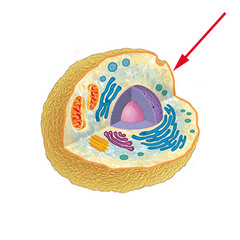
plasma membrane
The membrane at the boundary of every cell that acts as a selective barrier, thereby regulating the cell's chemical composition.
vesicle
Sacs made of membrane that unite the endomembrane system through the transfer of membrane segments.

Mitochondria
Powerhouse of the cell
