COMPOSITES (Materials 2)
 Call Kai
 Learn
 Practice Test
 Spaced Repetition
 Match
 Flashcards
 Knowt Play
1/11

There's no tags or description
Looks like no tags are added yet.
12 Terms
Composite
made of 2 or more materials
matrix (softer/more ductile)
reinforcement (harder/more brittle)
Matrix
surrounds and holds reinforcement together
protects it
transfers the load/ spreads the force applied
Reinforcement
carries most of the load
prevents material from breaking
can be in particles or fibers
can be aligned or random
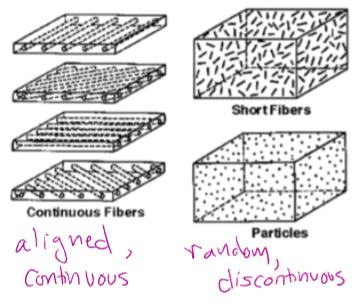
Properties of composites depend on
properties of materials
volume percentage of materials
geometry/spatial distribution of materials
particle/fiber, random/aligned, continuous/discontinuous
Modulus Prediction
estimates how stiff a composite material will be based on materials used and how much of it is present
Ec = EmVm + ErVr
Ec= stiffness of composite
Em= stiffness of matrix
Er= stiffness of reinforcement
Vm= fraction of matrix
Vr= fraction of reinforcement
(composite is usually stiffer if has more stiffer reinforcement material)


Rubber Bridge Bearings
bearing must resist:
compressive forces from weight of bridge
shear forces as bridge shortens/lengthens due to thermal expansion/contraction
matrix = rubber
reinforcement = steel plates

Base Isolation Bearings
reduce shaking of buildings during earthquake


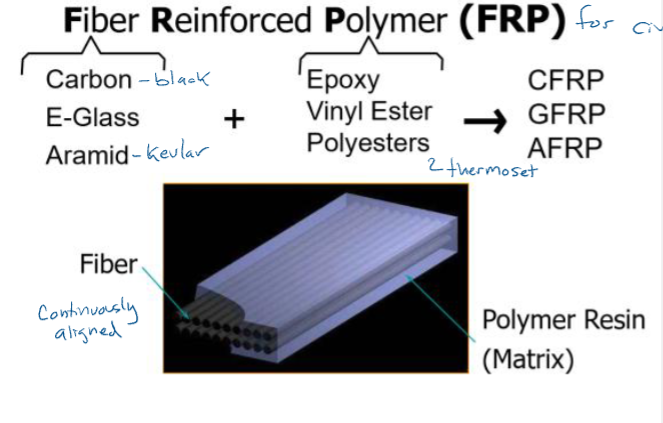
Fiber-Reinforced Polymer (FRP)
wrap damaged structural elements
wrap structural elements in seismic regions
substitutes for steel-reinforcing bar in concrete
(fibers stronger than steel, more brittle)
(between fiber and matrix)

Dry fabrics
flexible/easy to install and fit the geometry of members
Basic Use- Flexural Strengthening
attaching strong carbon-fiber sheets to the bottom of a beam to help it resist bending
fiber’s orientation is parallel to beam

Basic Use- Confinement
wrapping a column with strong fiber material to stop it from expanding outward when squeezed
stronger under compression
fiber’s orientation horizontally around column

Structural Repair?
Restoring spalled, cracked, or fire-damaged structural members via epoxy injection, mortar patch repair, and external FRP jackets.