Synaptic Plasticity and Regeneration
 Call Kai
 Learn
 Practice Test
 Spaced Repetition
 Match
 Flashcards
 Knowt Play
1/35

There's no tags or description
Looks like no tags are added yet.
36 Terms
What are the Types of Memory?

How do we Learn?
Learning: the response of the brain to environmental events and involves adaptive changes in synaptic connectivity which will in turn alter behaviour.
How does Memory Work?

What are the Rules of Synaptic Modification?

Coincident Inputs Strengthen Together

What is the Long Term Potentiation (LPT) Mechanism?
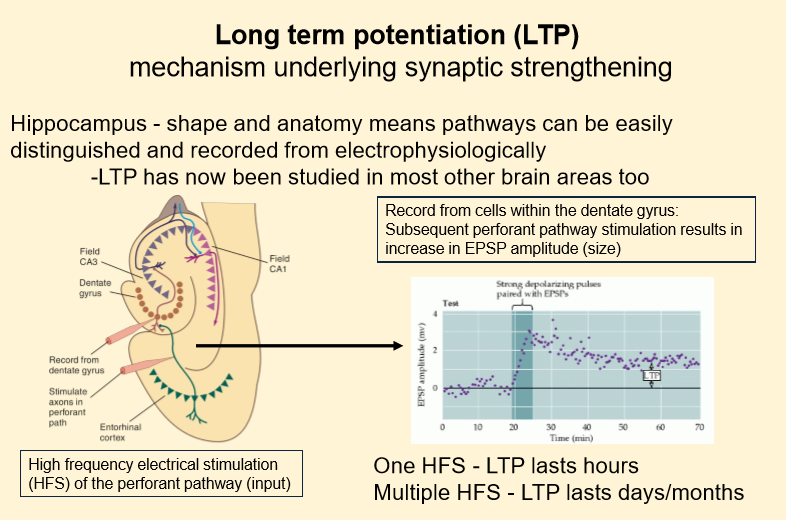
The NMDA Receptor detects Coincidence: Glutamate Plus Depolarisation

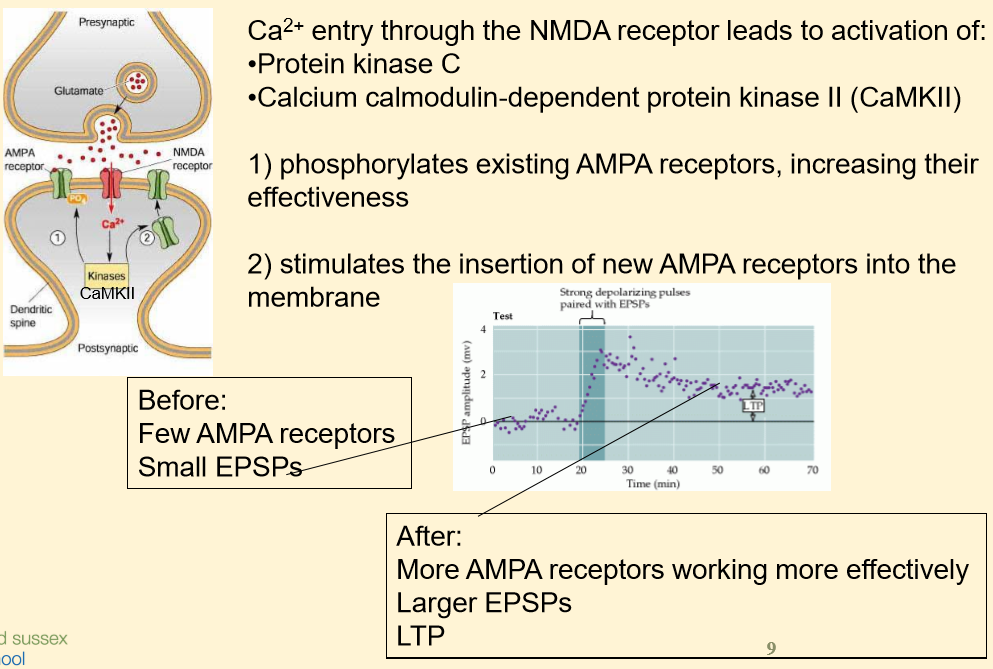
How does Ca2+ Entry Add and Strengthen AMPA Receptors?
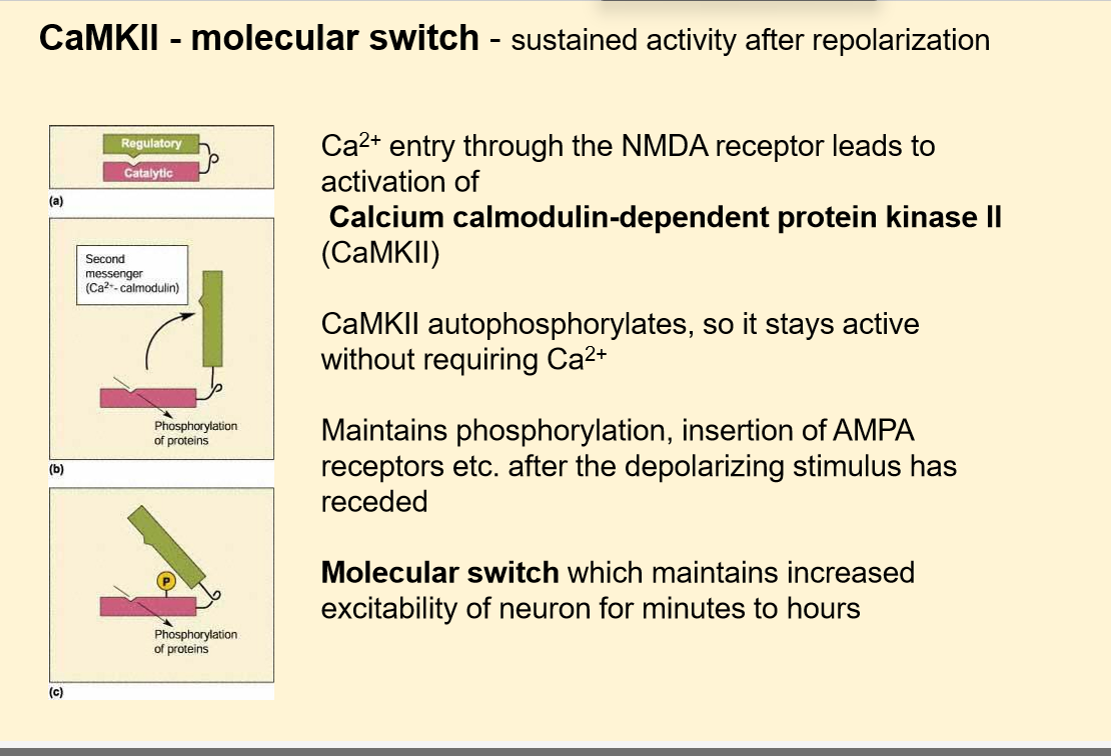
What is the Role of CaMKII in Molecular Switch?
Why does Lasting LTP and Long-term Memory need New Proteins?

What is Long Term Depression (LTD)?
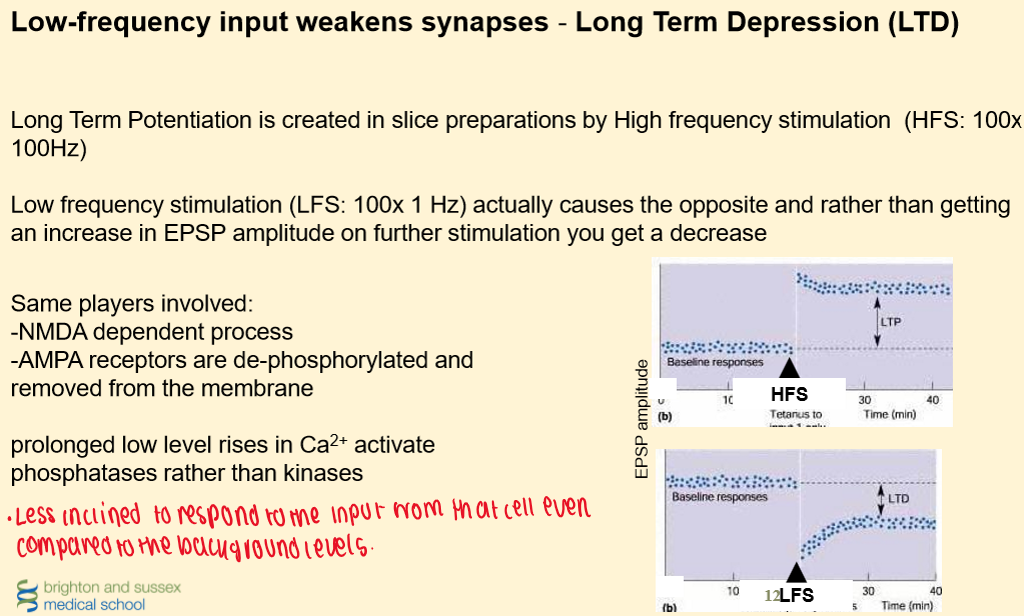
How does LTP and LTD Reflect Bidirectional Regulation?
LTP and LTD reflect bidirectional regulation of:
1. phosphorylation and
2. number of postsynaptic AMPA receptors
How does Blocking Hippocampal LTS Block Spatial Learning?

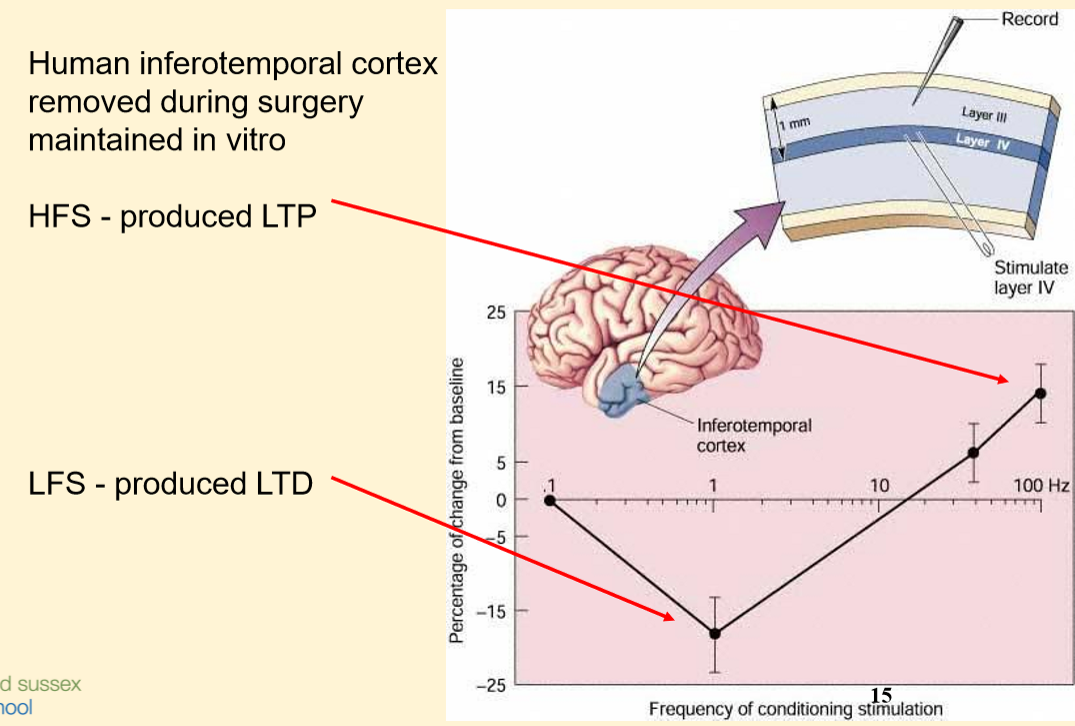
How does Human Cortex Show LTP and LTD?
Drug Effects on Learning and Memory I- Alcohol

Drug Effects on Learning and Memory II- Benzodiazepines

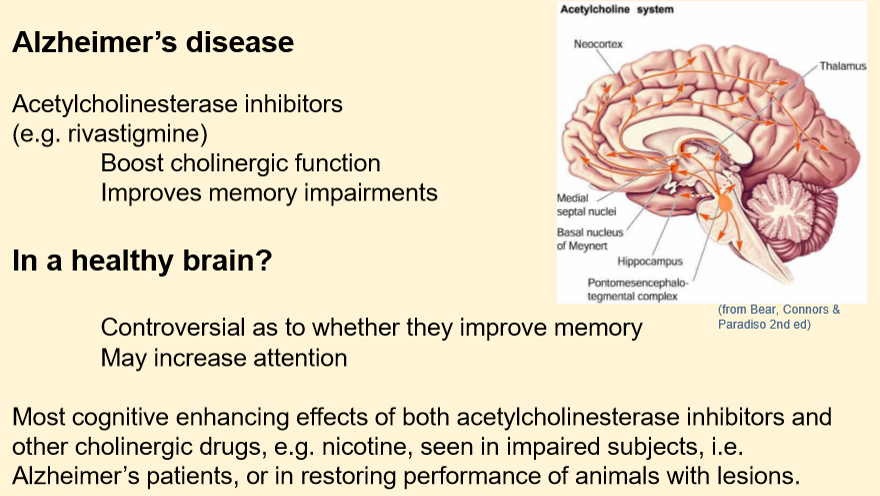
Drug Effects on Learning and Memory III- Cholinergic/ Anticholinergics

Drug Effects on Learning and Memory III- Alzheimer’s Disease
What are the Other Learning Processes which use LTP or Similar Mechanism?
Activity dependent synaptogenesis (development)
Motor learning - e.g. riding a bike – mainly cerebellar LTD
What is the Connectome?

What is Neurogenesis?
Neurogenesis: the process by which neurons are generated
5th week – 5th month of gestation
Peak rate of 250,000 new neurons / minute
What is a Neuroblast?
Postmitotic, immature nerve cell that will differentiate into a neuron
The fate of the migrating neuron will be determined by combination of factors, e.g.
Age of precursor cell
Position in ventricular zone
Environment at time of division
Inside-Out Development of the Cortex

Modification of Brain Circuits as a Result of Experience
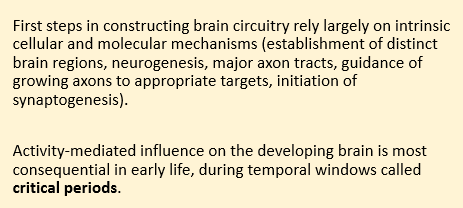
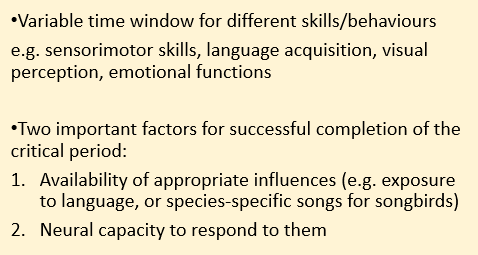
How do Experiences Shape Wiring in Critical Periods Most Strongly?
What are the Effects of Visual Deprivation on Ocular Dominance?

Competitive imbalance: The two eyes' inputs compete for layer 4 neurons; the active eye's synapses strengthen (Hebb) and the deprived eye's weaken.
First evidence of how experience during a critical period changes the way the brain is wired, and how individual neurons respond to stimuli
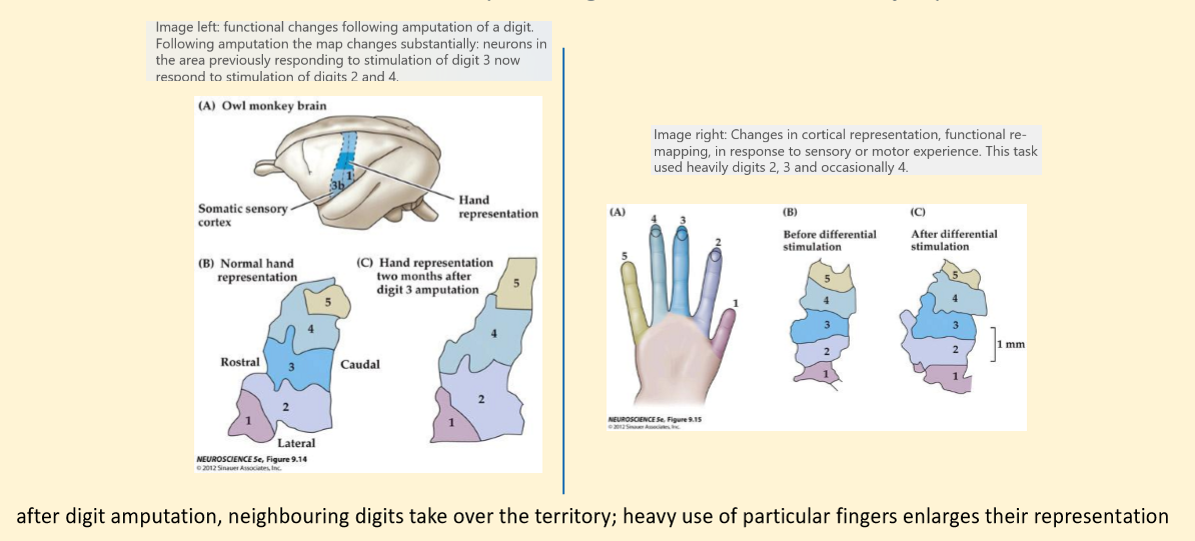
How do Adult Cortical Maps Reorganise with Use and Injury?
How do Peripheral Nerves Regenerate?

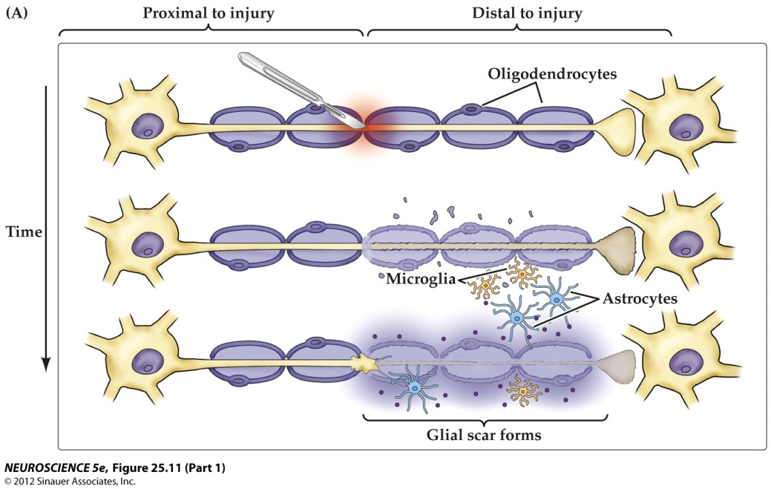
Why do Central Axons largely not Regenerate?
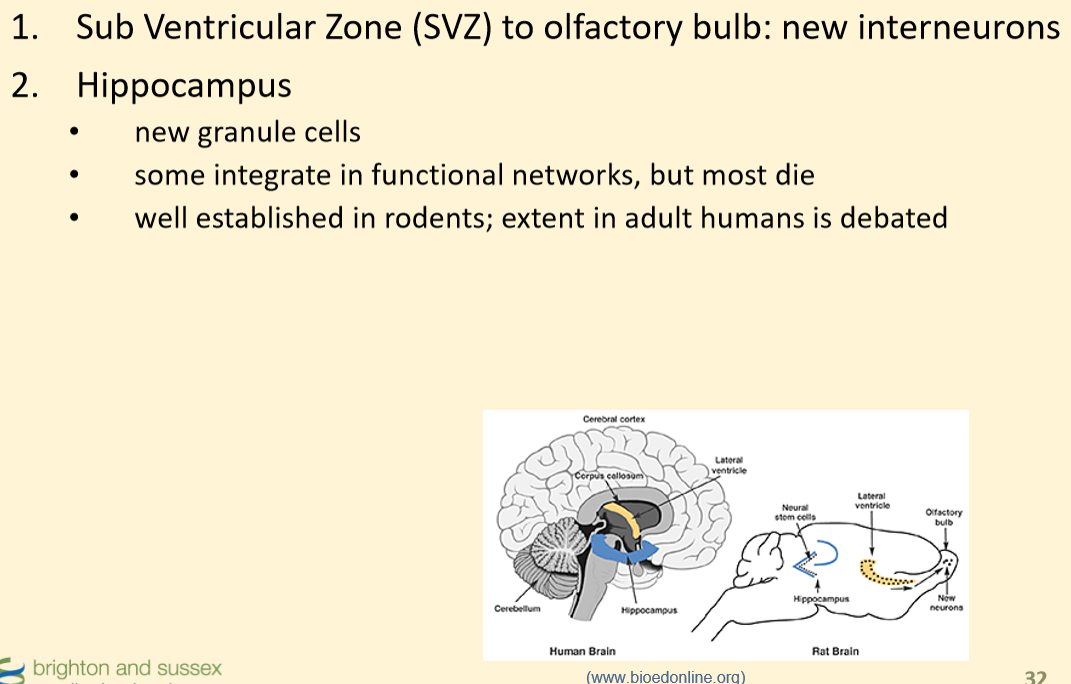
How does Adult Neurogenesis Work?
What is the Computational Theory of Neurogenesis?

Summary
Cells that fire together wire together
Long Term Potentiation - molecular mechanism for memory
Cells that fire out of sync, lose their link - LTD
Drugs that modulate memory
Connectome
Experience shapes wiring most in critical periods
Adult maps stay plastic
Peripheral nerves regenerate, central axons largely don’t
New hippocampal neurons may keep memories apart.
Question 1

Question 2

Question 3
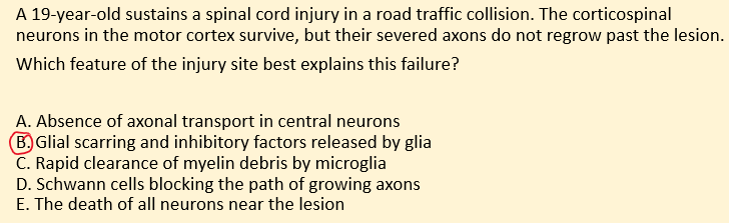
Question 4
