plant a+p test 3
 Call Kai
 Learn
 Practice Test
 Spaced Repetition
 Match
 Flashcards
 Knowt Play
1/137

Earn XP
Description and Tags
yikes.
138 Terms
hydrogen, positive
in _ bonds, Electrons tend to spend less time around the H atom than around a larger atom. The H atom becomes slightly _.
DNA, cellulose, strong
Hydrogen bonding is Responsible for water properties, _ bonding, and binding _ microfibrils together- it is a moderately _ force
ionic, weak
In an _ bond, One atom loses an electron to another, atom becomes a negative ion, and a Positive cation is attracted to negative anion. It’s a Relatively _ bond
covalent, share, strong
in _ bonds, 2 atoms _ electrons to fill outer shell-strongest bonds, since Atoms tend to ‘like’ having their outer orbital shell filled with electrons. First shell can hold 2 electrons while all others after that can hold 8. It is a very _ force
dehydration, covalent
In a _ reaction, a hydrogen atom is removed from one molecule and a hydroxyl group, or OH- is removed from another monomer. These combine to release a molecule of water as a byproduct. The remaining parts of the molecules share electrons, making a _ bond. It’s a common way to break down or create macromolecules.
macromolecules, monomers
_ are very large, complex molecules that are essential for the structure and function of living organisms. They are typically composed of repeating smaller units called _
hydrolysis, consumed
a _ reaction is a chemical process where a molecule of water is _ to break one or more chemical bonds in a larger compound, splitting it into smaller fragments. it’s a common way to break down or create macromolecules
carbohydrates, structural
_ Typically contain only C, H, O in a 1:2:1 ratio, and serve as energy storage or _ molecules.
N, poisonous
carbohydrates have a Carbon-dominant ring structure- changing O to _ in the top right portion of the ring can change the molecule from palatable to _ for humans
monosaccharides
_ are carbohydrates with one sugar unit, featuring a carbonyl group (C=O) and multiple hydroxyl groups (-OH)

glucose, ATP
_ is a simple monosaccharide and the primary product of photosynthesis in plants. It can be used in starch, cellulose, or broken down through respiration to provide _

fructose, carbohydrate
_ is a monosaccharide with the chemical formula C₆H₁₂O₆, that serves as a foundational building block for plant energy transport and _ storage
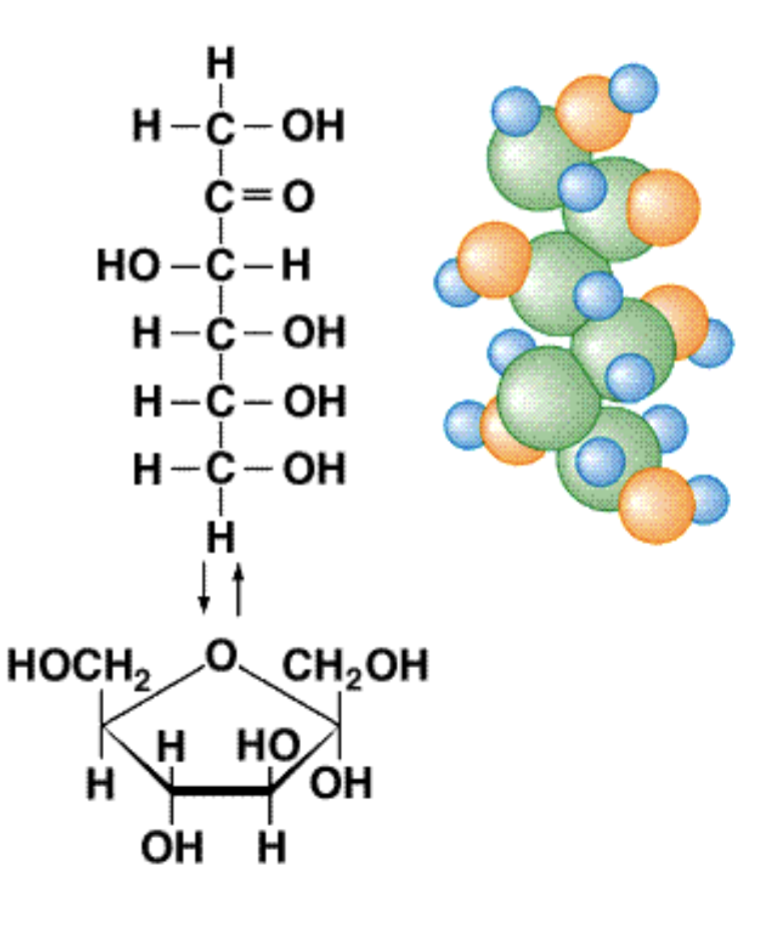
ribose, deoxyribose
other plant monosaccharides include galactose, as well as _ (a key component of RNA), and _, which builds DNA
disaccharide
a _ is a carbohydrate molecule formed when two simple sugars (monosaccharides) join together through a glycosidic linkage
sucrose, photosynthesis
_ is a disaccharide with glucose and fructose linked, and is the primary end product of _ and the main form of carbohydrate transported through a plant's vascular system
maltose, starch
other disaccharides include lactose, which consists of galactose and fructose, as well as _, which is 2 glucose units that play a critical role in plant energy metabolism, _ breakdown, and stress response
polysaccharides, amylose, amylopectin, branched
_ are large, high-molecular-weight carbohydrate polymers composed of more than 10 monosaccharides linked together by glycosidic bonds. it includes _, long chains of glucose that makes up 20-35% of plant starch- it’s connected to _, which makes up the remaining plant starch, and has long, but _ glucose chains
frutans
_ are a type of polysaccharide made of long chains of frutans, used as an alternative to starch for some plants.
cellulose, walls
_ is a polysaccharide made of Beta-D-glucose or alpha glucose. It is the primary structural component of plant cell _ and the most abundant organic compound on Earth.

lipids
_ are hydrophobic organic molecules essential for plant structure, energy storage, and environmental protection. They are typically composed of C, H, O- much more C+H than O

energy storage
lipids are __ molecules. Their C-C and C-H bonds have much more useful energy than C-O and H-O bonds
triglycerides
_ are a lipid that have a glycerol unit+ 3 fatty acid chains
unsaturated, kink
Fatty acid chains are lipids, and may have _ double bonds- makes the chain bend/have a _. OMega 3 and omega 6 fatty acids are both (first blank), and have health benefits
phospholipids, sphere, hydrophilic, hydrophobic
_ are lipids that have 2 fatty acid chains+ a phosphate group. They can form a bi layer _ similar to cell membranes in water. They’re also a critical component of cell membranes- they have a _ head and a _ tail

hydrophobic, ring
The chlorophyll molecule has a long, _ chain below the light capturing _ structure of the molecule

sterols, isoprenoids
hydrophobic, lipid-like compounds include _, that are the building blocks of plant membranes, and _, which are built from 5 carbon units, and include pigments like carotene and lycopene that color fruits and flowers
nucleic acids, nucleotides
__ are large, naturally occurring biomolecules that store, transmit, and express genetic information in all living cells and viruses. They are composed of subunits called _ (left). They’re composed of C, H, O, N, P.

nitrogenous bases
__ are nitrogen-containing organic molecules that form the structural "letters" of genetic information in nucleic acids
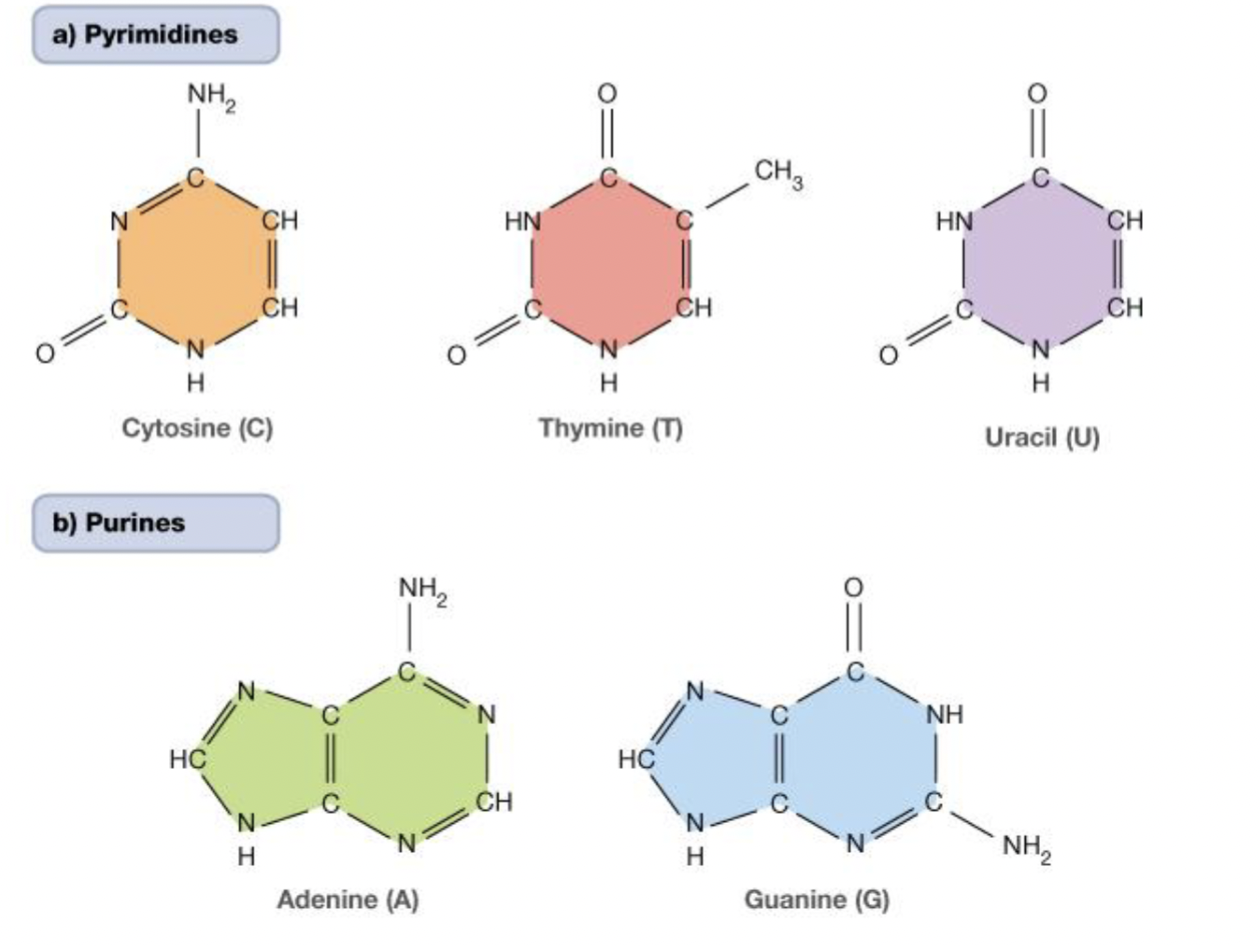
covalent, hydrogen
Nucleotides form polymers by _ bonds between the phosphate group of one and the sugar unit of another. The 2 strands of the DNA molecule are held together by _ bonds
proteins, amino acids
_ are large macromolecules built from chains of __ that drive nearly every structural, metabolic, and physiological process in plant life. The r group ( variable chemical group attached to the central alpha carbon) determines which type of amino acid it is and its properties. They are made of C, H, O, N, S.

amino acid, carbon, carboxyl
__ are organic molecules that act as the fundamental building blocks of proteins (up to 20 unique). Each molecule features a central alpha-_ atom bonded to an amino group (−NH₂), a _ group (−COOH), a hydrogen atom, and a unique side chain (R group)
peptide synthesis
__ is the chemical or biological production of short chains of amino acids linked together by peptide bonds.
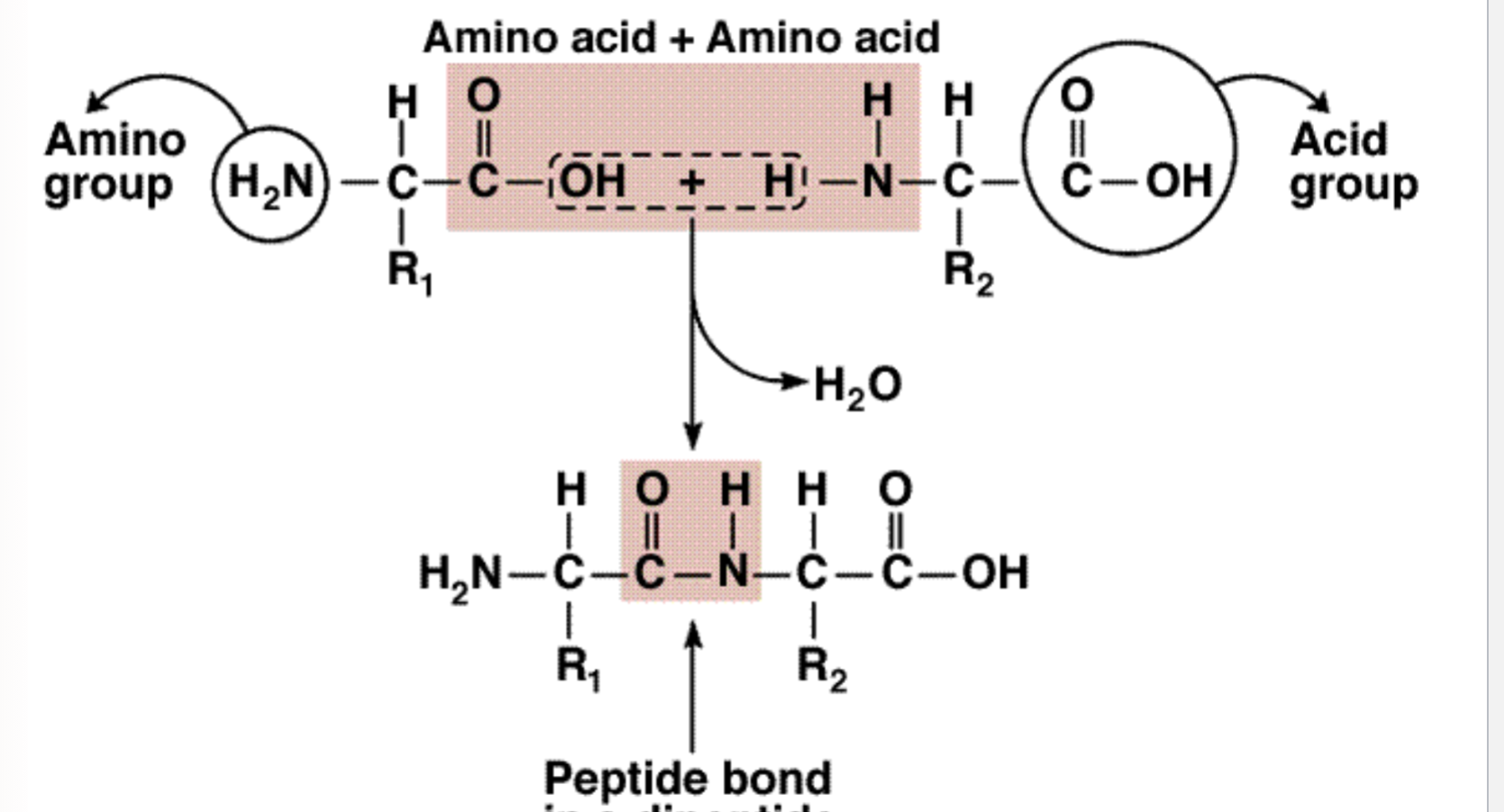
polypeptides
amino acids can form _, a continuous, unbranched chain of ten or more amino acids linked together by covalent peptide bonds

transport prote
__ are specialized transmembrane proteins that move ions, small molecules, and macromolecules across biological membranes or throughout an organism
enzymes, substrate, reaction
_ are protein molecules that catalyze reactions in cells. They have an active site that binds to a specific _, and lower the amount of energy needed for a _ to occur or they speed up the reaction rate
pH, metal, inhibitors
Enzymes may be broken down when no longer needed. They may activate only at a particular _, or activated by a specific _ ion Competitive _ may compete for the enzyme binding site an slow or stop its reaction
structural proteins, microtubules
__ are fibrous and globular building-block proteins that provide mechanical support, shape, and internal organization to cells, tissues, and entire organisms. They include _, hollow protein tubes that form a critical part of the plant cell cytoskeleton
movement proteins, actin fibers
__ are specialized, virus-encoded proteins found in plant viruses that enable viral genomes or particles to spread from one cell to another and eventually throughout the entire plant. Include __, structural tracks and mechanical engines inside cells
histone proteins
__ are positively charged nuclear proteins that package/organize plant DNA into chromatin and act as dynamic epigenetic switches for growth, flowering, and environmental stress survival.
amino acids
there are 4 levels of protein structure. the primary structure is chains of __ that form a peptide
helix, pleated
there are 4 levels of protein structure. the secondary structures are alpha _ or beta _ sheets

3d
there are 4 levels of protein structure. in the tertiary structure, the amino acid chains folds and forms a _ shape
quaternary, functional
there are 4 levels of protein structure. In the _ structure, 2 or more polypeptides combine to make a _ protein
visible
_ light is a small fraction of the EM spectrum
wavelength, less, ionizing radiation
Light travels as a wave and a particle simultaneously. _ is the distance between wave peaks. Longer wavelength light has _ energy, Shorter wavelengths strip electrons- this is known as __
red
_ light has longer wavelengths than blue light
pigments, orbit
_ (selective light-absorbing molecules that give plants their color and drive vital biological processes like photosynthesis, photoprotection, and pollinator attraction) absorb light energy+ electrons are boosted to a higher _ and then instantly fall back down, releasing longer wavelength energy
action spectrum, absorption spectrum
an __ (bottom) is a graph showing the rate of photosynthesis (biological effectiveness) produced at each wavelength of light. the __ (top) describes how chlorophyll a and chlorophyll b/pigments absorb light across the visible spectrum (roughly 400 nm to 700 nm

red, blue, photosynthesis
Chlorophyll absorbs _+_ light and reflects green. Chlorophyll absorbs the wavelengths that drive _ (action spectrum). Chlorophyll a is a true red, chlorophyll b is a red-orange
quantity, unit time
the first property of light is light _: total amount of energy per __. Corn, a C4 grass can take full advantage of right sunlight while wheat, a C3 grass reaches an upper limit of photosynthesis in full sun
quality, leaves
the 2nd property of light is light _: the wavelengths or spectrum of light shining on the plant. A canopy of _ changes the spectrum (as well as the quantity) of light that reaches the forest floor. The type of source can change the light quality

duration, stress
the 3rd property of light is light _: the length of time that the light shines on the plant. Most plants need a dark period each day- 24 hour light results in _ and poor growth
chlorophyll a, red
there are 3 photosynthetic pigments: __ is required for O2 releasing photosynthesis. Absorbs blue+_ light, and is the Primary photosynthetic pigment
chlorophyll b
there are 3 photosynthetic pigments: __ passes energy to chlorophyll a, and absorbs blue-green and orange-red pigments
carotenoids
there are 3 photosynthetic pigments: _ passes energy to chlorophyll a, and absorbs green light
c
chlorophyll _ is a type of light-absorbing magnesium porphyrin ring pigment found in certain marine algae, diatoms, and kelp
green, land, brown, red
_ algae+ _ plants have chlorophyll a, b,and carotenoids. _algae+diatoms have chl a, c + carotenoids. _ algae + cyanobacteria have chl. A + phycobilins
phycobilins
_ are water-soluble, light-capturing pigments found in cyanobacteria, red algae, glaucophytes, and some cryptomonads
flowers
Carotinoids are also important photosynthetic pigments as well as providing color for some _.
xanthophylls, lycopene
Carotinoids and _(major class of yellow, oxygen-containing polar carotenoid pigments) color fall foliage and _ colors tomatoes.
photoprotection
xanthophylls are important for _

cryptochrome
_ is a flavoprotein photoreceptor that detects blue and ultraviolet-A (UV-A) light (380–500 nm) to regulate plant growth, development, and daily biological rhythms
phototropins
_ are blue-light photoreceptor proteins (flavoproteins) in plants, algae, and fungi that detects direction of light using blue wavelengths
anthocyanins
Flavinoids+_ are water soluble color pigments for flowers or fruits
uv, full sun
flavinoids and anthocyanins are often protective for leaves, absorb _ light. If plants are moved from indoors to outdoors and not given time to acclimitize, they can be seriously damaged by __
betalains
_ are water soluble pigments that provide colors for flowers+ fruits in specific plant families: Bougainvillia, portulaca, celosia, cacti
dicot, mesophyll
The internal structure of _ leaves maximizes light scatter and capture The _ scatters+reflects light as it passes through to maximize CO2 and light capture
stroma, thykaloids
the chloroplast has 2 membranes, an inner gel called the _, and an inner membrane made of _
grana, stroma
_ thylakoids are in stacks, while _ thylakoids extend through the stroma. Thylakoids can be stretched out in high light, or compressed in lower light- changes rate of light capture
photosystem II, grana, h+
There are 4 major complexes in thylakoids. __ is the 1st step in light capture process. Pigments pass light energy down to two Chl. a molecules on the inner side of the _ membrane. Chl a molecules split H20 into _ ions and O2. e- are passed across the grana membrane
grana, h+, acidic, basic
There are 4 major complexes in thylakoids. in the Cytochrome b-Cytochrome f complex, E- are passed back to the inside of the _ sac. E- carry _ ions with them into the grana sac, making the inside more _ in pH and the outside more _
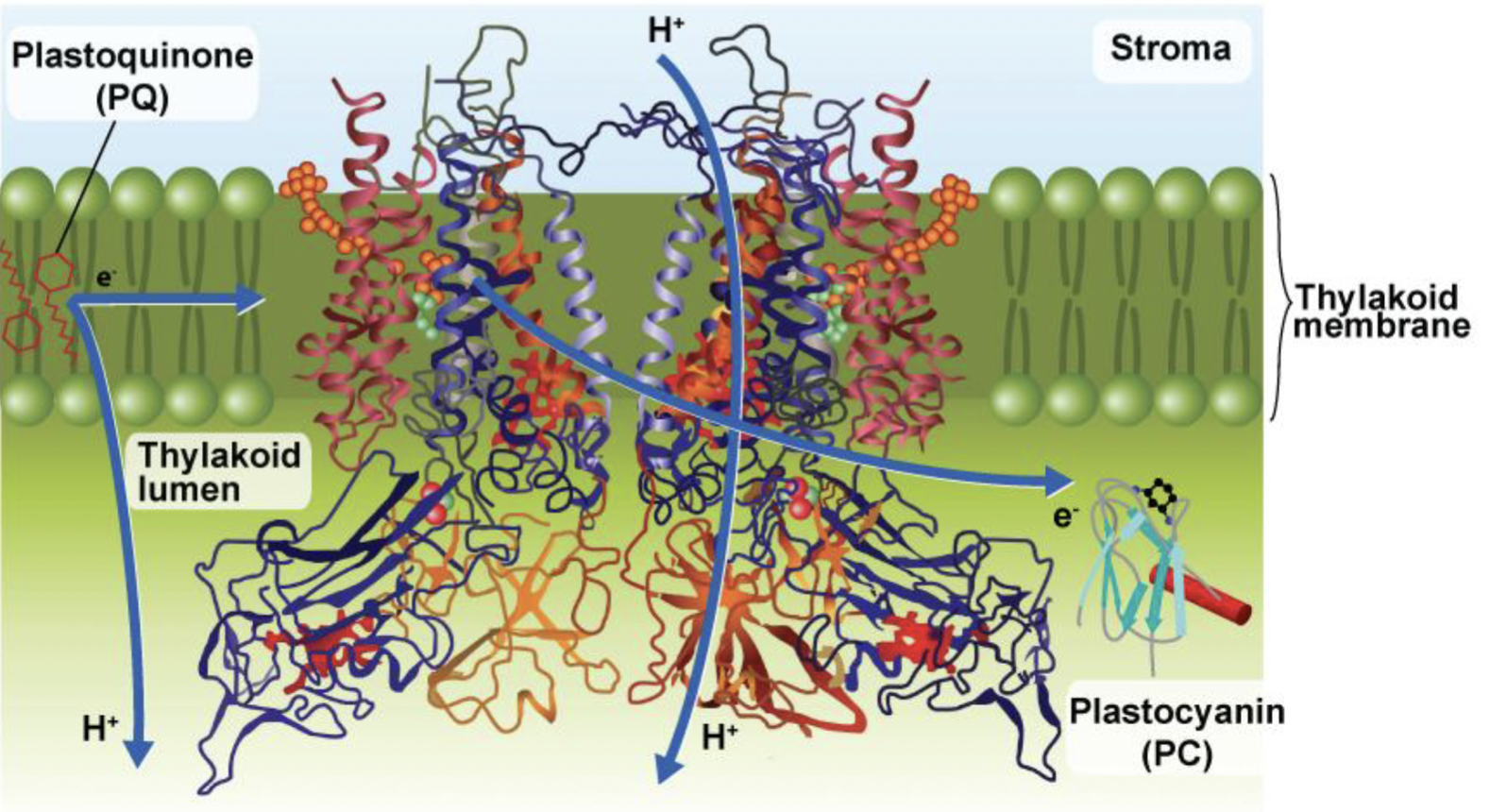
photosystem I, nadp+, nadph
There are 4 major complex in thylakoids. __ re energizes the electrons and passes them back across the membrane. High energy e- are used to attach h+ ions to _ and _
atp synthase, pumps, 1, 3
There are 4 major complexes in thylakoids. in the __ complex, H+ ion concentration inside the grana sac is very high, ph 5, and H+ ion concentration outside is low, ph 8. H+ ions are passed through ATP synthase _+ make _ atp per _ H+ ions
non cyclic photophosphorylation
___ a light-dependent reaction of photosynthesis that takes place in the thylakoid membranes of chloroplasts in plants, algae, and cyanobacteria. It involves a linear flow of electrons from water to NADP+, utilizing both Photosystem II (PSII) and Photosystem I (PSI)
calvin cycle, nadph, nadp+
If CO2 is not available, the __ shuts down. If it stops, ATP cannot drop off P+ become ADP and _ cannot drop off h+ and e- and become _. IF there is no NADP+ available the non cyclic photophosphorylation pathway cannot move e-
photosystem I, thylakoid, grana
Plants can run __ independently. Light energy boosts e- up and across the the _ membrane. E- are passed to the Cytb-cytf complex. E- are used to pump h+ ions into the _ sac. High h+ ion concentration is used to drive ATP synthase pumps to make ATP
light harvesting, efficiency
a __ complex is a collection of proteins and pigment molecules embedded in the thylakoid membranes of chloroplasts in plants and green algae. Not vital for plant survival, But enhances photosynthetic _

a, b, photosystems, flow
Over ½ of chl. _ + almost all chl. _ are in Light-harvesting complex. It does not have reaction center, just passes energy to photosystems. LHC also helps balance e- _ between PS II and PS I
more
Shade adapted leaves have _ light harvesting complex than sun adapted leaves
10, photosystem II
Sun flecks on the forest floor may increase light intensity by _x in seconds and could damage __
decouple, active, balance
If too much light energy is going into ps2, the light-harvesting complexes can _ and move over to ps1 to speed it up. Once PSI is fully _, some of the LHC can migrate back to PSII to keep the flow of electrons in _.
shade adapted
__ plants can photosynthesize more efficiently at low light levels.
thicker, adapted, thinner
Different species can acclimatize to low light levels at different rates. Plants moved from sun to shade typically drop _ sun leaves and grow new shade _ ones. Shade adapted leaves are broader and _ with more LHC
xanthophyll, heat
In Photoprotection, _ will change form+ rather than passing light to photosystems it will dissipate it as _
photosystem II
in photodamage, the d1 protein of __ is damaged, which slows photosynthesis
electrons
Some herbicides work by interrupting the flow of _ in the light-dependant reactions
pore, guard
the stomatal complex contains the stomatal _ and 2 _ cells. More than 90% of gas exchange is thru stomata
chloroplasts, subsidiary
the guard cells of the stomatal complex can open and close- they’re the only epidermal cells w/_. _ cells are adjacent to guard cells
monocots, dicots
_ typically have stomata on both leaf surfaces, _ typically only on lower surface
cuticle
All plants have stomata except for submerged aquatic plants, which lack a _
diffusion, absorbing
CO2 enters leaves by _ through stomata, the same way water vapor exits. Stomata open by _ water in guard cells
length, turgor
Guard cells cannot expand in diameter, only in _. Guard cells open when fully turgid and close when they lose _ pressure
subsidiary, cl-, osmosis
_ cells use ATP to pump K+ ions into the guard cells, _ ions follow + this absorbs h20 into guard cells by _. Guard cells can open protein channels to let k+ ions out
bright, blue, cryptochrome
_ light or low CO2 levels typically triggers stomata to open, typically close in dim light or darkness. _ light is more effective at triggering stomata to open, suggesting a role for the pigment _
water, abscissic acid
_ stress will override all other signals and cause the stomata to close. Uppermost roots will send __ up to leaves through xylem, triggers stomata to close
close
High temperatures have a complex interaction with stomata, but generally trigger them to _
amino acids, carbon, phosphoglycerate
Algae are used to study CO2 fixation. Single celled algae were exposed to radioactive C14O2 for a short time, then killed. After 60 seconds, radioactive C14 was in __, sugars, many other _ compounds. After only 2 seconds, most c14 was in 3-_, which was the 1st detectable product of CO2 fixation.
bisphosphate
The acceptor molecule for the CO2 was the 5 carbon sugar ribulose 1-t-_.
carboxylation, RuBP, phosphoglycerate, rubisco
the first step of the calvin cycle is _: CO2 is attached to _ (ribulose 1,5 bisphosphate), this immediately splits into 2 3-_ molecules (3 carbon), and this is catalysed by the enzyme ribulose 1,5 bisphosphate carboxylase oxygenase or _
reduction, glyceraldehyde
the 2nd step of the calvin cycle is _: Energy and e- from ATP and e- and h+ from NADPH are added to 3 phosphoglycerate to convert it to _ 3 phosphate (GA3P, a higher energy molecule with more hydrogen). GA3P has more energy than 3 PGA