Pharmacodynamics
 Call Kai
 Learn
 Practice Test
 Spaced Repetition
 Match
 Flashcards
 Knowt Play
1/24

There's no tags or description
Looks like no tags are added yet.
25 Terms
What is pharmacodynamics
The effect of a drug on the body
What are the sites of drug action and explain them
•Ion Channels (voltage sensitive/ligan gated/ion transport and selectivity)
•Receptors
•Enzymes
•others
Describe ion channels as drug targets
Ion channel blockade or opening control the function of excitable cells
•Muscles
•Nerves
e.g. Sodium entry into the cell excites it leading to contraction in muscles and conduction in nerves
Lignocaine
Blocks sodium entering the cell and reduces muscle excitability (heart) and stops nerves conducting (central and peripheral nervous system)
Describe the function of ATP dependent sodium/ potassium pump
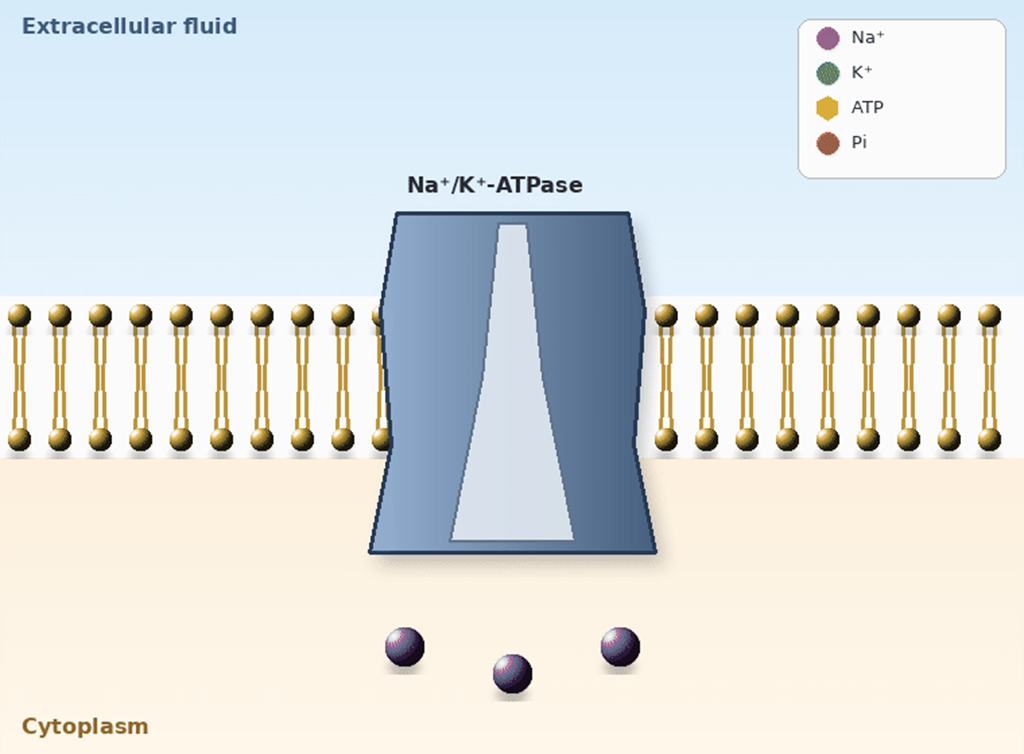
Describe transport proteins as drug targets
Inhibition of transport proteins
Ion transport pumps
Diuretics, digoxin
Selective Serotonin reuptake inhibitors
Using transport proteins as carriers
L-Dopa (Parkinson's disease medication) is transported into the body and brain by the large neutral amino acid (LNAA) transporter
What is a receptor
•A receptor is a specific protein capable of binding a specific group of drugs or endogenous substances
•Receptors may be: intracellular or extracellular
Describe an enzyme as a drug target
…
Describe a ligand
•A ligand is a substance which binds to a receptor.
•A ligand may normally be found in the body (endogenous) or enter the body from outside (exogenous) to bind with a receptor.
•e.g. histamine is a ligand at histamine receptors
•Drugs are exogenous ligands, as they come from outside the body
Describe ligan gated ion channels
…
Describe aldosterone
Aldosterone binds to an intracellular receptor
Metabotropic receptor G-protein-linked
PKA= phosphokinase A
PDE= phosphodiesterase
(LIU 🙂 )
Why are pharmacodynamic interactions important
Drugs modulate physiological communication
What are physiological communications
•The CNS exerts rapid control via impulses & neurotransmitters (NTs)
•The endocrine communicates by means of hormones, responses occur more slowly
•Collectively known as first messengers
Stimulus —> First messenger NT/ hormones
Describe the target cells for messenger molecules
Target cells have specific receptors within
They can be in the: plasma mem, nucleus and cytoplasm
Stimulus —→ First messenger ——> Target
Signal transduction and secondary messengers
for example:
Intracellular enzymes
Calcium
Intracellular lipids (arachodonic acid, diacylglycerol & Inositol trisphosphate)
Stimulus —→ first messenger —> target —→ intracellular secondary messenger
Describe the response to a stimuli
•Second messengers activate or inhibit enzymes within the cell
•Signal transcription of genes
What is receptor theory
The charge of the ligand impacts the affinity to the receptor
Opposite charges will cause more attraction
What are agonists and antagonists
•Agonist: drugs with high affinity and high intrinsic activity.
•Mimic the effect of the resident natural ligand
•Antagonists: drugs with high affinity but No intrinsic activity.
•Cause no effect (receptor is inhibited)
What are the different kinds of antagonists
Competitive antagonists: these compete for the same receptor as an agonist
Non-competitive antagonist: these drugs bind to a place other than the endogenous ligand binding site and incapacitate the receptor (biological effect absent)
Partial agonists: These act on a receptor but without the maximum effect
How does competitive antagonism work
The drugs and ligands affinity need to be equal
Affinity D= Affinity L
What are the different durations of Drug-Receptor interaction
Reversible= pharmacological effect reversible eg. ventolin
Irreversible= pharmacological effect prolonged eg. aspirin
Drug receptor-interaction easily reversible but have prolonged pharmacological effect eg. steroids
Describe drug selectivity
Drugs may have more than one effect. Other receptors might have similar structures to the drug
Thus, the same drug may bind to different receptors resulting in a multitude of effects
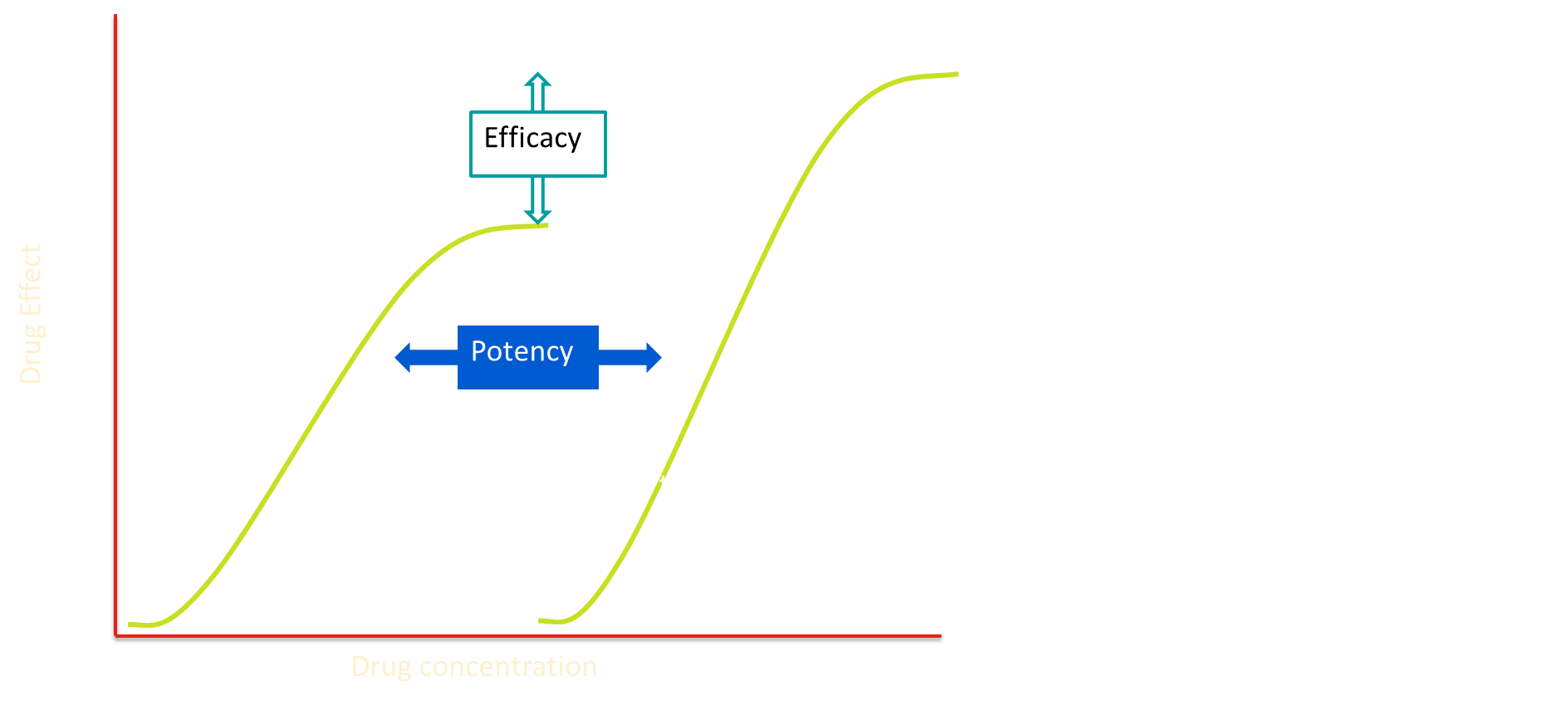
Potency vs Efficacy
Potency= amount of the drug needed to get a certain effect
Receptor down regulation
If the receptor-drug effect is agonistic then receptor down regulation may occur
Because of the agonist there is a reduction in the amount of receptors available for ligand binding
Consequence: If drug stopped suddenly the body is “starved” of the ligand effect, this may give rise to withdrawal or a crisis effect in the body
Body perceived potential for too much effect
Receptor Up Regulation
• If the receptor-drug effect is antagonistic then receptor up regulation may occur
Increase in receptors available for ligand binding
Consequence: If the drug is suddenly stopped, there is an increased response of the ligand, This will cause an overt effect of that ligand in the body, which may be harmful and sometimes fatal
- Body perceives potential for too little an effect