BIO Exam 2
 Call Kai
 Learn
 Practice Test
 Spaced Repetition
 Match
 Flashcards
 Knowt Play
1/202

There's no tags or description
Looks like no tags are added yet.
Name | Mastery | Learn | Test | Matching | Spaced | Call with Kai | Chat |
|---|
No analytics yet
Send a link to your students to track their progress
203 Terms
What are the four main tissue types?
Epithelial, connective,
What is tissue?
clusters of cells that perform the same purpose as cells
where is epithelial tissue found?
lining/coverings of surfaces or body cavities
what is epithelial tissue naming based off of?
number of layers and shape of cell
what are the two main types of connective tissue?
fibrous and spatialized
How is connective tissue arranged differently than epithelial tissue?
Connective tissues often have few living cells, and these cells are not tightly bound like epithelial tissue
what are the four types of specialized connective tissue?
Cartilage, bone, blood, and adipose
what is a chondrocyte and which tissue is it related to?
the cells responsible for cartilage formation, cartilage
What is an osteocyte and which tissue is it related to?
these cells are responsible for detecting mechanical stress and helping regulate bone remodeling. They are related to bone tissue
What is a neuron and which tissue is it related to?
large nerve cells that transmit nerve impulses in the nervous system, they are related to nervous tissue
what are white blood cells and which tissue are they related to?
White blood cells are immune cells that defend the body against infection, and they are primarily related to connective tissue
What are red blood cells and which tissue are they related to?
Red blood cells are oxygen‑carrying cells in the blood, and they are part of connective tissue
What are platelets and what tissue are they related to?
they are tiny cell fragments in your blood that help with clotting, they are part of connective tissue
what are neurological cells and what tissue are they related to?
supporting cells in the nervous system, they are related to nervous tissue
What type of matrix is found in cartilage?
flexible matrix
what type of matrix is found in the bone?
solid matrix
what are the two types of bone tissue?
spongey bone and compact bone
what is in the center of an osteon?
vessels: veins and arteries
what is an osteon?
the single unit you put together to make compact bone
what resides in the spaces of an osteon?
osteocytes
name the 3 types of muscle tissue?
skeletal, cardiac, and smooth
Why is it important that junctions between epithelial cells are tightly joined?
they greatly restrict the passage of water, ions, and small molecules through the paracellular space
What does simple and stratified refer to in relation to epithelial tissue?
simple means it has a single layer of cells and stratified means it has multiple

Which type of epithelial cell is this?
cuboidal

Which type of epithelial cell is this?
squamous

Which type of epithelial cell is this?
columnar

What type of tissue is this?
compact bone

What type of tissue is this?
skeletal muscle
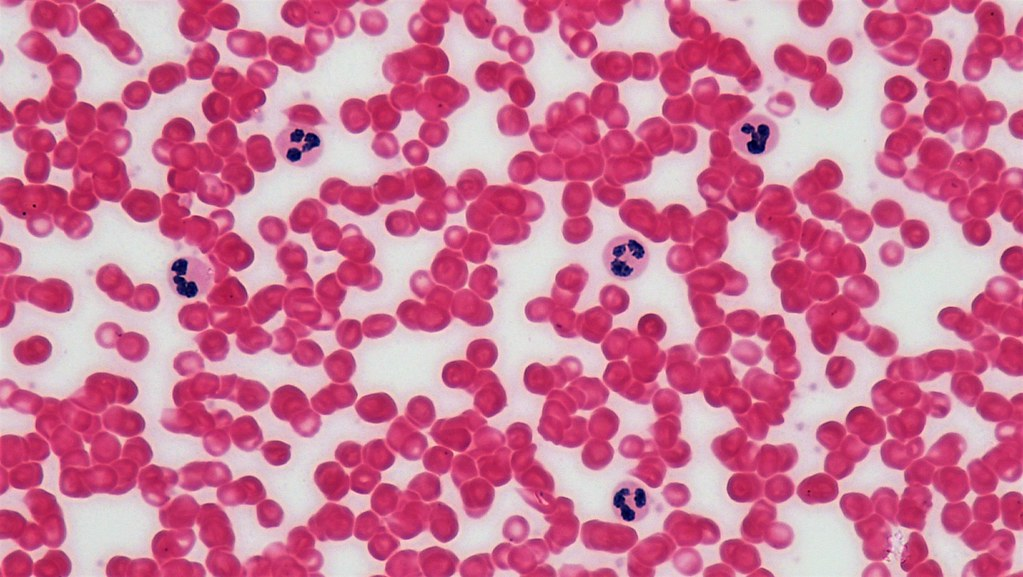
What type of tissue is this?
blood tissue

What type of muscle is this?
cardiac muscle

What type of tissue is this?
nervous
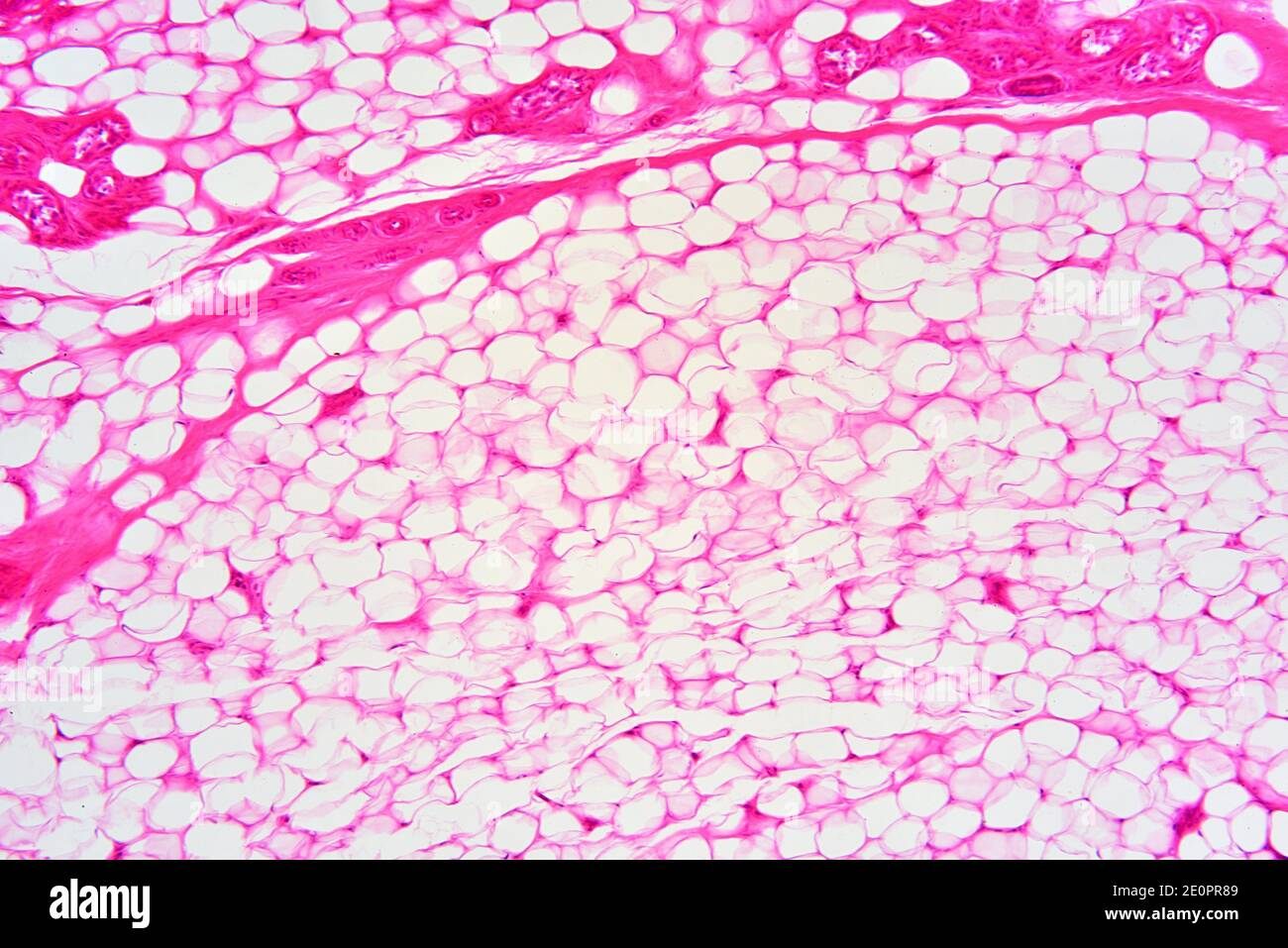
What type of tissue is this?
adipose
organ
a group of tissues in a living organism that have been adapted to perform a specific function
what is the largest organ in the human body?
skin
what are the 4 functions of the integumentary system?
Protection/defense, regulation of body temperature, helps synthesize “vitamin D”, and sensory reception
What are the three major layers of the skin
Epidermis, dermis, hypodermis
what tissue type makes up the epidermis?
epithelial tissue
What tissue type makes up the dermis?
connective tissue
What type of tissue makes up the hypodermis?
adipose tissue
which cell is most common in the epidermis?
keratinocytes
what do melanocytes do?
specialized pigment‑producing cells responsible for synthesizing melanin, the pigment that protects skin from ultraviolet radiation
which layer of the skin are melanocytes found in?
epidermis
What causes different skin colors that we see in humans?
the amount or type of melanin you have
Does the epidermis have a blood supply?
no
Does the dermis have a blood supply?
yes
Where are most of the structures such as blood vessels, nerves and glands found in the skin?
dermis
What is the function of the hypodermis?
acts as a cushion and insulator
Where is most nervous tissue found?
dermis
where are muscles found in the skin?
dermis
where is adipose found in the skin?
hypodermis
What are the 2 layers of skin where epithelial tissue is found?
epidermis and dermis
what are the 2 layers of the skin where connective tissue is found?
dermis and hypodermis
what is the microbiota?
microbes that live on and in you such as on the skin and in the digestive system
Why is the microbiota important?
The microbiota is essential because it supports digestion, strengthens immunity, regulates metabolism, and helps protect the body from disease.
what causes the ridges we see on the tips of our fingers that result in fingerprint patterns?
dermal ridges at the top of dermis
what are the ways that the sun damages the skin and its cells?
wrinkles, age spots, leather-like skin, cancer
Which layer of skin does cancer originate in?
epidermis
which skin cancer is the deadliest?
melanoma
Name the 5 signs of skin cancer
asymmetry, border irregularity, color, diameter 7-6mm, evolving
What is a muscle fiber equivalent to?
a single muscle cell
What attaches muscle to bone?
tendons
what is the contractile unit of a muscle?
sarcomeres
What two proteins are sacromeres made up of?
actin and myosin
what are the repeating units in a myofibril?
sarcomeres
which protein in a sarcomere has heads on it that can be used for attachment?
myosin
What is the role of acetylcholine in muscle contraction?
it triggers the muscle fiber to activate
What is the role of calcium in muscle contraction?
it attaches to troponin which opens myosin binding cites
What is the role of myosin in muscle contraction?
myosin heads attach to myosin binding sites to form cross bridges which pulls the actin toward the center
What is the role of ATP in muscle contraction?
is required for attachment and detachment of the myosin and actin
what is a crossbridge?
Cross bridge cycling is the repeated molecular process that powers every muscle contraction in your body. It describes how tiny protein motors called myosin heads attach to a neighboring protein filament called actin, pull it forward, release, and reset, over and over, to shorten a muscle fiber
what molecule allows crossbridges to be made and broken
ATP
Where does calcium come from in the muscle fiber/cell?
sarcoplasmic reticulum
What molecule does calcium bind to in muscle contraction and what is the result?
troponin, it exposes myosin binding sites
explain muscle relaxation
ach will stop being released, calcium is sequestered, cross bridges stop being formed
why does rigor mortis occur?
Rigor mortis happens because ATP runs out after death, causing actin and myosin filaments to lock together so muscles become stiff
What are the two types of muscle fibers?
Slow-twitch and fast-twitch fibers
Which muscle fiber is used for endurance?
slow-twitch
which muscle fiber is used for quick bursts of energy
fast-twitch
What gives slow-twitch fibers their darker color?
they contain high levels of myoglobin, dense mitochondria, and a rich capillary supply
When you aerobically train what are you increasing in your muscles and your muscle cells?
capillaries, mitochondria, myoglobin
What is increasing in the muscle cells that allows this to occur in this type of training?
myofibrils
Why is cardiac muscle striated like skeletal muscle is?
it has the same arrangement of actin and myosin into sarcomeres within the muscle fibers, like in skeletal
Why doesn’t smooth muscle look striated (stripes/lines) under a microscope?
their proteins are found surrounding the cells rather than in them, so they contract but they do not lead to striations like in the others
Explain how the muscle fibers are different in birds like turkeys and ducks by looking at the breast and leg muscles based on how they live
Turkeys cannot fly well and mostly walk, so they have more slow twitch fibers in their legs because that is where they need more endurance. Ducks are the opposite, they fly so their slow twitch fibers are mainly found in their breasts while the fast-twitch fibers are found in their legs

which person has the most fast-twitch fibers?
hannah

Which person has the most low-twitch fibers?
Matt

Which person would be the best at aerobic training?
Matt
What are the three main functions of blood?
Transportation, regulation, and protection
What component makes up the most of the blood?
Plasma- 55%
what percentage of blood is made up of red blood cells?
44%
What two components make up 1% of blood?
white blood cells and platelets
What is the shape of a RBC?
biconcave disk
Do RBC have a nucleus or organelles?
no
What molecule is RBC filled with and what is its function?
Hemoglobin, carrying oxygen
why is the structure of RBC so important?
the shape enables RBCs to efficiently transport oxygen from the lungs to tissues and carry carbon dioxide back to the lungs
What is the hematocrit?
a blood test that measures the amount of red blood cells in your blood
what two tests are often used to diagnose diabetes?
Fasting blood glucose and A1C
how does the A1C test give you information about the average blood glucose over the last 3 months?
healthy A1C have some glucose stuck to them, a high A1C means that unhealthy amounts of glucose are stuck to the cell
What are the normal A1C levels?
below 5.7%
What are normal fasting blood glucose numbers?
below 100mg